
India is planning a $1.5 billion reinsurance fund to support insurers covering ships navigating high-risk waters in West Asia, ensuring continuity in global trade despite rising geopolitical tensions.
The fund, likely to be managed by the General Insurance Corporation of India, will act as a financial safety net amid surging war-risk premiums and reduced global reinsurance capacity.
By stabilising insurance availability, the initiative aims to protect India’s energy imports, prevent supply chain disruptions, and strengthen domestic insurance resilience in volatile global conditions.
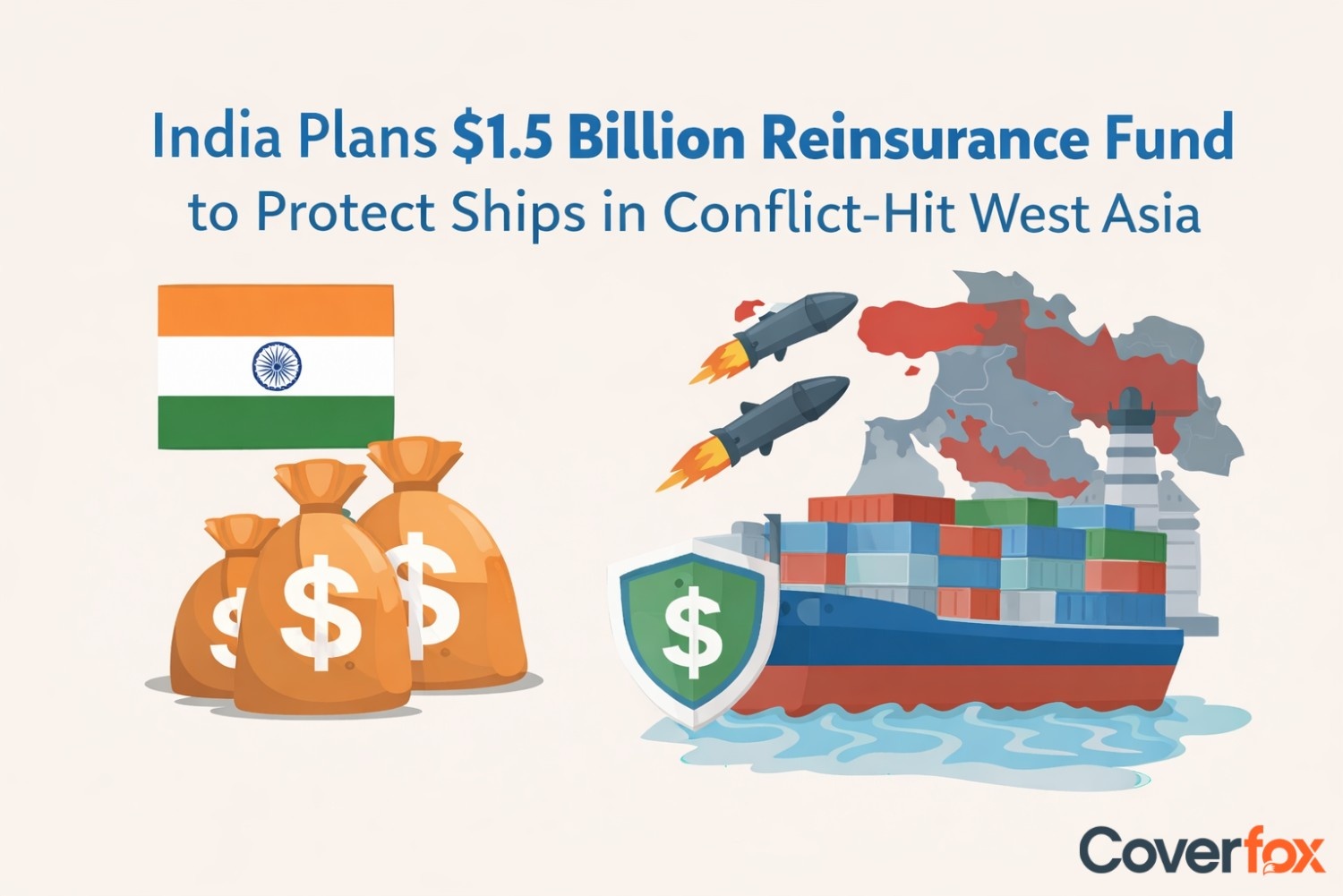
In recent weeks, war-risk insurance for commercial shipping has increased by over 7.5%. In response, the Indian government is reportedly preparing to launch a $1.5 billion (₹14,000 crore) reinsurance fund to support insurers covering vessels navigating these high-risk waters. The move is aimed at ensuring continuity in maritime trade while shielding insurers and shipowners from rising war-related uncertainties. Given that nearly 20% of global oil trade passes through critical routes like the Strait of Hormuz, any disruption can have far-reaching economic consequences.
What Is the Proposed Reinsurance Fund?
The government is planning to create a $1.5 billion reinsurance facility, likely to be managed by the General Insurance Corporation of India (GIC Re).
The primary objective is to:
Provide reinsurance backing to domestic insurers
Encourage insurers to continue offering coverage for ships operating in conflict-prone zones
Reduce dependence on volatile international reinsurance markets
In simple terms, this fund acts as a financial safety net, enabling insurers to underwrite high-risk policies without bearing the full burden of potential large-scale losses.
What Is War Risk Insurance?
War-risk insurance is a specialised type of marine insurance that covers damages caused by:
War or armed conflict
Terrorist attacks
Piracy or hostile acts at sea
Unlike standard marine insurance, it is priced separately and can increase sharply during geopolitical tensions, sometimes rising multiple times within days.
Why Is This Fund Needed Now?
1. Surge in War Risk Premiums
The ongoing conflict in West Asia has sharply increased maritime risks. War-risk insurance premiums for ships have reportedly surged dramatically, making operations more expensive.
2. Withdrawal of Global Reinsurers
Many international reinsurers have either reduced exposure or exited the region altogether due to heightened uncertainty. This has created a coverage gap for Indian insurers.
3. Strategic Importance of Shipping Routes
Key routes like the Strait of Hormuz are vital for:
Crude oil imports (India imports over 60% of its crude oil from this region)
Trade with the Middle East and Europe
Any disruption here directly impacts India’s energy security and trade flows.
How the Fund Will Work
The proposed structure is expected to function in two layers:
Government-backed reinsurance pool ($1.5 billion): Provides large-scale financial backing to insurers
Additional industry-supported fund (~$300 million): Helps settle large or unexpected claims during crises
For example:
If a tanker transporting crude oil from West Asia is damaged due to conflict, insurers could face massive claims. With this fund in place, a portion of the loss would be absorbed by the reinsurance pool, ensuring claims are settled without destabilising the insurer.
Impact on India’s Shipping and Trade
1. Ensuring Continuity of Trade
By reducing the risk burden on insurers, the fund will help:
Maintain uninterrupted shipping operations
Prevent sudden spikes in freight costs
Support exporters and importers dependent on these routes
2. Strengthening Domestic Insurance Capabilities
The move also signals a shift towards self-reliance in reinsurance, reducing India’s dependence on global players during crises.
3. Boosting Industry Confidence
A sovereign-backed fund reassures:
Insurers (to continue underwriting policies)
Shipowners (to keep operations running)
Traders (to avoid supply chain disruptions)
How This Relates to the Insurance Ecosystem
For the broader insurance industry, this move highlights the importance of reinsurance as a risk management tool.
Reinsurance allows insurers to:
Handle large-scale claims
Maintain financial stability
Continue offering coverage even in high-risk situations
How Other Countries Handle Similar Risks
Globally, similar mechanisms exist to manage extreme risks:
The Lloyd’s of London market provides specialised war-risk coverage
Governments often step in with sovereign-backed pools during crises (e.g., terrorism insurance pools)
India’s proposed fund aligns with these global practices, signalling a more resilient and self-reliant insurance framework.
Challenges and Considerations
While the fund is a strong step forward, a few challenges remain:s
Sustainability: Prolonged conflicts could strain the fund
Pricing risks: Premiums may remain elevated despite support
Global coordination: International shipping still depends on broader geopolitical stability
Conclusion
India’s proposed $1.5 billion reinsurance fund reflects a strategic and timely intervention in the face of rising global uncertainty. By stepping in where global reinsurers are retreating, the government is not just protecting insurers, but also safeguarding trade, energy flows, and economic stability.
Note: The fund is currently in the proposal stage and is expected to be rolled out in the coming months, subject to approvals and final structuring. Its implementation will be closely watched by insurers, shipping companies, and global trade stakeholders.
Frequently Asked Questions
What is the $1.5 billion reinsurance fund proposed by the Indian government?
The proposed fund is a government-backed financial safety mechanism that will support insurers covering ships operating in high-risk West Asia regions. It will help absorb large losses arising from war or conflict-related incidents.
Why is India planning this reinsurance fund now?
The fund is being considered due to rising geopolitical tensions in West Asia, which have increased war-risk insurance premiums and reduced participation from global reinsurers. This has made it difficult and expensive for ships to secure adequate coverage.
How will the reinsurance fund benefit shipping and trade?
The fund will ensure that ships continue to receive insurance coverage, preventing disruptions in trade routes. It will also help stabilise freight costs and protect India’s energy imports and export supply chains.
Who will manage or operate this reinsurance fund?
The fund is expected to be managed by the General Insurance Corporation of India (GIC Re), which is India’s national reinsurer and has the expertise to handle large-scale and high-risk insurance exposures.
Will this fund reduce insurance costs for shipowners?
While it may not immediately lower premiums, the fund will help stabilise insurance availability and prevent extreme price spikes by sharing risks with insurers, making coverage more accessible in volatile conditions.

