
India has reported two confirmed Nipah virus cases in 2026, both involving healthcare workers in Barasat, West Bengal, and linked to a single, localised cluster.
A rapid public health response was activated, including immediate isolation, laboratory confirmation, contact tracing of 196 individuals, and enhanced surveillance, with no additional cases detected so far.
Official press releases have advised the public not to panic, rely only on verified government updates, and continue normal activities while following basic health precautions.
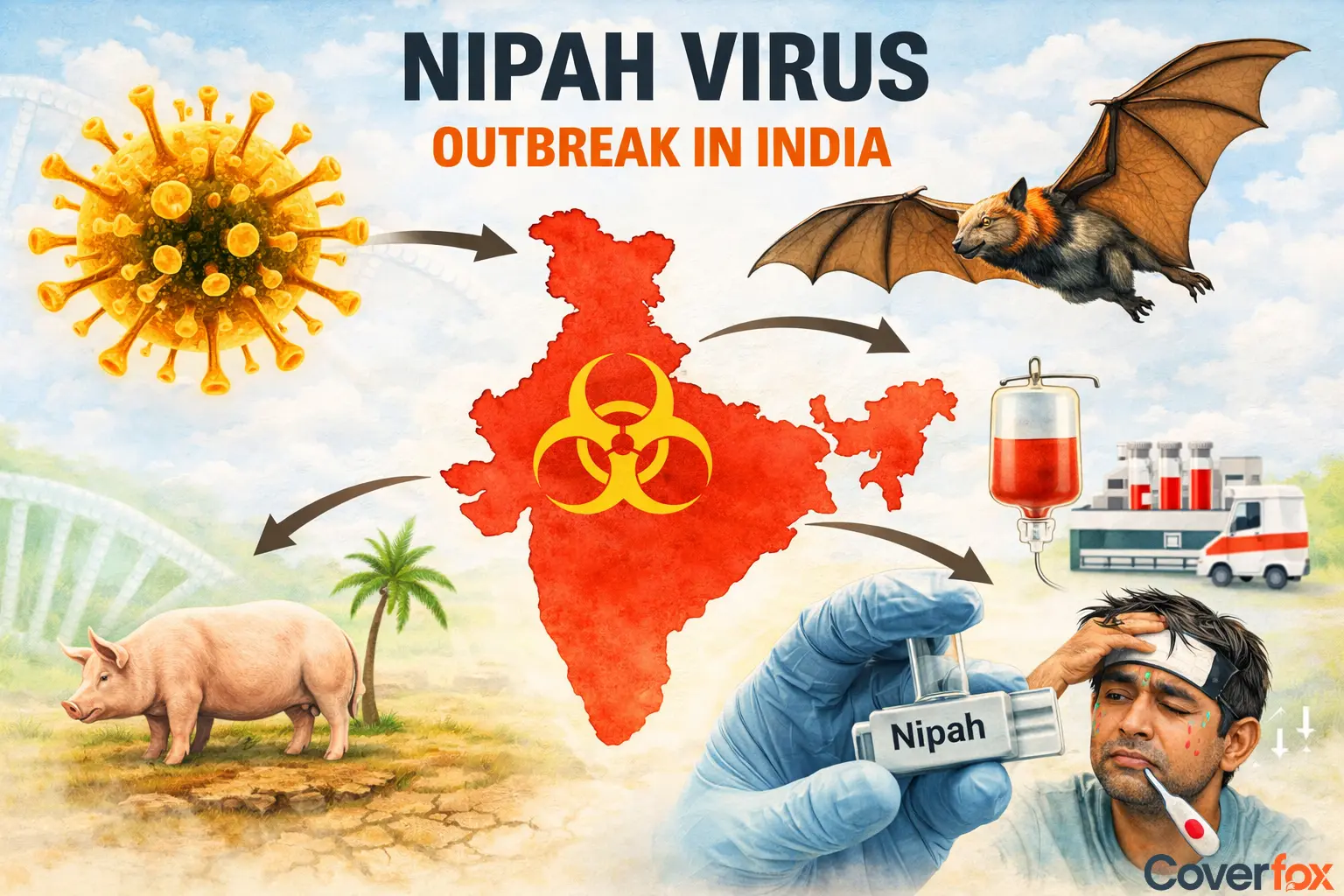
A new virus, called the Nipah Virus, has set the country on alert. India has reported fresh Nipah virus cases in 2026, with two confirmed infections detected in the eastern state of West Bengal this month, both involving healthcare workers in Barasat. Health authorities have issued a high alert and intensified surveillance and containment measures to prevent further spread of the deadly infection. (Source - WHO)
What Happened in the Latest Nipah Outbreak in India?
The first case in the current 2026 outbreak was detected in late December 2025 at a private hospital in Barasat, West Bengal, when a patient with severe symptoms later believed to be linked to Nipah virus infection was treated and subsequently died. Two healthcare workers who had cared for this patient developed symptoms soon after.
The suspected Nipah virus cases in this outbreak were identified on 11 January 2026 when samples from the two healthcare workers were tested at the Viral Research and Diagnostic Laboratory (VRDL) at a government hospital in Kalyani and flagged as suspected NiV infections. These tests prompted further evaluation.
Confirmation of Nipah virus infection for both individuals (a 25-year-old male and a 25-year-old female nurse) came from the National Institute of Virology (Pune) on 13 January 2026, based on standard laboratory diagnostics.
Following confirmation, public health authorities immediately activated outbreak response protocols, including contact tracing and containment. A total of 196 people who had been in contact with the confirmed cases were identified, traced, monitored, and tested, and all were asymptomatic and tested negative for the Nipah virus.
As of 21 January, the male patient was reported to be recovering, whereas the female patient remained in critical condition under clinical care.
Press Release of the Ministry of Health and Family Welfare
Where Are the Nipah Cases Reported in India?
The only confirmed Nipah virus cases in India in 2026 have been reported in the state of West Bengal in eastern India. According to official health ministry data, both confirmed cases were detected in healthcare workers linked to a hospital in the Barasat area of North 24 Parganas district, near Kolkata.
Link Between Cases
The two cases are epidemiologically linked — both involve healthcare workers who were exposed while caring for the same initial patient in the same facility. Contact tracing and testing identified no new, unrelated cases beyond these two.
Local Cluster, Not Widespread
Health authorities describe this situation as a localised cluster of cases, not a widespread outbreak across multiple regions. No other districts or states in India have confirmed additional Nipah cases beyond this cluster in West Bengal.
Nipah Virus: What It Is, Causes, Symptoms, and Transmission
Nipah virus (NiV) is a zoonotic virus, meaning it can spread from animals to humans and also between humans in some cases. It belongs to the Henipavirus genus and was first identified in Malaysia and Singapore in 1999.
What causes Nipah virus infection?
The virus is primarily carried by fruit bats (also called flying foxes). Humans can get infected through:
Direct contact with infected animals or their bodily fluids.
Eating food contaminated by bat secretions (such as fruit or date palm sap).
Close contact with an infected person’s body fluids during caregiving.
Common Symptoms of Nipah Virus
Symptoms usually appear 4–14 days after exposure and can range from mild to severe:
Fever, headache, muscle pain, sore throat, and vomiting.
Respiratory symptoms like cough and difficulty breathing.
Neurological signs such as dizziness, altered consciousness, encephalitis (brain inflammation), seizures, and coma.
In severe cases, infection can be fatal.
Transmission: How does the Nipah virus spread?
Animal-to-human most commonly from fruit bats to humans through contaminated food or close contact with infected animals.
Human-to-human can occur, particularly through direct contact with the body fluids of an infected person (e.g., caregivers, healthcare settings).
There is no widely available vaccine or specific antiviral treatment; care is mainly supportive.
Government & Public Health Response to the Nipah Virus Outbreak
Here’s how the state and central governments responded to the 2026 Nipah virus cases in India with specific public health actions:
Immediate isolation & treatment
Contact tracing
Enhanced surveillance & testing
Deployment of expert teams
Public advisories
Confirmed and suspected cases were isolated in designated hospitals with strict infection-control protocols and PPE use.
Authorities traced, monitored, and tested 196 contacts linked to the cases; all tested negative and remained asymptomatic.
Active surveillance and expanded testing were implemented in affected areas to quickly detect any new cases.
The Centre deployed a National Joint Outbreak Response Team to support the state with investigation and containment measures.
Health departments issued advisories on symptom awareness, early reporting, and avoiding misinformation, while assuring close monitoring.
Travel Advisory and Public Restrictions
No need to panic
Follow official information only
No travel bans or public restrictions
Health authorities have clarified that the situation is under control and there is no cause for public alarm at this stage.
People are advised to rely only on updates from government and public health authorities and avoid sharing unverified or misleading information.
There are no travel advisories, lockdowns, or movement restrictions currently in place, and routine activities can continue as normal.
Past Nipah Outbreaks in India
2001: Siliguri, West Bengal
2007: Nadia district, West Bengal
2018: Kozhikode and Malappuram, Kerala
2021: Kozhikode district, Kerala
2023: Kozhikode district, Kerala
2024–2025: Kerala
India’s first Nipah outbreak occurred in Siliguri and nearby areas, reporting around 66 cases and about 45 deaths, with significant hospital-based human-to-human transmission.
A smaller outbreak with five confirmed cases, again indicating person-to-person transmission in close-contact settings.
A major outbreak with 23 cases and 17 deaths, linked to fruit bats as the natural reservoir, was contained through aggressive public health measures.
A single confirmed Nipah case with a fatal outcome was rapidly contained without further spread.
A localised outbreak with multiple infections, controlled through surveillance, isolation, and contact tracing.
Sporadic Nipah cases have been reported in different years, including isolated fatalities, with no sustained community transmission.
How to Protect Yourself From Nipah Virus?
Simple precautions and early awareness can significantly reduce the risk of Nipah virus infection.
Avoid consuming raw date palm sap or fruits that may be contaminated by bats
Do not touch bats or sick animals and avoid areas where bats are known to roost
Maintain hand hygiene by washing hands regularly with soap and water
Avoid close contact with people showing symptoms such as fever or altered consciousness
Follow infection-control practices in healthcare settings, including mask use and PPE
Seek immediate medical care if symptoms appear and follow official health advisories only
Official Statements & Expert Opinions on the Nipah Virus Outbreak
Ministry of Health & Family Welfare / Govt of India
State health officials (West Bengal)
World Health Organisation (WHO)
The outbreak response is being conducted in close coordination with the West Bengal government, with enhanced surveillance, laboratory testing, and field investigations. Officials stress the situation is contained with no additional cases detected so far. (PIB)
Health authorities have reiterated public health containment measures, ongoing contact tracing outcomes, and that all traced contacts remain negative, underscoring that there is currently no broader spread.
WHO has stated that although the Nipah virus is serious, the risk of spread beyond India is low, there is no evidence of increased human-to-human transmission, and travel or trade restrictions are not necessary at this time.
Conclusion
The current Nipah virus situation in India remains limited and closely monitored, with cases limited to a small, linked cluster and no evidence of wider community spread. Swift action by state and central health authorities has helped contain the risk effectively. Public cooperation remains crucial: staying informed through official sources only, following health advisories, and avoiding panic will ensure that containment efforts continue to protect public health.
Disclaimer: This information is intended for general awareness and educational purposes only. It does not replace professional medical advice, diagnosis, or treatment. For the latest updates and guidance, always refer to official sources such as the Ministry of Health and Family Welfare, state health departments, and the World Health Organisation (WHO). If you experience symptoms or have health concerns, seek medical attention promptly.
FAQs on Nipah Virus Breakout in India
Is the Nipah virus contagious between humans?
Yes, the Nipah virus can spread from person to person through close contact, especially via bodily fluids such as respiratory secretions, blood, or urine, mainly in household or healthcare settings.
Is there a vaccine for the Nipah virus?
No, there is no approved vaccine for the Nipah virus yet. Treatment is largely supportive, focusing on managing symptoms and complications.
What is the fatality rate of Nipah?
Nipah virus has a high case fatality rate, historically ranging between 40 per cent and 75 per cent, depending on the outbreak and quality of medical care. (WHO details on Nipah Virus)
Can Nipah be cured?
There is no specific cure for Nipah virus infection. Early diagnosis, intensive supportive care, and strict infection-control measures improve survival chances.
How is Nipah diagnosed?
Nipah is diagnosed through laboratory tests such as RT-PCR, ELISA, or virus isolation, usually conducted in specialised laboratories like VRDLs and NIV Pune.
Should people avoid travelling to the Nipah virus-affected areas?
No travel restrictions have been advised. Authorities have stated there is no need to avoid travel, but travellers should follow health advisories and precautions.
How long does the Nipah virus survive outside the body?
The virus does not survive long outside the body, but it can persist for a short time in bodily fluids or contaminated food under favourable conditions.
Will Nipah become a pandemic?
Health authorities, including WHO, state that the risk of a Nipah pandemic is low, as the virus does not spread easily and outbreaks are usually localised.
How many days of quarantine are required for Nipah virus?
Contacts are generally monitored or quarantined for 14–21 days, which corresponds to the known incubation period of the virus.
Will Nipah spread through the air?
No, Nipah virus is not airborne. It spreads through direct contact with infected animals or people and their bodily fluids.
Which fruits should be avoided during a Nipah outbreak?
Avoid partially eaten fruits, fruits found on the ground, and any fruit that may be contaminated by bats, unless properly washed and peeled.
How many days does the Nipah virus last?
Symptoms usually appear 4–14 days after exposure, but the illness can last weeks, especially in severe cases involving brain inflammation.

