
India’s MSME sector continues to play a major role in driving the country’s economic growth through employment generation, manufacturing, exports, and entrepreneurship. With increasing formalisation, digital adoption, and government support, MSMEs are helping strengthen local economies across both rural and urban India while creating opportunities for millions of small businesses and first-time entrepreneurs.
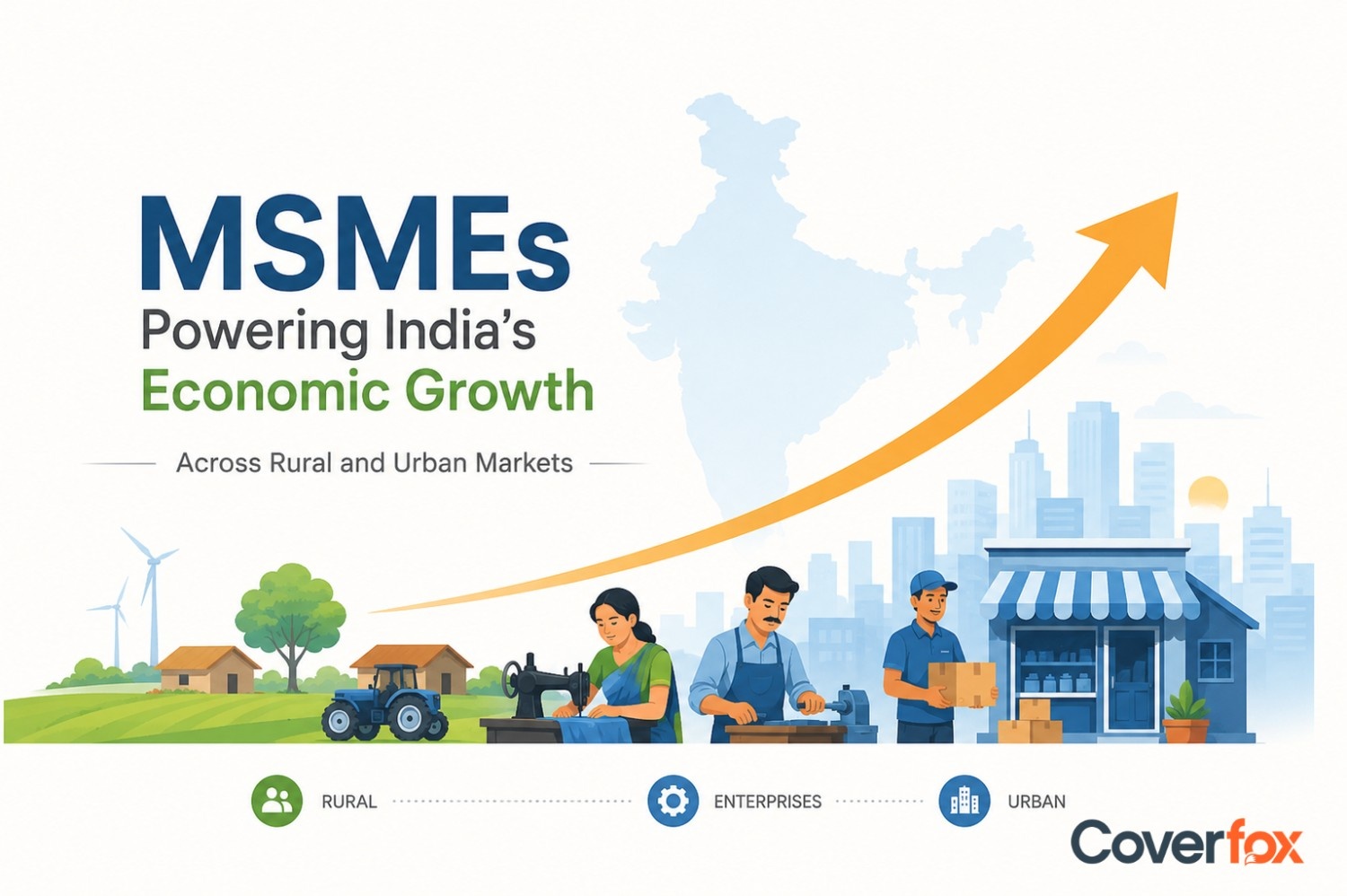
India’s Micro, Small and Medium Enterprises (MSMEs) sector is demonstrating a significant advantage in strengthening India’s economy through employment generation, manufacturing output, exports, and rural development. With millions of enterprises operating across manufacturing, trade and services, MSMEs are emerging as one of the strongest contributors to India’s grassroots economic growth.
MSMEs Contribution to India’s Economy
According to government data, MSMEs contribute:
31.1% to India’s GDP
48.58% to India’s total exports
35.4% of the country’s manufacturing output
The sector currently comprises more than 7.47 crore enterprises across manufacturing, services and trade activities.
MSMEs Supporting Employment Generation
MSMEs currently provide livelihoods to nearly 32.8 crore people across India, making the sector the second-largest source of employment after agriculture.
A large share of these businesses operates in:
Rural regions
Semi-urban markets
Local manufacturing clusters
Traditional trade ecosystems
These enterprises help create:
Non-farm employment
Self-employment opportunities
Local business ecosystems
Decentralised industrial growth
Rapid Formalisation of MSMEs
One of the biggest developments in the sector has been the rapid formalisation of informal businesses through digital registration platforms.
As of March 2026:
More than 7.9 crore MSMEs and informal micro enterprises have been formalised
4.72 crore enterprises registered through the Udyam Portal
3.21 crore enterprises registered through the Udyam Assist Platform (UAP)
This formalisation drive is helping small businesses gain access to:
Institutional credit
Government schemes
Priority Sector Lending benefits
Digital Platforms Improving MSME Growth
Digitalisation is becoming a major growth driver for MSMEs across India.
Government-backed digital platforms supporting MSMEs include:
Udyam Portal
Government e-Marketplace (GeM)
Trade Receivables Discounting System (TReDS)
MSME Champions Portal
MSME SAMBANDH
PMEGP Portal
PM Vishwakarma Portal
Online Dispute Resolution Portal
These platforms are helping MSMEs:
Access government procurement opportunities
Improve payment cycles
Expand customer reach
Simplify compliance processes
Resolve disputes digitally
PMEGP Boosting Entrepreneurship and Jobs
The Prime Minister’s Employment Generation Programme (PMEGP) continues to support new micro enterprises across India.
Between FY 2021–22 and FY 2025–26:
More than 5.8 lakh projects were supported
Bank loans worth over ₹60,000 crore were sanctioned
Margin money subsidies exceeding ₹13,450 crore were disbursed
More than 4 lakh units received support
Nearly 36.3 lakh employment opportunities were generated
The scheme focuses on generating self-employment opportunities in non-farm sectors through credit-linked subsidies.
PM Vishwakarma Supporting Traditional Artisans
The PM Vishwakarma Scheme is helping traditional artisans and craftspeople strengthen their businesses through skill development and financial assistance.
As of March 2026:
More than 30 lakh artisans are registered under the scheme
Over 26.7 lakh beneficiaries completed skill verification
More than 23.7 lakh beneficiaries underwent basic training
Nearly 5.9 lakh loans worth around ₹5,050 crore were approved
More than 25.8 lakh e-vouchers were issued for toolkit support
The scheme supports 18 traditional trades and provides collateral-free enterprise development loans.
MSMEs Emerging as a Pillar of India’s Growth
With rising formalisation, better digital access, stronger policy support, and growing participation in manufacturing and exports, MSMEs are playing a bigger role in India’s economic development than ever before.
From small towns and villages to urban industrial clusters, these enterprises are supporting livelihoods, encouraging entrepreneurship, and helping build a more inclusive economy. As India continues to expand its manufacturing and domestic business ecosystem, MSMEs are expected to remain at the centre of the country’s long-term growth journey.
Source - PIB
Frequently Asked Questions
Why are MSMEs important for rural development in India?
MSMEs help create local employment opportunities in rural and semi-urban regions, reducing migration to larger cities. They also support local supply chains, traditional industries, and small business ecosystems.
How do MSMEs help first-time entrepreneurs?
MSMEs provide low-investment business opportunities for individuals looking to start small enterprises. Government schemes, subsidies, and easier digital registrations have also made it simpler for new entrepreneurs to enter the market.
What role does digitalisation play in MSME growth?
Digital platforms help MSMEs improve business operations, access financing, reach new customers, participate in government procurement, and manage compliance processes more efficiently.
Why is formal registration important for MSMEs?
Formal registration helps MSMEs access institutional loans, government incentives, subsidies, and legal business recognition. It also improves credibility with banks, partners, and customers.
How are MSMEs supporting local manufacturing in India?
Many MSMEs operate in small manufacturing clusters and contribute significantly to India’s production ecosystem by supplying components, finished goods, and services to larger industries and local markets.
What challenges do small businesses still face despite growth?
Many MSMEs continue to face issues such as delayed payments, limited access to affordable credit, rising operational costs, and a lack of infrastructure in smaller regions.
How do MSMEs contribute to women's entrepreneurship?
A growing number of women-led businesses operate within the MSME sector, especially in food processing, handicrafts, retail, and services. Government schemes and digital access are helping more women entrepreneurs formalise and expand their businesses.
What is the future outlook for India’s MSME sector?
With increasing digital adoption, policy support, improved access to credit, and growing participation in exports and manufacturing, MSMEs are expected to play an even bigger role in India’s long-term economic growth.

