
This transition is being powered by digital infrastructure, improved financial visibility, and evolving credit behaviour, and women are now being seen as a critical pillar of India’s economic growth.
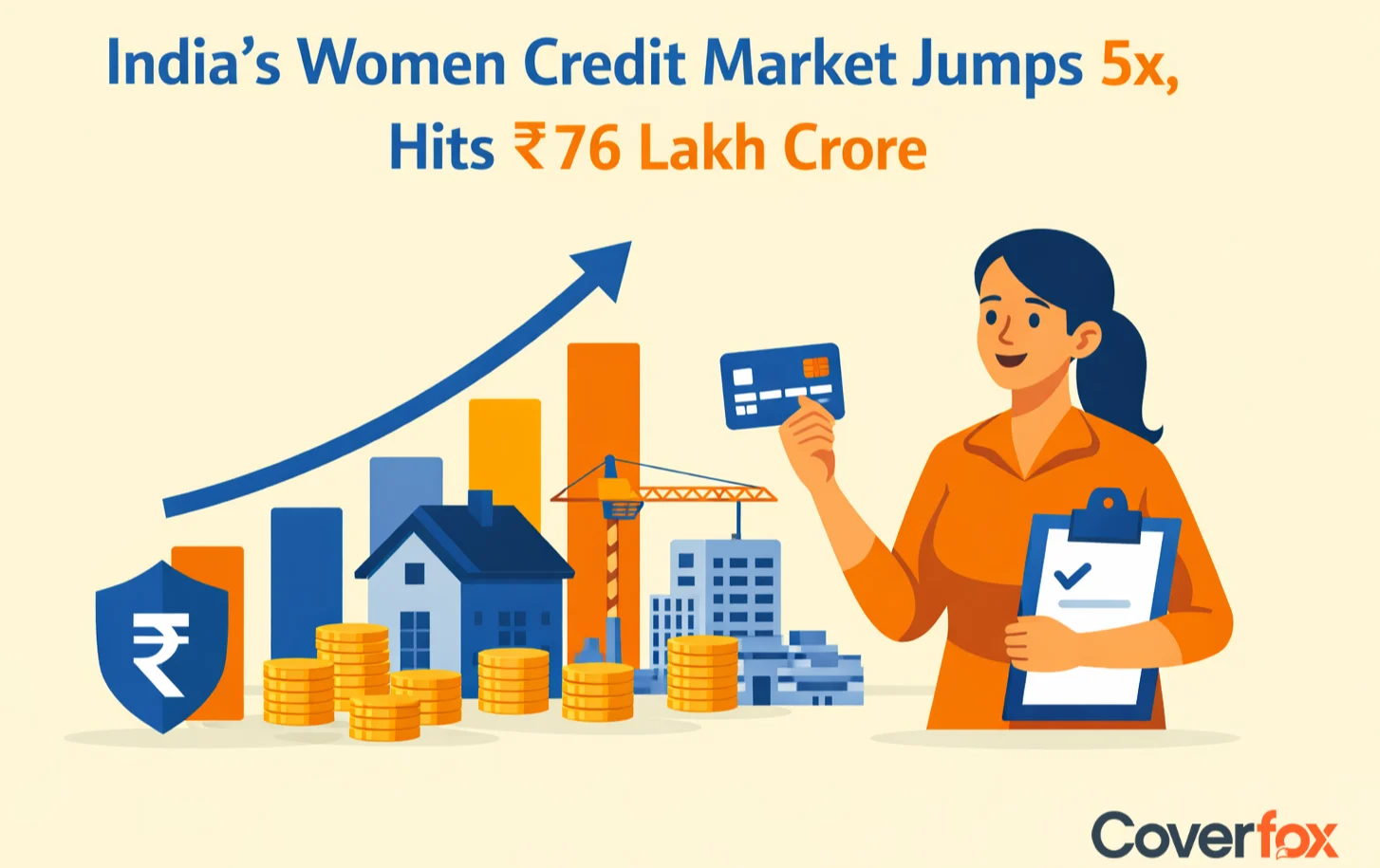
Women’s Credit Growth: 5x Rise Since 2017
Women borrowers in India now hold a credit portfolio of ₹76 lakh crore, accounting for 26% of the total system credit, marking a 5x increase since 2017.
This growth is not just about scale but also consistency:
Microfinance borrowers
Retail borrowers
Business borrowers
A key insight is that 19% of microfinance borrowers have already “graduated” into retail or business loans, indicating upward mobility within the credit ecosystem
The Shift from Consumption to Business Credit
While retail loans still dominate (around 71% of total credit value), the fastest growth has been seen in business lending:
Business-purpose loans have grown 7.5x since 2017
Their share has increased from 16% to 25% of total women’s credit
Women entrepreneurs with active business loans have grown at a 31% CAGR in the last 3 years
This shift highlights that women are increasingly using credit not just for consumption but for income generation, working capital, and enterprise expansion.
Role of Digital Infrastructure in Credit Expansion
India’s Digital Public Infrastructure (DPI) has significantly reduced entry barriers for women borrowers:
Same-day loan approvals for consumption loans increased from 34% in 2022 to 45% in 2025
Digital tools like UPI, Aadhaar e-KYC, and DigiLocker have simplified onboarding
UPI transactions have grown exponentially, creating verifiable financial trails
These digital methods enable flow-based underwriting, where lenders assess creditworthiness based on real transaction data rather than traditional collateral.
Women as High-Quality and Reliable Borrowers
A critical insight from the report is that women borrowers are more disciplined and reliable:
Women show 0.7x default rates compared to the overall market
Stronger repayment behaviour improves lender confidence
Higher sanctioned loan sizes indicate growing creditworthiness
Regional and Demographic Trends
The growth of women’s credit is both geographically and demographically diverse:
South and West India remain strong anchors for credit volume
Northern states like Bihar (59% CAGR) and Uttar Pradesh (42% CAGR) are emerging high-growth markets
Younger women (≤35 years) are increasingly participating across consumption, gold, and vehicle loans
Additionally:
51% of women borrowers in consumption credit are from urban areas
Rural women dominate microfinance and early-stage borrowing
This reflects a multi-speed growth pattern across India.
Rise of Women Entrepreneurs and Enterprise Credit
Women entrepreneurs are at the centre of this transformation:
Around 1.6 crore women now have active business loans (2025)
Increasing adoption of structured credit products
Gradual shift toward cash credit and overdraft facilities
However, only ~4.3% of women-owned businesses use advanced credit products, compared to ~40% overall
Key Challenges in Women’s Credit Access
Despite strong growth, structural and behavioural barriers remain:
Time poverty due to unpaid household responsibilities
Limited decision-making power in financial matters
Dependence on shared devices and assisted digital usage
Declining share of new-to-credit borrowers in microfinance
For rural women nano-entrepreneurs:
60 to 70% use digital payments, but usage is often limited to basic transactions
Trust and peer validation play a major role in adoption
What Needs to Improve in the Credit Infrastructure Going Forward
The report outlines a clear roadmap:
Use digital transaction data for flow-based lending models
Expand credit literacy and awareness programmes
Design gender-intelligent financial products
Leverage SHGs and collectives to build trust and adoption
Focus on progression metrics (multi-product usage, enterprise growth) instead of just access
Conclusion
Women are emerging as a core driver of India’s credit growth, with their rising participation strengthening both household stability and enterprise resilience. The sharp 5x growth to ₹76 lakh crore reflects a clear shift towards business-led borrowing and deeper financial integration. Backed by digital infrastructure, this transformation represents women-led entrepreneurship in India.
Source: The Niti Aayog Report
Frequently Asked Questions
Q. What is the total credit held by women in India?
Women hold a credit portfolio of ₹76 lakh crore as of 2025, accounting for 26% of total system credit.
Q. How fast is women’s credit growing in India?
Women’s credit has grown 5 times since 2017, with a steady increase in borrower participation and credit penetration.
Q. What types of loans do women primarily take?
Women borrow across microfinance, retail loans (gold, housing, consumption), and business loans, with increasing focus on enterprise credit.
Q. Are women reliable borrowers?
Yes, women have lower default rates (0.7x of the market average) and demonstrate strong repayment behaviour.
Q. What challenges do women face in accessing credit?
Key challenges include limited financial autonomy, time poverty, digital access gaps, and low adoption of advanced credit products.

