
Prime Minister Narendra Modi’s recent appeal asking Indians to reduce fuel consumption and avoid non-essential gold purchases has triggered fresh discussions around fuel prices, inflation, and the broader economic impact of rising global crude oil prices.
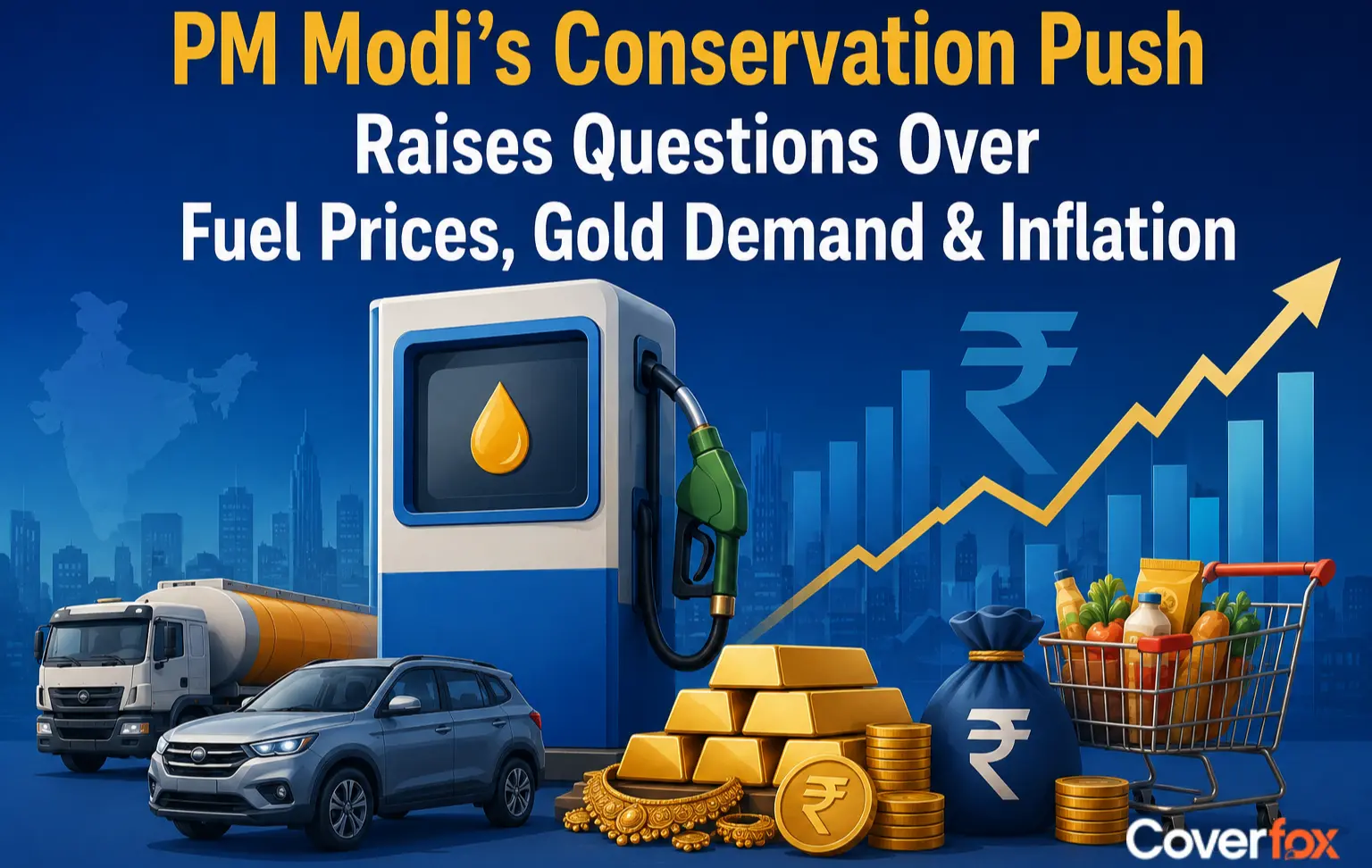
During a public address in Hyderabad, the Prime Minister encouraged citizens to adopt fuel-saving habits such as carpooling, using metro services, and working from home wherever possible. He also advised people to avoid unnecessary foreign travel and postpone non-essential gold purchases, especially for weddings, for at least a year.
While the government has not announced any immediate restrictions or policy changes, analysts tracking the economy believe the remarks reflect growing caution around rising import costs and pressure on India’s foreign exchange reserves.
Why Are Fuel Prices Becoming a Major Discussion Point?
Global crude oil prices have witnessed volatility in recent weeks following tensions in West Asia and disruptions around the Strait of Hormuz, one of the world’s key oil trade routes. India remains highly dependent on imported crude oil, making the economy sensitive to global energy price movements.
According to recent reports, India spent nearly $174.9 billion on crude oil and petroleum imports during FY2026.
Oil Companies Continue Absorbing Pressure
Industry observers say sustained high crude oil prices could eventually influence petrol and diesel prices if global energy markets remain volatile for a prolonged period.
Reports suggest oil marketing companies such as Indian Oil Corporation, Bharat Petroleum, and Hindustan Petroleum are currently absorbing a significant portion of rising crude oil costs instead of fully passing them on to consumers.
Some market analysts believe the government may continue using temporary relief measures to avoid sudden fuel price shocks. Others believe gradual pricing adjustments may be considered if crude oil prices remain elevated over the coming weeks.
Gold Market Watching Government Signals Closely
Gold markets are also drawing attention after Modi urged citizens to avoid non-essential gold purchases for some time, particularly wedding-related buying.
India remains one of the world’s largest consumers of gold, importing nearly $72 billion worth of bullion during FY2026, according to reports.
Why Do Gold Imports Matter?
Financial experts say high gold imports can increase pressure on India’s foreign exchange reserves during periods of economic uncertainty.
Although no restrictions have been proposed officially, some policy observers believe the government is encouraging more cautious discretionary spending to help manage import-related pressure.
Jewellery retailers and bullion traders are expected to closely track consumer demand, especially ahead of the festive and wedding season later this year.
Could Gold Demand Slow Temporarily?
Some analysts believe gold purchases could moderate temporarily if consumers become more cautious about spending amid uncertain global conditions.
However, others point out that gold has traditionally remained a preferred investment during periods of market volatility, meaning long-term demand may remain stable despite short-term caution.
Imported Inflation Risks Remain Under Watch
Economists say prolonged high fuel prices could gradually affect transportation and logistics costs across sectors such as aviation, manufacturing, retail, and food distribution.
India’s foreign exchange reserves reportedly declined from $728.49 billion in February to around $690.7 billion by May 1, while the rupee has also faced pressure in recent weeks.
How Currency Pressure Affects Imports?
A weaker rupee can increase the cost of importing crude oil, gold, electronics, and several industrial raw materials. Analysts say this may gradually influence overall inflation if global commodity prices remain elevated for an extended period.
At the same time, experts note that India continues to maintain adequate energy reserves, and no immediate supply concerns have been officially indicated.
RBI and Government Response in Focus
Attention is now turning toward how the Reserve Bank of India and the Centre respond if global energy market volatility continues.
Reports suggest the RBI has intervened in currency markets in recent days to support rupee stability.
Meanwhile, the government has previously reduced excise duties on fuel to cushion consumers from global price increases.
Economists believe policymakers are currently focused on balancing inflation management, economic growth, and currency stability without creating panic in consumer markets.
Preventive Economic Message Rather Than Immediate Restrictions
Policy observers believe Modi’s speech appears to be more of a preventive economic message than a signal of immediate restrictions.
Instead of announcing strict measures, the government seems focused on encouraging voluntary conservation, responsible spending, and reduced dependence on imports during a period of global uncertainty.
Experts say this approach may help create awareness around fuel conservation and economic stability while avoiding unnecessary panic among consumers and investors.
Note: This content is compiled and adapted from reports published by the Indian online NEWS platforms. The information is intended for news analysis and informational purposes only.
Frequently Asked Questions
Will petrol and diesel prices increase soon?
No official price increase has been announced. However, analysts believe fuel prices may remain sensitive to global crude oil movements.
Why did PM Modi ask people to avoid buying gold?
Experts say high gold imports contribute significantly to India’s import bill and foreign exchange outflow.
Why is the rupee under pressure?
Rising oil prices, global uncertainty, and increased demand for dollars have contributed to currency volatility.
Could inflation rise if fuel prices remain high?
Higher transportation and logistics costs can gradually affect prices across multiple sectors of the economy.
Is the government planning restrictions on gold purchases?
No official restrictions have been announced. Current messaging is focused on voluntary conservation and economic awareness.

