
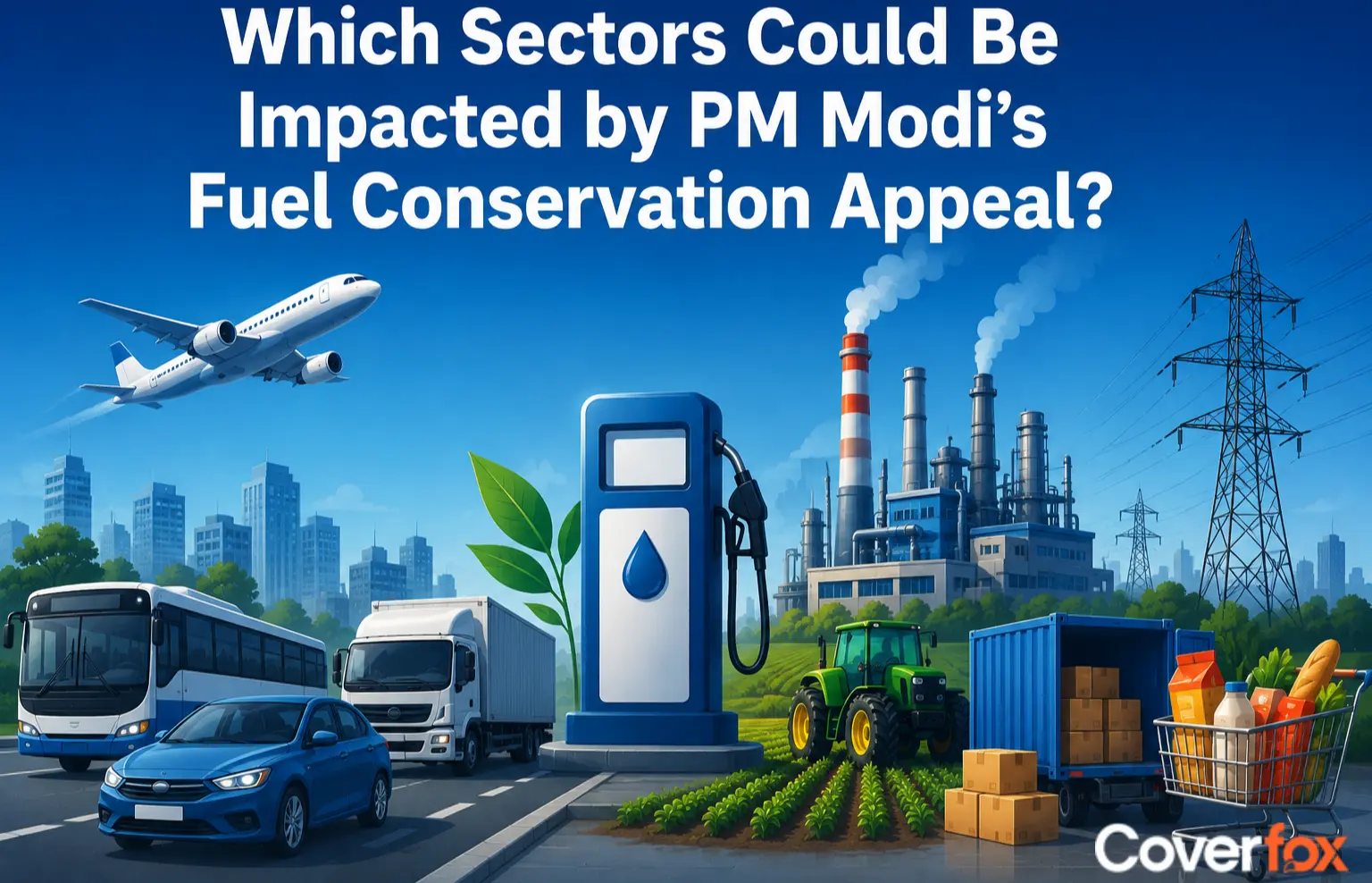
Prime Minister Narendra Modi’s appeal asking Indians to reduce fuel consumption, avoid unnecessary foreign travel, delay gold purchases for weddings, and adopt fuel-saving habits has triggered discussions around which sectors of the economy could see changes if global crude oil volatility continues.
The Prime Minister made the remarks during a public gathering in Hyderabad, where he encouraged citizens to use public transport, consider work-from-home arrangements where possible, and reduce dependence on imported goods.
While the government has not announced any restrictions or austerity measures, market observers believe the messaging reflects a broader push toward voluntary conservation and responsible consumption during a period of global economic uncertainty.
1. Aviation, Tourism and Outbound Travel Could See Changes
Among the sectors drawing the most attention is aviation and outbound tourism.
Rising Fuel Costs Could Influence Airlines
The aviation sector remains sensitive to crude oil price movements because aviation turbine fuel forms a significant share of airline operating costs.
Industry analysts say rising crude oil prices and currency fluctuations could increase expenses for airlines, especially those with dollar-linked costs such as aircraft leasing and maintenance.
Key Areas Being Watched
International airfare trends
Airline operating costs
Overseas leisure travel demand
Corporate travel patterns
Some analysts believe higher international travel expenses may gradually impact outbound tourism if fuel prices remain elevated.
Domestic Tourism Could Benefit
At the same time, domestic tourism could benefit if travellers increasingly prefer local destinations over overseas vacations.
Potential beneficiaries may include:
Domestic airlines
Hotel chains
Regional tourism operators
Online travel platforms
2. Oil Marketing, Transport and Logistics Remain in Focus
India imports a large portion of its crude oil requirements, making transport and logistics sectors sensitive to global energy price movements. During his speech, PM Modi encouraged Metro usage, carpooling, rail transport, and electric vehicle adoption.
Transport Costs Could Influence Multiple Sectors
Reports suggest oil marketing companies are currently absorbing a significant share of higher crude oil costs instead of fully passing them on to consumers.
Sectors Being Closely Watched
Trucking and freight movement
Ride-sharing services
Shipping and logistics
E-commerce delivery
FMCG distribution
Analysts say transportation costs could gradually influence retail pricing, manufacturing expenses, and food distribution.
3. Fertilisers, Agriculture and Rural Economy Could Remain Sensitive
Another important focus area in Modi’s speech was agriculture and fertiliser dependency.
The Prime Minister encouraged farmers to reduce chemical fertiliser usage and adopt practices such as solar-powered irrigation systems.
Rural Segments Being Closely Watched
Tractor and farm equipment sales
Rural FMCG demand
Fertiliser subsidy spending
Agri-input businesses
India imports large quantities of fertiliser-related raw materials, making the sector sensitive to global commodity price movements.
Some analysts believe higher fertiliser-related costs could gradually influence cultivation expenses and rural spending patterns.
4. Gold, Luxury Consumption and Imported Goods Could Witness Slower Demand
One of the most discussed parts of Modi’s speech was his appeal asking citizens to delay gold purchases for weddings for at least one year.
India remains one of the world’s largest gold importers, with bullion imports contributing significantly to the country’s import bill.
Segments That Could Be Affected
Jewellery retailers
Luxury fashion brands
Premium electronics
Imported appliances
High-end automobiles
Jewellery stocks reportedly witnessed volatility following the Prime Minister’s remarks, while analysts continue monitoring consumer sentiment across the sector.
Experts also believe currency fluctuations may increase the landed cost of imported products across premium consumer categories.
5. Manufacturing and MSMEs Could Monitor Cost Trends Closely
Manufacturing businesses, especially MSMEs, are also being closely watched as industries assess the impact of higher fuel and logistics costs.
Industries Being Closely Watched
Chemicals
Plastics
Packaging
Textiles
Engineering goods
Auto components
Analysts say rising freight rates, import expenses, and raw material costs could influence manufacturing and export-related sectors if global energy volatility continues.
6. Public Transport, EVs and Renewable Energy Could Benefit
While several sectors may remain cautious, others could benefit from gradual changes in consumer behaviour.
Experts believe public transport systems, metro rail services, electric vehicles, and renewable energy companies could see stronger interest if fuel conservation becomes a larger national priority.
Sectors That Could Benefit
Electric vehicle manufacturers
Metro rail systems
Public transport networks
Solar equipment manufacturers
Renewable energy companies
Urban commuters facing higher fuel expenses may increasingly consider electric vehicles and public transport alternatives.
7. Work-From-Home Could Return to Corporate Discussions
PM Modi’s speech has also revived discussions around remote work and hybrid office models.
Corporate analysts believe some companies may revisit flexible work arrangements if fuel costs remain elevated in major metropolitan cities.
Corporate Areas Being Closely Watched
Video conferencing platforms
Collaboration software providers
Hybrid workplace solutions
IT infrastructure services
8. Consumer Spending Trends Could Become a Key Factor
Economists say the long-term impact of Prime Minister Modi’s remarks may depend less on direct policy measures and more on whether consumer behaviour changes meaningfully.
The government currently appears focused on:
Voluntary conservation
Responsible spending
Fuel-saving practices
Reduced dependence on imports
Whether households gradually reduce fuel usage, delay discretionary imports, or shift spending priorities may ultimately shape how sectors perform during the ongoing global economic uncertainty.
Note: This content is compiled and adapted from reports published by the Indian online NEWS platforms. The information is intended for news analysis and informational purposes only.
Frequently Asked Questions
Which sectors could see the biggest impact from PM Modi’s remarks?
Aviation, logistics, jewellery, manufacturing, fertilisers, and outbound tourism are among the sectors being closely watched.
Which sectors could benefit from PM Modi’s conservation appeal?
Public transport, electric vehicles, domestic tourism, renewable energy, and remote work technology sectors could potentially benefit.
Could fuel prices affect airlines?
Yes. Aviation turbine fuel forms a significant portion of airline operating costs, making airlines sensitive to crude oil prices.
Why are jewellery companies being closely watched?
Market observers believe demand trends may be monitored closely after Modi urged citizens to delay gold purchases for weddings.
Is the government planning restrictions on travel or gold purchases?
No official restrictions have been announced so far. Current messaging is focused on voluntary conservation and economic awareness.

