


The Royal Enfield Himalayan 450 is a modern adventure-tourer designed for riders who love exploring both highways and rugged terrains. Built for endurance and performance, it balances power with practicality — making mileage a key factor for touring and daily commutes alike. The Himalayan 450 mileage ranges between 25–30 km/l, offering a decent balance between adventure performance and fuel efficiency on long routes.
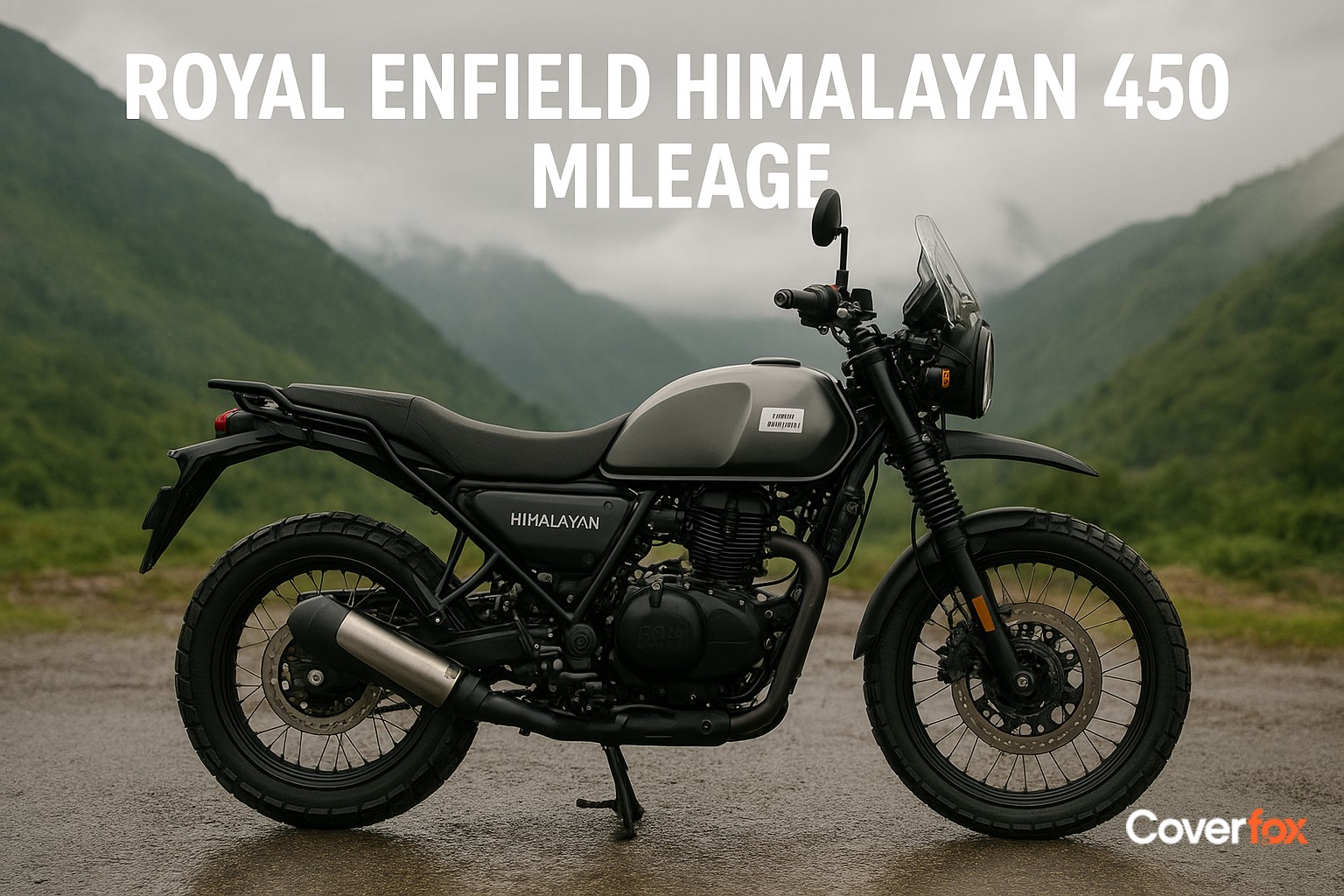
The Royal Enfield Himalayan 450 is built on a new twin-spar steel frame and powered by a 452cc liquid-cooled engine producing around 40PS and 40Nm. Designed for true off-road performance, it features 43mm USD forks, a 21-inch front wheel, and long-travel suspension. Modern touches like ride-by-wire throttle, a TFT display with navigation, and multiple ride modes make it a versatile and tech-forward adventure machine. The mileage of the Himalayan 450 is also suitable for its purpose – adventure touring and commuting.
The Himalayan 450 comes under 3 variants and has a similar mileage per litre across them. They are:
| Variant of Himalayan 450 | ARAI-Claimed Mileage of Himalayan 450 | User-Reported Mileage of Himalayan 450 |
|---|---|---|
| Himalayan 450 Base | ~ 30 km/l | ~ 25-28 km/l |
| Himalayan 450 Pass | ~ 30 km/l | ~ 27-30 km/l |
| Himalayan 450 Summit | ~ 30 km/l | ~ 28-30 km/l |
Disclaimer: ARAI number applies across all variants and user-reported mileage of Himalayan 450 is based on real‐world reports; mileage varies with riding style, terrain and load.
Elevation, heavy load, and a mix of city, highway or off-road riding all change fuel consumption — so expect Himalayan 450 mileage figures to vary from ride to ride. These external factors (altitude, luggage/pillion weight, and terrain mix) should be noted before you measure the Himalayan 450 mileage using these methods.
Knowing the monthly fuel cost for your Himalayan 450 helps you plan your budget, especially for long-distance touring or daily commuting. Since Himalayan 450 mileage can vary with terrain and riding style, understanding how much fuel you consume directly impacts running costs.
Monthly Fuel Cost = (Average Monthly Distance Travelled ÷ Himalayan 450 Mileage per Litre) × Fuel Price per Litre
Example
Monthly Fuel Cost = (800 ÷ 28) × 110 ≈ ₹3,143
Maximising your Himalayan 450 mileage helps you go further on every tank, whether on long tours or daily rides.
Use the Himalayan 450’s ride-by-wire Eco mode on mixed terrain to optimise fuel delivery for mileage.
Use the 6th gear on long highway stretches to maintain low RPMs and reduce fuel consumption.
Use the average mileage display on the TFT to adjust your riding habits in real time.
Engage the clutch smoothly during off-road throttle control to avoid unnecessary fuel spikes.
Keep the 21-inch front wheel and suspension properly aligned and serviced to reduce rolling resistance.
Start longer rides after the engine reaches optimal temperature to maximise liquid-cooled engine efficiency.
For the Himalayan 450, third-party bike insurance covers damage or injury to others, while comprehensive plans also protect your bike against theft, accidents, and natural events. Its 452cc engine and premium pricing make comprehensive policies slightly costlier than smaller bikes. Himalayan 450 mileage doesn’t directly influence insurance rates, though riding habits and usage type may affect overall premiums.
The Himalayan 450 delivers around 25–30 km/l in real-world riding, depending on terrain, load, and riding style.
It depends on distance and fuel price. For example, riding 800 km/month at 28 km/l with petrol at ₹110/litre costs roughly ₹3,143.
Meteor 350 averages 30-35 km/l, while the Himalayan 450 averages 25–30 km/l due to its bigger engine and adventure-focused setup.
Yes, for touring and off-road riders, it combines modern tech, comfort, and off-road capability at a competitive price.
Maintenance for the Himalayan 450 is moderate; regular servicing and genuine parts keep it reliable, though higher than smaller commuter bikes due to engine size and adventure focus.
Himalayan 450 excels in touring/off-road performance, while Classic 350 is ideal for city cruising; the choice depends on your riding needs.
Around 140 km/hr under normal riding conditions.
Recommended every 5,000 km or 6 months, whichever comes first.
Prices vary by variant (Base, Pass, Summit), ranging approximately ₹3.1–3.5 lakh (ex-showroom).
At around 199 kg kerb weight, it’s manageable for most adventure riders but heavier than commuter bikes, especially off-road.

