
Kanya Sumangala Yojana is a flagship welfare scheme of the Uttar Pradesh government that provides financial assistance of up to ₹25,000 to girl children in phased instalments from birth to higher education. The scheme aims to promote education, prevent dropouts, and support the overall empowerment and well-being of girls across the state.
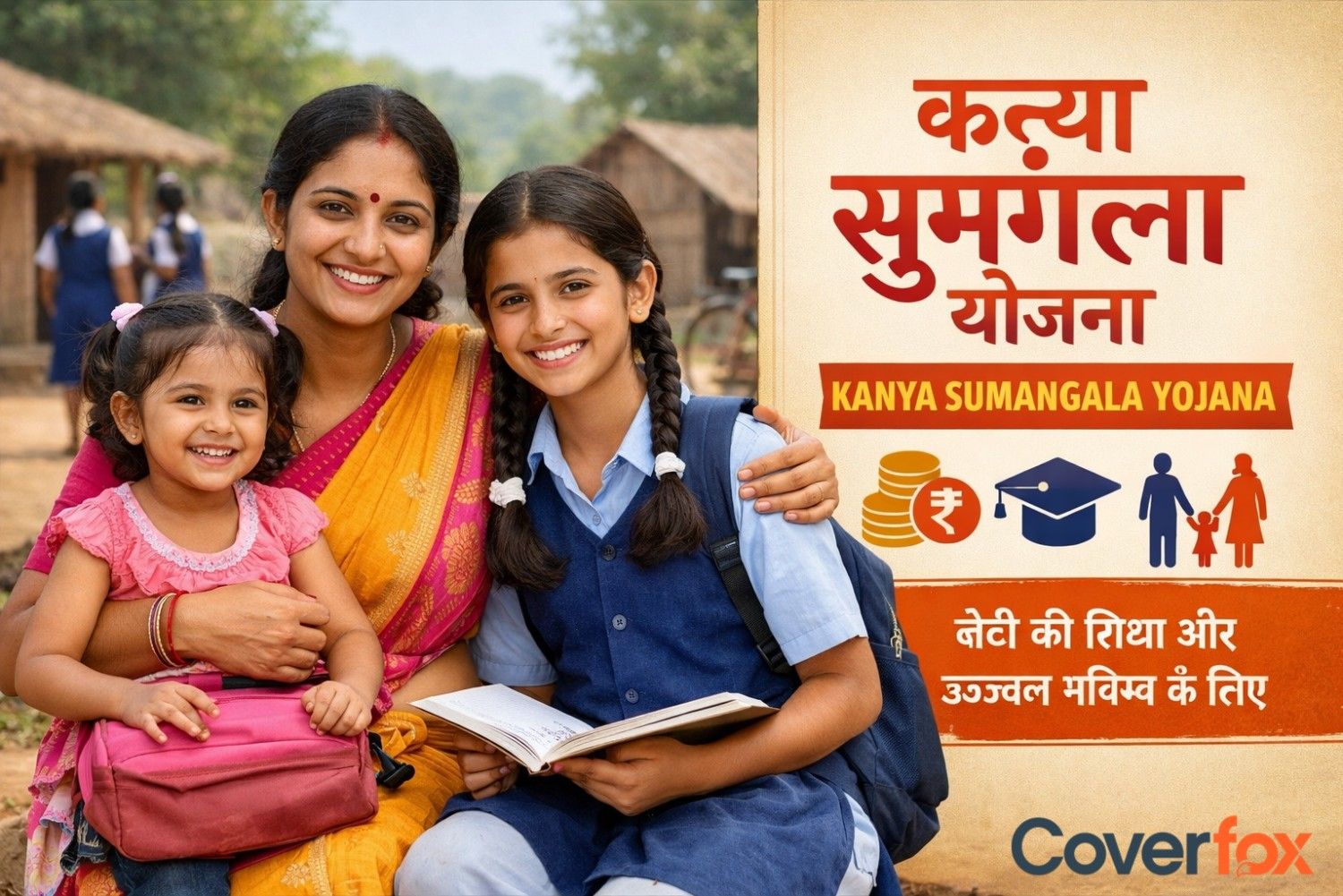
Kanya Sumangala Yojana was launched in October 2019 by the Government of Uttar Pradesh under Chief Minister Yogi Adityanath. The scheme was introduced to promote girl child education, improve the declining sex ratio, and ensure financial support for girls from birth to higher education. It aims to reduce gender-based discrimination and encourage families to invest in the future of their daughters through structured financial assistance.
In the Uttar Pradesh State Budget for 2026-27, the government has significantly increased its commitment to women’s and child welfare by proposing a higher allocation for the Women & Child Development department, which includes provisions for Mukhyamantri Kanya Sumangala Yojana. An overall ₹18,620 crore has been earmarked for women and child development schemes — marking an 11 % increase over the previous year’s allocation, underlining the state’s focus on gender-responsive welfare programmes. Within this budget, a provision of approximately ₹400 crore has been made specifically for the Mukhyamantri Kanya Sumangala Yojana to ensure continued financial support and increased coverage for girls across Uttar Pradesh.
As per recent budget statements from the Uttar Pradesh government, the scheme has already benefited around 26.81 lakh girls across the state up to early 2026, reflecting substantial outreach and impact of the programme since its implementation.
At the national level, the Union Budget 2026-27 has also raised the overall gender budget allocation for the welfare of women and girls to ₹5.01 lakh crore, up 11.55 % from the previous year.
Here are the key features and highlights of Kanya Sumangala Yojana:
| Particulars | Details |
|---|---|
| Scheme Name | Kanya Sumangala Yojana |
| Launched By | Government of Uttar Pradesh |
| Launch Year | 2019 |
| Total Financial Assistance | Up to ₹25,000 |
| Beneficiaries | Girl children of Uttar Pradesh |
| Eligibility | Girls born on or after 1 April 2019 |
| Benefit Structure | Provided in 6 instalments |
| Coverage Stage | From birth to higher education |
| Mode of Payment | Direct Benefit Transfer (DBT) |
| Number of Beneficiaries | Up to two girl children per family |
| Implementing Department | Department of Women Welfare, Uttar Pradesh |
| Objective | Promote education, empowerment & welfare of girl children |
The most critical amendment is the substantial hike in the total financial assistance. Previously set at ₹15,000, the total grant has been increased to ₹25,000 per beneficiary, effective from the current financial year.
The increased amount of ₹25,000 is disbursed in six strategic stages to ensure the girl's welfare from birth through higher education.
In 2025, the scheme will be integrated into the Zero Poverty Program to ensure that no eligible girl from an economically disadvantaged background is left behind.
Targeting: Special drives are being conducted to identify eligible girls in families identified under the poverty survey.
Simplification: Phase 2 emphasises a "Digital First" approach, reducing the paperwork required for subsequent instalments once the first stage is verified.
The following changes were made in 2025:
Family Income: The total annual income of the beneficiary's family must not exceed ₹3 Lakh.
Family Size: The benefit is limited to a maximum of two girls per family.
Exception: If a woman has a second delivery with twins, and both are girls, all three girls will be eligible.
Documentation: Required documents include a Birth Certificate, Aadhaar Card of parents/girl, and a Bank Passbook (Aadhaar-seeded).
As of 2025, the scheme has achieved remarkable reach across the state:
Total Beneficiaries: Over 26 lakh girls have been registered and are receiving benefits.
Direct Benefit Transfer (DBT): 100% of the funds are transferred directly to the mother's or the girl's bank account to ensure transparency.
Impact: The increased grant is expected to benefit an additional 3 to 5 Lakh new applicants in the 2024–25 cycle alone.
The Kanya Sumangala Yojana aims to promote the education, dignity, and overall development of the girl child by providing financial support at crucial stages of her life.
Encourage the birth of girl children and improve the declining sex ratio
Ensure education and continuation of studies for girls
Prevent school dropouts, especially after primary and secondary education
Promote financial independence and empowerment of girls
Reduce gender-based discrimination in society
Support families in bearing the educational expenses of girl children
Here is the eligibility criteria for the Kanya Sumangala Scheme:
Permanent Resident of Uttar Pradesh
Girl child born on or after 1 April 2019
Family annual income not exceeding ₹3 lakh
Up to two girl children per family (as per latest government norms)
Valid Aadhaar and bank account in the name of the beneficiary (or her guardian)
Birth must be registered with appropriate authority
The scheme provides milestone-based financial assistance to girl children from birth through higher education. The payment and disbursement is done through DBT and is done as follows:
Installment-wise Benefits
| Milestone / Stage | Benefit Amount |
|---|---|
| At Birth (on birth registration) | ₹5,000 |
| After 1 Year & Full Immunisation | ₹2,000 |
| On Admission to Class 1 | ₹3,000 |
| On Admission to Class 6 | ₹3,000 |
| On Admission to Class 9 | ₹5,000 |
| On Admission to Graduation / 2-year Diploma after Class 10/12 | ₹7,000 |
| Total Benefit | ₹25,000 |
All amounts are transferred directly into the beneficiary’s bank account via DBT.
To avail benefits under the Kanya Sumangala Yojana, applicants must submit a set of common documents along with phase-specific documents depending on the stage at which the benefit is claimed.
Aadhaar card of the girl child and parent/guardian
Residence proof of Uttar Pradesh
Income certificate (annual family income up to ₹3 lakh)
Bank account details (linked with Aadhaar for DBT)
Passport-size photograph of the beneficiary
Mobile number linked with Aadhaar
Birth certificate of the girl child
Phase 1 – At Birth
Birth registration certificate
Aadhaar of parents
Phase 2 – After Completion of 1 Year
Immunisation certificate
Child Health Card
Phase 3 – Admission to Class 1
School admission certificate
Bonafide certificate from school
Phase 4 – Admission to Class 6
Class 6 admission proof
School ID or bonafide certificate
Phase 5 – Admission to Class 9
Class 9 admission certificate
Previous class mark sheet
Phase 6 – Higher Education / Diploma
Admission proof to graduation or diploma course
Educational institution certificate
Marksheet of Class 10 or 12
All documents must be valid and uploaded through the official Mukhyamantri Kanya Sumangala Yojana portal for successful verification and benefit disbursal.
You can apply for the Kanya Sumangala Yojana online through the official UP government portal.
Official Website: https://mksy.up.gov.in/women_welfare/citizen/guest_login.php mksy.up.gov.in
Visit the official portal: Open the Mukhyamantri Kanya Sumangala Yojana portal at mksy.up.gov.in.
Read instructions: Go through the scheme guidelines and click “I Agree”/“Continue.”
Register as a new user: Enter your mobile number, name, relationship, and district details to create a login.
Verify with OTP: Complete mobile OTP verification to secure your account.
Fill application form: Enter applicant and beneficiary details, select the appropriate stage, and attach required documents.
Submit for verification: Submit the form for official approval and track status via the portal dashboard.
Applications can also be submitted offline at the nearest District Social Welfare Department office if needed.
You can check the status of your Kanya Sumangala Yojana application quickly through the official portal.
Go to the official Kanya Sumangala Yojana portal
Click on “Track Application Status” or Status / Dashboard option.
Enter your Application Reference Number or Registered Mobile Number.
Click Submit / Search to view the current status of your application.
The screen will display whether your application is Under Review, Approved, or Rejected, along with any remarks.
You can also contact your District Women Welfare Office with your reference number if the online status isn’t updated.
Despite its positive impact, the Kanya Sumangala Yojana faces a few implementation challenges on the ground:
Many eligible families, especially in rural areas, are still unaware of the scheme or its benefits.
Online application and tracking can be difficult for families without smartphones, internet access, or digital literacy.
Missing or incorrect documents often lead to application rejection or delayed approvals.
Manual verification at district levels can slow down fund disbursement.
Errors in bank details or inactive accounts can delay DBT payments.
Some beneficiaries fail to claim later instalments due to lack of information about eligibility stages.
Addressing these challenges through better awareness drives, simplified documentation, and stronger digital support can improve the scheme’s overall reach and effectiveness.
Source of Information:
It is a welfare scheme launched by the Uttar Pradesh government to support the education, health, and empowerment of girl children through financial assistance at different life stages.
Girl children who are permanent residents of Uttar Pradesh and born on or after 1 April 2019 are eligible, subject to income and family criteria.
The annual family income should not exceed ₹3 lakh.
The financial assistance is provided in six instalments, linked to different education and life milestones.
Benefits are available for up to two girl children per family, as per scheme guidelines.
Yes, Aadhaar of the beneficiary and parent/guardian is required for identification and DBT purposes.
Yes, applications can be submitted online through the official Uttar Pradesh government portal.
The benefit amount is transferred directly to the beneficiary’s bank account through Direct Benefit Transfer (DBT).

