
Recent monsoon events across India have shown how floods, waterlogging, fallen trees and landslides cause costly damage to vehicles within minutes. While a comprehensive car insurance policy covers many monsoon-related risks, certain damages may require specific add-ons or fall under policy exclusions. Knowing what your policy covers and taking the right steps after rain-related damage helps you avoid unexpected repair costs and ensure a smoother claims experience.
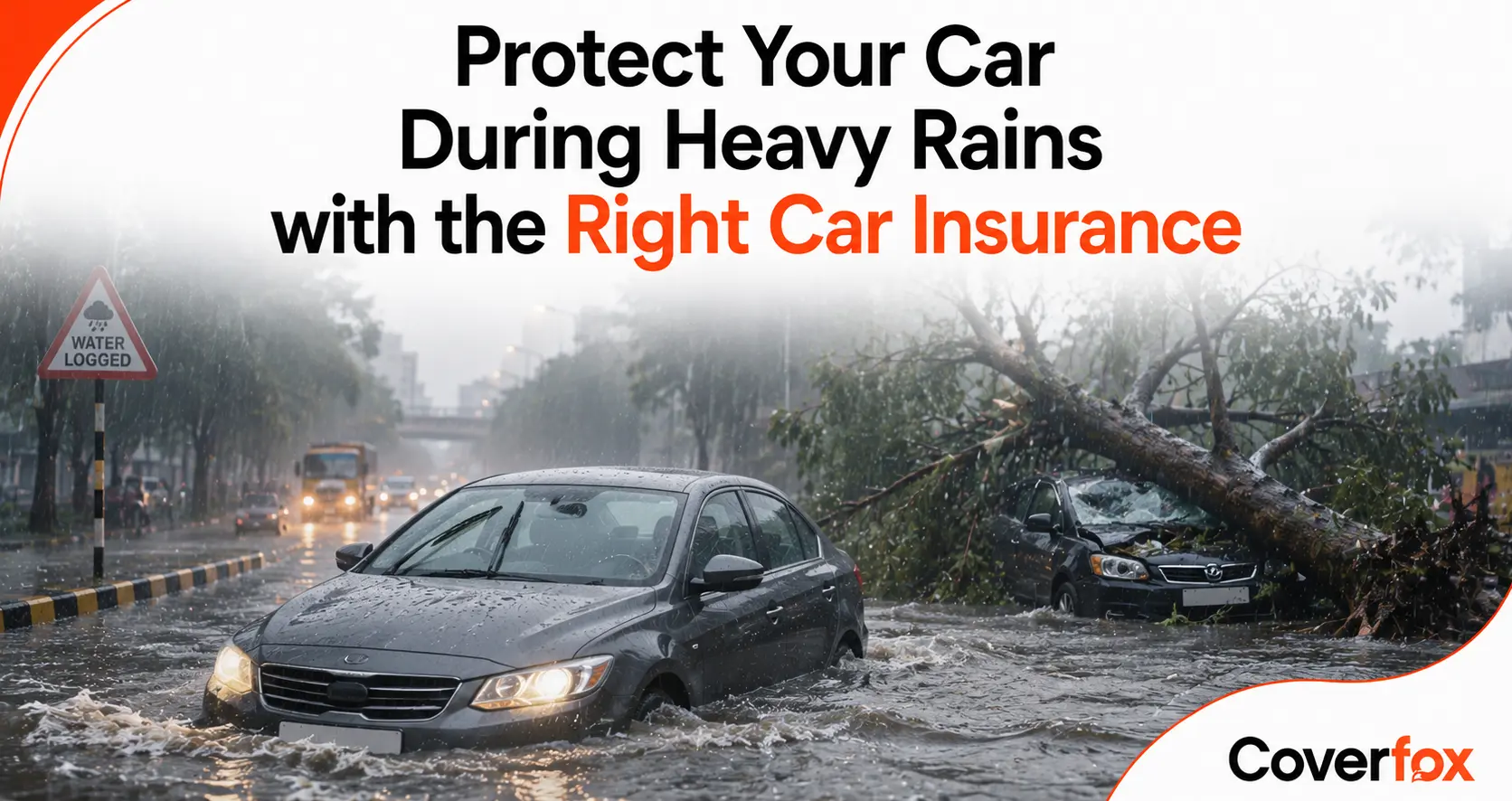
The first week of July 2026 saw relentless monsoon rains flood roads, submerge vehicles, and disrupt traffic across Mumbai, Delhi-NCR, and Himachal Pradesh. With extreme natural disasters causing over ₹1 lakh crore in annual economic losses across India, the financial impact on individual asset owners is staggering. For example, a single incident of vehicle waterlogging can easily cost an owner anywhere from ₹50,000 to over ₹1.2 lakh in out-of-pocket engine repairs alone. The right car insurance policy can help protect you from the immense financial impact of these sudden monsoon-related damages.
July 2026's Monsoon: When Heavy Rains Turned into Costly Car Damage
The first week of July 2026 served as a reminder that heavy monsoon showers bring cities to a standstill within hours. Across India, torrential rain caused severe waterlogging, traffic disruptions, flash floods, landslides, and damage to public infrastructure.
Some of the biggest incidents included:
Mumbai: Record Rainfall Left Vehicles Submerged
Mumbai: Over 1,700 Trees Uprooted in a Week
Delhi-NCR: Waterlogged Roads and Fallen Trees Damaged Vehicles
Mahabaleshwar: Record Rainfall Triggered Landslides
Himachal Pradesh: Flash Floods Swept Away Roads and Stranded Vehicles
Mumbai received over 1,000 mm of rainfall in just seven days (India Meteorological Department (IMD)), flooding roads across several parts of the city. Thousands of vehicles were left stranded in waterlogged streets, with many suffering engine and electrical damage after being partially or completely submerged. To combat this growing threat, the Maharashtra government announced a ₹13,000-crore flood-control master plan to redesign urban drainage.
The relentless rain and strong winds uprooted more than 1,700 trees across Mumbai (ET) in the first week of July alone. Several parked cars were crushed by falling trees and branches, while multiple incidents were reported across areas such as Shivaji Park, Churchgate, and Ghatkopar.
Heavy rainfall inundated roads and underpasses across Delhi-NCR, leaving vehicles stranded in floodwater and disrupting traffic. The downpour also brought down trees that damaged thousands of vehicles in different parts of the city.
Mahabaleshwar recorded nearly 916 mm of rainfall in just two days (India Meteorological Department (IMD)), one of the highest spells in recent years. The intense rain triggered landslides and road closures across the Western Ghats, putting vehicles at risk from falling rocks, debris, and collapsing road shoulders.
Flash floods and landslides across Himachal Pradesh damaged highways, washed away bridges, and cut off several routes. Vehicles travelling through the region were stranded for hours, while many roads became unsafe due to debris and sudden slope failures.
Is Every Damage Caused by Heavy Rain Covered Under Car Insurance?
No. Not every type of rain-related damage is covered under car insurance. Flood damage is usually covered under comprehensive policies, whereas third-party insurance covers only damage caused to others. A comprehensive car insurance policy covers most monsoon-related damages, while a third-party policy does not cover damage to your own vehicle. Some losses, such as engine damage due to negligent driving through deep water or normal wear and tear, are typically excluded unless you have the required add-ons.
What Damages Are Covered and Not Covered Under Car Insurance?
| Monsoon-Related Damage | Is It Covered? | Coverage Details |
|---|---|---|
| Car submerged due to waterlogging or floods | ✅ Yes | Damage caused by floods or waterlogging is covered under a comprehensive car insurance policy. |
| Engine damage after driving through or restarting a flooded car | ⚠️ Add-on Required | Consequential engine damage due to water ingress is not covered under a standard policy. An Engine Protect add-on is typically required. |
| Car damaged by a fallen tree or branch | ✅ Yes | Damage caused by falling trees, branches, or other storm-related debris is covered as a natural calamity. |
| Damage caused by landslides or mudslides | ✅ Yes | A comprehensive policy covers damage caused by landslides, subject to the policy's terms and conditions. |
| Damage caused by hailstorms, cyclones, or lightning | ✅ Yes | These natural calamities are included under comprehensive car insurance coverage. |
| Broken windscreen or windows due to storm impact | ✅ Yes | Glass damage caused by storms or flying debris is covered, depending on policy terms. |
| Vehicle skids on a wet road and meets with an accident | ✅ Yes | Accidental damage to your own vehicle is covered under a comprehensive policy. |
| Mechanical failure or rust caused by prolonged moisture exposure | ❌ No | Normal wear and tear, corrosion, and mechanical failures that are not the direct result of an insured event are typically excluded. |
| Personal belongings damaged inside the car | ❌ No | Standard car insurance does not cover laptops, bags, mobile phones, or other personal belongings kept inside the vehicle. |
| Towing after the car breaks down in a flooded area | ⚠️ Depends | Towing may be covered under your policy or through a Roadside Assistance add-on. |
Disclaimer: Coverage under car insurance depends on the policy type and differs from insurer to insurer. For accurate coverage details, always refer to your policy wording.
How Car Insurance Add-ons Help You During Heavy Rains
The right add-ons fill important coverage gaps and protect you from expensive repairs that are common during the monsoon.
Engine Protect Cover
Zero Depreciation Cover
Roadside Assistance Cover
Consumables Cover
Return to Invoice Cover
NCB Protection Cover
Particularly useful if your car encounters waterlogged roads, as it helps cover engine damage caused by water ingress that a standard policy may exclude.
If damaged parts need to be replaced after a flood or accident, this add-on helps you receive a higher claim amount by removing depreciation deductions.
Ideal when your vehicle breaks down or gets stranded during heavy rain, providing services such as towing and emergency assistance.
Helps recover the cost of consumables like engine oil, coolant, and lubricants that are normally not included in standard claim settlements.
If your vehicle is declared a total loss after severe flood or storm damage, this add-on reimburses the original invoice value instead of the depreciated insured value.
Allows you to make an eligible claim without losing your accumulated No Claim Bonus, subject to your insurer's terms.
What to Do If Your Car Is Damaged Due to Heavy Rain?
Acting quickly after flooding can reduce further vehicle damage and simplify the claims process.
Prioritise Safety First
Avoid Starting the Engine
Arrange Professional Towing if Required
Record the Incident
Report the Incident to Your Insurer
Allow the Surveyor to Inspect the Vehicle
Choose a Network Garage Where Possible
Move yourself and your passengers to a safe location before checking the vehicle.
If the car has stalled in water, leave it switched off until it has been inspected.
If the vehicle cannot be driven safely, have it towed instead of attempting to drive it.
Capture photos and videos of the vehicle, the water level, and any visible damage for future reference.
Inform your insurer at the earliest so they can guide you on the next steps.
Wait for the insurer's assessment before authorising major repairs.
This simplifies repairs and cashless claim settlement, if available.
Tips to Avoid Car Insurance Claim Rejection During Heavy Rains
Even if your policy covers rain-related damage, certain mistakes can result in your claim being reduced or rejected.
Don't Delay Claim Intimation
Avoid Unauthorised Repairs
Don't Discard Damaged Parts
Provide Complete and Accurate Information
Keep All Supporting Documents
Know Your Policy Exclusions
Renew Your Policy on Time
Inform your insurer as soon as reasonably possible after the incident.
Repairing the vehicle before the insurer's approval may affect your claim.
The surveyor may need to inspect them before approving repairs.
Any incorrect or incomplete details can delay or affect claim settlement.
Save repair estimates, invoices, towing receipts, and claim-related communication.
Standard comprehensive insurance may not cover consequential engine damage without an Engine Protect add-on.
An expired policy means there will be no coverage for monsoon-related damage.
Why Does Car Damage Increase During the Monsoon?
The monsoon creates multiple driving hazards that can damage a vehicle within minutes. Waterlogging isn't the only concern. Hidden potholes can damage tyres, suspension, and alloy wheels, even when floodwater appears shallow. Reduced visibility, slippery roads, and strong winds also increase the likelihood of accidents and damage from falling trees or debris.
Conclusion
Before the monsoon arrives, review your policy to confirm whether it includes Engine Protect, Roadside Assistance, and other covers that may be useful during flood-related incidents. Choosing the right add-ons and following the correct claim process can ensure you're better protected and prepared throughout the monsoon season.
Frequently Asked Questions
Is every rain-related damage covered under car insurance?
No. Rain-related damage is covered only under a comprehensive car insurance policy. Certain losses, such as consequential engine damage or wear and tear, may be excluded unless you have the required add-ons.
Does comprehensive car insurance cover engine damage caused by waterlogging?
Not always. Standard comprehensive insurance may not cover engine damage caused by water ingress or hydrostatic lock. An Engine Protect add-on is typically required for such claims.
Is comprehensive car insurance enough during the monsoon season?
Comprehensive insurance provides broad protection against floods, storms and accidents, but adding covers such as Engine Protect, Zero Depreciation and Roadside Assistance can offer better protection during the monsoon.
Which car insurance add-ons are most useful during heavy rains?
Engine Protect, Zero Depreciation, Roadside Assistance, Consumables Cover and Return to Invoice are among the most useful add-ons for monsoon-related risks.
Will my claim be rejected if I restart my car after it stalls in water?
It can be. Restarting a waterlogged vehicle may cause consequential engine damage, which is often excluded under standard comprehensive policies unless you have an Engine Protect add-on.
Does third-party car insurance cover flood damage to my own car?
No. Third-party car insurance covers only third-party liabilities. Damage to your own car due to floods or heavy rain is covered only under a comprehensive policy.
Can I claim insurance if my car is damaged by a fallen tree during heavy rain?
Yes. Damage caused by a fallen tree or storm debris is covered under a comprehensive car insurance policy, subject to the policy's terms and conditions.
Is towing covered if my car gets stranded due to flooding?
Towing may be covered if it is included in your comprehensive policy or if you have a Roadside Assistance add-on. Coverage limits vary between insurers.
How soon should I inform my insurer after rain damage?
You should notify your insurer as soon as possible after the incident. Early claim intimation helps ensure a smoother inspection and claim settlement process.
Can I repair my car before the insurance survey is completed?
It is advisable to wait until the insurer or surveyor has inspected the vehicle. Carrying out repairs beforehand may affect your claim unless your insurer specifically authorises them.

