
Not too long ago, diseases such as polio, tuberculosis, Kala-azar, and high child mortality posed major public health challenges across India. Over the years, sustained government programmes, wider vaccination coverage, improved maternal care, and stronger healthcare infrastructure have helped change that picture.
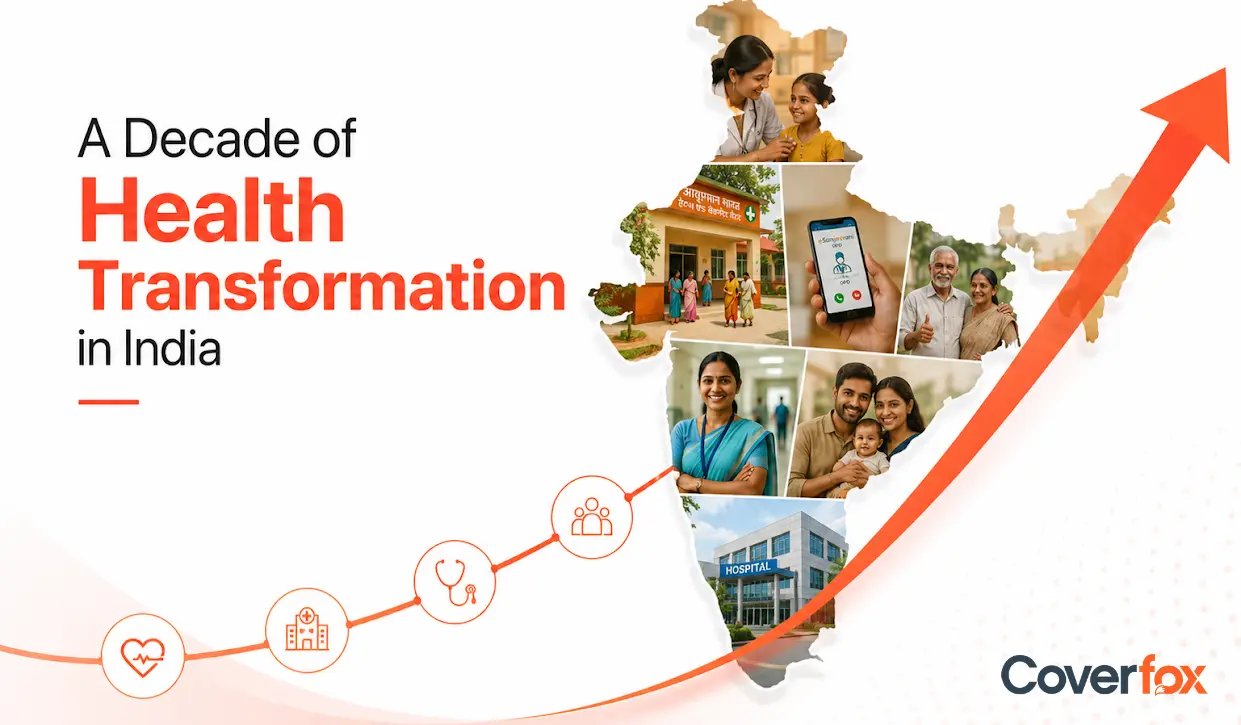
While the country has made remarkable progress on several health indicators, new challenges such as rising healthcare costs and lifestyle-related illnesses are becoming increasingly important. Understanding both sides of this story is essential to understanding why health insurance remains relevant even in a healthier India.
India's Major Public Health Achievements
These past years have been revolutionary for India’s Health sector, as established in the India Health Transformation 2026 Report. The following statistics and information are directly sourced from PIB (Press Information Bureau of India) amongst other credible sources:
-
Polio-Free Since 2014
India was officially declared polio-free by the World Health Organisation in 2014, marking one of the country's biggest public health achievements. The milestone was the result of decades of vaccination campaigns, surveillance programmes, and community-level healthcare efforts that helped stop the transmission of the wild poliovirus. Since then, India has maintained its polio-free status through continued immunisation and monitoring efforts.
Key Statistics
India was certified polio-free by the WHO in 2014.
The country has maintained its polio-free status for more than a decade through sustained vaccination coverage and disease surveillance.
-
Maternal Mortality on a Steady Decline
India has made significant progress in improving maternal health through initiatives such as Janani Suraksha Yojana (JSY), Janani Shishu Suraksha Karyakram (JSSK), and Pradhan Mantri Surakshit Matritva Abhiyan (PMSMA). Improved access to institutional deliveries, antenatal care, and maternal health services has contributed to a steady reduction in maternal deaths across the country.
Key Statistics
Maternal Mortality Ratio (MMR) declined from 130 per 1 lakh live births (2014-16) to 97 per 1 lakh live births (2018-20).
MMR further reduced to 93 per 1 lakh live births in 2020-22.
Under PMSMA, more than 7.47 crore pregnant women have received antenatal examinations.
-
Under-Five Mortality Rate Falls by 41.3%
India has made substantial progress in improving child survival over the past decade. Better immunisation coverage, stronger maternal and newborn care services, nutrition programmes, and community-based healthcare interventions have contributed to a significant decline in deaths among children under five years of age.
The Under-Five Mortality Rate (U5MR) declined by 41.3%, from 45 deaths per 1,000 live births in 2014 to 26.4 deaths per 1,000 live births in 2024.
India achieved the Sustainable Development Goal target of fewer than 25 neonatal deaths per 1,000 live births ahead of schedule.
Child health programmes under the National Health Mission, including Home-Based Newborn Care and Rashtriya Bal Swasthya Karyakram, have played a key role in improving child survival outcomes.
-
Tuberculosis Deaths Drop by 28%
Tuberculosis remains one of India's biggest public health challenges, but the country has recorded notable progress in reducing both infections and deaths. Through the National Tuberculosis Elimination Programme (NTEP), India has expanded screening, treatment, nutritional support, and community participation to accelerate progress towards TB elimination.
TB deaths declined by 28% between 2015 and 2023, exceeding the global decline rate during the same period.
TB incidence fell by 17.7% between 2015 and 2023, compared to a global decline of 8.3%.
More than 3.78 lakh Nikshay Mitras have supported over 20 lakh TB patients with nutritional, diagnostic, and vocational assistance.
Over 20 crore people have been screened for TB through the Pradhan Mantri TB Mukt Bharat Abhiyaan, leading to the diagnosis of more than 28 lakh patients since December 2024.
-
Kala-Azar on the Verge of Elimination
Kala-azar, or Visceral Leishmaniasis, has historically affected some of India's most vulnerable populations. Sustained surveillance, early diagnosis, treatment programmes, and vector-control measures have brought the disease close to elimination as a public health problem.
All 633 endemic blocks across 54 districts have reported fewer than one Kala-azar case per 10,000 population, meeting the elimination threshold.
India is now among the countries closest to achieving official Kala-azar elimination status.
-
Lymphatic Filariasis: Reaching Crores Through Mass Drug Administration
India has expanded its fight against Lymphatic Filariasis through large-scale Mass Drug Administration (MDA) campaigns, where preventive medicines are provided to entire at-risk populations. These efforts have significantly reduced disease transmission in endemic districts.
143 out of 348 endemic districts (41%) have stopped Mass Drug Administration and successfully cleared the Transmission Assessment Survey.
This represents a major improvement from 15% of endemic districts in 2014.
MDA coverage increased from 75% in 2014 to 85% in 2025 against the target population.
-
Fewer Zero-Dose Children Through Stronger Vaccination Drives
India's immunisation efforts have expanded considerably through the Universal Immunisation Programme and Mission Indradhanush. These initiatives focus on reaching children who have missed routine vaccinations and improving coverage in underserved communities.
Mission Indradhanush has vaccinated over 5.46 crore children and 1.32 crore pregnant women who had previously missed immunisation.
More than 95% of children aged 12-23 months received vaccinations through public health facilities in 2023-24.
The share of zero-dose children fell from 0.11% in 2023 to 0.06% in 2024.
How India's Health Landscape Is Changing
India's healthcare challenges are changing. As diseases such as polio, malaria, and Kala-azar come under better control, non-communicable diseases (NCDs) such as diabetes, hypertension, heart disease, stroke, obesity, and cancer are becoming more common. These conditions often require long-term treatment, regular monitoring, and ongoing medical expenses, creating a different set of healthcare and financial challenges for families.
Non-communicable diseases account for 60% of all deaths in India.
41.5 crore people have been screened for hypertension since 2017.
7.1 crore people have been diagnosed with hypertension.
41.3 crore people have been screened for diabetes.
4.7 crore people have been identified as diabetic.
More than 60 crore screenings have been conducted for oral, breast, and cervical cancers.
2.3 lakh people were detected with oral cancer through government screening programmes.
1.1 lakh women were diagnosed with cervical cancer.
Government Health Initiatives and Their Impact
Many of India's public health gains have been driven by large-scale government programmes focused on prevention, treatment, and healthcare access. These initiatives have helped improve vaccination coverage, reduce disease burden, strengthen primary healthcare, and make treatment more affordable for millions of people.
-
Universal Immunisation Programme (UIP)
The Universal Immunisation Programme is one of the world's largest vaccination programmes, providing free vaccines against 12 diseases to children and pregnant women every year.
Covers approximately 2.67 crore newborns annually.
Covers approximately 2.9 crore pregnant women annually.
Provides free vaccination against 12 vaccine-preventable diseases.
-
Mission Indradhanush
Launched in 2014, Mission Indradhanush focuses on reaching children and pregnant women who missed routine vaccinations.
5.46 crore children were vaccinated.
1.32 crore pregnant women were vaccinated.
More than 95% of children aged 12-23 months received vaccinations through public health facilities in 2023-24.
The share of zero-dose children declined from 0.11% in 2023 to 0.06% in 2024.
-
Ayushman Bharat PM-JAY
Ayushman Bharat PM-JAY is the world's largest publicly funded health assurance scheme, providing financial protection against hospitalisation expenses.
Covers approximately 12 crore families.
44.14 crore Ayushman Cards issued.
12.03 crore hospitalisations covered.
Treatment worth ₹1.80 lakh crore provided.
Network of 36,218 empanelled hospitals.
-
Ayushman Arogya Mandirs
These centres provide primary healthcare services closer to communities and play a key role in disease screening and preventive care.
More than 1.86 lakh Ayushman Arogya Mandirs operational.
Recorded cumulative footfall of over 540 crore visits.
Provide services including disease screening, maternal care, mental health support, teleconsultation, and free medicines.
-
National Tuberculosis Elimination Programme (NTEP)
The programme focuses on early detection, treatment, nutritional support, and community participation to eliminate tuberculosis.
TB deaths reduced by 28% between 2015 and 2023.
More than 20 crore people screened for TB.
Over 28 lakh patients were diagnosed through large-scale screening drives.
3.78 lakh Nikshay Mitras supported more than 20 lakh TB patients.
-
eSanjeevani Telemedicine Services
Digital healthcare has improved access to medical consultations, particularly in remote and underserved regions.
More than 47 crore telemedicine consultations were delivered.
Over 2.34 lakh healthcare providers onboarded onto the platform.
Gaps That Still Exist in Healthcare Coverage in India
India has made significant progress in improving public health outcomes, but access to affordable healthcare remains uneven. While government programmes have expanded healthcare services and reduced the burden of several diseases, many families still face financial and accessibility challenges when seeking treatment.
-
High Out-of-Pocket Healthcare Spending
Despite the availability of public healthcare and government insurance schemes, a large share of healthcare expenses in India is still paid directly by patients and their families.
India's out-of-pocket expenditure accounted for approximately 39.4% of current health expenditure in 2021, down from much higher levels a decade ago.
Hospitalisation, specialist consultations, diagnostics, and long-term treatments continue to create financial stress for many households.
Source: World Bank/ORF analysis.
-
Unequal Access to Healthcare Services
Healthcare infrastructure and specialist availability remain concentrated in urban areas, while many rural and remote regions continue to face access challenges.
Access to specialists, advanced diagnostics, and tertiary care remains limited in several parts of the country.
Patients often travel long distances for specialised treatment, increasing both medical and non-medical expenses.
-
Rising Burden of Chronic Diseases
As infectious diseases decline, lifestyle-related illnesses are becoming a larger healthcare challenge.
Non-communicable diseases account for 60% of all deaths in India.
Millions of Indians require ongoing treatment for diabetes, hypertension, heart disease, cancer, and kidney disorders.
These conditions often involve lifelong medication, regular monitoring, and repeated hospital visits.
-
Cost of Hospitalisation and Advanced Treatments
Modern medical treatments have improved health outcomes but have also increased treatment costs.
Procedures such as cancer treatment, cardiac surgeries, organ-related treatments, and critical care can cost several lakhs of rupees.
Even insured individuals may face expenses related to non-medical costs, uncovered treatments, or post-hospitalisation care.
-
Healthcare Needs Are Evolving
India's healthcare challenges are no longer limited to infectious diseases. An ageing population, increasing life expectancy, and growing prevalence of chronic illnesses are creating sustained demand for healthcare services.
Longer lifespans mean greater need for regular medical care and disease management.
Preventive care, early diagnosis, and financial protection are becoming increasingly important alongside public health interventions.
How Health Insurance Supports Disease Prevention and Early Treatment
Health insurance does more than cover hospital bills. It can encourage preventive healthcare by making health check-ups, consultations, diagnostic tests, and treatments more accessible and affordable. Early detection of conditions such as diabetes, hypertension, heart disease, and certain cancers often leads to better treatment outcomes and lower long-term healthcare costs.
Many health insurance plans include preventive health check-ups.
Supports timely consultations and diagnostic tests for early diagnosis.
Helps manage treatment costs for chronic illnesses such as diabetes, heart disease, and cancer.
Some plans offer maternity, newborn, and vaccination-related benefits.
Reduces the financial burden of hospitalisation and specialised treatment.
A Healthier India Still Needs to be Insured
India's progress in improving public health has helped millions live longer and healthier lives. However, as healthcare needs shift towards chronic diseases and treatment costs continue to rise, financial protection remains just as important as healthcare access. While public health programmes can reduce disease burden, health insurance helps individuals and families manage the cost of treatment. Together, stronger healthcare systems and wider insurance coverage will play a key role in building a healthier and more financially secure India.
Source:
Press Information Bureau (PIB): India's Health Transformation, 2026
World Health Organisation (WHO)
Frequently Asked Question
Can polio return to India after elimination?
India has remained polio-free since 2014. While the risk of local transmission is extremely low, continued vaccination and disease surveillance are essential to prevent imported poliovirus cases from causing outbreaks.
Which states in India still have the highest maternal mortality rates?
Maternal mortality has declined significantly across India over the past decade. However, some states continue to report higher maternal mortality ratios than the national average. State-wise figures are periodically updated through Sample Registration System (SRS) reports released by the government.
Which parts of India still have high under-five mortality rates?
India's under-five mortality rate has fallen substantially, but some states and underserved regions continue to record higher child mortality rates than the national average. These variations are monitored through national health surveys and government health data.
What is India's target year for tuberculosis elimination?
India aims to eliminate tuberculosis by 2025, five years ahead of the global Sustainable Development Goal target of 2030.
How close is India to officially eliminating Kala-Azar?
India has made significant progress towards Kala-Azar elimination. According to government data, all 633 endemic blocks across 54 districts have reported fewer than one case per 10,000 population, which is the elimination threshold for the disease.
How many people has India's MDA programme reached so far?
India's Mass Drug Administration (MDA) programme for Lymphatic Filariasis has expanded significantly over the years. MDA coverage increased from 75% in 2014 to 85% in 2025, while 143 of 348 endemic districts have successfully cleared the Transmission Assessment Survey and stopped MDA activities.
What is a zero-dose child?
A zero-dose child is a child who has not received even a single routine vaccine. India reduced the share of zero-dose children from 0.11% in 2023 to 0.06% in 2024 through expanded immunisation efforts.
Why are healthcare costs increasing in India despite better health outcomes?
Healthcare costs are rising due to increased healthcare utilisation, growing rates of chronic diseases, advancements in medical technology, and higher spending on specialised treatments and long-term disease management.
Do critical illness plans help cover lifestyle diseases?
Yes. Critical illness plans provide a lump-sum benefit upon diagnosis of covered illnesses such as cancer, heart attack, stroke, kidney failure, and other specified serious health conditions, subject to policy terms.
How can preventive healthcare reduce medical expenses?
Preventive healthcare helps detect health conditions at an early stage when treatment is often simpler and less expensive. Regular health check-ups and screenings can also reduce the risk of serious complications.
Does better public health mean lower medical bills?
Not necessarily. Better public health reduces disease burden across the population, but individuals may still face substantial medical expenses due to hospitalisation, chronic illnesses, surgeries, or specialised treatments.
If government health schemes exist, why do I still need health insurance?
Government health schemes provide valuable support, but eligibility criteria, coverage limits, and hospital availability may vary. Health insurance can offer additional financial protection and help cover medical expenses that may not be fully covered under government programmes.
What percentage of healthcare costs in India are paid out-of-pocket?
According to available estimates, out-of-pocket expenditure accounted for approximately 39.4% of India's current health expenditure in 2021, although this share has declined compared to previous years.
How much health insurance cover is enough for a family in India?
The ideal health insurance cover depends on factors such as family size, age, location, and healthcare needs. For many families, a cover of ₹10 lakh to ₹20 lakh is often considered a reasonable starting point, particularly in cities where medical treatment costs are higher.

