
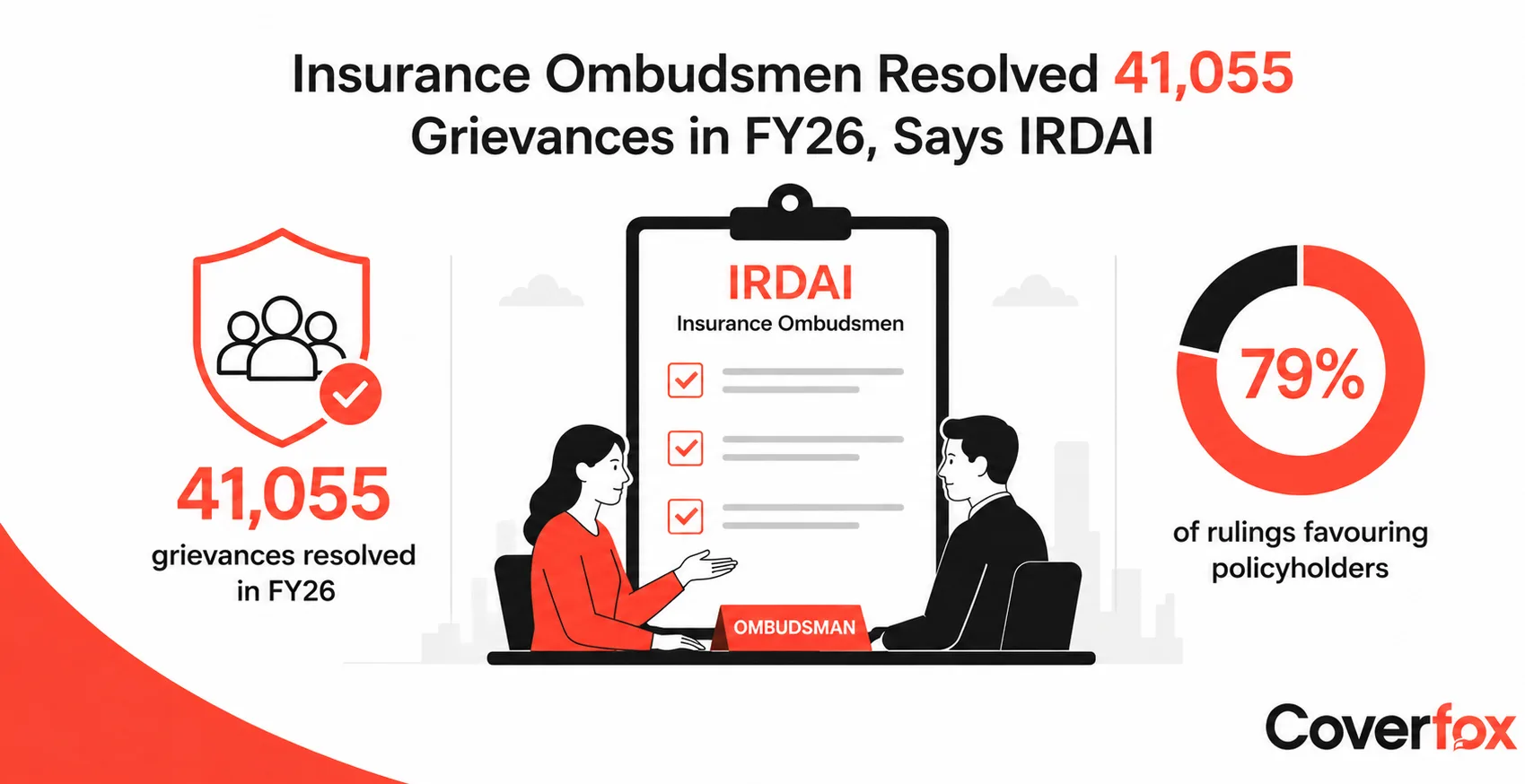
The Insurance Regulatory and Development Authority of India (IRDAI) announced that Insurance Ombudsmen resolved 41,055 grievances during the financial year ended March 2026, with nearly 79% of the rulings delivered in favour of policyholders. The figures were shared during an announcement for the orientation programme for Insurance Ombudsmen being held in Hyderabad from May 20 to May 23, 2026 (as per reports).
What is an Insurance Ombudsman?
An Insurance Ombudsman is an independent authority established to help policyholders resolve complaints against insurance companies, intermediaries, and insurance brokers in a free, accessible, and time-bound manner.
The Insurance Ombudsman system was introduced to provide policyholders with an alternative grievance redressal platform without requiring lengthy legal procedures or court intervention. The offices of Insurance Ombudsmen function under the administrative supervision of the Council for Insurance Ombudsmen.
Role of Insurance Ombudsmen
Insurance Ombudsmen are responsible for handling and resolving complaints related to various insurance services and claim-related disputes. Their role includes ensuring fair grievance resolution for policyholders while improving accountability within the insurance sector. Some of the common issues handled by Insurance Ombudsmen include:
Claim settlement disputes
Delays in claim processing
Policy servicing complaints
Mis-selling of insurance products
Disputes related to policy terms and conditions
Complaints against insurers, intermediaries, and brokers
What the 41,055 Grievance Resolutions Highlight
Insurance Ombudsmen resolved a total of 41,055 grievances during FY26, according to IRDAI.
Nearly 79% of the rulings were delivered in favour of policyholders, highlighting the institution’s role in customer protection.
The increasing number of complaints handled reflects growing policyholder awareness regarding insurance rights and grievance redressal mechanisms.
The figures also indicate rising dependence on the Ombudsman system for resolving claim settlement disputes, policy servicing issues, and mis-selling complaints.
IRDAI has highlighted recurring concerns such as delays in complaint registration, unresolved grievances beyond 90 days, and non-entertainable complaints within the insurance sector.
The regulator is focusing on improving grievance-handling practices, strengthening institutional capacity, and ensuring faster complaint resolution across the insurance ecosystem.
IRDAI Highlights Need for Stronger Grievance Framework
Speaking at the programme, IRDAI Chairman Ajay Seth said the Insurance Ombudsman institution plays an important role in ensuring speedy grievance resolution and strengthening customer trust.
“Strengthening customer trust is central to achieving higher insurance penetration and realising the vision of inclusive insurance coverage,” Seth said.
He also urged participants attending the programme to identify operational challenges, exchange experiences, and develop practical solutions to improve the efficiency of the grievance redressal ecosystem.
Key Concerns Highlighted by IRDAI
IRDAI highlighted several recurring concerns affecting grievance management processes within the insurance sector, including:
Mis-selling of insurance products
Delays in complaint registration
Complaints remaining unresolved beyond 90 days
Non-entertainable complaints
The regulator stated that the orientation programme has been organised to strengthen institutional capacity, improve consistency in grievance-handling practices, and facilitate discussions on emerging issues affecting the insurance industry.
DFS Secretary Stresses Empathy and Technology Adoption
Nagaraju, Secretary at the Department of Financial Services (DFS), addressed the programme through video conference and emphasised that grievances should be handled with empathy and a policyholder-focused approach.
He also highlighted the importance of continuous capacity building, adoption of best practices, and the use of digital tools and technology-driven systems to further strengthen grievance management processes in the insurance sector.
Conclusion
The resolution of 41,055 grievances during FY26 reflects the growing importance of Insurance Ombudsmen in India’s insurance ecosystem. With regulators focusing on faster complaint resolution, stronger policyholder protection, and improved grievance-handling practices, the Ombudsman mechanism continues to play a key role in building customer trust and supporting the growth of insurance penetration across the country.
Disclaimer: The information provided in this article is for general informational and educational purposes only. The content is based on publicly available statements and reports released by the Insurance Regulatory and Development Authority of India (IRDAI) and related official sources. Readers are advised to verify details from official regulatory or government platforms before making any financial, insurance, or legal decisions.
Frequently Asked Questions
How can a policyholder file a complaint with an Insurance Ombudsman?
A policyholder can file a complaint with the Insurance Ombudsman after first raising the issue with the insurer and not receiving a satisfactory response within the prescribed time period. Complaints can usually be submitted online, through email, or by visiting the Ombudsman office.
What complaints are not accepted by an Insurance Ombudsman?
Insurance Ombudsmen generally do not entertain complaints involving fraud investigations, disputes already pending before courts or tribunals, and cases that fall outside the prescribed monetary or jurisdictional limits.
What is the time limit for filing a complaint before an Insurance Ombudsman?
A complaint should typically be filed within one year from the date the insurer rejects the complaint or provides a final response that is unsatisfactory to the policyholder.
Can an Insurance Ombudsman help with delayed insurance claim settlements?
Yes, delays in claim settlement are among the most common issues handled by Insurance Ombudsmen. Policyholders can approach the Ombudsman if their claims remain unresolved or delayed without proper justification.
Is the decision of an Insurance Ombudsman binding on insurance companies?
Yes, once a policyholder accepts the Ombudsman’s award, the decision becomes binding on the insurer. However, the policyholder still has the option to pursue legal remedies if not satisfied.
Why is the Insurance Ombudsman system important for policyholders?
The Insurance Ombudsman system provides policyholders with a faster, cost-effective, and accessible alternative to lengthy legal proceedings, helping improve transparency, accountability, and trust within the insurance sector.

