
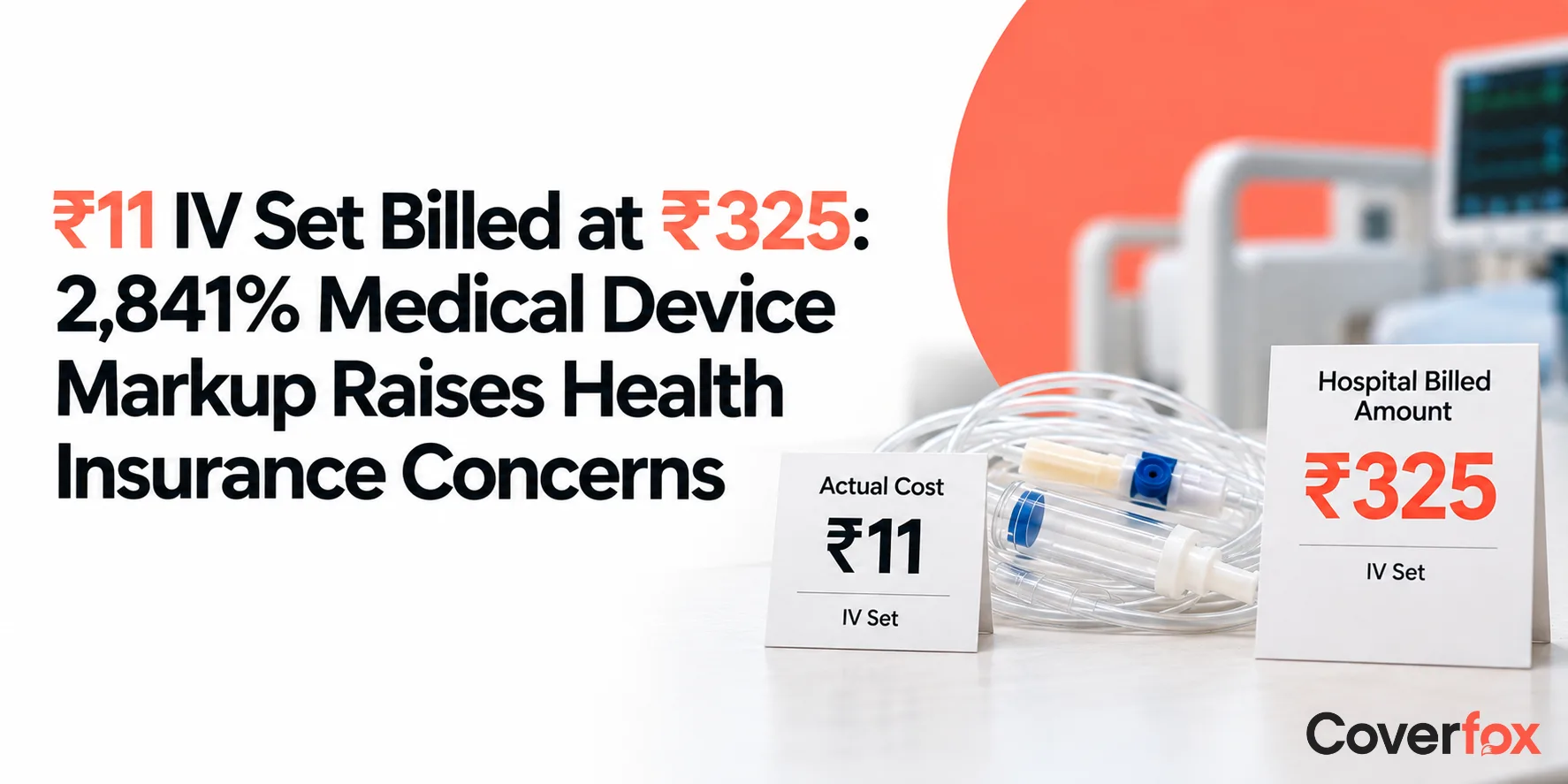
Maharashtra FDA commissioner Tukaram Mundhe has asked the Department of Pharmaceuticals and the NPPA to control how much hospitals charge for medical devices. A state survey found some items sold to patients at over 2,800% above cost. The Association of Indian Medical Device Industry (AiMeD) has backed the call. For health insurers, this is not just a hospital pricing issue. It touches claims, premiums, and how much policyholders actually pay.
What Has Tukaram Mundhe Asked the NPPA to Do?
Maharashtra FDA Commissioner Tukaram Mundhe has asked the Department of Pharmaceuticals and the National Pharmaceutical Pricing Authority (NPPA) to review the pricing of medical devices and hospital consumables after a state survey found large gaps between hospital procurement prices and the prices charged to patients. His August 10 communication reportedly sought two possible regulatory measures:
Trade margin cap: A fixed limit on how much hospitals can add between the buying price and the patient bill.
Price monitoring: Regular tracking of device prices instead of relying on occasional state audits.
He has also proposed bringing primary hospital devices and consumables under Section 4 of the Drugs (Prices Control) Order, 2013. FDA commissioners in Punjab, Rajasthan, and Tamil Nadu have raised the same concern, so this is not a one-state issue.
Hospital Cost vs Patient Bill
The Maharashtra State Price Monitoring Resource Unit checked hospital invoices across four device categories. The difference between what hospitals pay and what patients are billed is stark.
| Item | Hospital Cost | Patient Bill | Markup |
|---|---|---|---|
| Standard IV infusion set | ₹11.05 | ₹325 | 2,841% |
| IV infusion set (alt.) | ₹11.50 | ₹252 | 2,091% |
| 10ml syringe | ₹6.75 | ₹57.20 | 747% |
| Hypodermic needle | ₹1.00 (approx.) | ₹3.30 | 230% |
| Adult nebuliser mask kit | ₹40.00 | ₹715 | 1,688% |
| IV cannula extension line | ₹22.50 | ₹424 | 1,784% |
| Balloon catheter | ₹29.41 | ₹310 | 954% |
| HEPA filter (bacterial-viral) | ₹50.68 | ₹473 | 833% |
Disclaimer: Pricing rules vary by medical-device category. Not all hospital consumables are subject to a fixed ceiling price under the DPCO, 2013.
How Medical Device Markups Can Affect Health Insurance Claims
Every device on a hospital bill can end up in a health insurance claim, whether cashless or reimbursed. Here is how the markup problem reaches insurers in plain terms.
Bigger claims: A surgery uses many consumables. Small markups on each item add up to a large inflated total.
Greater variation between hospitals: The same procedure can produce different claim amounts depending on how individual hospitals price consumables. That makes claims benchmarking and hospital-rate negotiations harder.
More scrutiny during claim assessment: Large differences between procurement prices, MRPs and billed amounts can create another area for insurers and TPAs to examine during claim processing.
Pressure on network rates: Insurers negotiate rates and packages with network hospitals. More transparent device pricing could make those negotiations easier by giving both sides a clearer reference point.
What Insurers Can Control
Insurers can manage how high hospital device charges affect claims through their existing processes.
Hospital rate negotiations: Insurers and TPAs can negotiate agreed rates for procedures and consumables with network hospitals.
Claim bill reviews: Itemised bills can be checked against agreed rates, policy terms and available benchmarks.
Package rates: Pre-agreed procedure packages can reduce the impact of individual consumables being billed separately.
Claims data analysis: Repeatedly high charges for the same devices can be identified and addressed during hospital negotiations.
Policy-based assessment: Coverage, exclusions, sub-limits and admissibility determine how much of a hospital bill is payable.
What Insurers Cannot Control
Insurers cannot decide what a hospital should charge for a medical device. They can negotiate rates with individual hospitals and question excessive charges during claim assessment, but they cannot impose a price ceiling across the healthcare system.
What This Means Going Forward
India’s medical devices market is valued at around $16 billion (PIB). Even a limited price cap on high-volume consumables would touch a large share of health insurance claims, not just a few unusual bills. If the NPPA acts on structured monitoring, insurers would finally get something they do not have today: a documented, regulated ceiling price to check hospital bills against.
Frequently Asked Questions
What is the medical device price markup issue in India?
It refers to the large gap between the procurement cost of certain medical devices and the price charged to patients. A Maharashtra FDA survey found markups of up to 2,841% on some hospital consumables.
What has Tukaram Mundhe asked the NPPA to do?
Maharashtra FDA Commissioner Tukaram Mundhe has asked the NPPA and Department of Pharmaceuticals to review medical device pricing, consider trade-margin controls and establish regular price monitoring for essential hospital consumables.
How do medical device markups affect health insurance claims?
Higher device charges can increase the amount submitted in an admissible health insurance claim. Insurers and TPAs can review these charges against agreed hospital rates, package rates and policy terms.
Can medical device markups increase health insurance premiums?
They can contribute to insurers' overall claims costs when inflated charges are repeatedly reflected in admissible claims. However, premiums depend on several factors, so medical device markups alone do not determine future premium increases.
Disclaimer: Medical device pricing and health insurance claim outcomes depend on applicable regulations, policy terms and hospital billing practices. The information above is for general awareness and does not constitute financial or insurance advice.

