
If you ever need to sell a used vehicle or deal with vehicle ownership, it requires a clear and systematic process involving the necessary documentation. This means being aware of the right forms as issued by the Regional Transport Office (RTO), ensuring both buyer and seller are free from any future liabilities, and providing a smooth transition.
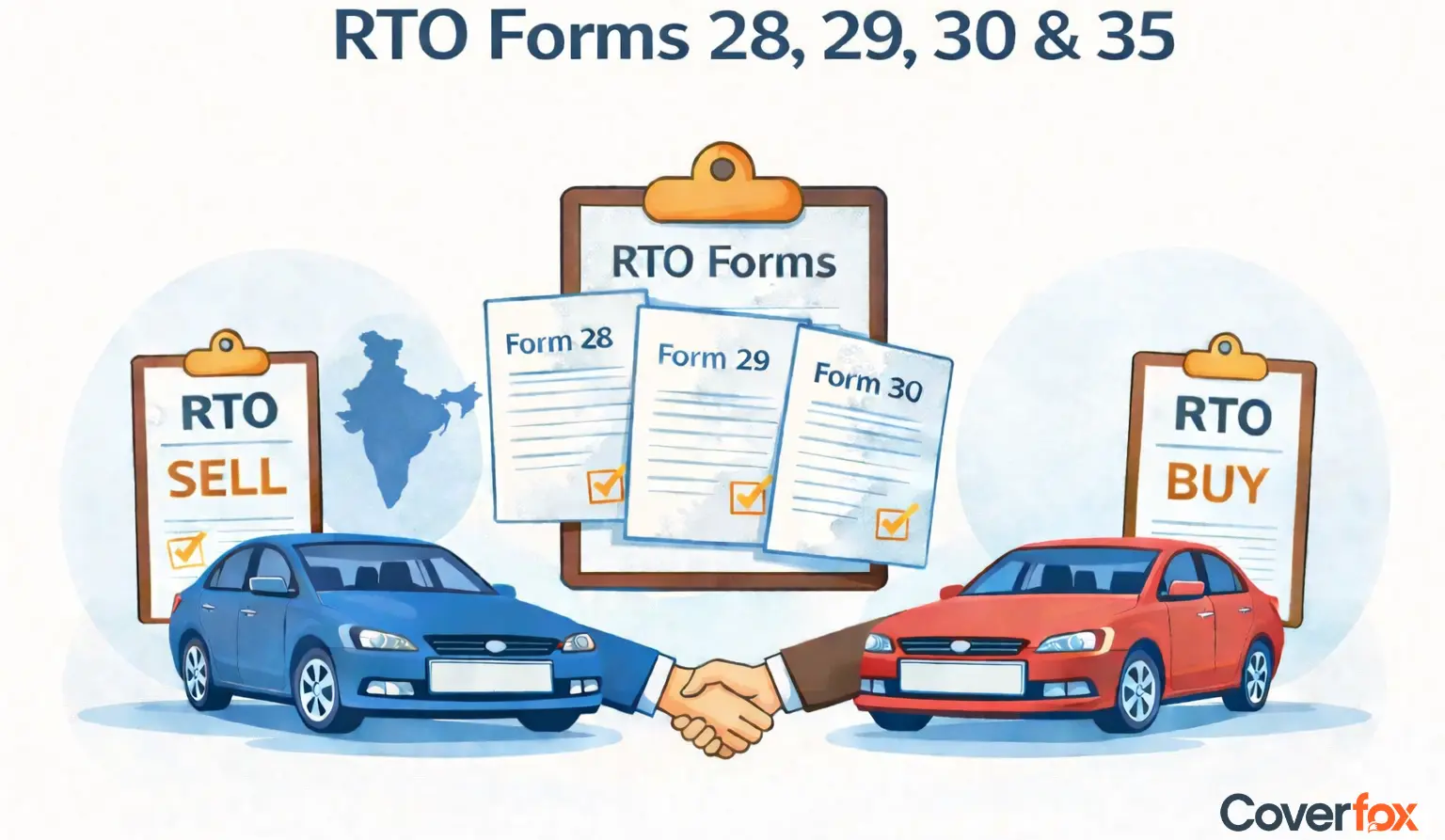
To understand in depth, this guide explains RTO forms 28, 29, 30, and 35 in simple terms, what they are used for, and why they matter.
Upon selling a used vehicle, there is a specific set of procedures that needs to be followed. These are the necessary forms as issued by the RTO that are required for those purposes:
Form 28 is the standard application to obtain a No Objection Certificate (NOC) from the RTO (Registering Authority) of a vehicle, as per Section 48 of the Motor Vehicles Act, 1988.
This Form 28 is used to apply for a No Objection Certificate (NOC) from the RTO.
The NOC is necessary if you want to transfer your vehicle from one state to another or sell it outside your current state's jurisdiction. This form is also compulsory in case there is an interstate transfer. However, this may vary from one state to another. For example, Form 28 is mandatory in Maharashtra even for an intrastate transfer of ownership. Form 28 has to be filled, signed and then submitted to the RTO with all the other necessary documents, after which an NOC is issued.
It is crucial to obtain this form to certify that no loans, traffic challans, taxes or disputes are filed against this vehicle.
The RTO Form 29 is a form informing about the transfer of ownership of a vehicle.
The seller fills this form to notify the RTO officially that the vehicle has been sold to another person.
This form must be signed by both the buyer and seller, and a copy of this form must be submitted to the RTO.
Form 30 RTO provides final intimation for ownership transfer, acting as confirmation for Form 29.
Both Form 29 and Form 30 must be submitted together, within 14 days of the sale of the vehicle.
With this form, the seller can be assured of being relieved from any future liabilities related to the vehicle, as ownership and legal liabilities are officially transferred.
Once a car loan is fully repaid, Form no 35 RTO is used to remove the financier’s name from the vehicle.
In simple terms, when all payments are made and the vehicle ownership is fully transferred to the buyer, this form shows the loan has been repaid and the vehicle is no longer under a hire-purchase or lease agreement.
Also Read - What is Hypothecation?
Here is the list of things taken care of by the Regional Transport Office (RTO):
The RTO gives registration numbers to new vehicles and issues Registration Certificates (RC) that prove the vehicle is legally registered.
It runs driving tests and gives licences to people who are allowed to drive vehicles.
RTO collects road taxes and fees that vehicle owners must pay to use public roads.
When a used vehicle is sold, the RTO handles the process of transferring ownership from the old owner to the new one.
RTO gives Pollution Under Control (PUC) certificates to ensure vehicles meet pollution rules and helps enforce related laws.
It manages traffic rules, fines for violations, and keeps records of traffic offences to ensure road safety.
In all, it is necessary to follow the proper legal steps while selling or transferring a used vehicle. Make sure to properly fill out Form 28, Form 29, Form 30, and Form 35, ensuring a smooth transfer of ownership and safeguarding both the buyer and seller. Simply understanding these RTO forms can simplify the process of selling or transferring your vehicle. Also, don’t forget that updating your car insurance is just as important as transferring ownership. Once the vehicle is sold, the insurance policy must be transferred to the new owner, or a fresh policy should be purchased.
Disclaimer: This guide provides general information only about RTO forms, and procedures are subject to change and vary by state/RTO. This is not legal or official advice. Always verify current rules and documentation directly with your local RTO office or the official Parivahan Seva website before taking action.
No, Form 28 is mainly for obtaining a No Objection Certificate (NOC) when transferring a vehicle to another state or jurisdiction. For ownership transfer within the same state, Forms 29 and 30 are used.
While both Form 29 and Form 30 are submitted together, Form 29 is a notice submitted by the seller to inform the RTO about the vehicle sale. On the other hand, Form 30 RTO is submitted by the buyer as an application to formally transfer ownership and confirm the details of the sale.
Yes, you can. They are available at your local RTO office or can be downloaded from official Regional Transport Organisation websites.


