


The Royal Enfield Continental GT 650 mileage is around 27 km/l, making it fairly efficient for a 650cc twin-cylinder motorcycle. While it’s built for performance and riding pleasure, proper maintenance and smooth riding can help achieve consistent fuel efficiency.
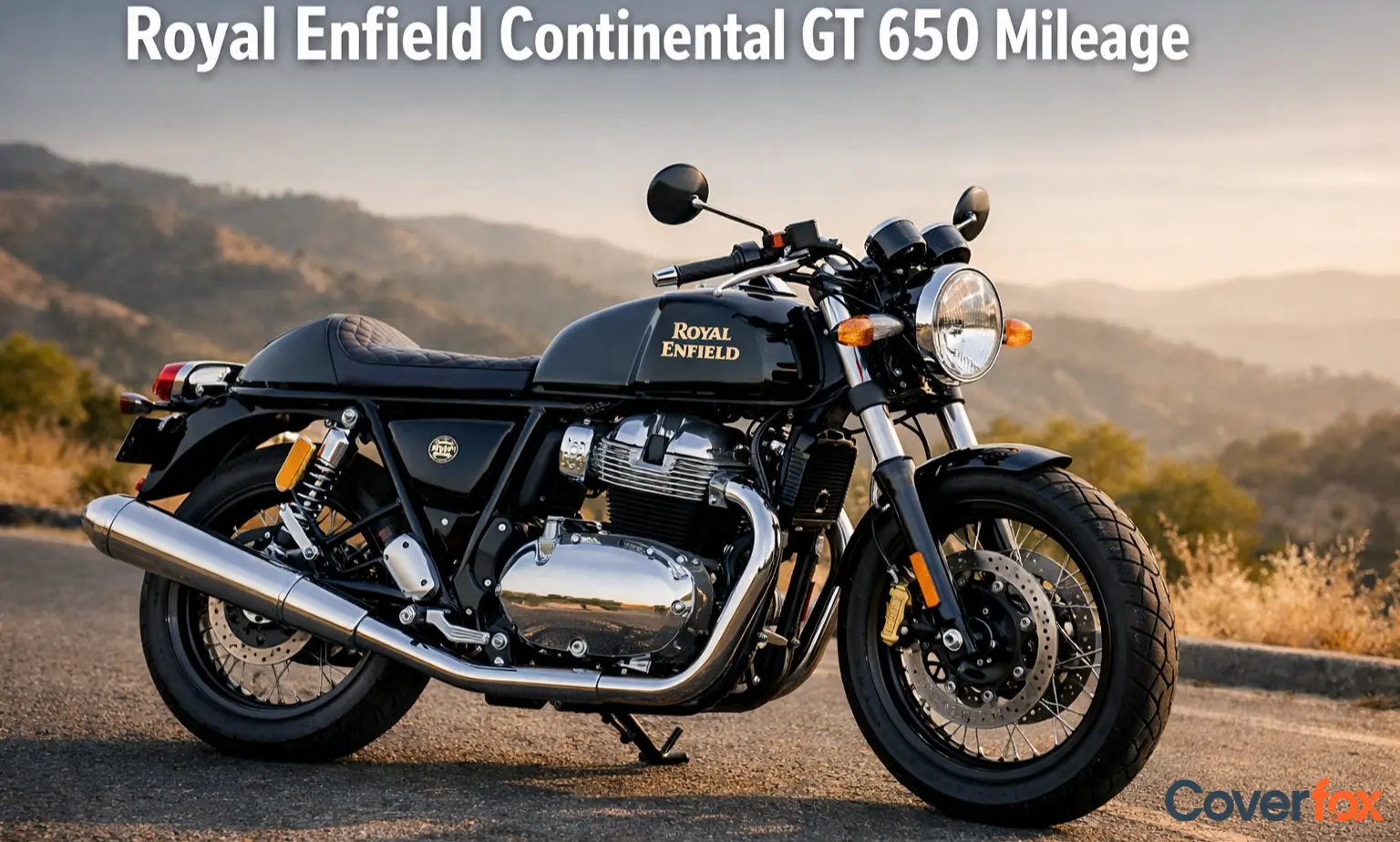
The Royal Enfield Continental GT 650 is a performance-focused café racer that blends retro styling with modern engineering and a powerful 650cc twin-cylinder engine. While its sporty character attracts enthusiasts, the Continental GT's mileage remains an important consideration for many buyers. The GT 650 variants, such as the GT 650 Standard, GT 650 Alloy Wheel, and GT 650 Chrome, are priced at ₹3,49,212, ₹3,71,513, and ₹3,77,663, respectively, ex-showroom in India. [Note: Prices may vary depending on the city.]
In addition to performance, securing the right two wheeler insurance is also crucial for protecting your investment. This article covers the real-world mileage of the GT 650, factors that affect fuel efficiency, comparisons with other Royal Enfield models, and tips to improve mileage.
As per Royal Enfield’s official figures, the Continental GT 650 has a mileage of 27 km/l. However, the real-world mileage of the GT 650 varies depending on traffic conditions, riding style, and road usage.
| Riding Condition | Mileage of Continental GT 650 |
|---|---|
| City Riding | 22–24 km/l |
| Highway Riding | 26–27 km/l |
| Mixed Usage | 24–25 km/l |
These figures reflect practical riding conditions and may vary based on throttle input, maintenance, load, and riding habits.
The Royal Enfield Continental GT 650 mileage varies depending on where and how it is ridden. In city conditions, frequent braking, stop-and-go traffic, and lower gear usage affect fuel efficiency, especially since the GT 650’s parallel-twin engine is tuned for performance rather than economy. The bike’s heavier build and aggressive riding posture also mean slightly higher fuel consumption during daily urban commutes.
On highways, however, the Continental GT 650's mileage exceeds the average performance. The engine feels most relaxed while cruising at steady speeds, and this is where the bike returns its best mileage. Maintaining a consistent cruising speed of 80–100 km/h, smooth throttle inputs, and timely gear shifts help extract optimal efficiency from the 650cc twin-cylinder motor. Aggressive acceleration, frequent downshifts, and high-rev riding can significantly reduce mileage, even on open roads.
Overall, riding style, traffic density, and gear management play a crucial role in determining how fuel-efficient the Continental GT 650 feels in real-world conditions.
The Royal Enfield Continental GT 650 mileage depends on multiple riding and maintenance factors that directly influence how efficiently the engine burns fuel and delivers power.
Riding aggressively at high RPMs reduces GT 650 mileage, while smooth riding at steady speeds improves Continental GT 650 mileage per litre.
Sudden acceleration and frequent throttle inputs increase fuel consumption, whereas gentle throttle use helps maintain better fuel economy.
Incorrect tyre pressure increases rolling resistance and negatively impacts Royal Enfield GT 650 mileage.
Regular engine oil changes, clean air filters, and timely spark plug checks play a major role in maintaining optimal mileage.
Riding with a pillion, heavy luggage, or accessories reduces overall Continental GT 650 mileage due to added weight.
Stop-and-go city traffic lowers mileage, while smooth highways allow the bike to deliver its best GT 650 average.
Using original spare parts and servicing at Royal Enfield-authorised centres ensures better combustion efficiency, improved Continental GT 650 mileage, and long-term engine health.
While both motorcycles share the same 650cc twin-cylinder engine, the Continental GT 650’s sportier riding posture and café racer styling result in slightly lower mileage compared to the more upright and relaxed Interceptor 650.
| Specification | Continental GT 650 | Interceptor 650 |
|---|---|---|
| Mileage (Real-world) | 22–27 km/l | 24–29 km/l |
| Fuel Tank Capacity | 12.5 litres | 13.7 litres |
| Riding Posture | Sporty, forward-leaning | Upright, relaxed |
| Engine Tune | Identical 648cc parallel twin | Identical 648cc parallel twin |
The Interceptor 650 typically delivers 1–2 km/l better mileage, mainly due to its upright ergonomics, lighter riding stance, and slightly more relaxed highway behaviour, whereas the Continental GT 650 prioritises performance and aggressive riding feel.
Improving the mileage of the Royal Enfield GT 650 largely depends on riding discipline, regular maintenance, and using the bike in a way that suits its twin-cylinder character.
Maintain steady cruising speeds between 80–100 km/h to keep the engine in its most efficient RPM range.
Use smooth throttle inputs and avoid sudden acceleration, especially in lower gears.
Upshift early and avoid riding at high revs for long durations.
Keep tyre pressure as per manufacturer recommendation to reduce rolling resistance.
Follow timely service intervals, especially engine oil and air filter replacement.
Avoid unnecessary weight, such as heavy luggage or aftermarket accessories.
Use high-quality fuel and get the bike serviced only at authorised Royal Enfield centres for optimal performance.
The Royal Enfield Continental GT 650 comes with a 12.5-litre fuel tank, which offers a practical riding range when combined with its real-world mileage.
Fuel Tank Capacity: 12.5 litres
Estimated Range (City): 260–300 km
Estimated Range (Highway): 300–330 km
Best range achieved when ridden at steady cruising speeds with smooth throttle inputs
Here’s how the Royal Enfield Continental GT 650 mileage stacks up against some popular middle-weight bikes in similar categories, highlighting differences in fuel efficiency and design focus.
| Model | Approx. Mileage (km/l) | Engine / Notes |
|---|---|---|
| Royal Enfield Continental GT 650 | ~25–27 km/l | 648 cc parallel-twin café racer, tuned for torque and character |
| Kawasaki Z650 | ~19–24 km/l | 649 cc liquid-cooled naked bike (claimed ~19.02 km/l, some user reports higher) |
| Honda CB650R | ~25 km/l | 649 cc inline-four sporty naked (reported ~25 km/l) |
| Benelli Leoncino 500 | ~25 km/l | 500 cc twin scrambler with claimed ~25 km/l |
From this comparison, the Royal Enfield and Honda deliver similar real-world fuel economy figures, while the Kawasaki Z650 tends to be less fuel-efficient on average due to its higher performance tuning, and the Benelli Leoncino 500 sits close to the GT 650 in terms of everyday efficiency.
With an average mileage of around 27 km/l, the Royal Enfield Continental GT 650 offers a balanced blend of performance and efficiency for a twin-cylinder motorcycle. While it isn’t built purely for fuel economy, its refined engine, strong torque delivery, and reliable engineering make it a sensible choice for riders who value riding pleasure and long-term dependability along with respectable mileage.
The real-world mileage of the Royal Enfield GT 650 usually ranges between 22–27 km/l, depending on riding style, traffic, and maintenance.
On highways, the GT 650 delivers around 26–27 km/l when ridden at steady cruising speeds of 80–100 km/h.
The Interceptor 650 generally offers 1–2 km/l better mileage due to its upright ergonomics and relaxed riding posture, while the GT 650 is more performance-oriented.
Yes, the GT 650 offers good value considering its twin-cylinder engine, build quality, performance, and long-term reliability, even if mileage isn’t its primary focus.
Yes, timely servicing, clean air filters, proper engine oil, and correct spark plug condition can noticeably improve mileage and overall performance.
The GT 650 has a 12.5-litre fuel tank, offering a real-world riding range of approximately 260–330 km, depending on usage.
Aggressive riding, high RPM usage, heavy traffic, poor tyre pressure, delayed servicing, and extra load can reduce mileage.
Among 650cc bikes, the Royal Enfield Interceptor 650 generally offers slightly better mileage than the GT 650, while bikes like the Kawasaki Z650 focus more on performance than fuel efficiency.

