


The Renault Kiger offers an impressive mileage range, delivering between 17.63 to 20.5 km/l for petrol variants and 18 to 26 km/kg for CNG variants, depending on the specific model and driving conditions. Its fuel efficiency makes it a competitive choice among other compact SUVs in the segment, offering cost-effective running for daily commutes as well as occasional long drives. Along with its efficient performance, the Renault Kiger provides a balance of style, comfort, and practicality. While exploring its mileage and features on this page, you can also get instant car insurance quotes to ensure your vehicle is well-protected from the start.
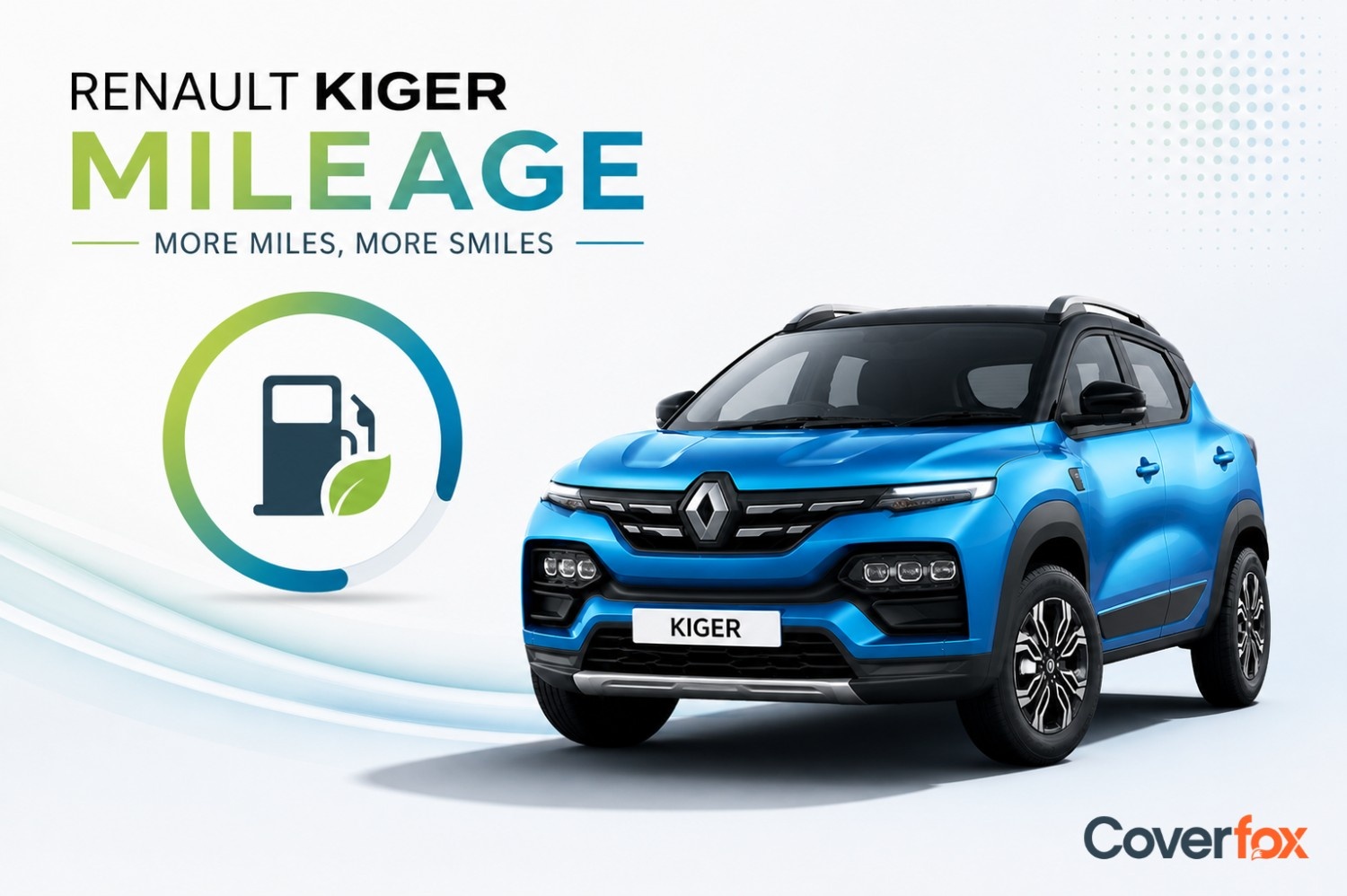
Here’s a quick look at the approximate ARAI-certified mileage across variants of the Renault Kiger.
| Engine & Transmission | Mileage of Kiger (Approx ARAI) |
|---|---|
| 1.0L Petrol Manual (Non-Turbo) | 19.17 – 20.5 km/l |
| 1.0L Petrol AMT (Automatic) | 19.03 – 19.83 km/l |
| 1.0L Turbo Petrol Manual | 20.38 – 20.5 km/l |
| 1.0L Turbo Petrol CVT (Automatic) | 17.63 – 18.24 km/l |
| 1.0L NA CNG Manual (MT) | 18 – 26 km/kg |
Real-world mileage of the Renault Kiger varies based on driving conditions, with noticeable differences between city traffic and highway cruising.
City mileage of Kiger: approximately 12–15 km/l for petrol, 18-22 km/kg for CNG
Highway mileage of Kiger: approximately 15–18 km/l for petrol, 24-26 km/kg for CNG
The driving range of the Renault Kiger depends on its fuel tank capacity and real-world mileage.
Fuel tank capacity: 40 litres
Estimated driving range: approximately 700 to 800 km on a full tank (based on average mileage of 17–20 km/l)
In city conditions, the range may drop to around 500–600 km due to traffic and idling
On highways, the range can extend closer to 700–800 km with steady driving
The Renault Kiger offers both naturally aspirated petrol and turbo petrol engine options, each influencing fuel efficiency differently. The 1.0L naturally aspirated petrol engine is designed for smooth and efficient city driving, generally delivering better mileage in daily traffic conditions. In contrast, the 1.0L turbo petrol engine focuses on higher performance and quicker acceleration, which can lead to slightly higher fuel consumption in stop-and-go city use. However, on highways, the turbo variant can maintain consistent speeds more efficiently, helping balance performance with overall mileage.
Additionally, a CNG option can further improve fuel efficiency by offering lower running costs compared to petrol, especially in city commuting conditions, while trading off some performance and boot space.
Follow these manufacturer-recommended and practical tips to get the best mileage from your Renault Kiger.
Maintain correct tyre pressure (around 33–36 PSI) as recommended; incorrect pressure increases engine load and reduces mileage
Drive at steady speeds (ideally 60–80 km/hr) and avoid sudden acceleration or braking to optimise fuel efficiency
Keep your engine well-serviced as per schedule; clean air filters and timely oil changes improve combustion efficiency
Avoid excessive idling, especially in traffic, as it leads to unnecessary fuel consumption
Use the recommended fuel type and maintain proper fuel quality for optimal engine performance
Reduce extra weight in the car, as a higher load directly impacts mileage and engine efficiency
| Model | ARAI Mileage | Real-World Mileage |
|---|---|---|
| Renault Kiger (Petrol) | 19.17–20.5 km/l | 12–18 km/l |
| Nissan Magnite | 17.9–19.9 km/l | 12–16 km/l |
| Tata Nexon | 17–17.5 km/l (petrol) | 10–16 km/l |
| Hyundai Venue | 17.5–18.5 km/l | 11–15 km/l |
Note: Mileage figures can vary in real-world conditions depending on driving habits, traffic, road conditions, load, and maintenance, so actual performance may differ from stated estimates.
Yes, the Renault Kiger is a fuel-efficient choice for daily use, especially for city commutes and occasional highway drives. With an ARAI mileage ranging from around 17.63 to 20.5 km/l and real-world figures averaging 12–18 km/l for the petrol variant (depending on conditions), it helps keep fuel expenses under control. Even the CNG variant offers effective mileage of 26 km/kg, ideal for a daily commute.
Additionally, better fuel efficiency contributes to lower overall running costs, which indirectly supports affordable car insurance premiums and ownership expenses over time.
The Renault Kiger offers an average ARAI mileage ranging between 17.63 and 20.5 km/l, depending on the engine and transmission. In real-world conditions, users can expect around 12–18 km/l based on driving habits and traffic.
The 1.0L turbo petrol manual variant delivers the highest mileage of up to 20.5 km/l (ARAI), making it the most fuel-efficient option in the lineup. Automatic variants like AMT and CVT offer slightly lower mileage.
You can improve mileage by maintaining proper tyre pressure (around 33–36 PSI), driving at steady speeds (60–80 km/hr), avoiding sudden acceleration, and keeping up with regular servicing. These practices help maintain optimal fuel efficiency in both city and highway conditions.
The ARAI-certified mileage of the Renault Kiger ranges from 19.03 to 20.5 km/l, depending on whether you choose manual or automatic variants.
Mileage can vary based on driving conditions, traffic, load, AC usage, road quality, and driving style. Frequent braking, idling, and aggressive acceleration can significantly reduce fuel efficiency in real-world scenarios.
In city driving, the Renault Kiger typically delivers around 12–15 km/l, depending on traffic and engine type, with turbo variants sometimes consuming slightly more in stop-and-go conditions.
Yes, the Renault Kiger is considered fuel-efficient for a compact SUV, offering up to 20.5 km/l (ARAI) and practical real-world mileage for daily commuting and long drives.
Manual variants generally deliver better mileage, with figures up to 20.5 km/l, while automatic variants (AMT/CVT) range between 18.24 and 19.83 km/l. This difference is due to higher fuel consumption in automatic gear systems.
The CNG mileage of Renault Kiger ranges from 18-26 km/kg, depending on driving conditions and driving style.
Yes, installing CNG in the Renault Kiger can slightly reduce engine performance due to lower power output compared to petrol. You may notice reduced acceleration and pickup, especially with AC on or while driving on highways

