


The Volkswagen Virtus offers an ARAI-claimed mileage ranging from approximately 18.45 km/l to 20.8 km/l, depending on the engine and transmission variant. Known for its premium build quality, solid German engineering, and strong turbocharged performance, the Virtus delivers a refined driving experience that balances comfort with efficiency. Its TSI petrol engines are designed to provide responsive acceleration while maintaining competitive fuel economy, making it suitable for both daily city commutes and long highway drives.
In real-world conditions, the mileage may vary based on the chosen variant, driving style, traffic density, road conditions, vehicle load, and maintenance practices. Manual variants generally tend to offer slightly better efficiency, while automatic and DSG versions prioritize convenience and smooth performance. Maintaining optimal tyre pressure, following regular service schedules, and adopting smooth driving habits can further help improve fuel efficiency, making the Volkswagen Virtus a practical and well-rounded premium sedan choice.
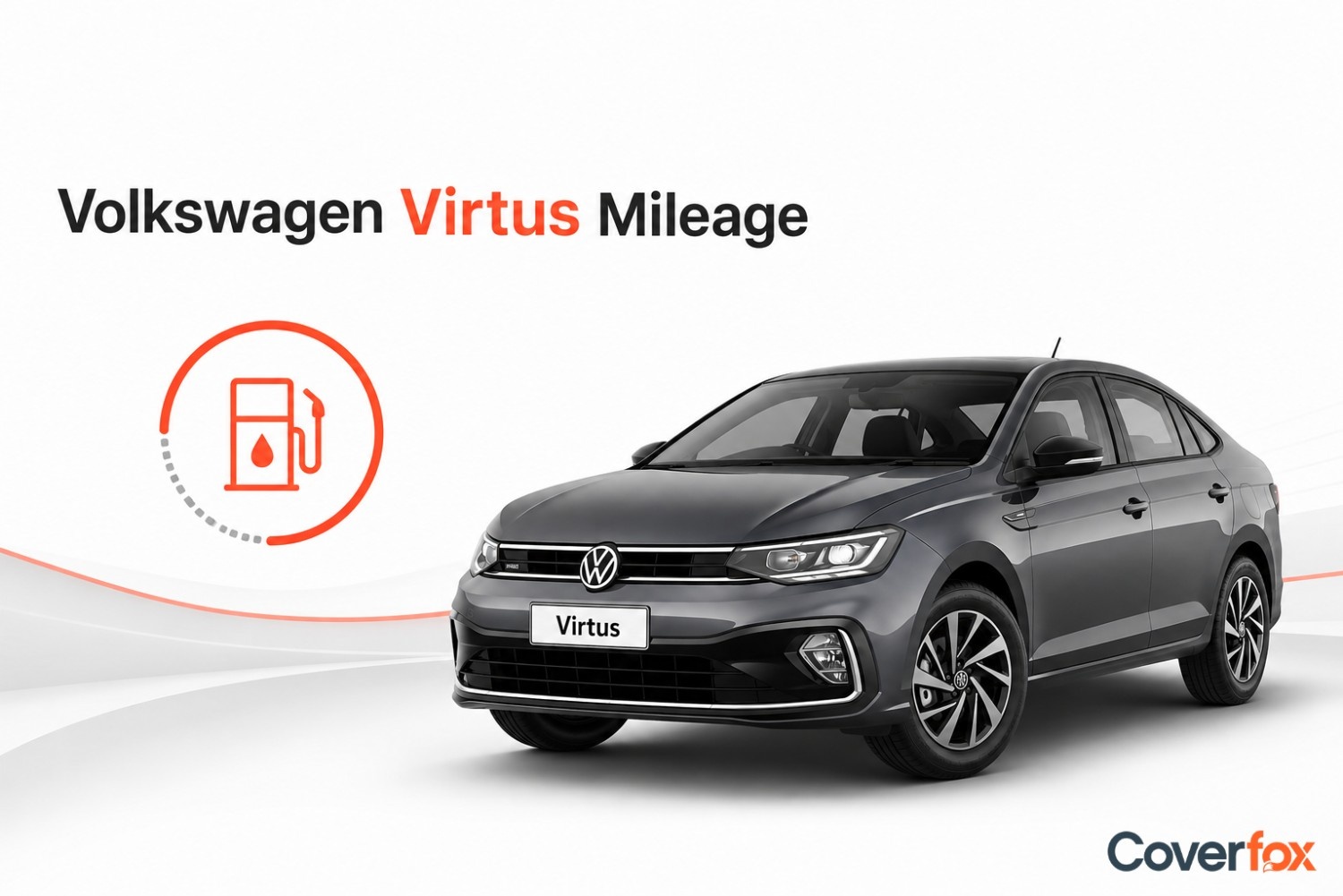
ARAI Mileage: 18.45 km/l to 20.8 km/l
Real-World Mileage: 12 km/l to 18 km/l
City Mileage: 9 km/l to 14 km/l
Highway Mileage: 16 km/l to 20 km/l
(May differ as per variants and road conditions)
The Volkswagen Virtus is available with multiple engine and transmission combinations, with mileage figures varying across variants.
| Variant | ARAI Mileage |
|---|---|
| Virtus 1.0 TSI MT | 20.8 km/l |
| Virtus 1.0 TSI AT | 18.45 km/l |
| Virtus 1.5 TSI DSG | 19.62 km/l |
While ARAI mileage figures are measured under controlled test conditions, the actual fuel efficiency of the Volkswagen Virtus can vary in everyday driving. These certified figures are typically achieved in laboratory environments with ideal speed, load, and road conditions, which may not reflect real-world usage. In practical driving situations, factors such as traffic congestion, frequent braking, and stop-and-go city conditions can reduce overall mileage. Driving habits like rapid acceleration or high-speed driving on highways can also impact fuel efficiency. Additionally, regular maintenance, tyre pressure, and vehicle load play an important role in determining the actual mileage experienced by owners.
City Mileage: 9 km/l to 14 km/l
Highway Mileage: 16 km/l to 20 km/l
Combined Real-World Mileage: 12 km/l to 18 km/l
Best Fuel Efficiency: Typically achieved on highways with steady speeds and minimal traffic.
Lower Fuel Efficiency: Usually experienced during stop-and-go city driving and heavy traffic conditions.
The Volkswagen Virtus combines a sizable fuel tank with efficient petrol engines, allowing it to cover long distances between refuelling stops.
Fuel Tank Capacity: 45 litres
Estimated Driving Range: 830 km to 935 km on a full tank (based on ARAI mileage figures)
Suitable For: Daily commuting, intercity travel, and long highway journeys with fewer fuel stops.
Following a few manufacturer-recommended driving and maintenance practices can help improve the fuel efficiency of the Volkswagen Virtus in everyday usage.
Maintain tyre pressure between 32 PSI and 36 PSI for optimal fuel efficiency.
Check tyre pressure at least once every month to avoid increased fuel consumption.
Avoid carrying excess weight, as removing around 45 kg (100 lbs) can improve fuel efficiency by approximately 1%.
Use the recommended engine oil, which can improve fuel consumption by up to 2%.
Keep tyres properly inflated, which can improve fuel efficiency by up to 3%.
Avoid aggressive driving, as sudden acceleration and hard braking can reduce fuel efficiency by 15%–30% on highways and 10%–40% in city traffic.
Maintain the recommended tread depth above 1.6 mm to reduce rolling resistance and maintain efficient performance.
Below are the Volkswagen Virtus Mileage Compared to Rivals:
| Model | Engine | ARAI Mileage |
|---|---|---|
| Volkswagen Virtus | 1.0L TSI / 1.5L TSI Petrol | 18.45 km/l – 20.8 km/l |
| Honda City | 1.5L i-VTEC Petrol | 17.8 km/l – 18.4 km/l |
| Hyundai Verna | 1.5L MPi / 1.5L Turbo GDi Petrol | 18.6 km/l – 20.6 km/l |
| Skoda Slavia | 1.0L TSI / 1.5L TSI Petrol | 18.73 km/l – 20.32 km/l |
| Maruti Suzuki Ciaz | 1.5L K-Series Petrol | 20.04 km/l |
| Honda City e:HEV | 1.5L Petrol Hybrid | 27.13 km/l |
Note: Mileage figures are ARAI-certified and may vary depending on the variant, driving conditions, traffic, and vehicle maintenance.
Yes, the Volkswagen Virtus is considered fuel-efficient for daily use, especially the 1.0L TSI variants, which offer a good balance of performance and economy. Its competitive mileage figures, comfortable ride quality, and long driving range make it well-suited for both city commutes and regular highway travel. To further optimise ownership costs, pairing the Virtus with a comprehensive car insurance policy can help protect against unexpected repair and accident-related expenses.
The Volkswagen Virtus offers an ARAI-claimed mileage ranging from 18.45 km/l to 20.8 km/l, depending on the engine and transmission variant.
The Volkswagen Virtus 1.0 TSI Manual delivers the highest ARAI-certified mileage of 20.8 km/l among the Virtus lineup.
Yes, the Volkswagen Virtus is well-suited for long drives thanks to its comfortable cabin, stable high-speed performance, large boot space, and fuel-efficient turbo-petrol engines.
In real-world city driving conditions, the Volkswagen Virtus typically delivers around 9 km/l to 14 km/l, depending on traffic, driving habits, and the variant.
Generally, automatic variants offer slightly lower mileage than manual variants. However, the difference is relatively small, and actual fuel efficiency depends on driving conditions and usage patterns.
Volkswagen recommends using petrol that meets the fuel specifications mentioned in the owner's manual. Higher-octane fuel may help optimise performance in turbocharged variants.
The Volkswagen Virtus offers a higher maximum ARAI mileage of 20.8 km/l, while the Honda City delivers up to 18.4 km/l in its petrol variants. Actual mileage may vary depending on the variant and driving conditions.
Maintaining correct tyre pressure, avoiding aggressive acceleration and braking, servicing the vehicle regularly, and reducing unnecessary load can help improve fuel efficiency.
The Volkswagen Virtus GT 1.5 TSI DSG offers an ARAI-certified mileage of 19.62 km/l.
Yes, using the air conditioner can slightly reduce fuel efficiency because it places an additional load on the engine, especially during city driving.
The Volkswagen Virtus comes with a 45-litre fuel tank, allowing it to cover long distances between fuel stops.

