
- Retail Insurance
- Business Insurance
- Resources
- Claims


Add-ons in a two-wheeler insurance policy are like an extra layer of protection that adds to the base protection offered by the insurer. While standard policies cover basic risks, add-ons help bridge coverage gaps by offering financial protection against specific situations such as depreciation, engine damage, or roadside emergencies. Choosing the right add-on will ensure you are covered for every situation, but make sure to select only the necessary add-on, as it will also affect your bike insurance premium price.
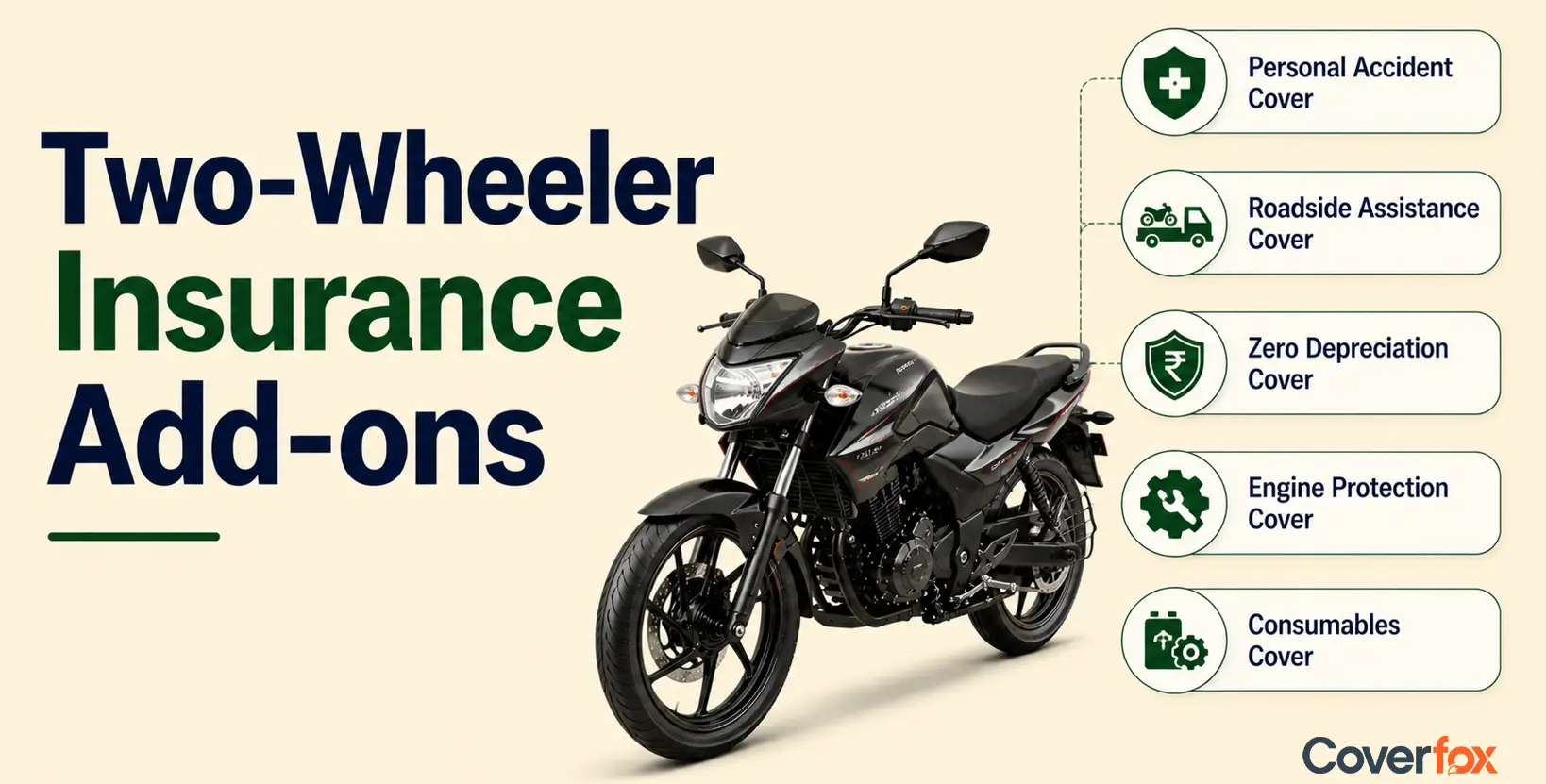
Add-on covers, also known as riders, are optional benefits that you can purchase along with a base two wheeler insurance, such as comprehensive or standalone own damage cover. These add-ons enhance your policy by offering extra financial protection beyond standard coverage, covering specific risks or expenses. While they are not mandatory, they are highly recommended based on your riding habits, location, and overall usage of the bike.

Disclaimer: The above mentioned prices are for a 2 year old Hero Honda Karizma R 223 CC, registered in Navi Mumbai & previous policy has expired.
Add-ons in bike insurance are necessary because they strengthen your base bike policy by covering gaps that standard coverage does not address, ensuring better financial protection.
Help minimise out-of-pocket expenses during claims, especially for repairs and replacements
Provide specialised coverage such as tyre protection, zero depreciation, and roadside assistance
Ensure higher claim value by reducing depreciation-related deductions
Offer protection against specific risks like water damage, consumables, or breakdowns
Allow policy customisation based on riding habits, location, and bike usage
Improve overall peace of mind by covering unexpected and high-cost situations
Add-on covers are supported only by certain types of bike insurance policies that allow customisation and extended protection. They are available with comprehensive bike insurance and standalone own damage (OD) bike policies, where you can enhance coverage by paying an extra premium. However, third-party bike insurance plans do not support add-ons, as they only cover legal liabilities and offer no scope for customisation.
Add-on covers in bike insurance can be purchased at the time of buying a new bike insurance policy or during the renewal of an existing policy. They allow you to enhance your coverage based on your current needs and usage. However, most insurers do not allow add-ons to be included in the middle of an active policy term, so it is best to select or upgrade them during purchase or renewal.
Add-ons increase your bike insurance premium slightly, but they help reduce major expenses during claims.
For Example:
Base comprehensive policy premium: ₹2,000
Adding add-ons (zero dep + engine protection): ₹2,600–₹2,800 premium
In case of a claim (₹10,000 repair bill):
Without add-ons:
Depreciation + exclusions → you pay ₹3,000–₹4,000
With add-ons:
Most costs covered → you pay only ₹0–₹500
Key takeaway:
Small increase in premium upfront
Significant savings during claims
Better financial protection and peace of mind
You can opt for bike insurance add-ons if you have own damage or comprehensive bike insurance policies. Here is the complete list of two-wheeler insurance add-ons:
Eliminates depreciation deductions on bike parts during claims, ensuring a higher or near full claim settlement. It is most beneficial for new bikes and is usually available for bikes up to 5 years old.
Covers the cost of consumable items like engine oil, nuts, bolts, grease, and washers, which are otherwise excluded in standard policies.
Provides coverage for tyre damages such as cuts, bulges, and bursts, including repair and labour charges.
Protects your No Claim Bonus even after making a claim, allowing you to retain your premium discount benefits.
Offers compensation for daily travel expenses when your bike is under repair, either as a fixed amount per day or reimbursement of transport costs.
Reimburses the original invoice value of the bike instead of the depreciated IDV in case of total loss or theft.
Covers loss or damage to personal items such as bags or gadgets kept on the bike during an accident, excluding valuables like cash or important documents.
Covers engine damage caused by water ingress or oil leakage, which is typically not included in standard bike insurance policies.
Provides financial protection to pillion riders in case of accidental injury, disability, or death.
Covers the cost of replacing lost or stolen keys, including lockset replacement if required.
Offers emergency support such as towing, battery jumpstart, flat tyre assistance, fuel delivery, and minor on-site repairs.
Covers aftermarket accessories like LED lights, USB chargers, customised seats, and other modifications added to the bike.
Reimburses the cost of replacing a helmet if it is damaged in an accident.
Provides financial assistance for breakdowns occurring far from home, including accommodation or travel expenses.
Covers electric bike components such as the battery, motor, charger, and includes EV-specific roadside assistance services.
| Zero Depreciation Cover | No Claim Bonus Cover | Roadside Assistance Cover |
| Return to Invoice Cover | Consumables Cover | Engine Protection Cover |
| Passenger Assistance Cover | Personal Accident Cover |
| Rider Type / Usage | Recommended Add-ons | Why It Matters |
| Daily Commuters | Roadside Assistance (RSA), Consumables Cover | Helps manage frequent usage, minor repairs, and daily wear-and-tear expenses |
| Touring Riders | RSA, Engine Protection Cover | Ensures support during long rides and protects engine from unexpected damage |
| New Bike Owners | Zero Depreciation Cover, Return to Invoice (RTI) | Maximises claim value and protects against early-stage depreciation losses |
| Premium Bike Owners | Accessories Cover, Engine Protection Cover | Covers expensive parts, modifications, and high repair costs |
| Couples / Pillion Usage | Pillion Rider Cover | Provides financial protection for pillion riders during accidents |
| Electric Bike Owners | EV Shield Add-on | Covers battery, motor, charger, and EV-specific risks |
Choosing the right add-ons for your bike insurance depends on your usage, risk exposure, and budget, as some covers are essential while others are optional.
Bike age (new bikes benefit from zero depreciation and RTI)
Riding frequency (daily use requires RSA and consumables cover)
Location (flood-prone areas need engine protection cover)
Risk exposure (long rides or highways increase need for RSA and tyre cover)
Budget (balance premium cost with expected benefits)
Type of bike (premium bikes may need accessories and engine protection)
Choosing the right add-ons can significantly improve your financial protection, especially in real-world riding scenarios.
Ensures maximum claim settlement by eliminating depreciation, making it highly useful for new bikes
Provides immediate help during breakdowns, which is essential for both daily commuters and long-distance riders
Helps retain your No Claim Bonus even after a claim, saving money on future premiums
Crucial for riders in flood-prone or waterlogged areas, as it covers costly engine repairs not included in standard policies
Covers small but frequent expenses like engine oil and nuts, reducing out-of-pocket costs during claims
The cost of add-ons varies based on the type of cover, bike model, and insurer, but they typically come at a reasonable additional premium.
~15%–25% of base premium
~₹300–₹800 per year
~₹100–₹500 per year
~₹200–₹400 per year
~₹100–₹300 per year
Note: All add-on premiums are subject to 18% GST, which is added to the total premium amount. The final cost depends on factors such as bike value, age, location, and number of add-ons selected. Prices may differ from insurer to insurer, and the above-mentioned prices are for reference only.
Even though add-ons provide an additional protection layer, some common exclusions still persist:
General wear and tear or ageing of parts beyond policy terms
Mechanical or electrical breakdown not caused by an accident (unless specifically covered)
Damage due to negligent riding, illegal activities, or driving without a valid licence
Claims made outside the geographical limits of the policy (unless covered under specific add-ons)
Consequential damages not directly linked to the insured event (unless engine protection is opted)
Use of the bike for commercial or unauthorised purposes
War, nuclear risks, or intentional damage
Add-ons not selected at the time of policy purchase or renewal
Claiming add-on benefits follows the standard claim process, but approval depends on the specific add-ons you have opted for and their conditions.
Inform insurer & mention add-ons clearly
While reporting the claim, specify applicable add-ons like zero dep, engine protection, or consumables so they are considered during assessment
Surveyor checks add-on applicability
The surveyor verifies not just the damage, but whether it qualifies under the selected add-ons (for example, engine damage due to water ingress for engine cover)
Repairs at network garage preferred
Add-ons like zero depreciation and consumables cover are easier to process under cashless claims at authorised garages
Add-on specific conditions to note
Usually limited to 1–2 claims per year depending on the insurer and mostly applicable for bikes up to 5 years old
Covers only specific scenarios like water ingress or oil leakage, not general wear and tear
Pays for items like oil and grease only if linked to an approved claim
Applicable only in case of accidental damage, not normal wear
Allows you to retain your No Claim Bonus even after making a claim, but only up to a specified number of claims
Cashless
Add-on benefits are directly applied, reducing your final payable amount
Reimbursement
You need to submit bills, and the insurer reimburses eligible costs including add-on coverage
Add-ons, also called riders, are optional covers that you can purchase along with a comprehensive or standalone own damage policy to enhance your protection. They cover specific risks and expenses that are not included in a standard policy, helping reduce your out-of-pocket costs during claims.
The best add-ons depend on your usage, but the most recommended ones include zero depreciation, roadside assistance (RSA), engine protection, NCB protection, and consumables cover. These provide maximum real-world benefits by covering common expenses like depreciation, breakdowns, engine damage, and minor repair costs.
No, add-ons are not available with third-party insurance as it only covers legal liabilities towards third parties. To use add-ons, you need a comprehensive or standalone own damage policy, which allows customisation.
Yes, add-ons increase your premium because they provide additional coverage. However, the increase is relatively small compared to the potential savings during claims, as they significantly reduce expenses like depreciation, consumables, and major repair costs.
In most cases, add-ons can only be selected at the time of policy purchase or renewal. Insurers usually do not allow mid-term addition of add-ons, so it is important to choose them carefully while buying or renewing your policy.
For new bikes, zero depreciation cover and return to invoice (RTI) are the most valuable. Zero dep ensures full claim settlement without depreciation deductions, while RTI helps recover the original invoice value in case of total loss or theft.
Yes, add-ons are flexible and can be added or removed during policy renewal. This allows you to customise your coverage based on your current usage, bike age, and budget.
Yes, add-ons are available for used bikes, but some covers have eligibility limits. For example, zero depreciation is usually available only for bikes up to 5 years old, while others like RSA or engine protection can be opted for older bikes as well.
Yes, you can claim multiple add-ons in a single claim if they are applicable to the damage. For instance, zero depreciation, consumables cover, and engine protection can all be used together to minimise your out-of-pocket expenses.
Yes, EV-specific add-ons are highly recommended for electric bikes as they cover critical components like the battery, motor, and charger, along with EV-specific roadside assistance, which are not covered under standard policies.
If you do not renew an add-on, its coverage will stop, and you will no longer receive its benefits during claims. This means you may have to pay for expenses like depreciation, consumables, or engine repairs out of your own pocket.
Yes, zero depreciation cover is one of the most valuable add-ons, especially for new and premium bikes. It ensures maximum claim settlement by eliminating depreciation deductions, though it may have limits such as 1–2 claims per year and age restrictions.
To claim add-ons, you need to inform your insurer immediately after an incident and clearly mention the add-ons you have opted for. A surveyor will assess whether the damage qualifies under those add-ons, and repairs are usually carried out at a network garage. The final settlement is done through cashless or reimbursement mode, where applicable add-on benefits are included to reduce your overall expenses.

