


The TVS XL 100 is one of India's most trusted mopeds, known for its durability, affordability, and impressive fuel efficiency. Whether you use it for daily commuting, carrying goods, or business purposes, fuel economy remains one of the biggest reasons behind its popularity. If you're planning to buy this practical two-wheeler, understanding the TVS XL 100 mileage can help you estimate your running costs and overall value.
The TVS XL 100 mileage is one of the biggest reasons for its popularity among commuters and business owners. Powered by a 99.7cc EcoThrust Fuel Injection (ET-Fi) engine, the moped delivers a claimed mileage of around 65 kmpl while offering reliable performance for daily use. The TVS XL 100 has a fuel tank capacity of 4 litres, which includes a reserve capacity of approximately 1.25 to 1.3 litres.
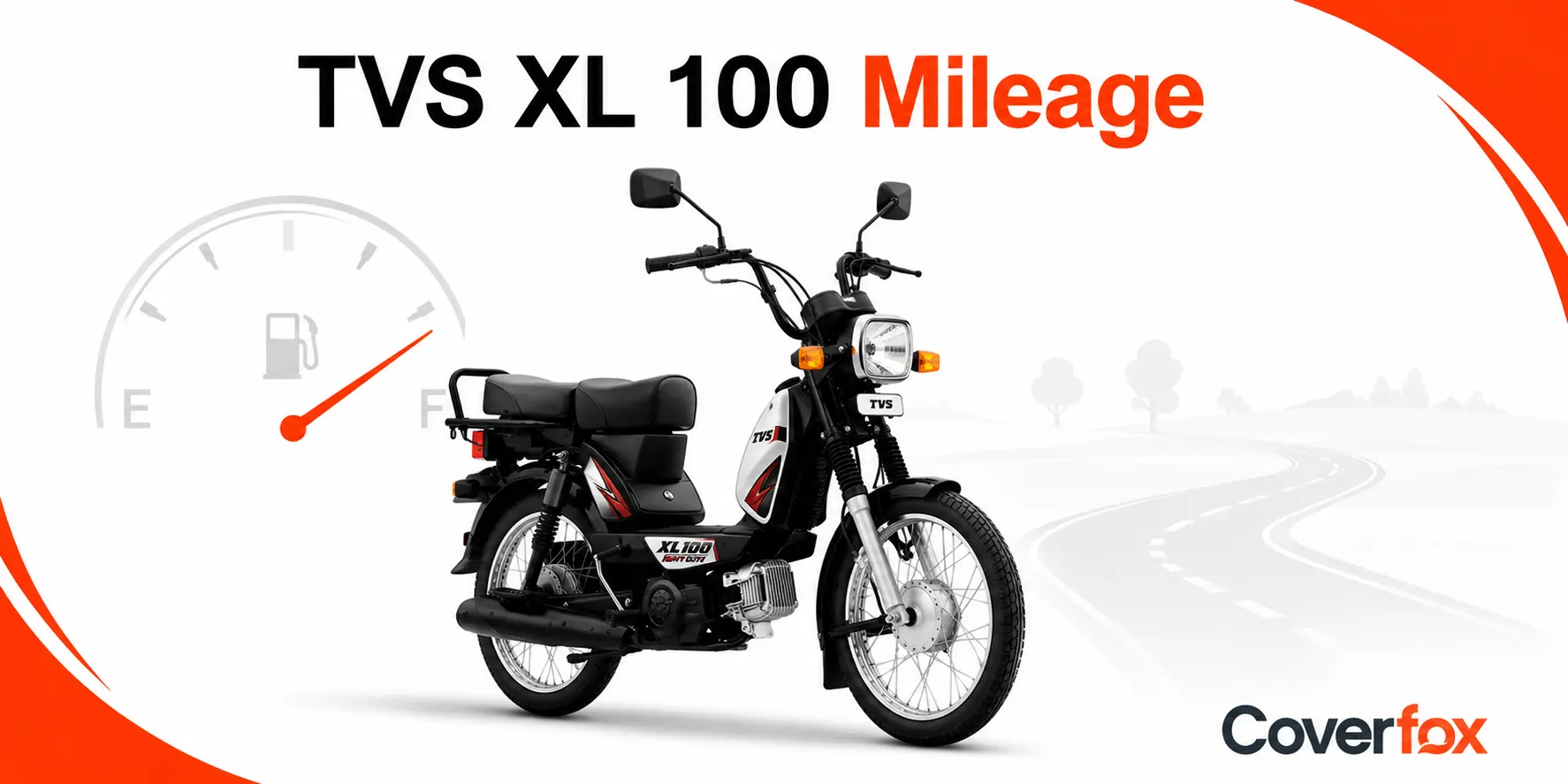
Its lightweight design, automatic transmission, and ability to carry loads make it a practical choice for both personal and commercial applications. The impressive TVS XL mileage helps keep running costs low, making it an economical option for everyday commuting and goods transportation. Along with choosing the right vehicle, having suitable two wheeler insurance can help you stay financially protected against unexpected expenses on the road.
Many buyers want to know the actual XL 100 mileage per liter they can expect during everyday usage.
The ARAI-certified TVS XL 100 mileage is approximately 65 kmpl. This figure is achieved under controlled testing conditions.
In practical riding conditions, the TVS XL 100 average mileage generally falls between:
City Riding: 55 - 60 kmpl
Highway Riding: 60 - 65 kmpl
Mixed Usage: 57 - 62 kmpl
The actual mileage may vary depending on road conditions, riding style, maintenance, and load carried.
Mileage figures can vary significantly depending on where the vehicle is ridden.
In urban traffic conditions with frequent stops and starts, the TVS XL 100 mileage per liter generally ranges between 55 kmpl and 60 kmpl.
On open roads with consistent speeds, riders can achieve around 60 kmpl to 65 kmpl, making the XL 100 one of the most fuel-efficient utility two-wheelers available.
The excellent TVS XL 100 average fuel efficiency comes from several engineering features.
The latest fuel-injected engine improves fuel combustion efficiency and helps deliver better mileage compared to older carbureted models. According to TVS, the ET-Fi system can improve fuel economy by up to 15%.
With a kerb weight of around 88–89 kg, the XL 100 requires less energy to move, contributing to better fuel efficiency.
The centrifugal clutch and single-speed automatic transmission ensure smooth power delivery while reducing fuel wastage caused by incorrect gear shifts.
The 99.7cc engine is tuned primarily for torque and efficiency rather than outright performance, helping maximize the TVS XL mileage.
Several factors can influence the actual TVS XL 100 mileage you experience.
The XL 100 is built to carry heavy loads, but carrying maximum payload regularly can reduce fuel efficiency.
Aggressive acceleration and constant high-speed riding can lower mileage.
Under-inflated tyres increase rolling resistance and negatively impact fuel economy.
Dirty air filters, old engine oil, and neglected servicing can reduce engine efficiency and mileage.
Frequent riding on rough roads, steep inclines, or congested traffic can decrease the XL 100 mileage.
If you want to get the best possible TVS XL 100 mileage per liter, follow these simple tips:
Maintain recommended tyre pressure.
Service the vehicle regularly.
Avoid unnecessary idling.
Accelerate smoothly and ride at moderate speeds.
Use quality fuel from trusted fuel stations.
Avoid carrying excessive weight beyond the recommended payload limit.
Keep the air filter clean and replace it when required.
Following these practices can help maintain the excellent TVS XL 100 average fuel efficiency over the long term.
All TVS XL 100 variants are powered by the same 99.7cc EcoThrust Fuel Injection (ET-Fi) engine. As a result, the claimed mileage remains largely similar across the lineup. The main differences lie in features such as electric start, alloy wheels, and styling elements rather than fuel efficiency.
| TVS XL 100 Variant | Claimed Mileage |
| TVS XL 100 Heavy Duty | 65 to 67 kmpl |
| TVS XL 100 Heavy Duty i-Touchstart | 65 kmpl |
| TVS XL 100 Heavy Duty Winner Edition | 65 kmpl |
| TVS XL 100 Comfort i-Touchstart | 65 kmpl |
When compared to other commuter-focused two-wheelers, the TVS XL 100 offers competitive fuel efficiency while also providing superior load-carrying capability.
| Model | Claimed Mileage |
| TVS XL 100 | 65 kmpl |
| Hero HF Deluxe | 70 kmpl |
| Bajaj Platina 100 | 70 kmpl |
| TVS Sport | 80 kmpl |
| TVS Radeon | 74 kmpl |
While some commuter motorcycles may offer slightly higher mileage figures, the TVS XL 100 stands out because of its utility-focused design, automatic transmission, and ability to carry heavier loads. This makes it a practical choice for both personal and commercial use.
The claimed TVS XL 100 mileage per liter is around 65 kmpl. In real-world riding conditions, users can expect an average mileage of 55 kmpl to 60 kmpl depending on riding habits, road conditions, and load carried.
The TVS XL 100 Heavy Duty mileage per liter is around 55 kmpl to 60 kmpl in real-world riding conditions. Under heavy load usage, mileage may reduce to approximately 50 kmpl to 55 kmpl, while the claimed mileage stands at 65 kmpl.
The TVS XL 100 average mileage in city traffic generally ranges between 55 kmpl and 60 kmpl. Frequent braking, traffic congestion, and carrying loads can slightly affect fuel efficiency.
The TVS XL 100 Heavy Duty mileage per liter is around 55 kmpl to 60 kmpl in practical usage. Under ideal riding conditions, it can deliver close to the claimed mileage of 65 kmpl.
Yes, the TVS XL 100 is well-suited for daily commuting. Its fuel-efficient engine, automatic transmission, lightweight design, and low maintenance requirements make it a practical choice for everyday use.
The TVS XL 100 comes with a 4-litre fuel tank and a reserve capacity of approximately 1.25 litres, allowing riders to cover long distances between fuel stops.
With a fuel tank capacity of 4 litres and an average mileage of around 55-60 kmpl, the TVS XL 100 can travel approximately 220 km to 240 km on a full tank under normal riding conditions.
Yes, carrying heavy loads can reduce mileage because the engine has to work harder. However, the TVS XL 100 is specifically designed for utility purposes and continues to deliver respectable fuel efficiency even when carrying cargo.
The TVS XL 100 has a top speed of around 58 kmph, making it ideal for city commuting, rural transportation, and commercial use.
Most TVS XL 100 variants share the same 99.7cc fuel-injected engine and offer similar fuel efficiency. Actual mileage depends more on riding conditions and load than on the variant itself.
Yes, the TVS XL 100 is designed for utility use and can carry substantial loads. Its strong chassis, high payload capacity, and fuel-efficient engine make it a popular choice among small business owners and delivery riders.
The TVS XL 100 is powered by a 99.7cc single-cylinder, air-cooled, fuel-injected engine that balances fuel efficiency with load-carrying performance.
In terms of fuel efficiency and running costs, the TVS XL 100 generally offers better mileage than many conventional scooters, making it a cost-effective option for daily transportation and business use.

