Winter increases health risks due to cold, dry air, reduced sunlight, and indoor crowding, which weaken immunity and allow infections to spread more easily.
Common winter issues include respiratory infections, skin and joint problems, cold-related conditions, emotional low mood, and increased cardiovascular strain, with overlapping symptoms across illnesses.
Practical prevention through nutrition, hygiene, warmth, vaccination, and timely medical care, supported by health insurance, helps manage winter health risks effectively.
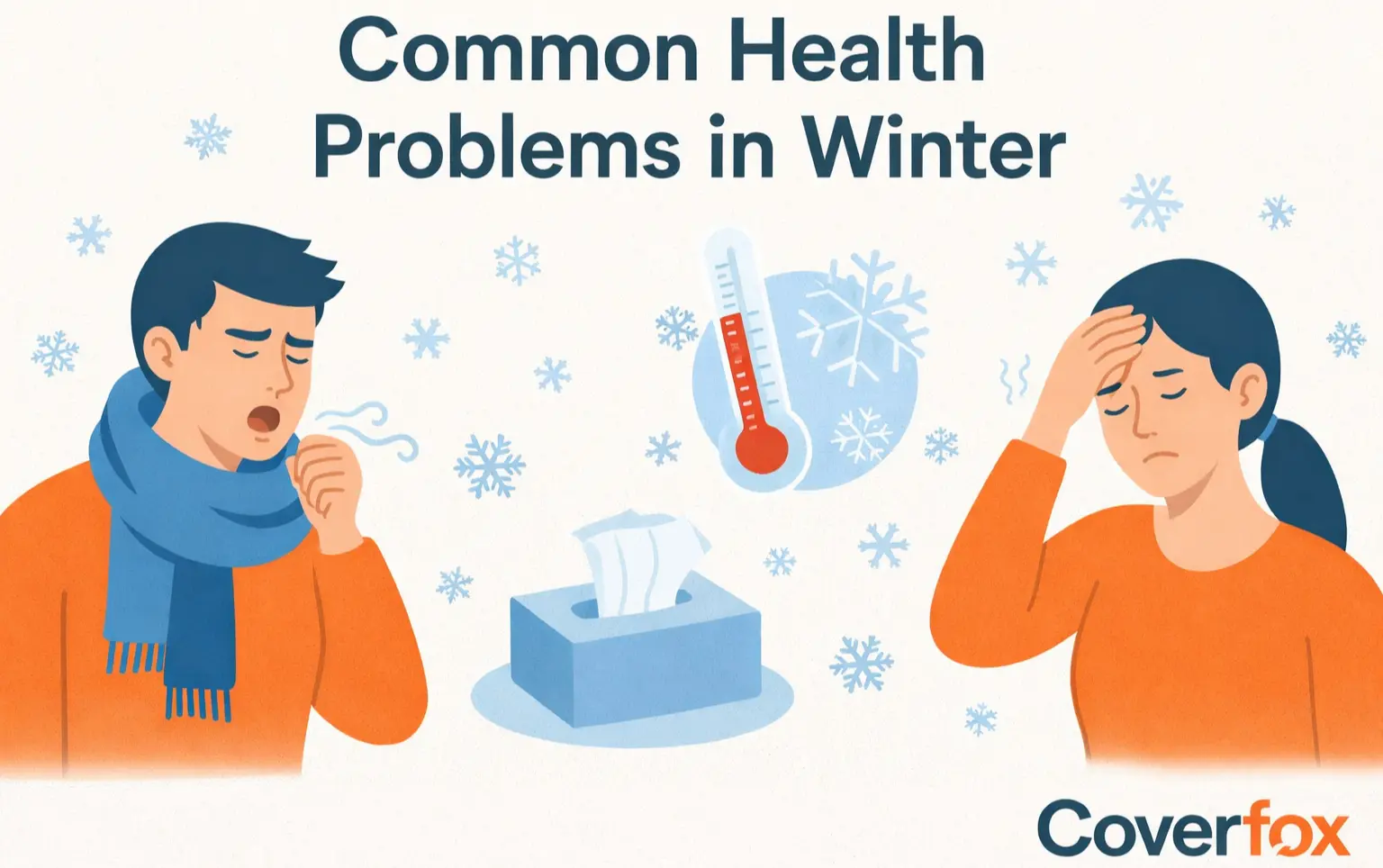
Cold, cough, dry skin, and respiratory issues are just the tip of the iceberg when it comes to health problems that tend to surface during winter. As temperatures drop, the risk of seasonal illnesses increases, making it important to prepare your body for the challenges of cold weather. This article helps you stay winter-ready by highlighting the most common health issues during the season, their causes, key symptoms, and practical ways to prevent them.
Why Do Health Issues Increase During Winter?
-
Cold temperatures and low humidity weaken immunity
Cold weather and dry air slow down the body’s natural defence response, making it harder to fight off infections.
-
Dry air dries nasal passages and reduces natural protection
Lack of moisture dries out the nose and throat, reducing their ability to trap and block germs.
-
Viruses survive longer in cold, dry conditions
Many viruses remain active for longer in cold, dry air, increasing the chances of infection from air and surfaces.
-
Reduced sunlight causes vitamin D deficiency and mood changes
Shorter days mean less sunlight, which can lower vitamin D levels and affect mood, sleep, and overall immunity.
-
Increased indoor crowding speeds up virus transmission
People spend more time indoors in winter, allowing germs to spread faster through close contact.
-
Cold-induced blood vessel constriction increases heart strain
Cold causes blood vessels to narrow, raising blood pressure and putting extra stress on the heart.

Most Common Winter Health Issues and Diseases
Winter brings a range of health issues, as cold weather, dry air, and reduced immunity make the body more vulnerable to infections and seasonal illnesses.
1. Respiratory Infections
-
Common cold and flu
Viral infections that cause cough, fever, body aches, and a runny nose, spreading faster in winter due to close indoor contact and longer virus survival.
-
COVID-19
A viral respiratory illness with symptoms similar to the cold and flu, increasing in winter as indoor crowding and reduced ventilation raise transmission risk.
-
Bronchitis and pneumonia
Infections that inflame the airways or lungs, becoming more common in winter as cold air irritates the respiratory tract and immunity weakens.
-
Strep throat
A bacterial throat infection causing severe sore throat and fever, spreading easily in winter through close contact in enclosed spaces.
-
Sinusitis
Inflammation of the sinuses leading to congestion, facial pain, and headaches, often triggered in winter by cold air, infections, and blocked nasal passages.
2. Skin and Body-Related Issues
-
Dry skin and eczema
Cold, dry air removes natural moisture from the skin, causing dryness, itching, and worsening of eczema during winter.
-
Joint pain and arthritis flare-ups
Cold weather makes joints and surrounding tissues stiff, increasing pain and discomfort, especially in people with arthritis.
-
Asthma flare-ups
Breathing in cold air can irritate the airways, triggering coughing, wheezing, and asthma attacks.
3. Cold-Related and Environmental Conditions
-
Hypothermia
Prolonged exposure to cold lowers body temperature, affecting normal body functions.
-
Frostbite
Extreme cold damages skin and tissues, commonly affecting fingers, toes, ears, and the nose due to reduced blood flow.
-
Higher risk during extreme cold spells
Sudden drops in temperature increase stress on the body, raising the likelihood of cold-related illnesses and complications.
4. Emotional Stress During Winter
-
Reduced sunlight can lead to Seasonal Affective Disorder (SAD), causing fatigue, low motivation, and persistent tiredness.
5. Cardiovascular Risks in Cold Weather
-
Blood vessel constriction in cold weather
Cold temperatures cause blood vessels to narrow, reducing blood flow and forcing the heart to work harder.
-
Increased blood pressure
Narrowed blood vessels raise blood pressure levels, increasing stress on the heart.
-
Higher risk of heart attack and stroke
The combination of cold, higher blood pressure, and added heart strain increases cardiovascular risk, especially in high-risk individuals.
Common Symptoms of Winter Health Problems
Many winter illnesses share overlapping symptoms, which can make them easy to overlook or confuse with one another.
1. Respiratory and Viral Symptoms
Runny or blocked nose, sneezing, sore throat
Cough (dry or with mucus), wheezing
Fever, chills, body aches, fatigue, headache
Shortness of breath or chest discomfort in severe cases
2. Digestive Symptoms (Winter Viral Infections)
Diarrhoea, vomiting, nausea
Stomach cramps with or without fever
3. Skin and Joint-Related Symptoms
Dry, itchy, flaky skin
Cracked lips and heels
Dandruff and eczema flare-ups
Joint stiffness and increased pain
4. Mental Well-Being and Mood Changes
Low mood or persistent sadness
Fatigue and low energy levels
Changes in sleep and appetite
Who Is More Vulnerable to Winter Health Issues?
Older adults (65+), infants, young children, and pregnant women
People with chronic conditions such as asthma, COPD, heart disease, diabetes, eczema, or psoriasis
Individuals with weakened immune systems
Tips to Stay Healthy and Safe During Winter
-
Health and Wellness Tips
Eat immunity-boosting foods and get natural vitamin D
Stay hydrated with warm fluids
Maintain a balanced diet
Engage in regular physical activity
Aim for 7–8 hours of quality sleep
Practise good hygiene
Take care of emotional well-being
-
Safety and Protection Measures
Dress in warm layers
Use home heating safely
Ensure carbon monoxide detectors work
Check vehicles before winter travel
Stay up to date with recommended vaccines
Home Remedies for Common Winter Illnesses
-
For Congestion and Nasal Stuffiness
Steam inhalation, humidifiers, warm fluids, and saline nasal rinses help clear airways.
-
For Sore Throat and Cough
Honey, warm salt-water gargles, and herbal teas can soothe throat irritation.
-
General Home Care and Immunity Support
Stay hydrated, limit alcohol and caffeine, eat vitamin C–rich foods, and prioritise rest.
Note: These remedies support mild symptoms and comfort—they are not replacements for medical care.
When Should You See a Doctor During Winter?
Consult a doctor if symptoms persist or worsen.
Seek immediate care for high fever, breathing difficulty, chest pain, severe weakness, or dehydration.
How Health Insurance Helps Manage Medical Costs During Winter?
Health insurance helps manage medical costs during winter by covering expenses related to doctor consultations, hospitalisation, and treatments for seasonal illnesses. It reduces the financial burden of unexpected medical emergencies, including respiratory infections and complications. Many policies also offer cashless treatment at network hospitals and coverage for pre- and post-hospitalisation care, ensuring timely access to treatment without financial stress.
Disclaimer: The information provided in this article is for general awareness and informational purposes only and should not be considered medical advice, diagnosis, or treatment. Health conditions and symptoms may vary from person to person. Always consult a qualified doctor or healthcare professional for personalised medical guidance, especially in case of persistent symptoms, existing health conditions, or medical emergencies. Any references to health insurance are indicative in nature and subject to the terms, conditions, and coverage limits of individual policies.
Read More:
FAQs on Winter Health Issues
Why do people get sick more often in winter?
Cold, dry air weakens natural defences, viruses survive longer, and people spend more time indoors, making infections spread faster.
What are the most common winter illnesses?
Common winter illnesses include colds, flu, COVID-19, bronchitis, sinus infections, asthma flare-ups, and seasonal stomach infections.
How can I prevent colds and flu during winter?
Maintain good hygiene, eat a balanced diet, stay hydrated, get enough sleep, exercise regularly, and avoid close contact with sick individuals.
Who is most vulnerable to winter health problems?
Older adults, infants and young children, pregnant women, and people with chronic illnesses or weakened immunity are more vulnerable in winter.
How does winter affect the immune system?
Reduced sunlight, lower vitamin D levels, cold stress, and poor sleep can weaken the body’s ability to fight infections.
Why does skin get dry and itchy in winter?
Low humidity and indoor heating strip moisture from the skin, leading to dryness, itching, and flare-ups of conditions like eczema.
How can I prevent joint pain or arthritis flare-ups in cold weather?
Keep joints warm, stay physically active, maintain a healthy weight, and follow a regular stretching or exercise routine.
What foods or vitamins boost immunity in winter?
Foods rich in vitamin C, vitamin D, zinc, and antioxidants—such as citrus fruits, vegetables, nuts, seeds, and warm homemade meals—support immunity.
When should I see a doctor for winter illnesses?
Consult a doctor if symptoms worsen, last more than a few days, or include high fever, breathing difficulty, chest pain, or severe weakness.
Can cold weather cause mood changes or Seasonal Affective Disorder (SAD)?
Yes, reduced sunlight during winter can affect mood, energy, sleep, and motivation, sometimes leading to Seasonal Affective Disorder.


.webp)
 in Insurance.webp)