IPD, or In-Patient Department, is the hospital section where patients stay for extended care, usually 24 hours or longer. It provides round-the-clock medical supervision, specialized treatment, and post-surgery recovery for conditions that cannot be managed through OPD or emergency visits.
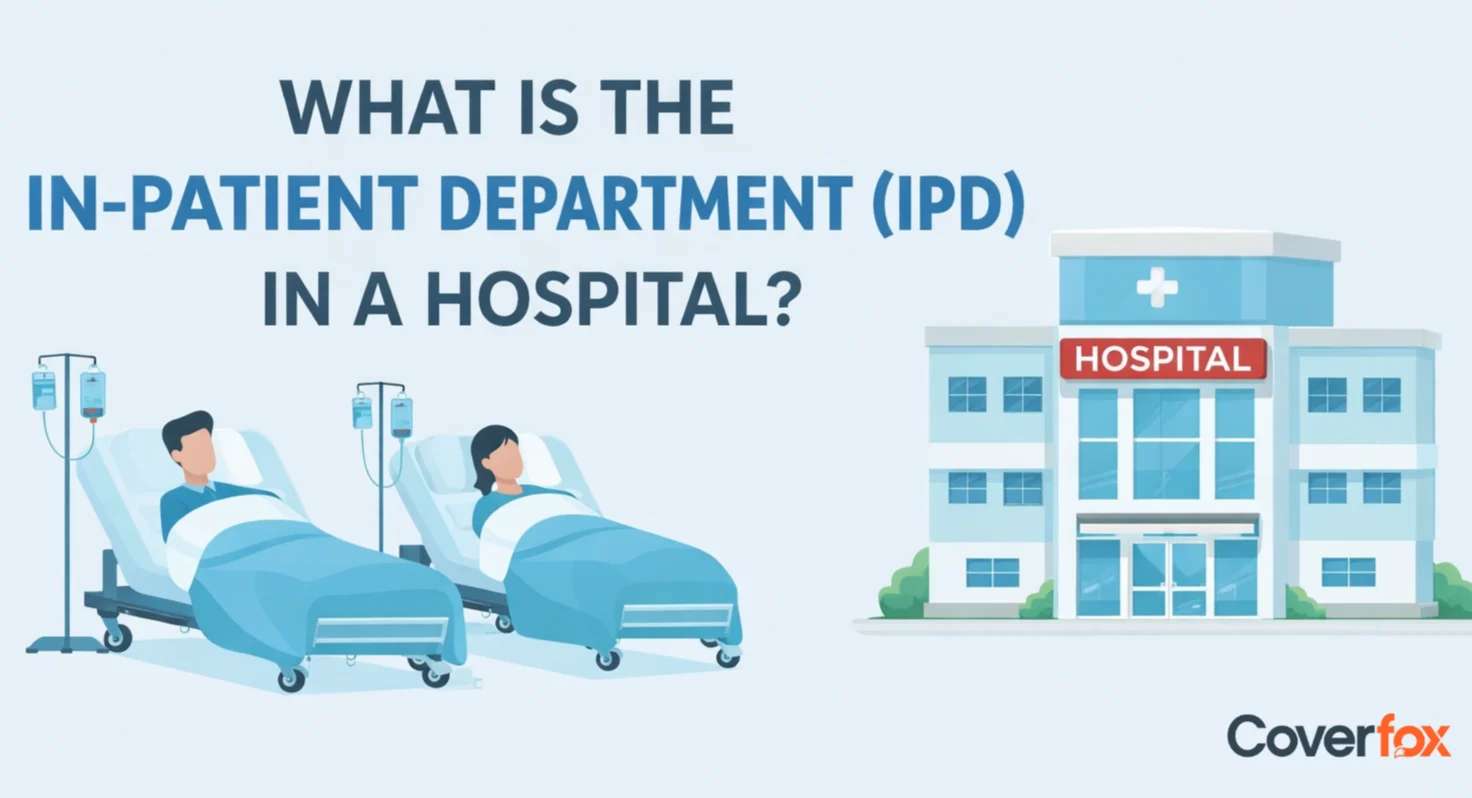
IPD (In-Patient Department) is a hospital unit where patients are formally admitted for treatments that require an overnight stay, surgery, or continuous monitoring. It is typically used for serious illnesses or procedures that cannot be handled through a same-day consultation (OPD). Patients remain under the supervision of doctors and nursing staff until their condition stabilises and they are discharged. Health insurance generally covers IPD expenses, making it a crucial part of hospital care for serious illnesses and complex procedures.
What is the Full Form of IPD in Medical Terms?
IPD stands for In-Patient Department in the healthcare system. It refers to the section of a hospital that manages patients admitted for 24 hours or more for treatment, observation, or surgery. IPD is a critical part of hospital infrastructure that provides continuous medical care and support.
When is a Patient Admitted to IPD?
A patient is admitted to IPD when their condition requires continuous monitoring, hospitalisation, or specialised treatment and cannot be handled by the OPD/ER.
Major surgeries or planned procedures
Serious illnesses require close observation
Accidents or emergency conditions
Need for intensive care or monitoring
Treatments that require an overnight stay or longer
Post-surgery recovery and observation

How the IPD Admission Process Works in Hospitals
Once a patient is admitted to the IPD, the hospital follows a structured process to ensure proper care and documentation:
Medical evaluation
Registration & documentation
Bed or room allocation
Consent formalities
Treatment planning
Diagnostic tests & records
Continuous monitoring
Billing & documentation
Discharge process
A doctor assesses the patient’s condition and confirms the need for admission.
Patient details, medical history, health insurance details and ID proof are recorded in the hospital system.
The patient is assigned a ward, private room, or ICU based on their condition and preference.
Required consent forms for admission, treatment, or procedures are signed.
Doctors create a treatment plan, including medications, tests, or surgery if needed.
Lab tests, scans, and reports are conducted and documented throughout the stay.
Doctors and nursing staff regularly monitor the patient’s condition and progress.
All treatments, services, and expenses are recorded for final billing.
Once stable, the patient is discharged with a summary, prescriptions, and follow-up instructions.
Services Provided in the IPD Department
IPD care is designed to manage complex medical needs in a controlled hospital environment, ensuring continuous treatment and supervision.
24/7 medical supervision by doctors and trained nursing staff
Nursing care, including routine monitoring, assistance, and patient support
Surgical procedures with pre- and post-operative monitoring
Diagnostic services such as blood tests, imaging, and scans
Medication administration, including IV fluids, injections, and prescribed drugs
Rehabilitation support, like physiotherapy and recovery assistance
Hospital accommodation, including beds, meals, and basic care services
Facilities Available in the In-Patient Department
IPD units are equipped with advanced infrastructure to support safe and effective patient care during hospitalisation.
General wards and private rooms based on patient needs and preferences
ICU and high-dependency units for critical care and intensive monitoring
Fully equipped operating theatres for surgical procedures
Diagnostic laboratories for tests and medical investigations
In-house pharmacy for the timely availability of medicines
Advanced monitoring equipment to track vital signs and patient condition
Difference Between OPD and IPD in Hospitals
| Basis | OPD (Out-Patient Department) | IPD (In-Patient Department) |
|---|---|---|
| Admission | No admission required | Patient is formally admitted |
| Duration | Short visits (consultation or same-day treatment) | Stay of 24 hours or more |
| Type of Care | Basic consultation and minor treatments | Intensive treatment, surgeries, and continuous care |
| Monitoring | No continuous monitoring | 24/7 medical supervision |
| Procedures | Minor procedures | Major surgeries and complex procedures |
| Stay | No hospital stay | Requires hospital stay (ward, room, or ICU) |
| Cost | Generally lower | Higher due to hospitalisation and extended care |
| Use Case | Routine check-ups, mild illnesses | Serious conditions, recovery, and critical care |
Does Health Insurance Cover IPD Treatment?
Most health insurance plans primarily cover IPD (In-Patient Department) hospitalisation expenses, as these involve structured and continuous medical care. Covered costs typically include room charges, doctor consultation fees, nursing charges, surgery expenses, diagnostic tests, and prescribed medications.
Insurers usually require a minimum hospital stay of 24 - 48 hours for the treatment to qualify as IPD coverage (with some exceptions for day-care procedures). Policyholders can avail treatment either through cashless claims at network hospitals or opt for reimbursement, where expenses are paid upfront and later claimed from the insurer.
NOTE: Coverage depends on the insurer and their policy. Please read insurance-related documents carefully before making a decision.
Key Takeaways
IPD, or in-patient department of the hospital, generally deals with severe cases, wherein OPD or ER cannot resolve the issue. The patient stays over 24 hours, or longer, in an IPD. Health insurance generally covers IPD expenses, subject to its terms and conditions. Every hospital must have an IPD in its structure, and it serves as an integral part of a hospital.
Also Read About
Disclaimer: * Savings are based on the maximum discount provided on own damage premium as offered by our health insurer partners.
Frequently Asked Questions on IPD
What is the minimum duration for IPD hospitalisation?
Typically, IPD requires a minimum stay of 24 hours to be considered inpatient care.
Can a patient be directly admitted to IPD without visiting OPD?
Yes, in emergencies or serious conditions, patients can be directly admitted to IPD.
Are ICU and IPD the same in hospitals?
No, ICU is a specialised unit within IPD for critical care, while IPD covers all admitted patients.
What documents are required for IPD admission in hospitals?
Basic ID proof, patient details, doctor’s recommendation, and insurance documents (if applicable).
How long can a patient stay in the IPD department?
The duration depends on the illness, treatment plan, and recovery progress.
Do all hospitals have an IPD department?
Most multi-speciality and large hospitals have IPD facilities; smaller clinics may not.
Is maternity treatment considered IPD hospitalisation?
Yes, delivery and related care usually require hospital admission and are treated as IPD.
Does health insurance cover all IPD expenses?
Not always; coverage depends on policy terms, limits, exclusions, and sub-limits.
What happens during the IPD discharge process?
Doctors assess recovery, provide a discharge summary, prescriptions, and follow-up instructions, along with final billing.
Can emergency patients be admitted directly to IPD?
Yes, emergency cases are often admitted immediately for urgent care and monitoring.