Indemnity health insurance is a practical and widely chosen policy that covers actual medical expenses incurred during hospitalisation, up to the sum insured. It offers flexibility through cashless treatment or reimbursement options and allows multiple claims within a policy year. With comprehensive coverage, customisable features, and cost-effective premiums, indemnity plans help individuals and families manage rising healthcare costs while reducing financial stress during medical emergencies.
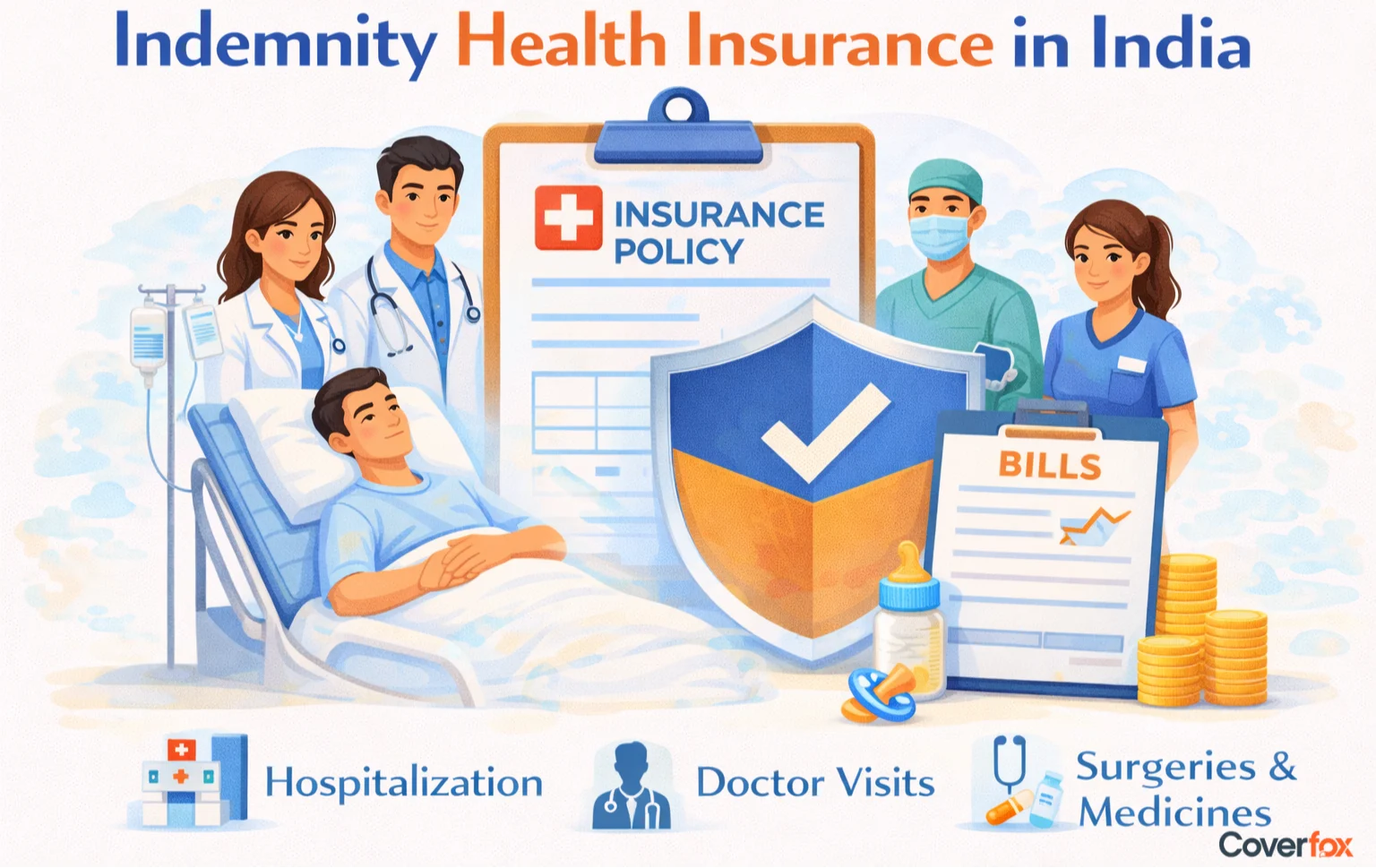
In today's world, health insurance is an absolute necessity unless you want to dip into your savings. However, with so many policy types available, it’s natural to feel overwhelmed while choosing the right one. One term you’ll come across often is Indemnity Health Insurance. In simple terms, it is a type of health insurance that reimburses your actual hospitalisation expenses, covering costs up to the sum insured limit specified in your health insurance policy.
What is an Indemnity Health Insurance Plan?
Indemnity health insurance is a type of policy that covers your actual medical expenses during hospitalisation. Instead of paying a fixed amount, the insurer reimburses the expenses incurred, up to the sum insured, which acts as the maximum limit for a policy year. You can either opt for cashless treatment at a network hospital or pay first and claim reimbursement later. Since the sum insured is a total limit, you can make multiple claims within the same year until it is fully utilised.
Example: Rahul has an indemnity health insurance policy with a sum insured of ₹5 lakh. He is hospitalised and incurs a bill of ₹2 lakh, which gets covered by the insurer. He still has ₹3 lakh remaining in his sum insured. Later in the same year, if he faces another medical issue and incurs a bill of ₹1 lakh, he can claim that too, leaving him with ₹2 lakh for the rest of the policy year.

Types of Indemnity Health Insurance Plans
Indemnity-based health insurance plans all work on the same principle, they cover actual hospitalisation expenses up to the sum insured, either via reimbursement or cashless treatment. The difference lies in who they cover and how the sum insured is structured.
Individual Health Insurance
Family Floater Plans
Senior Citizen Health Insurance
Group Health Insurance
Mediclaim Policies
Covers one person with a dedicated sum insured.
Cover the entire family under a shared sum insured.
Designed for older individuals with age-specific coverage needs.
Offered by employers, covering multiple individuals under one policy.
Basic plans that cover hospitalisation expenses up to a fixed limit.
All these plans follow the indemnity model but cater to different policyholder needs.
Key Features of Indemnity Health Insurance
Sum Insured
Actual Expense Cover
Cashless Treatment
Reimbursement Option
Multiple Claims
Hospitalisation Cover
Pre & Post Hospitalisation
Network Hospitals
Customisation Options
Policy Tenure
Maximum coverage limit available in a policy year
Pays for real hospitalisation costs incurred
Direct settlement at network hospitals
Claim expenses by submitting medical bills
Allowed until the sum insured is exhausted
Includes room rent, ICU, doctor fees, medicines
Covers expenses before and after admission
Access to a wide network for cashless care
Add-ons like co-pay, deductibles, and riders
Typically available for 1 year, renewable annually
Benefits of Indemnity Health Insurance
Indemnity health insurance provides practical financial protection by covering your actual medical expenses, ensuring you don’t have to rely heavily on your savings during medical emergencies.
Multiple Claims in a Year
Flexibility to Choose Hospitals
Comprehensive Medical Coverage
Covers Actual Treatment Costs
Affordable Premiums
Reduced Financial Stress
Suitable for All Medical Needs
Customisable Coverage
You can raise multiple claims within the same policy year, as long as your sum insured is not exhausted. This makes it useful for handling more than one medical situation in a year.
You are free to choose your preferred hospital or doctor, with the added benefit of cashless treatment at a wide network of hospitals across India.
These plans cover a broad range of expenses such as hospitalisation, ICU charges, surgeries, ambulance costs, and pre and post-hospitalisation care, offering all-around protection.
Unlike fixed benefit plans, it pays for the actual expenses incurred, ensuring you are not underinsured when medical costs are high.
Indemnity plans are generally more cost-effective, as features like deductibles help reduce the premium burden while still offering strong coverage.
By taking care of major medical expenses, it significantly lowers out-of-pocket spending and helps protect your long-term savings.
Whether it’s a planned surgery or an unexpected emergency, the coverage adapts to different healthcare situations without restrictions on specific illnesses.
You can enhance your policy with add-ons and features to better match your healthcare needs and budget.
Who Should Buy Indemnity Health Insurance
Individuals seeking comprehensive coverage
Families
People with limited emergency savings
Young professionals
Senior citizens
Those without employer coverage
Covers actual hospital expenses instead of fixed payouts
Suitable for those opting for family floater plans with shared coverage
Helps avoid financial strain during unexpected hospitalisation
A smart early investment with affordable premiums and long-term benefits
Useful for managing higher and more frequent medical expenses
Essential if you don’t have group health insurance
Factors to Consider Before Buying Indemnity Health Insurance
Adequate Sum Insured
Sub-limits & Room Rent Caps
Cashless Hospital Network
Pre & Post Hospitalisation Coverage
Co-payment & Deductibles
Claim Settlement Process
Policy Exclusions & Waiting Periods
Refill/Restoration Benefits
Since claims are paid based on actual expenses, ensure the sum insured is high enough to cover rising hospital costs
Check for limits on room rent, ICU charges, or specific treatments, as these can reduce your claim amount
A wider network ensures smoother, hassle-free treatment without upfront payments
Look at how many days before and after hospitalisation are covered for related medical expenses
Understand how much you need to pay out-of-pocket before the insurer covers the rest
Opt for insurers with a simple and efficient claims process for quicker reimbursements
Review what is not covered and how long you need to wait before certain conditions are included
Some plans restore the sum insured after it is exhausted, allowing continued coverage within the same year
Can You Buy Indemnity and Fixed Benefit Plans Together?
Yes, you can buy both indemnity and fixed benefit health insurance plans together. In fact, they complement each other. While an indemnity plan covers your actual medical expenses, a fixed benefit plan provides a lump sum payout for additional costs like loss of income or recovery expenses. For example, you can enhance your indemnity health insurance coverage by adding a critical illness rider, which is a fixed benefit plan to your policy.
Key Takeaways
Indemnity health insurance remains one of the most practical ways to manage medical expenses, as it directly covers the actual cost of treatment up to the sum insured. Its flexibility, ability to support multiple claims, and comprehensive coverage make it a reliable choice for individuals and families alike. When chosen carefully, it not only protects your health but also safeguards your finances during uncertain times.
Also Read:
FAQ on Indemnity Health Insurance
What is an indemnity health insurance plan?
An indemnity health insurance plan is a policy that covers your actual medical expenses incurred during hospitalisation. The insurer either reimburses the bills or settles them directly (cashless), up to the sum insured limit.
Is indemnity health insurance the same as mediclaim insurance?
Mediclaim is a type of indemnity health insurance. While all mediclaim policies follow the indemnity principle, indemnity plans today are broader and may offer more features, flexibility, and add-ons compared to basic mediclaim policies.
What’s the difference between fixed benefit & an indemnity policy?
An indemnity policy pays for actual hospital expenses based on bills, while a fixed benefit policy pays a pre-defined lump sum on diagnosis or hospitalisation, regardless of the actual cost incurred.
Why is indemnity health insurance considered important in India?
With rising healthcare costs, indemnity plans help cover real treatment expenses, reducing out-of-pocket spending and protecting savings during medical emergencies.
Can I file multiple claims under an indemnity insurance in one year?
Yes, you can file multiple claims in a policy year until your total sum insured is fully utilised.
What happens if my hospital bill is lower than my sum insured?
The insurer will only pay the actual bill amount. The remaining sum insured stays available for future claims within the same policy year.
Does an indemnity mediclaim policy cover the full hospital bill?
It can cover the full bill, but only up to the sum insured and subject to policy terms like sub-limits, co-payment, or exclusions.
Are deductibles applicable in hospital indemnity insurance?
Yes, some plans include deductibles, which is the amount you must pay before the insurer starts covering the remaining expenses.
What is a co-payment in indemnity-based health insurance?
Co-payment is the percentage of the claim amount that you agree to pay from your own pocket, while the insurer pays the rest.
Can I use indemnity health insurance at any hospital in India?
You can get treated at any hospital, but cashless treatment is usually available only at network hospitals. For non-network hospitals, you can claim reimbursement.
Are network hospitals required for cashless indemnity claims?
Yes, cashless claims are typically available only at network hospitals tied up with the insurer. Otherwise, you need to opt for reimbursement.
Can senior citizens buy indemnity health insurance plans?
Yes, there are specific indemnity plans designed for senior citizens, though they may include higher premiums, co-payments, and medical underwriting.
Can I buy indemnity and fixed benefit plans together?
Yes, both can be bought together. Indemnity plans cover actual expenses, while fixed benefit plans provide a lump sum for additional financial support.
Is there tax deduction under Section 80D for indemnity insurance policy?
Yes, premiums paid for indemnity health insurance qualify for tax deductions under Section 80D of the Income Tax Act, subject to applicable limits.
How do I choose the right indemnity health insurance plan?
Choose a plan with an adequate sum insured, minimal sub-limits, a strong hospital network, and features like restoration benefits. Also, consider your age, health condition, and budget before finalising a policy.