Moral hazard in health insurance arises when coverage leads to overuse or inefficient use of medical services. It increases claim costs, impacting premiums and the overall sustainability of the insurance system. Insurers manage it through cost-sharing measures, policy controls, and monitoring mechanisms.
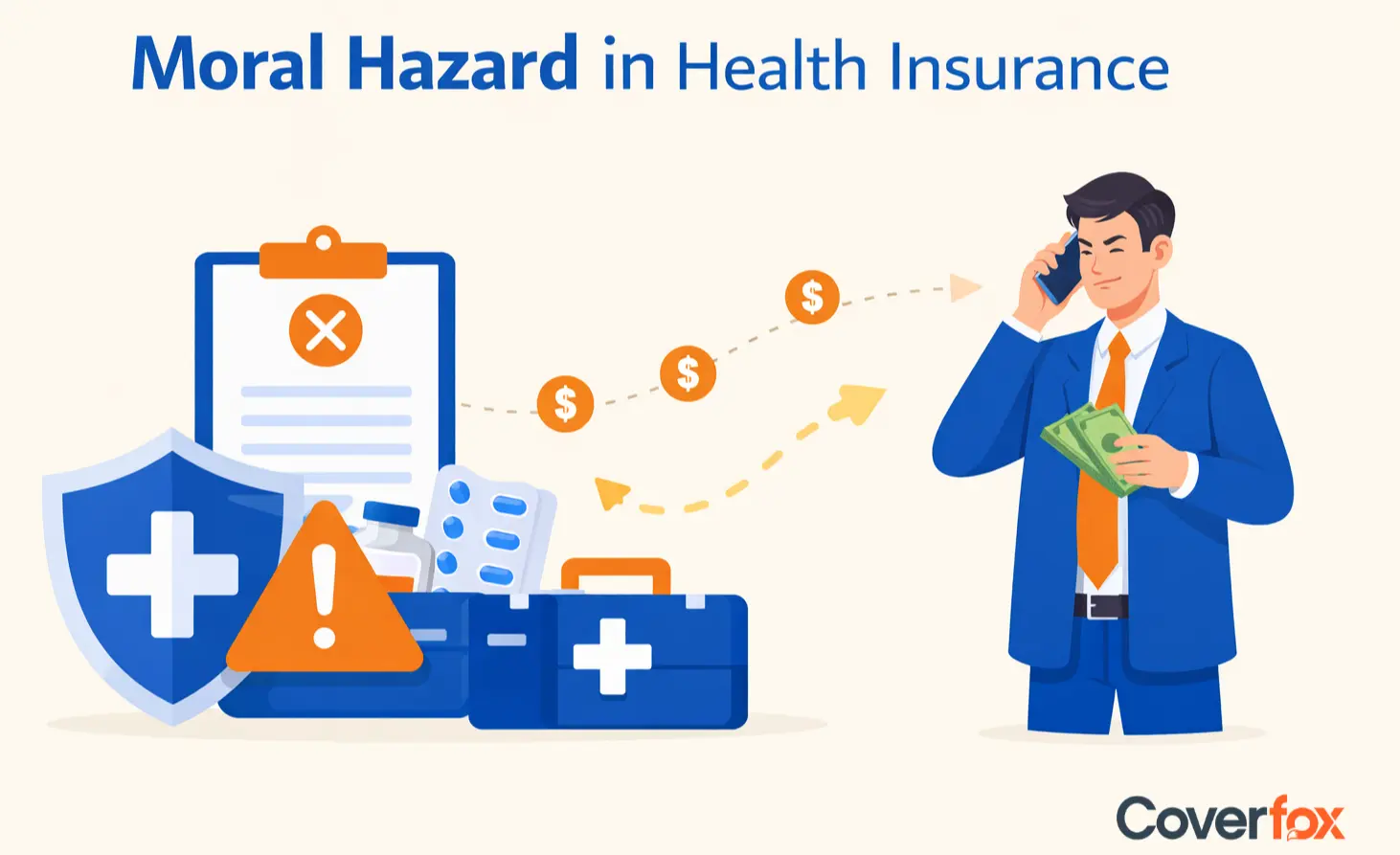
Few people, when their policy terms start, feel like insurance will cover anything and everything. With such a mentality, they start living life on the edge, taking unnecessary risks, and get exposed to dangers that they normally would not. This change of behaviour after activating a health insurance policy is called “Moral Hazard”. Let us learn more about this concept and how health insurers deal with it.
How Does Moral Hazard Work in Health Insurance?
Moral hazard in health insurance arises when individuals are insulated from the full cost of medical care. Since policyholders pay only a small portion of expenses, they may be more likely to use healthcare services more frequently or opt for costlier treatments. This can lead to:
Increased demand for medical services
Reduced focus on preventive healthcare
Higher claim frequency for insurers
Over time, these increased costs are often passed on to the larger insured group in the form of higher premiums.
Why Does Moral Hazard Occur in Health Insurance?
Moral hazard primarily occurs due to reduced financial responsibility. When individuals do not bear the full cost of treatment, their incentive to control healthcare spending decreases.
Key factors contributing to moral hazard include:
Comprehensive coverage with minimal out-of-pocket expenses
Low cost-sharing (deductibles, co-payments)
Lack of cost awareness among policyholders
Information asymmetry between patients, insurers, and healthcare providers

Types of Moral Hazard in Health Insurance
Moral hazard in health insurance is of two types:
Ex-Ante Moral Hazard
Reduced focus on preventive care
Unhealthy lifestyle choices (e.g., poor diet, lack of exercise)
Lower incentive to avoid risks
Ex-Post Moral Hazard
Higher use of medical services
Preference for expensive treatments or facilities
Increased hospital visits or extended stays
This occurs before a medical event or illness. Since individuals are insured, they may become less cautious about their health.
This occurs after an illness or medical need arises. As insurance covers a large portion of costs, individuals may use more healthcare services than necessary.
Examples of Moral Hazard in Health Insurance
Moral hazard can be seen in everyday healthcare decisions when insurance coverage reduces the financial burden on individuals:
Frequent doctor visits for minor issues: Policyholders may consult doctors more often for small symptoms since consultations are covered
Choosing expensive treatments: Opting for costlier procedures or hospitals, even when effective, lower-cost options are available
Extended hospital stays: Staying hospitalised longer than medically necessary because expenses are insured
Unnecessary tests or procedures: Healthcare providers may recommend additional diagnostics or treatments knowing the patient is covered
Moral Hazard vs Adverse Selection in Health Insurance
| Aspect | Moral Hazard | Adverse Selection |
|---|---|---|
| When it occurs | After purchasing insurance | Before purchasing insurance |
| Definition | Change in behaviour due to being insured | High-risk individuals are more likely to buy insurance |
| Core issue | Overuse or misuse of healthcare services | Imbalance in risk pool (more high-risk individuals) |
| Cause | Reduced financial burden leads to careless usage | Information asymmetry (insurer doesn’t know true risk) |
| Customer behaviour | Uses more services than necessary | High-risk individuals actively seek coverage |
| Examples | Frequent doctor visits, expensive treatments, unnecessary tests, longer hospital stays | People with pre-existing conditions buying comprehensive plans, healthy people opting out |
| Impact on insurer | Higher claim frequency and costs | Higher premiums due to risk-heavy pool |
| Control measures | Co-payments, deductibles, claim limits | Medical underwriting, waiting periods, premium pricing |
Moral Hazard vs Physical Hazard in Insurance
| Aspect | Moral Hazard | Physical Hazard |
|---|---|---|
| Definition | Risk arising from the behaviour or attitude of the insured person | Risk arising from physical conditions that increase the chance of loss |
| Nature | Behavioural / psychological | Tangible / environmental |
| Cause | Negligence, carelessness, or over-reliance on insurance | Unsafe infrastructure, poor maintenance, hazardous surroundings |
| Examples | Overusing healthcare services, careless driving because insured | Faulty wiring, unsafe buildings, flood-prone location |
| Detectability | Difficult to identify as it involves human behaviour | Easier to identify through inspection or assessment |
| Control measures | Deductibles, co-payments, policy terms to influence behaviour | Safety inspections, risk assessments, improved infrastructure |
| Timing of impact | Mostly after policy purchase | Exists before and during the policy period |
| Insurer’s approach | Behaviour monitoring and policy conditions | Physical inspections and underwriting checks |
Impact of Moral Hazard on Health Insurance
Moral hazard in health insurance leads to increased and often unnecessary utilisation of healthcare services, driving up overall costs.
Higher frequency of claims due to overuse of medical services
Increased treatment costs from preference for expensive procedures
Unnecessary hospitalisations and extended stays
Rise in insurance premiums for all policyholders
Strain on healthcare resources and provider systems
Reduced efficiency in healthcare delivery
How Health Insurance Companies Reduce Moral Hazard?
Health insurance companies reduce moral hazard by introducing checks and cost-sharing mechanisms that encourage responsible usage of healthcare services.
Co-payments to ensure the insured shares part of the cost
Deductibles to avoid frequent small claims
Policy limits and sub-limits on specific treatments
Pre-authorisation requirements for planned procedures
Network hospitals to control treatment costs and standardise care
Claim audits and fraud detection systems
Waiting periods for certain illnesses or treatments
Conclusion - Importance of Understanding Moral Hazard in Health Insurance
Understanding moral hazard in health insurance is important as it shows how individual behaviour can influence both personal costs and the overall system. Responsible usage of healthcare not only helps control unnecessary claims but also keeps premiums fair for everyone. Ultimately, it supports a more sustainable and efficient insurance ecosystem.
Also Read:
Clinical Establishment (Registration & Regulation) Act, 2010
How to Claim Health Insurance Benefits From Multiple Insurers?
Disclaimer: Information on this page is for educational and informational purposes only and must not be taken as medical advice. For proper medical evaluation, refer to a medical professional only.
FAQs on Moral Hazard in Health Insurance
What is a moral hazard in health insurance?
Moral hazard refers to a situation where insured individuals may change their behaviour and use more healthcare services than necessary because they are financially protected.
What are common examples of moral hazard in healthcare?
Frequent doctor visits for minor issues, opting for expensive treatments, unnecessary tests, and extended hospital stays are common examples.
How does moral hazard affect insurance premiums?
It increases overall claims, which leads insurers to raise premiums for all policyholders.
What is the difference between moral hazard and insurance fraud?
Moral hazard involves unintentional overuse due to coverage, while fraud is a deliberate act to deceive the insurer for financial gain.
How do deductibles and co-payments reduce moral hazard?
They ensure policyholders share a portion of the cost, discouraging unnecessary or excessive use of healthcare services.
Can healthcare providers contribute to moral hazard?
Yes, providers may recommend additional tests or procedures knowing the patient is insured.
What is ex-ante and ex-post moral hazard in health insurance?
Ex-ante refers to reduced preventive care or caution before illness, while ex-post refers to overuse of services after becoming insured.
Why is moral hazard a concern for insurance companies?
It leads to higher claim costs, affects profitability, and disrupts risk pricing.
How do insurers detect misuse of health insurance benefits?
Through claim audits, data analysis, pre-authorisation checks, and fraud detection systems.
How can policyholders avoid contributing to moral hazard?
By using healthcare services responsibly, avoiding unnecessary treatments, and making them cost-conscious.