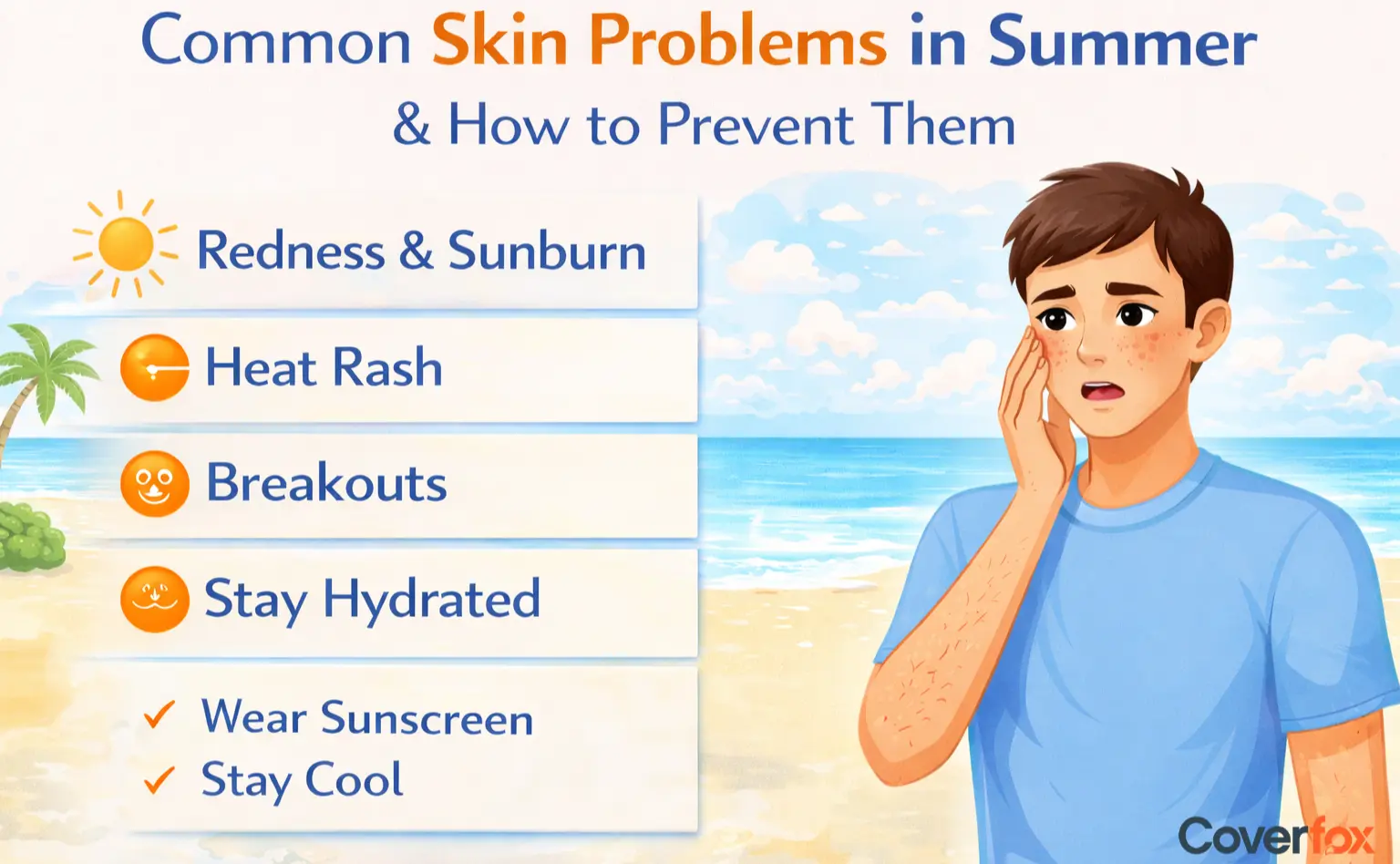
Summer skin problems are primarily caused by heat, humidity, sweat, and UV exposure, which disrupt the skin barrier and promote bacterial and fungal growth. Common issues include heat rash, sunburn, acne, fungal infections, and allergies, with symptoms like redness, itching, bumps, and irritation affecting daily comfort. Most conditions can be managed with proper hygiene, hydration, and skincare, but severe cases may require medical treatment and can sometimes be covered under health insurance.
In India, the Dermicool ad always gives us a reminder that summer is here and it's time to protect our skin. Indian summer is hot, humid and extremely sweaty. With exposure to UV rays, skin is extra sensitive during the heat, causing problems like rashes, dermatitis, fungal growths, etc. Let us go over the most common skin problems in summers in India that cause a hindrance to your lifestyle.
Why Skin Problems Increase in Summer
Skin problems increase in summer due to a combination of heat, humidity, and environmental triggers that hinders the skin’s natural balance.
Excessive sweating leads to clogged pores, causing acne, rashes, and irritation
Increased oil (sebum) production makes the skin more prone to breakouts
Strong UV radiation damages the skin barrier, leading to sunburn, tanning, and pigmentation
Dehydration reduces skin moisture, causing dryness, dullness, and sensitivity
Warm, moist conditions promote bacterial and fungal growth, leading to infections like heat rashes and fungal acne
Environmental triggers such as pollen, dust, insects, and chemicals can worsen allergies and skin sensitivity

Common Summer Skin Problems
During summer, heat, sweat, and sun exposure can trigger a variety of skin issues, especially when the skin barrier is already stressed.
Heat Rash (Prickly Heat)
Sunburn
Acne Breakouts
Folliculitis
Fungal Infections
Skin Allergies and Rashes
Hyperpigmentation and Tanning
Insect Bites and Reactions
Dry and Irritated Skin
Heat rash occurs when sweat glands get blocked, trapping sweat under the skin and causing itchy, red bumps along with a prickling or stinging sensation.
Sunburn is caused by prolonged exposure to strong UV rays, leading to skin damage that appears as redness, pain, inflammation, and eventually peeling.
Acne breakouts become more common in summer because sweat, excess oil, and bacteria combine to clog pores, resulting in pimples and inflamed skin.
Folliculitis is the inflammation or infection of hair follicles, often triggered by sweat and friction, leading to small red or pus-filled bumps.
Fungal infections thrive in warm and moist areas such as the feet, groin, and underarms, causing itching, redness, and discomfort.
Skin allergies and rashes can develop due to heat, sweat, or exposure to irritants like chemicals, leading to redness, itching, and irritation.
Hyperpigmentation and tanning occur when increased sun exposure triggers excess melanin production, resulting in dark patches and uneven skin tone.
Insect bites are more frequent in summer and can cause itchy bumps, swelling, and mild allergic reactions on the skin.
Dry and irritated skin can develop due to prolonged sun exposure, chlorine from swimming pools, and constant air conditioning, which strips the skin of its natural moisture.
Symptoms of Summer Skin Problems
Summer skin problems often show up as visible changes and discomfort caused by heat, sweat, and sun exposure.
Redness and inflammation on the skin
Itching or a prickling sensation
Small bumps, rashes, or blisters
Excess oiliness or greasy skin
Acne, pimples, or breakouts
Peeling or flaking skin after sun exposure
Dark patches or uneven skin tone
Burning or stinging sensation
Swelling from bites or allergic reactions
Dry, tight, or irritated skin
Causes of Summer Skin Problems
Summer skin issues are mainly triggered by heat, moisture, and environmental exposure, which either irritate the skin or create the perfect conditions for bacterial and fungal growth.
Heat and Humidity
Excess Sweating and Clogged Pores
UV Radiation Exposure
Poor Hygiene After Sweating
Tight or Synthetic Clothing
Allergens (Pollen, Plants, Insect Bites)
Dehydration and Poor Skincare Routine
High temperatures and humidity levels weaken the skin barrier and increase sweat production, making the skin more prone to irritation and infections.
Sweat mixes with oil and dirt, clogging pores and creating an ideal environment for acne, rashes, and bacterial growth.
Strong sun exposure damages skin cells, leading to sunburn, pigmentation, and increased sensitivity.
Not cleansing the skin after sweating allows bacteria and fungi to multiply, increasing the risk of infections and breakouts.
Non-breathable fabrics trap sweat and heat against the skin, causing friction, irritation, and fungal infections.
Environmental allergens can trigger allergic reactions, rashes, and itching, especially on sensitive skin.
Lack of hydration and improper skincare can disrupt the skin’s natural balance, making it dry, irritated, and more vulnerable to damage.
Who is More Prone to Summer Skin Issues
Certain groups are more vulnerable to summer skin problems due to their skin type, lifestyle, or existing conditions. People with oily or acne-prone skin are more likely to experience breakouts, while those with sensitive skin or allergies may develop rashes and irritation more easily. Children and infants are especially prone to heat rashes due to delicate skin, and individuals who spend long hours outdoors face higher exposure to sun damage and infections. Additionally, people with pre-existing skin conditions may notice their symptoms worsening during hot and humid weather.
Prevention Tips for Healthy Skin in Summer
Following simple, consistent habits can help protect your skin from heat, sweat, and environmental damage during summer.
Use broad-spectrum sunscreen (SPF 30+) daily to protect against UV damage
Wear loose, breathable cotton clothing to minimise sweat and irritation
Stay hydrated by drinking 8-10 glasses of water daily
Maintain hygiene by showering after sweating to prevent infections
Use lightweight, oil-free skincare products to avoid clogged pores
Avoid peak sun hours (11 AM – 4 PM) to reduce sun exposure
Use insect repellents when outdoors to prevent bites and reactions
Keep skin cool and dry, especially in sweat-prone areas
Skincare Routine for Summer
During summer, your skincare routine should focus on keeping the skin clean, hydrated, and protected without overloading it.
Use gentle cleansers twice daily to remove sweat, oil, and impurities
Apply lightweight moisturisers to maintain hydration without greasiness
Avoid heavy makeup and oily products that can clog pores
Choose non-comedogenic products that do not block pores
Reapply sunscreen every 2–3 hours, especially when outdoors
Summer Skincare Based on Skin Type
Adapting your routine based on your skin type helps prevent common summer issues more effectively.
Oily Skin
Dry Skin
Combination Skin
Sensitive Skin
Acne-Prone Skin
Use gel-based cleansers and oil-free moisturisers to control excess sebum and prevent breakouts
Opt for hydrating cleansers and light moisturisers to maintain moisture without heaviness
Balance oily and dry areas with mild cleansers and lightweight, balanced hydration
Use fragrance-free, gentle products to avoid irritation and redness
Focus on non-comedogenic and anti-bacterial products to reduce breakouts and inflammation
Home Remedies and Self-Care
Mild summer skin problems can often be managed at home with simple remedies that soothe irritation and support skin recovery.
Aloe vera
Calamine lotion
Cold compress
Cool showers
Cucumber and yoghurt
Applying fresh aloe vera gel helps calm sunburn, reduce redness, and soothe irritated skin
Useful for relieving itching and mild rashes caused by heat or allergies
Applying a cold cloth or ice pack helps reduce inflammation, swelling, and discomfort
Taking cool showers helps remove sweat, dirt, and bacteria, preventing further irritation
Natural ingredients like cucumber and yoghurt provide a cooling effect and help hydrate and calm the skin
When to See a Doctor
While most summer skin issues are mild, certain symptoms may indicate a more serious condition that requires medical attention.
Rash that does not improve within a few days
Severe itching, pain, or swelling
Presence of pus, fever, or signs of infection
Recurring or worsening skin problems
Sudden changes in skin colour or texture
Medical Treatment for Summer Skin Problems
Medical treatment depends on the specific condition and severity of the issue. Doctors may prescribe antihistamines for allergies, antifungal creams for fungal infections, antibiotic creams for folliculitis, or medicated treatments for acne. In more severe or persistent cases, consulting a dermatologist ensures accurate diagnosis and targeted treatment.
Complications of Untreated Skin Problems
Ignoring summer skin issues can lead to more serious complications like:
Skin infections
Scarring or pigmentation
Worsening allergies
Chronic skin conditions
Heat-related illness
Untreated rashes or wounds can develop into bacterial or fungal infections, spreading and becoming harder to treat
Persistent acne, burns, or irritation can leave behind permanent scars or dark patches on the skin
Repeated exposure to allergens without treatment can intensify reactions and increase skin sensitivity over time
Minor issues can turn into long-term conditions like eczema, dermatitis, or recurring infections
Severe heat exposure combined with skin problems can contribute to conditions like heat exhaustion or heatstroke
Summer Skin Problems and Health Insurance
Most summer skin problems like heat rash or mild sunburn can be treated at home and usually do not require insurance claims. However, conditions such as severe fungal infections, allergic reactions, or infected acne may need doctor consultation, prescribed medication, or even minor procedures. In such cases, health insurance can cover expenses like dermatologist visits, diagnostic tests, and treatment if deemed medically necessary. Hospitalisation due to complications like severe infections or heat-related conditions may also be covered. The extent of coverage depends on the specific policy terms, inclusions, and severity of the condition.
Note: Certain surgeries that come under cosmetic surgeries will not be covered under health insurance. For proper coverage, check your policy document carefully.
Key Takeaways
While summertime is generally associated with vacations and holidays, it is necessary to protect yourself from the sun. Direct exposure, humid climate, and high temperatures can cause an ample number of skin and health problems. Maintaining clean hygiene, daily skin care routine, and wearing loose cotton clothes go a long way in protecting your skin from the summer heat. Stay safe!
Disclaimer: Information on this page is for educational and informational purposes only and must not be taken as medical advice. For proper medical evaluation, refer to a medical professional only.
* Savings are based on the maximum discount provided on own damage premium as offered by our car insurer partners.
Also Read:
FAQs on Summer Skin Issues
What are the most common summer skin problems?
The most common summer skin problems include heat rash (prickly heat), sunburn, acne breakouts, fungal infections, folliculitis, skin allergies, tanning and hyperpigmentation, insect bites, and dryness or irritation caused by sun exposure and environmental factors. These issues are primarily triggered by heat, sweat, and increased exposure to UV rays.
Why do skin problems increase during summer?
Skin problems increase during summer due to a combination of heat, humidity, and sun exposure. Excess sweating and oil production clog pores, while UV radiation damages the skin barrier. At the same time, warm and moist conditions promote bacterial and fungal growth, making the skin more prone to infections and irritation.
What causes heat rash in summer?
Heat rash occurs when sweat ducts become blocked, trapping sweat under the skin. This leads to small red bumps, itching, and a prickly sensation. It is more common in hot and humid conditions, especially when sweat is not allowed to evaporate due to tight clothing or poor ventilation.
How can I prevent sunburn effectively?
Sunburn can be prevented by applying a broad-spectrum sunscreen with SPF 30 or higher, reapplying it every 2 to 3 hours, wearing protective clothing, and avoiding direct sun exposure during peak hours (11 AM to 4 PM). Using sunglasses and staying in shaded areas also helps minimise UV damage.
Why does acne worsen in hot weather?
Acne tends to worsen in hot weather because increased sweating and oil production clog pores more easily. Sweat mixed with dirt and bacteria creates an environment that promotes breakouts, especially if the skin is not cleansed regularly or if heavy skincare products are used.
What are the symptoms of summer skin rashes?
Common symptoms include redness, itching, irritation, small bumps or blisters, and sometimes a burning or stinging sensation. In more severe cases, rashes may spread, become painful, or show signs of infection such as pus or swelling.
How do I treat prickly heat at home?
Prickly heat can be managed by keeping the skin cool and dry, wearing loose cotton clothing, and taking cool showers to remove sweat. Applying soothing agents like aloe vera or calamine lotion can help reduce itching and irritation, while avoiding excessive heat exposure aids faster recovery.
What are the best skincare tips for summer?
The best skincare tips for summer include cleansing the skin regularly, using lightweight and non-comedogenic products, applying sunscreen daily, staying hydrated, and avoiding heavy makeup. Maintaining hygiene and keeping the skin dry in sweat-prone areas also helps prevent infections.
Can fungal infections increase during summer?
Yes, fungal infections are more common during summer because fungi thrive in warm, humid environments. Sweat accumulation in areas like the feet, groin, and underarms creates ideal conditions for fungal growth, leading to itching, redness, and discomfort.
When should I see a doctor for a skin rash?
You should consult a doctor if a rash does not improve within a few days, becomes severe, spreads rapidly, or is accompanied by symptoms like pain, swelling, fever, or pus. Recurring or persistent skin issues also require medical evaluation.
How can I protect my skin from UV damage?
Protecting your skin from UV damage involves daily use of sunscreen, wearing protective clothing, limiting sun exposure during peak hours, and using accessories like hats and sunglasses. Consistent sun protection helps prevent sunburn, premature ageing, and pigmentation.
What foods help keep skin healthy in summer?
Foods rich in water content and antioxidants, such as fruits (watermelon, oranges), vegetables (cucumber, tomatoes), and leafy greens, help keep the skin hydrated and healthy. Including vitamin C and E-rich foods also supports skin repair and protection against damage.
Can dehydration affect skin health in summer?
Yes, dehydration can make the skin dry, dull, and more sensitive. Lack of adequate water intake reduces the skin’s ability to maintain moisture, making it more prone to irritation, fine lines, and damage from external factors.
Are summer skin problems serious?
Most summer skin problems are mild and manageable with proper care and hygiene. However, if left untreated or if they worsen, they can lead to infections, scarring, or chronic skin conditions, making timely care important.
Are skin infections covered under health insurance?
Skin infections may be covered under health insurance if they require medical treatment, such as doctor consultations, prescribed medications, or hospitalisation. However, coverage depends on the policy terms, severity of the condition, and whether the treatment is considered medically necessary.