
Chemotherapy is a systemic cancer treatment that uses strong medicines to destroy or control fast-growing cancer cells, either to cure cancer, reduce tumour size, prevent recurrence, or relieve symptoms. It works throughout the body, which is why it can cause side effects like fatigue, hair loss, and low immunity, but these are usually manageable with medical care. In India, chemotherapy is commonly covered under health insurance and government schemes, and treatment outcomes depend on cancer type, stage, and response to therapy.
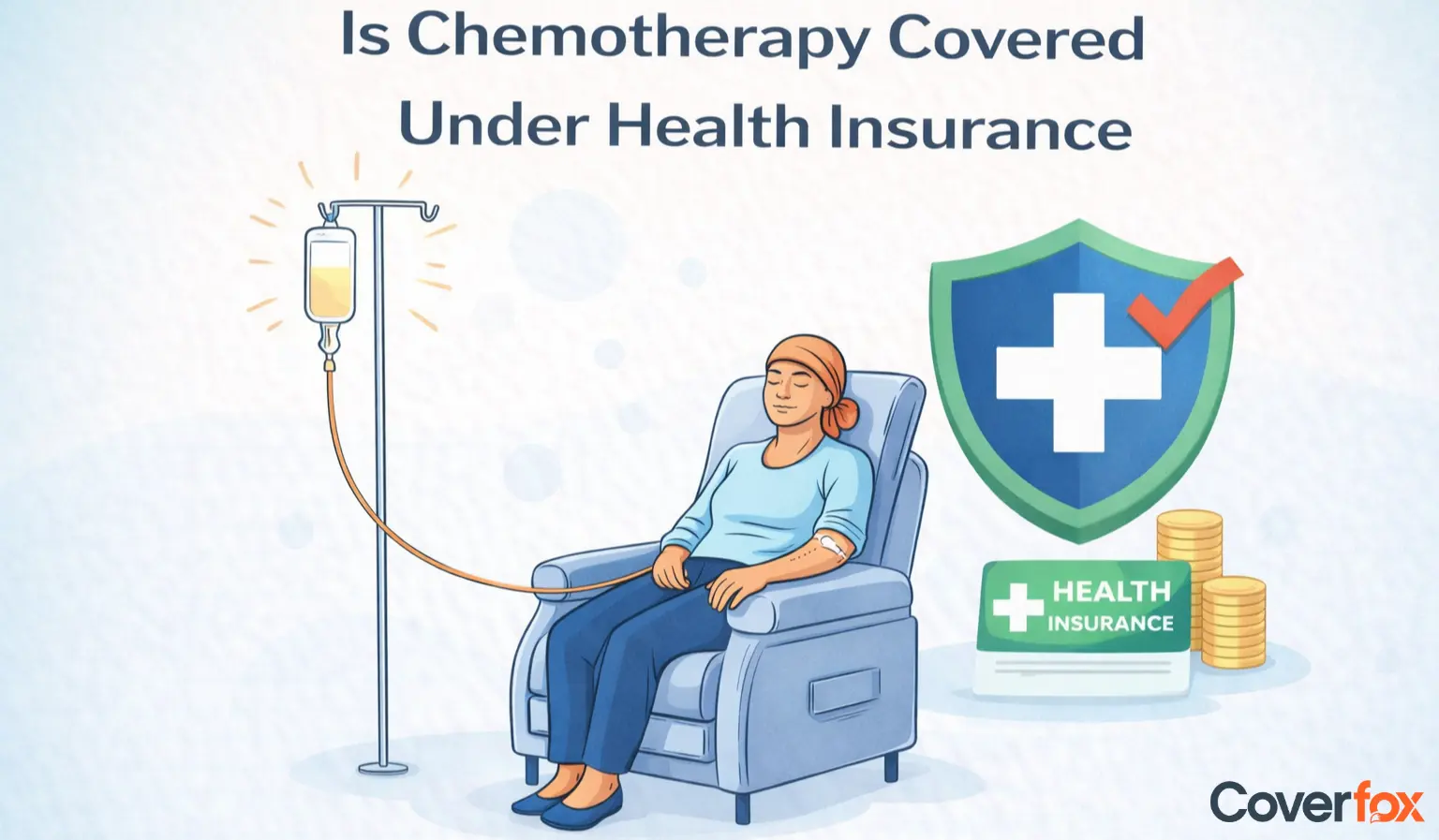
When it comes to cancer treatments, chemotherapy is the most well-known practice. Chemotherapy is a medical treatment that uses strong medicines to destroy or control fast-growing cancer cells in the body. It is used not only to cure cancer, but also to shrink tumours before surgery, kill remaining cancer cells after surgery, slow the spread of cancer, or relieve symptoms in advanced stages. In this article, you will understand what chemotherapy is, how it works, its side effects, and how health insurance can cover chemo.
How Chemotherapy is Different from Other Cancer Treatments?
Cancer can be treated in different ways, and each treatment works differently. Doctors choose the option based on the type of cancer, stage, and how far it has spread.
Chemotherapy
Radiation Therapy
Immunotherapy
Targeted Therapy
Chemotherapy uses strong medicines that travel through the bloodstream to kill fast-dividing cancer cells across the body. It is preferred when cancer has spread to multiple areas or when doctors need to kill microscopic cancer cells after surgery. For example, chemotherapy is used when cancer cells may be present throughout the body, not just in one spot.
Radiation therapy uses high-energy rays to destroy cancer cells in a specific, localised area. It is commonly used for one tumour or a limited region, such as a single breast tumour or a brain tumour. Unlike chemotherapy, radiation does not treat the entire body.
Immunotherapy works by boosting the body’s own immune system so it can recognise and attack cancer cells. Instead of directly killing cells like chemotherapy, it helps the immune system do the job. It is often used in cancers like lung cancer or melanoma where immune response plays a key role.
Targeted therapy focuses on specific genes, proteins, or pathways that help cancer cells grow. It causes less damage to healthy cells compared to chemotherapy and is used when a cancer has identifiable targets, such as certain breast or lung cancers.
Why Doctors Often Combine Treatments: Doctors frequently combine treatments to get the best possible results. For example, chemotherapy may be used to treat cancer spread throughout the body, while radiation targets a remaining tumour in one area. Immunotherapy or targeted therapy may be added to improve effectiveness and reduce the chance of cancer returning.

Science Behind How Chemotherapy Works
Cancer develops when normal cells lose control over growth and start dividing continuously, forming tumours that may spread to other parts of the body. Chemotherapy works by travelling through the bloodstream and interrupting the cell cycle, which slows down or kills fast-dividing cancer cells across the body. Because some healthy cells also divide quickly, chemotherapy can affect them too, leading to side effects like hair loss, nausea, or low immunity.
How Doctors Measure Chemotherapy Response?
Doctors assess how well chemotherapy is working by combining scan results, lab tests, and symptom changes. Here’s how they explain treatment response in simple terms:
Key Terms Doctors Use
Remission
Complete remission
Partial remission
Stable disease
Disease progression
Cancer signs reduce or disappear after treatment.
No detectable cancer on scans or tests (for example, no tumour visible on CT scan).
Cancer is still present, but the tumour has clearly shrunk (for example, tumour size reduced on imaging).
Cancer has not grown or shrunk significantly.
Cancer continues to grow or spread despite treatment.
How Response Is Measured
CT, MRI, or PET scans
Tumour markers (blood tests)
Symptoms
Lab tests
Used to check tumour size and spread; a shrinking tumour on scans usually means chemotherapy is working.
Falling marker levels often indicate a good response to treatment.
Reduced pain, swelling, or breathlessness suggest improvement.
Blood counts and organ function tests help track both treatment effect and safety.
Doctors review all these factors together to decide whether chemotherapy should be continued, adjusted, or combined with other treatments.
Types of Chemotherapy
Chemotherapy can be classified in two main ways: based on treatment goals and based on how the drugs are given.
Types of Chemotherapy Based on Treatment Goals
Curative chemotherapy
Neoadjuvant chemotherapy
Adjuvant chemotherapy
Palliative chemotherapy
Given to completely eliminate cancer, such as in certain blood cancers or early-stage cancers.
Used before surgery or radiation to shrink a tumour and make treatment easier.
Given after surgery to kill any remaining cancer cells and reduce the risk of recurrence.
Used in advanced cancer to slow disease progression and relieve symptoms like pain or pressure.
Types of Chemotherapy Based on Delivery Method
IV chemotherapy
Oral chemotherapy
Injection chemotherapy
Regional chemotherapy
Given through a drip into a vein, usually in hospitals or daycare centres; this is the most common method.
Taken as tablets or capsules at home under medical supervision, often used for long-term treatment.
Injected into the muscle or under the skin, depending on the drug and cancer type.
Delivered directly to a specific area or organ (for example, into the abdomen or bladder) to target cancer locally and limit whole-body exposure.
Doctors choose the type and method of chemotherapy based on cancer type, stage, patient health, and treatment goals, and may combine multiple approaches for better results.
What to Expect on the Day of Chemotherapy?
Here’s how the patient might feel or experience, and what they can expect on the day of chemotherapy:
The day begins quietly
Getting ready for treatment
During the session
Time passes differently
After chemo ends
The rest of the day
Over the next few days
You arrive at the hospital knowing exactly what to expect. Blood tests are checked first to make sure your body is ready, followed by routine checks like blood pressure and temperature.
A nurse sets up the IV line (or checks your chemo port). Medicines to prevent nausea and reactions are given before the chemotherapy drugs begin.
The chemo medicine flows slowly while nurses keep a close watch. You may read, rest, listen to music, or simply sit quietly. A caregiver stays nearby, offering comfort and reassurance.
Some sessions last just 30–60 minutes, while others can take a few hours. Most people feel fine during the treatment itself.
The IV is removed, and you’re allowed to go home. Tiredness often sets in later, and some people may feel slightly nauseous or low on energy.
You’re advised to drink plenty of fluids, eat light food, and rest. Plans are usually kept minimal as this is a recovery day.
Fatigue is common but temporary. Caregivers help with meals, medicines, and emotional support, while you slowly regain strength before the next cycle.
Side Effects, Risks & Management of Chemotherapy
Chemotherapy causes side effects because it works by attacking fast-dividing cells in the body. While this helps destroy cancer cells, it can also affect healthy fast-growing cells in the bone marrow, digestive tract, hair follicles, and reproductive system. As a result, patients may experience temporary discomfort and, in some cases, longer-term effects—most of which can be effectively managed with proper medical care.
Common Short-Term Side Effects
Fatigue and weakness
Nausea and vomiting
Hair loss or thinning
Mouth ulcers and taste changes
Loss of appetite, diarrhoea, or constipation
Lowered immunity and higher infection risk
Possible Long-Term or Late Side Effects
Numbness or tingling due to nerve damage
Heart, lung, or kidney effects (drug-specific)
Fertility or hormonal changes
Memory and concentration issues (“chemo brain”)
Prolonged susceptibility to infections
Chemotherapy Cost & Financial Support - Coverage Under Health Insurance in India
Chemotherapy costs in India vary widely because treatment is personalised to the cancer and the patient. Understanding what drives the cost and what support is available can significantly reduce financial stress.
What Impacts the Cost of Chemotherapy?
Type of chemotherapy drugs
Cancer type and stage
Number of cycles
Hospital choice
Supportive care
Standard chemo medicines cost less, while targeted or newer drugs are more expensive.
Advanced cancers usually need more cycles and combination therapies.
Chemotherapy is given in cycles, and the total cost increases with longer treatment duration.
Costs differ between government hospitals, trust hospitals, and private hospitals.
Anti-nausea drugs, growth factors, blood tests, and scans add to the total cost.
Chemotherapy Coverage Under Health Insurance
Most health insurance policies in India cover chemotherapy under cancer treatment, including:
Chemotherapy drugs (IV and oral, as per policy terms)
Daycare or hospitalisation expenses
Doctor fees, investigations, and supportive medicines
Coverage depends on sum insured, waiting periods, sub-limits, and network hospitals, so reviewing the policy wording is essential. While most health insurance plans do cover chemotherapy, it is advised to have a critical illness plan to cover the high cost of the treatment, which may not be enough under the sum insured of a normal health insurance policy.
Government Schemes & Financial Support in India
Ayushman Bharat (PM-JAY)
Mahatma Jyotiba Phule Jan Arogya Yojana (MJPJAY)
State government schemes
NGOs and cancer trusts
Covers eligible families for cancer treatment, including chemotherapy, in empanelled hospitals.
Provides financial support for chemotherapy and cancer care for eligible residents of Maharashtra.
Many states offer cancer assistance through health departments or CM relief funds.
Several non-profit organisations like NCI (National Cancer Institute) help with medicine costs, diagnostics, or hospital bills, especially for long-term treatment.
Practical Financial Planning Tips
Ask the hospital for a cycle-wise cost estimate before starting treatment
Choose cashless treatment if your insurer and hospital are networked
Explore government schemes and NGO support early, not as a last resort
Keep all medical documents organised for reimbursements or aid applications
Discuss treatment alternatives or dosing schedules if costs are a concern—doctors often help optimise care
Chemotherapy & Everyday Life
Chemotherapy affects daily life differently for every person, and most routines can continue with small adjustments and medical guidance.
Office or desk work is often possible depending on fatigue and side effects, while physically demanding jobs may require rest or flexible hours.
Travel is usually allowed with precautions such as avoiding crowds, staying hydrated, and carrying medical documents.
Light exercise like walking or stretching is encouraged if energy permits, but overexertion should be avoided.
If a chemotherapy session is missed or delayed, the doctor should be informed immediately so the cycle can be safely adjusted.
Small, frequent meals with adequate protein and fluids help maintain strength and manage treatment-related side effects.
Emotional changes such as anxiety or low mood are common, and counselling or support groups can be helpful.
Caregivers and family members play a vital role in daily care, emotional support, and treatment coordination.
Benefits, Effectiveness & Treatment Outlook of Chemotherapy
Chemotherapy can cure some cancers, control disease spread, shrink tumours, and relieve symptoms, helping many patients live longer and more comfortably. Its effectiveness depends on the cancer type, stage, overall health, and how well the cancer responds, being highly effective in cancers like lymphoma and leukaemia. In some advanced solid tumours, chemotherapy may not cure the disease but can slow progression and improve quality of life. Doctors regularly review treatment responses to set realistic, compassionate goals and adjust care as needed.
Also Read:
Frequently Asked Questions on Chemotherapy
Does chemotherapy cure cancer?
Chemotherapy can cure some cancers, but it is not exactly a universal solution. In many cases it helps control the disease, shrink tumours, or relieve symptoms.
Is chemotherapy effective for all types of cancer?
No. Some cancers respond very well to chemotherapy, while others respond better to surgery, radiation, immunotherapy, or targeted therapy.
Is chemotherapy painful?
Chemotherapy itself is usually not painful, but some side effects like nausea, fatigue, or mouth sores may cause discomfort.
How long do chemotherapy side effects last?
Most side effects are temporary and improve within days or weeks after a cycle, though some may last longer depending on the drugs used.
Can cancer come back after chemotherapy?
Yes, recurrence is possible, depending on cancer type, stage, and treatment response, which is why regular follow-ups are important.
Are all cancer drugs chemotherapy drugs?
No. Chemotherapy, immunotherapy, targeted therapy, and hormone therapy are different types of cancer treatments.
At what stage of cancer is chemotherapy used?
Chemotherapy can be used at early, advanced, or metastatic stages—before surgery, after surgery, or as the main treatment.
What is remission in chemotherapy treatment?
Remission means cancer signs and symptoms have reduced or disappeared after treatment.
What is the difference between complete and partial remission?
Complete remission means no detectable cancer, while partial remission means the cancer has reduced but is still present.
Can you take chemotherapy at home?
Some chemotherapy is given as oral tablets that can be taken at home under medical supervision.
Can I skip or delay chemotherapy if I feel unwell?
Do not skip on your own—inform your doctor, who may safely delay or adjust the cycle if needed.
Does hair loss happen in all chemotherapy treatments?
No. Hair loss depends on the type of chemotherapy drug; some cause thinning, others cause no hair loss.
Can chemotherapy weaken immunity permanently?
Immunity usually recovers after treatment, though in rare cases, some effects may last longer.
Can I work full-time during chemotherapy?
Many patients continue working, especially desk jobs, but it depends on fatigue and side effects.
Can chemotherapy patients travel long distances?
Travel is often possible with precautions, but long trips should be discussed with the doctor.
Do chemotherapy drugs only kill cancer cells?
They mainly target fast-dividing cells, which is why some healthy cells are also affected.
Why are chemotherapy drug combinations used?
Using multiple drugs improves effectiveness and reduces the chance of cancer becoming resistant.
Is chemotherapy the same as immunotherapy or targeted therapy?
No. Chemotherapy kills fast-growing cells, while immunotherapy boosts the immune system and targeted therapy attacks specific cancer markers.
What happens if I miss a chemotherapy cycle or session?
Missing a cycle should be reported immediately so the doctor can adjust the treatment safely.
Are there diet restrictions during chemotherapy?
There are no strict restrictions, but safe, well-cooked, nutritious food and good hydration are advised.

.webp)
 in Insurance.webp)

