
Homeopathy and allopathy are two distinct healthcare systems that differ in philosophy, treatment methods, and speed of results. Homeopathy focuses on natural healing through highly diluted remedies, while allopathy relies on evidence-based medicine for fast and effective treatment, especially in emergencies. Understanding their differences helps individuals make informed choices and even combine both approaches for balanced care.
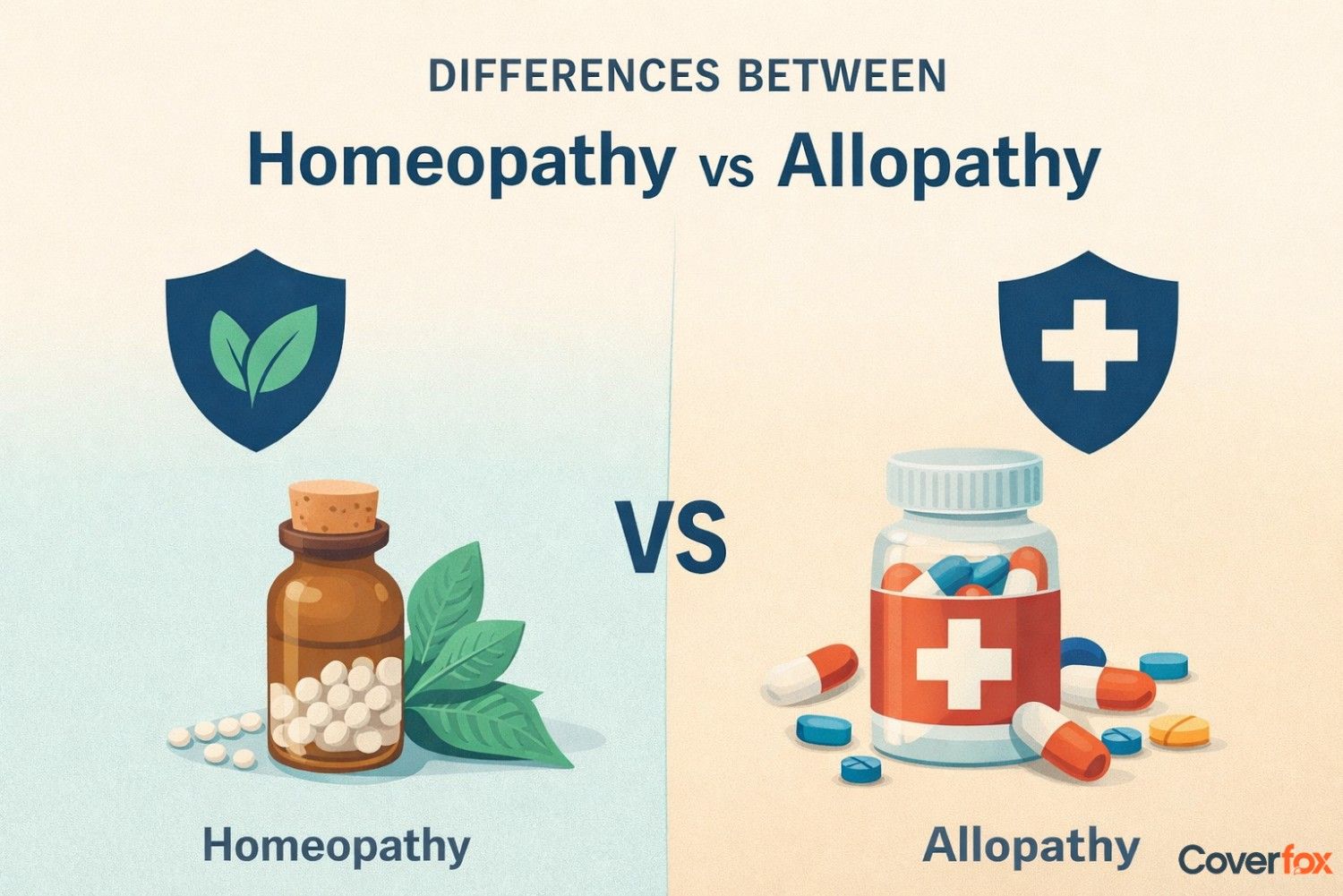
Ever wondered what the difference is between Homoeopathy vs Allopathy? In the world of healthcare, these are two prominent methods of treatment that contrast each other thoroughly. While both seek to restore health and treat ailments, they differ in terms of philosophies and therapeutic practices, making it difficult to choose one over the other.
For this reason, to understand the homoeopathy and allopathy, the detailed guide below takes a look at what is allopathy and homeopathy respectively, including their major differences and whether they can be used together.
Overview of Homoeopathy
Homoeopathy is a holistic system of medicine that aims to stimulate the body’s natural healing process through gentle and highly diluted remedies.
Homoeopathy, founded by physician Dr Samuel Hahnemann, is based on the principle of “like cures like” and extreme dilution, a principle described by the National Centre for Complementary and Integrative Health (NCCIH).
It means that a substance that causes symptoms in a healthy person can help treat similar symptoms in a sick person when given in small, diluted doses.
It mainly focuses on treating the underlying cause of ailments and uses very diluted substances so that they can boost the body’s natural healing mechanisms.
Overview of Allopathy
Allopathy is a modern medical system that focuses on diagnosing and treating diseases using scientifically tested medicines, procedures, and technologies.
Also referred to as conventional or Western medicine, allopathy uses evidence-based treatment, such as medicines, surgery, and diagnostics, which global bodies like the WHO and NCCIH recognise as the standard of care.
Allopathy is highly effective for acute, emergency, and infectious diseases, supported by findings from organisations like Healthline and the National Cancer Institute.
Relying heavily on scientific research, clinical trials, and laboratory testing, allopathy works best in acute situations or emergencies because it acts more quickly than other methods.
Also Read - Difference Between Homoeopathy vs Ayurveda
Comparing Homoeopathy and Allopathy
Check out the table below to understand the main points of difference between Homoeopathy and Allopathy:
| Aspect | Homoeopathy | Allopathy |
|---|---|---|
| Philosophy | Homoeopathy trusts the body’s natural ability to heal and uses medicines that help boost this inner strength. | Allopathy works by finding and treating the exact cause of the disease through medical tests and medicines. |
| Side Effects | Uses natural, diluted remedies that usually do not cause strong side effects. | Some medicines may cause side effects, especially when taken in high doses. |
| Dosage Philosophy | Prescribes very small doses to support the body’s natural healing process and reduce reaction risks. | Uses stronger doses for immediate results, which may sometimes affect immunity. |
| Recovery Timeline | Improvement may be gradual and varies widely between individuals. There is limited scientific data to predict recovery time. | Works quickly to provide fast and noticeable relief from symptoms. |
| Acceptance in Society | Homoeopathy is still not very common or fully accepted in mainstream medicine. | Allopathy is widely accepted and forms the main part of modern healthcare systems. |

Can Homoeopathy and Allopathy Be Taken Together?
Yes, it can be. Here is how:
In recent years, many people have started using both homoeopathy and allopathy together, a practice known as integrative or complementary medicine.
Using both systems together helps deal with immediate symptoms through allopathic medicines, while homoeopathic care works on improving long-term health and preventing future issues.
For example, allopathy can help treat serious or urgent health problems, while homoeopathy can support overall well-being and recovery.
Also Read - How Does Critical Illness Insurance Work?
Wrapping Up
In all, when comparing homoeopathy vs allopathy, it is important to consider that they both differ in terms of treatment method, potential side effects and individual preferences. While homoeopathy focuses on the root causes of diseases and shows gradual improvement over time, allopathy is highly effective in emergencies, surgeries, and critical care.
Along with focusing on your health, it’s also important to secure financial protection through a reliable health insurance plan. Platforms like Coverfox allow you to compare different health insurance policies, understand premiums, and pick the plan that best fits your budget and medical needs.
Frequently Asked Questions
What is the main difference between homoeopathy and allopathy?
Both differ in terms of approach. Homoeopathy believes in stimulating the body’s self-healing powers with natural remedies, whereas allopathy uses drugs to directly target symptoms or disease causes.
What is allopathy in simple terms?
Allopathy is a conventional medicine system that relies on evidence-based research to alleviate or cure symptoms. It mainly focuses on quick action and immediate relief.
Which is better: homoeopathy or allopathy?
Both have their own unique strengths. Homoeopathy is useful for holistic and preventive care of the body, while allopathy is essential during sudden or acute emergencies to provide immediate relief.
Disclaimer: This article is for general informational purposes only and should not be considered medical advice. Always consult a qualified healthcare professional before starting, stopping, or combining any form of treatment. Health insurance decisions should be made based on your individual medical needs and after reviewing policy terms carefully.


.webp)
 in Insurance.webp)

