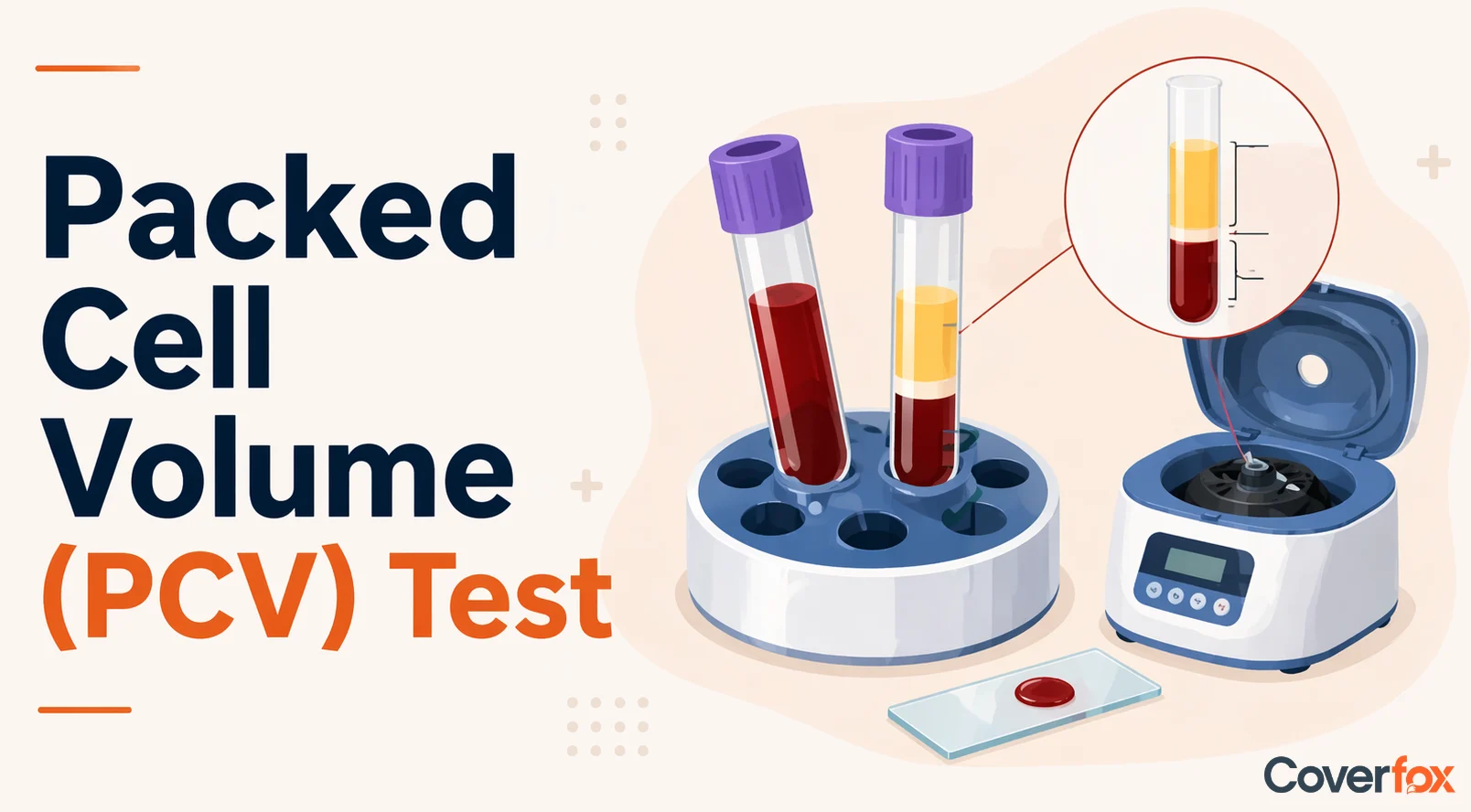
Packed Cell Volume (PCV) test is a routine blood examination that evaluates the proportion of red blood cells in your bloodstream, helping assess oxygen-carrying capacity and detect conditions like anaemia or dehydration. It is usually part of a complete blood count, requires a simple blood draw, and provides quick insights into overall health status, guiding further diagnosis and treatment decisions.
The Packed Cell Volume Test, also known as the haematocrit test, measures the volume of packed red blood cells. This simple yet essential screening tool measures the proportion of red blood cells in your blood, offering critical clues about your overall health. Here is a quick overview of what this guide covers: What PCV full form stands for and what the test actually measures, a detailed PCV blood test normal range chart for different age groups and genders, how to prepare for a PCV test and what to expect on the day, how to interpret your results, and risks, complications, and the conditions this test can help diagnose.
What is a PCV Test?
The PCV full form is 'Packed Cell Volume'. The PCV test, also known as the haematocrit (HCT) test, is a standard blood test that measures the percentage of your total blood volume that is red blood cells (RBCs). Red blood cells transport oxygen from your lungs to every tissue and organ in the body, making their concentration a direct indicator of your body's oxygen-carrying capacity.
So, what is PCV in blood test terms, exactly? In simple words: if your PCV result is 42%, it means that 42% of your blood consists of red blood cells, while the remaining 58% is plasma, white blood cells, and platelets.
The test is typically performed as part of a Complete Blood Count (CBC) panel, one of the most routinely ordered blood investigations in clinical practice. It can be done using two methods:
Traditional approach: Centrifugation method
Modern electronic counters used in most labs today: Automated haematology analysers
PCV in blood is measured as a percentage and is closely related to the hemoglobin (Hb) level.

Why Does the PCV Blood Test Matters?
The significance of the Packed Cell Volume blood test goes beyond a routine check. It plays a crucial diagnostic role in identifying and monitoring a wide range of medical conditions, such as common nutritional deficiencies to life-threatening blood disorders.
India carries one of the heaviest burdens of anaemia globally. As per the latest NFHS-5 survey, 57% of women (15-49 years) and 67% of children below five are anaemic in India. The significant reasons for the need for the PCV Test are:
1. Early Detection of Health Conditions
It helps detect anaemic and polycythemic states, i.e., increased or decreased RBC counts.
2. Monitor adherence
It allows health practitioners to monitor compliance with iron, B12, or folate supplementation.
3. Clinically Useful
This should be considered during the pre-surgical and pre-procedure examinations.
4. Unexplained health conditions
It will also help diagnose a range of unexplained symptoms, including breathlessness, dizziness, etc.
5. Monitoring Vulnerable Populations
When prescriptive monitoring improves, it can be used to monitor vulnerable populations, such as pregnant women and geriatric patients.
PCV Blood Test Normal Range Chart
It is important to understand what constitutes a 'normal' PCV test result while interpreting the results of your PCV test. The results can vary depending on the patient's age, gender, and physiological state. The following is a PCV blood test normal range chart:
| Age / Group | Gender | Normal PCV Range |
|---|---|---|
| Adults (18–60 yrs) | Male | 40.7% – 50.3% |
| Adults (18–60 yrs) | Female | 36.1% – 44.3% |
| Newborns (0–7 days) | Both | 44% – 64% |
| Infants (3–12 months) | Both | 30% – 40% |
| Children (1–5 yrs) | Both | 32% – 42% |
| Children (6–12 yrs) | Both | 35% – 45% |
| Pregnant Women | Female | 33% – 38% |
| Elderly (>60 yrs) | Male | 38% – 49% |
| Elderly (>60 yrs) | Female | 34% – 43% |
Important note: These ranges are general guidelines. Reference ranges can vary slightly between laboratories. Always interpret your result in consultation with your doctor.
How to Prepare for a PCV Test?
1. Before the Test
No special diet is required before a PCV test. If the PCV is done along with other blood tests, the doctor may recommend fasting for 8–12 hours.
Inform the doctor if taking any medications, especially iron and B12 supplements.
Inform the doctor about any recent illnesses.
Drink plenty of water to prevent PCV levels from being artificially elevated.
Avoid strenuous activity the same day, as it can cause abnormal changes in red blood cell count.
2. During the Test
A health professional will draw a small amount of blood from a vein, most likely in the arm.
The process isn't any more painful than getting an injection, and it takes less than 5 minutes. Individuals won‘t notice any pain but may notice a slight sting.
3. After the Test
You may resume your activities immediately.
Expect some minor bruising and discomfort at the site of needle insertion.
Interpreting PCV Test Results
Understanding your PCV test result requires looking at the numbers in context. Here is a clear breakdown:
| Result | What It May Indicate | Next Steps |
|---|---|---|
| High PCV (>52% men / >47% women) | Polycythemia, dehydration, lung disease, and high altitude | Consult a doctor; further blood tests are needed |
| Normal PCV | Healthy red blood cell levels | Routine monitoring as advised |
| Mildly Low PCV (30–36%) | Iron/B12 deficiency, early anaemia | Dietary changes, iron supplementation |
| Moderately Low PCV (20–30%) | Moderate anaemia, chronic disease | Medical evaluation, possible treatment |
| Severely Low PCV (<20%) | Severe anaemia, possible blood loss or haemolysis | Urgent medical attention required |
Risks and Complications of the PCV Test
Pain or discomfort in the area of the blood draw site
Bruising or the formation of a haematoma in the blood draw site, which should resolve on its own in a few days
Lightheadedness or dizziness, especially if individuals have not eaten in a while and are nervous
Infection of the blood draw site, although this is extremely rare
To avoid these complications, a qualified phlebotomist must draw blood in a clinical setting.
Conclusion
The PCV test, or Packed Cell Volume test, is a simple, quick, and remarkably informative blood test. Whether you are investigating unexplained fatigue, monitoring a known condition, or undertaking a routine health screening, your PCV result provides your doctor with vital data about your red blood cell health and overall well-being.
It is important to have a health insurance plan that provides for investigations, specialist consultations, and treatments. This way, you don’t have to wait to seek medical care. Explore our health insurance plans today and give your health the support it deserves!
Also Read:
Disclaimer: This article is intended for informational and educational purposes only and should not be considered medical advice, diagnosis, or treatment. The information provided is based on general medical knowledge and may not apply to individual health conditions. Always consult a qualified healthcare professional or your doctor for accurate diagnosis and personalized treatment recommendations.
Frequently Asked Questions
1. What if PCV is low?
If PCV is low in the blood, it means that the blood has fewer red blood cells than it should. This can be a sign of anaemia. Other symptoms of low PCV include fatigue, breathlessness, pale skin, dizziness, and a fast heart rate.
2. What is a normal PCV?
A normal PCV level for adult men is approximately 40.7% to 50.3%, and for adult women it is 36.1% to 44.3%. These ranges shift for children, newborns, pregnant women, and the elderly.
3. Should I be worried about low PCV?
Mildly low PCV does not always warrant alarm, particularly if you have recently had a viral illness or are menstruating. However, consistently low PCV results should never be ignored. They may indicate an underlying health issue that requires diagnosis and treatment. Contact your doctor if your PCV falls below the normal range.
4. Is the PCV test painful?
The PCV test is a standard blood test, and the blood sampling process is mildly uncomfortable, like a quick pinch. The discomfort is temporary and lasts for a few minutes.
5. How long does it take to obtain the results of the PCV test?
The results of the PCV test are usually available in a few hours or within 24 hours, depending on the facility and the blood tests ordered. With the latest technology and facilities in clinical laboratories and hospital settings, results are available the same day.
6. Can the PCV test diagnose anaemia?
Yes, the PCV test is one of the primary tests used to diagnose anaemia. If the PCV is below the standard level, the patient is diagnosed with anaemia, as anaemia is associated with a low red blood cell mass.
7. Can dehydration impact my PCV results?
Yes, dehydration can greatly impact your PCV results. When you are dehydrated, the plasma portion of your blood decreases. This will increase your red blood cell concentration. This will result in a false increase in PCV.
8. What should I do if my PCV result is abnormal?
If you have obtained abnormal PCV results, do not be alarmed. This is because abnormal PCV results warrant further investigation. In this case, you should schedule an appointment with your doctor. They will examine your entire blood count and medical history. They will also examine your symptoms. After doing this, they will be able to diagnose and recommend the best course of action.
9. What conditions can be diagnosed using a PCV test?
The PCV test can be used to diagnose a wide variety of conditions. This includes iron deficiency anaemia, vitamin B12 and folate deficiency anaemia, haemolytic anaemia, sickle cell anaemia, thalassaemia, etc. It can also be used to monitor patients suffering from cancer, chronic inflammatory conditions, and pregnant women.