- Retail Insurance
- Business Insurance
- Resources
- Claims


Purchasing a car is a hefty financial decision. That’s why many people go for used or 2nd hand cars, as they are cheaper in price and light on the wallet. But the journey does not end here; as you drive your old car on the road, accidents and mishaps are bound to happen. To protect yourself from such unforeseen events, having used car insurance or 2nd hand car insurance is absolutely essential.
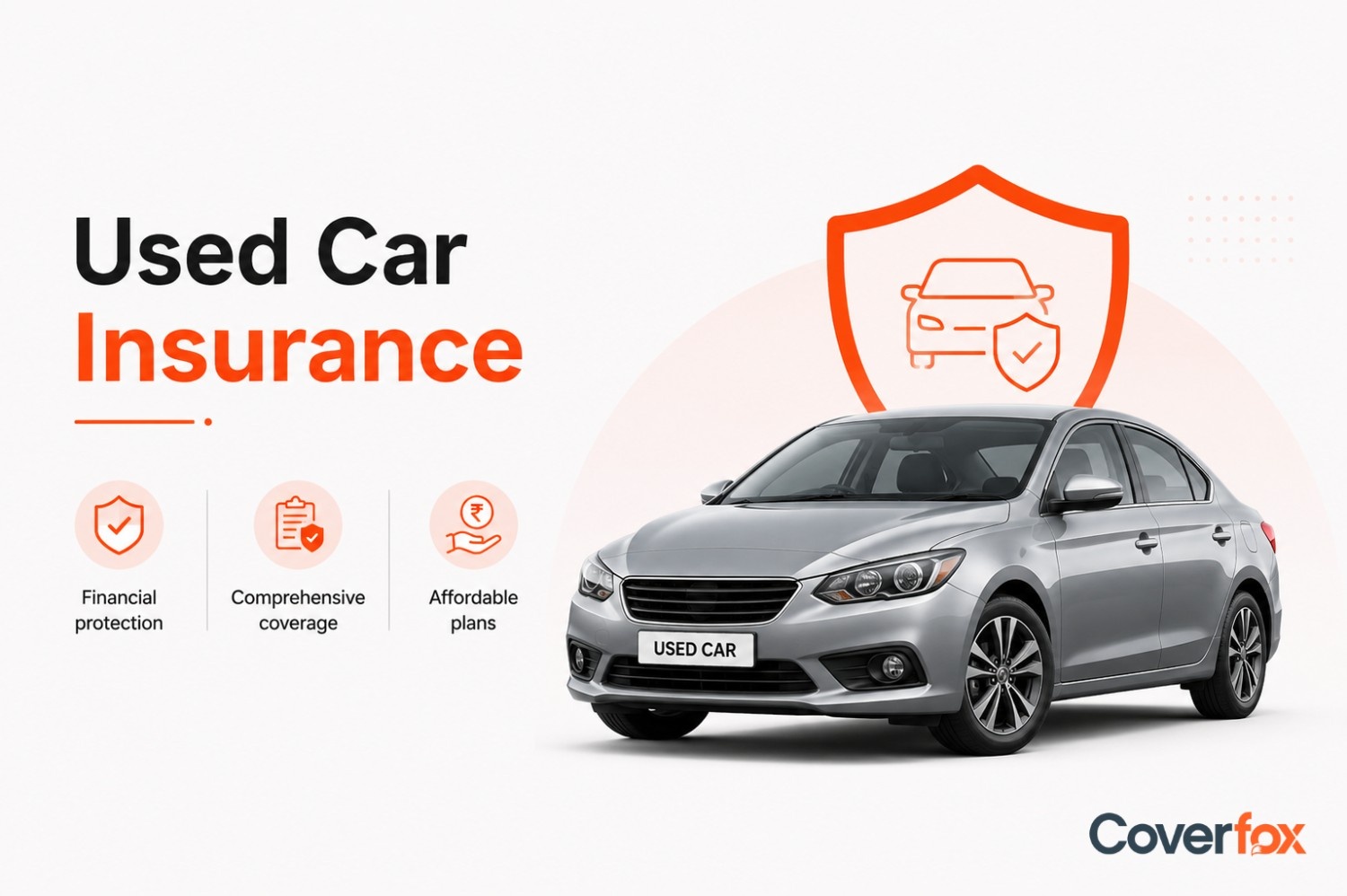
Used car insurance, or Old car insurance, is a motor insurance policy designed for pre-owned cars. It provides financial protection against accidents, theft, fire, natural calamities, and third-party liabilities. Commonly referred to as second-hand car insurance or old car insurance, it works similarly to insurance for a new car, with coverage and premiums determined by factors such as the vehicle's age, condition, Insured Declared Value (IDV), and claim history.
Whether you've recently purchased a certified pre-owned car or have been driving an older vehicle for years, a valid insurance policy helps cover repair costs and legal liabilities. Depending on your needs, you can opt for a Third-Party Liability Policy or a Comprehensive Policy that offers broader protection for your vehicle.
A 2nd hand car may cost less than a new one, but unexpected incidents can still lead to significant financial losses. The 2nd hand car insurance policy helps protect both your vehicle and your wallet.
While a used car loses value over time, the cost of repairing accidental damage can still be high. Used car insurance helps ensure that an unexpected incident doesn't lead to a major financial setback.
Even if you bought the car at a lower price, it still represents a significant investment that deserves protection from major financial losses.
While a used car may pass inspections, its complete usage history may not always be known. Insurance provides an added layer of financial security against unforeseen incidents.
In the event of theft or total loss, the insurer compensates you based on the vehicle's current Insured Declared Value (IDV), helping reduce the financial impact.
When buying a second-hand car, transferring or purchasing a valid insurance policy ensures uninterrupted coverage from day one.
Since the IDV of a used car is generally lower than that of a new car, insurance premiums can often be more budget-friendly while still providing meaningful protection.
When purchasing a used car, transferring the insurance policy to the new owner's name is essential to ensure uninterrupted coverage and a smooth claims process.
Contact the insurance company as soon as the vehicle sale is completed and request a used car policy ownership transfer.
Keep documents such as the insurance policy copy, vehicle Registration Certificate (RC), sale agreement, Form 29 and Form 30, identity proof, and address proof ready.
Fill out the insurer's policy transfer form and submit it along with the required documents.
Ensure that the RC has been transferred to the new owner's name, as insurers typically require proof of ownership before updating the policy.
The insurer may charge a nominal fee for transferring the policy and updating the policyholder details.
Once the verification process is complete, the insurer will issue an updated policy document reflecting the new owner's details.
After the transfer, review the existing coverage, Insured Declared Value (IDV), and add-ons to ensure the policy suits your requirements.
Pro Tip - You can port or transfer your old car insurance through Coverfox as well. Buy/Renew and Port your old car policy in your name in one place!
To transfer a second-hand car insurance policy to the new owner's name, you will need to submit a few documents to the insurer for verification and policy update.
Copy of the existing car insurance policy
Registration Certificate (RC) transferred or in the process of being transferred to the buyer's name
Duly filled insurance policy transfer application form
Form 29 (Notice of Transfer of Ownership)
Form 30 (Application for Intimation and Transfer of Ownership)
Sale deed or vehicle purchase agreement
Identity proof of the new owner (Aadhaar Card, PAN Card, Passport, etc.)
Address proof of the new owner
Passport-size photographs (if required by the insurer)
No Objection Certificate (NOC) from the previous owner, if requested by the insurer
Note: Document requirements may vary slightly between insurers. It is advisable to check with your insurance provider for the exact list before initiating the transfer process.
The right add-ons can enhance the protection offered by your 2nd hand car insurance and help reduce unexpected expenses, especially for older or second-hand cars that may require more frequent repairs and assistance.
One of the most useful add-ons for used cars, it provides help in case of breakdowns, battery failure, flat tyres, towing requirements, fuel delivery, and other roadside emergencies.
Covers repair or replacement costs for engine and gearbox damage caused by water ingress, lubricant leakage, or other covered incidents that are typically excluded under standard policies.
Pays for consumable items such as engine oil, lubricants, nuts, bolts, screws, washers, and coolant that are often not covered in a standard claim.
Covers the cost of replacing lost, stolen, or damaged car keys, which can be expensive for vehicles equipped with smart keys or advanced locking systems.
Allows you to retain your accumulated No Claim Bonus even after making a specified number of claims during the policy period.
Provides compensation for loss or damage to personal items kept inside the insured vehicle due to theft or certain covered events.
Offers additional financial protection for passengers travelling in the vehicle in case of accidental injury, disability, or death.
You can buy new used car insurance policy in the same way you would buy a traditional car insurance policy through Coverfox:
Step 1: Visit the Coverfox Website
Go to the car insurance section and start the quote process.
Step 2: Enter Your Car Details
Provide information such as the old car's registration number, make, model, variant, fuel type, and year of manufacture.
Step 3: Enter your previous policy details
Provide the insurance information of the previous insurance policy given by the old car owner.
Step 4: Compare Insurance Plans
Browse policies from multiple insurance providers and compare coverage benefits, premiums, and add-on covers.
Step 5: Customise Your Coverage
Choose the type of policy you need and add suitable add-ons such as Roadside Assistance, Engine Protection, or NCB Protection.
Step 6: Review the Premium and Policy Details
Check the coverage, Insured Declared Value (IDV), deductibles, and premium amount before proceeding.
Step 7: Complete the Payment
Pay the premium securely using your preferred online payment method.
Step 8: Receive Your Policy Instantly
Once the payment is successful, the policy document will be issued digitally and sent to your registered email address.
A second-hand car insurance policy offers practical financial advantages while helping you protect your pre-owned vehicle against unexpected risks.
Lower Premiums: Used cars typically have a lower IDV, which can result in more affordable insurance premiums.
Customisable Coverage: Choose between third-party and comprehensive coverage based on the car's age, value, and usage.
Affordable Add-On Options: Enhance coverage with useful add-ons such as Roadside Assistance, Engine Protection, and NCB Protection.
Protection Against Major Financial Losses: Helps cover expenses arising from accidents, theft, fire, and natural disasters.
Flexibility to Match Vehicle Value: Coverage can be tailored according to the current market value of the car.
Cashless Repair Facility: Access network garages for hassle-free repairs and claims.
No Claim Bonus Benefits: Earn premium discounts for claim-free years, reducing insurance costs over time.
Easy Ownership Transfer: Existing insurance can be transferred to the new owner when purchasing a used car.
While both policies offer similar types of coverage, they differ in terms of premium, vehicle value, add-on suitability, and claim payout.
| Parameter | Used Car Insurance | New Car Insurance |
|---|---|---|
| Vehicle Value (IDV) | Lower due to depreciation | Higher as the vehicle is new |
| Premium Cost | Generally lower | Usually higher |
| Repair Costs | May involve sourcing older parts | Parts are readily available |
| Suitable Add-ons | Roadside Assistance, Engine Protection, NCB Protection | Return to Invoice, Zero Depreciation, Engine Protection |
| Depreciation Impact | Higher due to vehicle age | Lower during the initial years |
| Ownership Transfer | Required when buying a second-hand car | Not applicable |
| Insurer Risk Assessment | Based on vehicle age, condition, and ownership history | Based primarily on vehicle specifications |
| Best Suited For | Budget-conscious buyers of pre-owned vehicles | Buyers seeking maximum protection for a new vehicle |
Here is a quick checklist that you need to have before you buy a second-hand car insurance:
Ensure the existing insurance policy has been transferred to your name or initiate the transfer immediately after purchase.
Check whether the vehicle has Third-Party or Comprehensive Insurance and decide if the existing coverage meets your needs.
Verify the policy's validity to avoid any lapse in coverage.
Confirm that the IDV accurately reflects the current market value of the vehicle.
Review the car's previous claim record, as frequent claims may indicate a history of accidents or major repairs.
Remember that the seller's NCB cannot be transferred with the vehicle and remains with the previous owner.
Check whether useful add-ons such as Roadside Assistance or Engine Protection are already included.
Assess the car's overall condition, as older vehicles may require different coverage requirements than newer ones.
Verify whether the insurer has a good network of cashless garages in your area.
Understand what is not covered and how much you may need to pay out of pocket during a claim.
Yes. Every used car must have at least a valid third-party insurance policy to be legally driven on Indian roads.
The insurance policy should ideally be transferred immediately after the vehicle purchase. As per regulations, the third-party policy transfers automatically, but the ownership details must be updated with the insurer as soon as possible.
You may face difficulties during claim settlement, as the policy will still be in the previous owner's name. This can lead to claim rejection under the own-damage section.
It depends on the insurer and the policy status. An inspection is commonly required if the previous policy has expired or when purchasing a fresh comprehensive policy.
The Insured Declared Value (IDV) is calculated based on the manufacturer's listed selling price after accounting for depreciation according to the vehicle's age.
You can reduce premiums by opting for a higher voluntary deductible, maintaining a claim-free record, choosing only relevant add-ons, and comparing plans from multiple insurers.
Zero Depreciation Cover is generally available for newer vehicles and may not be offered for older cars. Eligibility varies across insurers.
Used car owners can choose between Third-Party Insurance, Standalone Own Damage Insurance, and Comprehensive Car Insurance.
You can renew your policy online by entering your vehicle details, reviewing available plans, paying the premium, and receiving the renewed policy digitally.
Yes, many insurers offer coverage for older vehicles, subject to their underwriting guidelines and vehicle inspection requirements.
A comprehensive policy is generally recommended as it covers both third-party liabilities and damages to your own vehicle. The ideal choice depends on the car's age, condition, and value.
Yes. You can purchase a fresh insurance policy in your name instead of transferring the seller's policy, provided the vehicle meets the insurer's eligibility requirements.
Yes. You can purchase a new policy even if the previous insurance has expired. However, the insurer may require a vehicle inspection before issuing coverage.
The premium depends on factors such as the vehicle's age, IDV, make and model, location, coverage type, add-ons selected, and claim history.
Yes. Most insurers allow you to enhance your policy with add-ons such as Roadside Assistance, Engine Protection, Consumables Cover, and NCB Protection.
Inform your insurer about the incident, submit the required documents, arrange a vehicle inspection if required, and follow the insurer's claim process for repair or settlement.