PPN (Preferred Provider Network) in group health insurance is a network of hospitals that have agreed with an insurer on package rates for specified treatments. If your employer’s policy covers the treatment, you can use cashless hospitalisation at an eligible PPN hospital, subject to approval and policy terms.
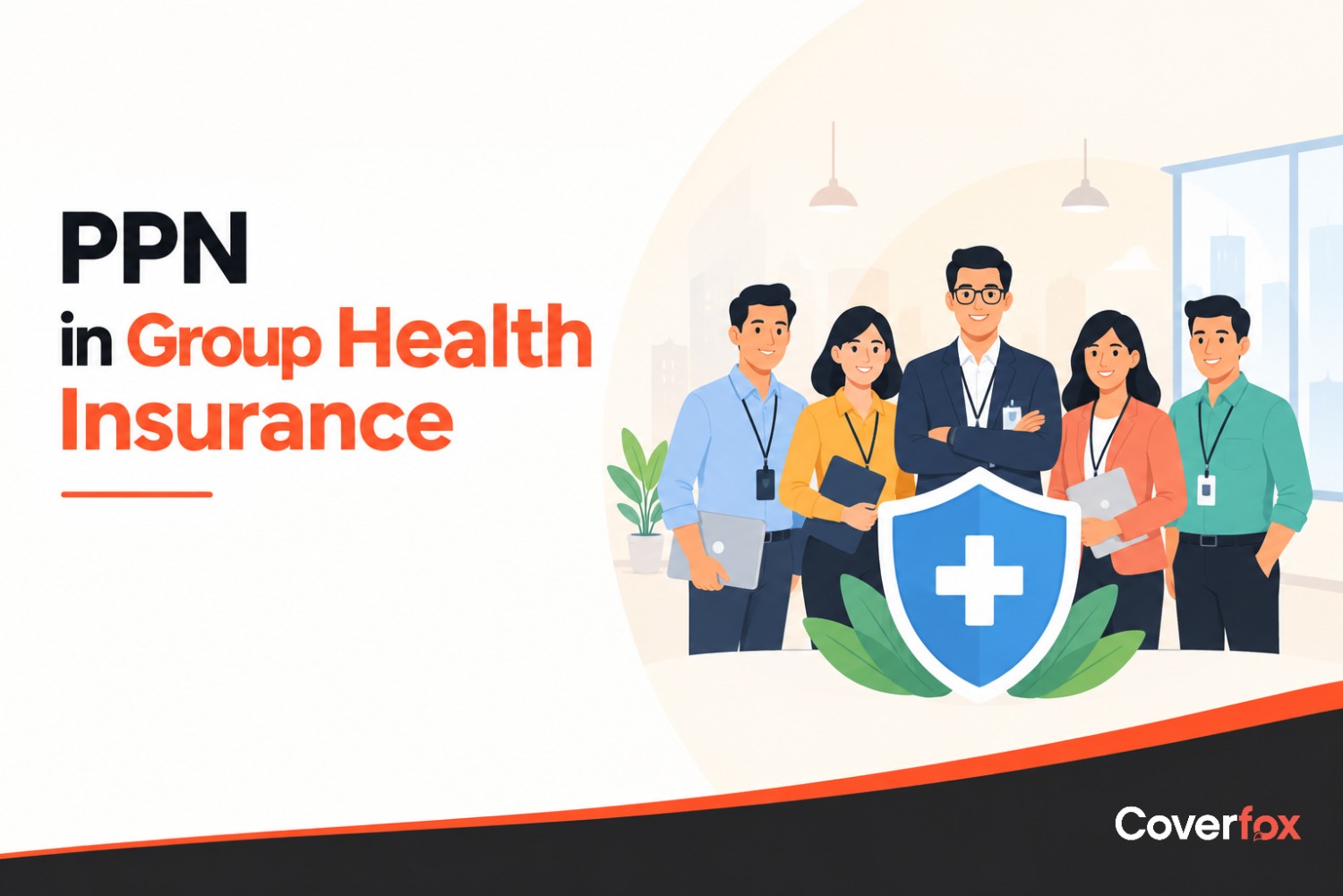
PPN stands for Preferred Provider Network. It refers to hospitals that have an arrangement with an insurer for specified treatments, including agreed package rates and cashless claim processing. If your employer provides group health insurance, you can use the PPN network for eligible treatment, subject to your policy terms and the insurer's approval.
What is PPN in Group Health Insurance?
PPN (Preferred Provider Network) in group health insurance refers to a specific hospital arrangement where participating hospitals and insurers have agreed terms, including package rates for specified treatments. Eligible treatment at a PPN hospital may be available on a cashless basis, subject to the group policy, pre-authorisation and other applicable terms.
PPN should not be confused with a network hospital. Insurers may have wider hospital networks where cashless treatment is available, but not every network hospital is necessarily part of a PPN arrangement. The terminology and applicable network can vary by insurer and group health policy.
Formation of PPN
In India, the PPN concept is historically associated with the General Insurance Public Sector Association (GIPSA), which represents four public-sector general insurers. The aim was to have standard rates for common treatments, make cashless treatment easier and bring more consistency to hospital billing. Today, the four GIPSA insurers follow a common GIPSA-PPN arrangement, while private insurers may have their own hospital networks and agreed rates. This means the hospitals and rates can vary from one insurer to another.
For group health insurance plan, a PPN may be part of the hospital arrangement, but it is not included in every group policy. The policy may use a GIPSA-PPN, an insurer-specific PPN or a broader cashless hospital network, depending on the insurer, TPA and policy terms.
A hospital typically becomes part of a PPN through these steps:
Hospital evaluation: The insurer evaluates the hospital based on factors such as infrastructure, facilities, services and documentation.
Rate negotiation: The hospital and insurer agree on package rates for specified treatments and procedures.
Empanelment agreement: Both parties formalise the arrangement, including agreed rates, documentation requirements, billing procedures, cashless authorisation and other terms.

What Does a PPN Hospital Offer?
Cashless treatment:
Pre-agreed treatment rates:
Standard billing:
Claim coordination:
Empanelled hospital access:
Eligible treatment can be processed without you paying the covered hospital bill upfront, subject to approval.
The hospital and insurer work with agreed package rates for specified procedures.
The hospital follows the documentation and billing requirements agreed with the insurer or TPA.
The hospital, insurer, and TPA can coordinate pre-authorisation, treatment details and final bill settlement.
The network gives employees access to hospitals that have been assessed and included by the insurer or TPA.
How Does PPN Work in Group Health Insurance?
Let's assume you need to have surgery. Here’s what you will have to do:
Pick a hospital from your insurer's PPN list.
Show your e-card and photo ID at the hospital's insurance desk. The hospital verifies your cover with the insurer or TPA.
The hospital sends a pre-authorisation reques
t with your diagnosis and estimated cost. IRDAI's master circular gives the insurer one hour to decide.After treatment, the hospital sends the final bill. The insurer has three hours to authorise discharge, and it bears any extra hospital charges if it runs over.
The insurer pays the eligible amount to the hospital. You pay only what your policy does not cover, such as co-payment or excluded items.
Benefits of PPN for Policyholders
Greater cost predictability:
Cashless treatment:
Simpler claim processing:
Agreed package rates for specified procedures can make eligible treatment costs more predictable, although exclusions, complications and policy limits can still result in additional expenses.
Eligible hospital expenses can be settled directly between the insurer and network hospital, subject to approval and policy terms.
Standardised billing and documentation can make cashless claim processing smoother.
PPN vs Non-PPN Hospitals
| Feature | PPN hospital | Non-PPN hospital |
|---|---|---|
| Network status | Contracted with your insurer | No contract with your insurer |
| Pricing | Agreed package rates | Set by the hospital |
| Payment | Insurer pays the hospital directly | You pay first, then claim |
| Cashless | Available for eligible treatment | Depends on your insurer and policy |
| Claim processing | Follows pre-agreed billing formats | Insurer reviews your bills against policy terms |
What Happens if Your Preferred Hospital is Not in the PPN?
You can still be treated at a non-PPN hospital. Treatment at a non-network hospital may still be covered under reimbursement, depending on your group health policy and the hospital's eligibility under the policy. Check the policy wording or confirm with the insurer/TPA before planned treatment. Cashless is not available unless your insurer offers it at that hospital. So the alternative is:
Pay the hospital bill.
Collect the itemised bill, discharge summary and reports.
File your claim. The insurer must settle non-cashless claims within 15 days of submission as prescribed by IRDAI.
For planned treatment, ask your insurer or TPA before admission whether cashless is possible. In an emergency, seek immediate medical care. Inform the insurer/TPA as soon as reasonably possible and follow the notification and claim requirements in your policy.
How to Find a PPN Hospital?
Your PPN hospital list is available from:
The insurer's website or app.
The customer portal, using your policy details.
The insurer's helpline.
Your HR department or the TPA.
Filter by city, speciality or pin code. Before a planned admission, call the insurer or TPA to confirm the hospital's network status and that your treatment falls under a package. At admission, carry your e-card, photo ID and the doctor's admission note. The hospital then raises the cashless request.
Conclusion
A Preferred Provider Network connects policyholders with empanelled hospitals that have pre-agreed treatment rates and cashless claim arrangements. Before hospitalisation, check the insurer’s current network list, whether your treatment is covered under a package, and the policy conditions. When choosing a health plan, compare the hospital network alongside the premium and coverage of the health insurance company.
Frequently Asked Questions
Does a PPN hospital charge less for treatment?
PPN hospitals may have negotiated package rates for specified treatments, but the amount payable still depends on the agreed package, your policy and any applicable out-of-pocket expenses.
Do I need pre-authorisation at a PPN hospital?
Yes, cashless treatment generally requires pre-authorisation from the insurer or TPA before the treatment is approved under the policy.
What documents are required for cashless treatment at a PPN hospital?
You may need your health e-card, photo ID, doctor's prescription or admission note and other medical documents requested by the insurer or TPA.
Can I choose any PPN hospital for my treatment?
Yes, you can choose from the applicable PPN or network hospitals, but check that the hospital is currently empanelled and that it provides the treatment you need.
Does a PPN hospital guarantee that my claim will be approved?
No, being treated at a PPN hospital does not guarantee claim approval. The treatment must be covered under your policy and meet the insurer's claim and authorisation requirements.
Can I use a PPN hospital for emergency treatment?
Yes, you can seek emergency treatment at a PPN hospital, but the cashless claim will remain subject to your policy terms and the insurer's approval process.
What happens if my treatment costs more than the PPN package rate?
The insurer and hospital will assess the additional costs according to the treatment provided, applicable package terms and your policy. You may have to pay amounts that are not covered.
Does a PPN hospital cover room rent and medicines?
Not automatically; coverage for room rent, medicines and other hospital expenses depends on your group health insurance policy and the applicable treatment package.
Can my employer change the PPN hospital network?
The applicable network can change when the employer renews or changes the group health insurance arrangement. Check with HR or the TPA for the current list.
Are PPN hospitals available in every city?
PPN availability varies by insurer and location. You can check your insurer's current network list by city or PIN code.
Does every group health insurance policy have a PPN?
No. Not every group health insurance policy has a PPN (Preferred Provider Network). A PPN is generally linked to the insurer's network arrangement with hospitals, rather than being an automatic feature of every group health policy.
Can I use my group health insurance at a hospital outside the PPN?
Yes, you may still be able to claim under your policy, but the claim may be handled as reimbursement rather than cashless treatment. Check your policy and insurer before planned admission.