Non-medical expenses are hospital costs that a health insurance policy may not pay, such as certain consumables, personal-use and administrative items. If an expense is excluded under the policy, the policyholder has to pay it unless the policy includes coverage for that expense.
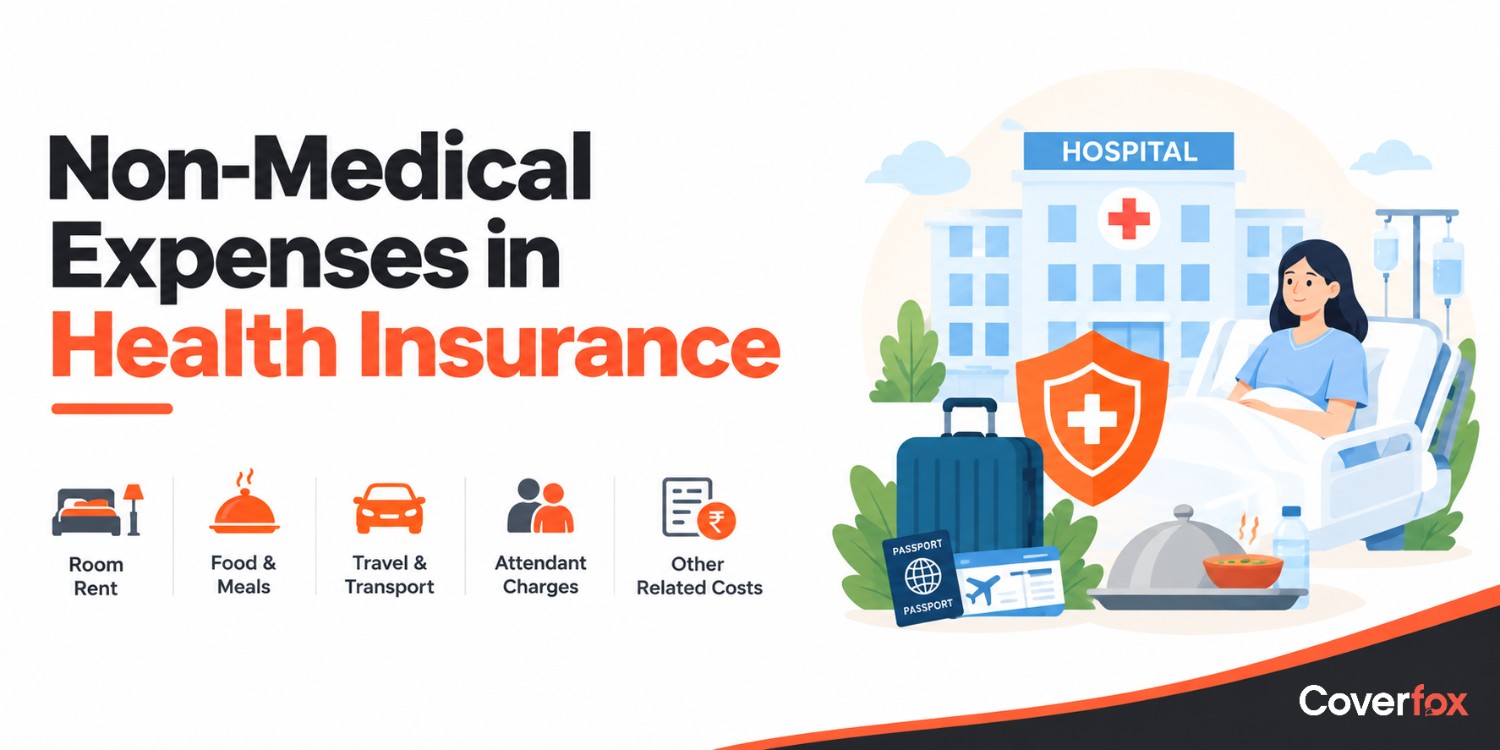
A hospital bill can include treatment costs, room-related charges, consumables and personal-use items. Some expenses are excluded under a policy, while others form part of the applicable room, procedure or treatment charges. The amount you pay depends on the policy terms, applicable regulations and how the expense is treated under the claim.
What are Non-Medical Expenses in Health Insurance?
Non-medical expenses are charges incurred during hospitalisation that are not payable under the terms of a health insurance policy. They can include certain consumables, personal-use items, administrative charges and other incidental expenses. These expenses are treated separately from the main claim based on the terms of the health insurance policy. The exact list of non-payable expenses varies by insurer and policy, so the policy wording determines what the insurer pays and what the policyholder has to pay.
These expenses are treated separately from the main claim based on the terms of the health insurance policy. The exact list of non-payable expenses varies by insurer and policy, so the policy wording determines what the insurer pays and what the policyholder has to pay.
Understanding Non-Medical Expenses
These terms help explain how non-medical expenses are treated under a health insurance policy.
| Term | Meaning |
|---|---|
| Excluded expense | An expense that is not payable under the terms of the policy. |
| Optional cover | Additional coverage included in the policy for specific expenses or benefits. |
| Consumables cover | Coverage for eligible consumable items, subject to the policy terms and limits. |
| Sub-limit | A specified limit on the amount payable for a particular expense or category. |
These are general explanations. The exact meaning and application of each term are determined by the policy document.
Non-Medical Expenses List in Health Insurance
IRDAI has issued standardisation guidelines covering how certain hospital expenses are to be treated. Its 2019 modification guidelines classified specified expenses into four categories: optional items, expenses to be included in room charges, expenses to be included in procedure charges, and expenses to be included in treatment costs. These categories should not be treated as a blanket list of expenses that are excluded from health insurance claims. (IRDAI)
IRDAI's current health insurance framework includes the Master Circular on Health Insurance Business dated 29 May 2024, issued under the IRDAI (Insurance Products) Regulations, 2024. (IRDAI Health Insurance Circulars)
1. IRDAI Categories for Hospital Expenses
Optional items: Insurers can offer coverage for specified optional items as an additional benefit.
Room charges: Specified expenses are included in the room charges rather than treated as separate expenses.
Procedure charges: Specified expenses are included in the relevant procedure charges.
Treatment costs: Specified expenses are included in the costs of treatment, including applicable diagnostic expenses.
The classification is different from a list of exclusions. An expense being included in the room, procedure or treatment category does not by itself mean that the expense is non-payable.
2. Non-Medical Expenses Under Hospital Room Charges
These expenses are included in the room charges category:
Gowns, hand wash and toiletries: Basic hygiene items provided in the room.
Tissue paper, slippers, caps and foot covers: Personal comfort items.
Housekeeping: Expenses related to maintaining the hospital room.
Hot and cold packs: Items used for pain relief during the hospital stay.

3. Non-Medical Expenses Under Procedure Costs
These expenses are included in the relevant procedure charges:
Surgical blades and disposable razors: Items used during surgery or to prepare the treatment area.
Bandages, cotton and gauze: Materials used to dress and protect the treated area.
Surgical drill: Equipment used during certain surgical procedures.
Other items used as part of a specific procedure: Costs that form part of the procedure rather than being treated separately.
These items should not be treated as automatically excluded simply because they appear in the standardisation framework. Their treatment is linked to the procedure charges and the terms of the policy.
4. Non-Medical Expenses Under Treatment Costs
These expenses are included in treatment costs rather than treated as separate non-payable items:
Registration and admission charges: Fees collected when a patient is registered or admitted to the hospital.
Urine containers and urine bags: Containers and bags used for collecting urine during treatment.
Blood reservation and antenatal booking charges: Charges for reserving blood and booking antenatal services.
Infusion pump: The cost of an infusion pump used during treatment.
Hydrogen peroxide, spirit and disinfectants: Products used for cleaning and disinfection.
Nutrition planning, dietician and diet charges: Expenses related to dietary planning, dietician services and diet.
HIV kits: Kits used for HIV testing.
Antiseptic mouthwash, lozenges and mouth paint: Oral-care products used during treatment.
Vaccination charges: Costs related to vaccination.
Alcohol swabs: Swabs used to clean the skin before a procedure or injection.
Scrub solution and Sterillium: Solutions used for cleaning and disinfection.
Glucometer and strips: Equipment and strips used for checking blood glucose.
BiPAP, CPAP and CAPD equipment: Equipment used for respiratory support or dialysis-related treatment.
These expenses form part of the treatment-cost classification and should not be presented as automatically non-payable simply because they appear in the IRDAI standardisation document.
Other Common Non-Medical Expenses
Hospital bills can also contain personal-use or incidental expenses that are excluded under individual health insurance policies. Examples can include:
Personal food and beverages
Attendant expenses
Laundry and personal-service expenses
Personal grooming services
Other convenience items
The treatment of these expenses varies by policy. Check the exclusions and benefits in your policy wording before assuming that an item will be payable.
Optional Items
Some personal-use and convenience expenses can be offered as optional benefits rather than standard treatment coverage. The non-medical items list helps identify these expenses.
Examples can include:
Mineral water and food: Personal food and drinking-water expenses during hospitalisation.
Laundry and attendant expenses: Expenses for laundry or an attendant accompanying the patient.
Baby food: Food provided to a baby during the hospital stay.
Belts and braces: Supportive items used during treatment or recovery.
Carry bags: Bags supplied for carrying medicines or personal belongings.
Thermometers: Devices used to measure body temperature.
Beauty services: Personal grooming and beauty-related services.
Coverage depends on the benefits included in the policy. Check the policy wording of the health insurance company to see whether the relevant optional benefit is included.
How Non-Medical Expenses Affect Your Health Insurance Claim?
Expenses excluded under the policy are deducted from the amount payable under the claim. This increases your out-of-pocket contribution even when the main hospitalisation claim is approved.
For example, if your hospital bill is ₹1,20,000 and ₹8,000 consists of expenses that are not payable under your policy, the payable claim amount would be ₹1,12,000. The remaining ₹8,000 would have to be paid by you.
How to Check Non-Medical Expense Coverage in Your Policy
Before hospitalisation or filing a claim, check:
Policy wording: Read the exclusions, inclusions and non-payable expenses section carefully.
Consumables coverage and sub-limits: Check whether your plan includes a consumables or non-medical expense benefit and whether a limit applies.
Room-rent conditions: Check whether the policy has a room-rent limit and how it can affect other hospitalisation expenses.
Insurer or TPA confirmation: Ask the insurer or TPA about the treatment of a specific expense if the policy wording is unclear.
Final Takeaway
Non-medical expenses can increase your out-of-pocket costs even when a hospitalisation claim is approved. Check the policy wording, exclusions, sub-limits and any consumables or non-medical expense benefits to understand which expenses the insurer will pay and which ones you will have to bear.
Frequently Asked Questions
What are non-payable items in health insurance?
Non-payable items are expenses on a hospital bill that are not payable under the terms of a health insurance policy. They can include certain consumables, personal-use items and administrative expenses.
Why are non-medical expenses not covered by health insurance?
Health insurance policies specify the expenses they cover and those they exclude. Non-medical or non-payable items are treated according to these policy terms and are payable only when the policy provides coverage for them.
Are non-medical expenses covered by health insurance?
It depends on the policy. Some plans include coverage for specific non-medical or consumable expenses, either as part of the policy or through an optional benefit or add-on.
Can non-medical expenses be claimed during cashless treatment?
Cashless treatment does not cover every item on the hospital bill. Expenses excluded under the policy are payable by the policyholder. If the policy includes coverage for eligible non-medical or consumable expenses, those expenses can be considered as part of the claim.
Do non-medical expenses affect the overall cost of hospitalisation?
Yes. Non-payable expenses increase the amount you pay from your own pocket, even when the main hospitalisation claim is approved.
What is the difference between non-medical expenses and consumables?
Non-medical expenses are costs that are not payable under the terms of a health insurance policy, while consumables are items used during treatment that are consumed or cannot be reused. The two terms can overlap, but they are not interchangeable.
Does consumables cover pay for every consumable?
No. Consumables cover is subject to the policy's inclusions, exclusions, limits and other conditions. Check the specific consumables benefit to see which items are eligible.
What should I do if the hospital charges separately for an item?
Ask the hospital billing desk for an itemised bill and clarification on the charge. If the expense is unclear, contact your insurer or TPA to confirm how it will be treated under your policy.
How much can non-payable expenses cost?
There is no standard amount. The out-of-pocket cost depends on the hospital bill, the expenses excluded under your policy and the coverage available. For example, if ₹8,000 of a ₹1,20,000 hospital bill is not payable, you would have to pay that ₹8,000 yourself.
What happens if I disagree with a deduction?
Ask the insurer for a detailed claim settlement or deduction breakdown and the reason for each disputed deduction. If you still disagree, raise the issue through the insurer's documented grievance process and follow the applicable escalation procedure.
What categories of expenses does IRDAI standardise?
IRDAI's health insurance standardisation framework categorises expenses into optional items, room charges, procedure charges and treatment costs. The IRDAI non-medical expenses list helps identify such expenses, but not every listed item is automatically excluded from claims.
Disclaimer: The information provided above is for general awareness and is based on IRDAI regulations, circulars and publicly available policy information. IRDAI's health insurance framework has evolved over time, and the treatment of individual expenses can vary between health insurance policies. Coverage, exclusions, sub-limits and claim payments are subject to the specific policy wording and terms and conditions of the insurer. Please refer to your policy document or contact your insurer/TPA for details applicable to your policy.