- Retail Insurance
- Business Insurance
- Resources
- Claims


Kidney stones affect around 1 in 10 people globally, with rising cases linked to dehydration and lifestyle factors (Source: Research Current Kidney Stone Disease). They can cause severe pain, urinary problems, and repeated episodes if not managed properly. This page covers what kidney stones are, why they form, symptoms, treatment options, and prevention tips.
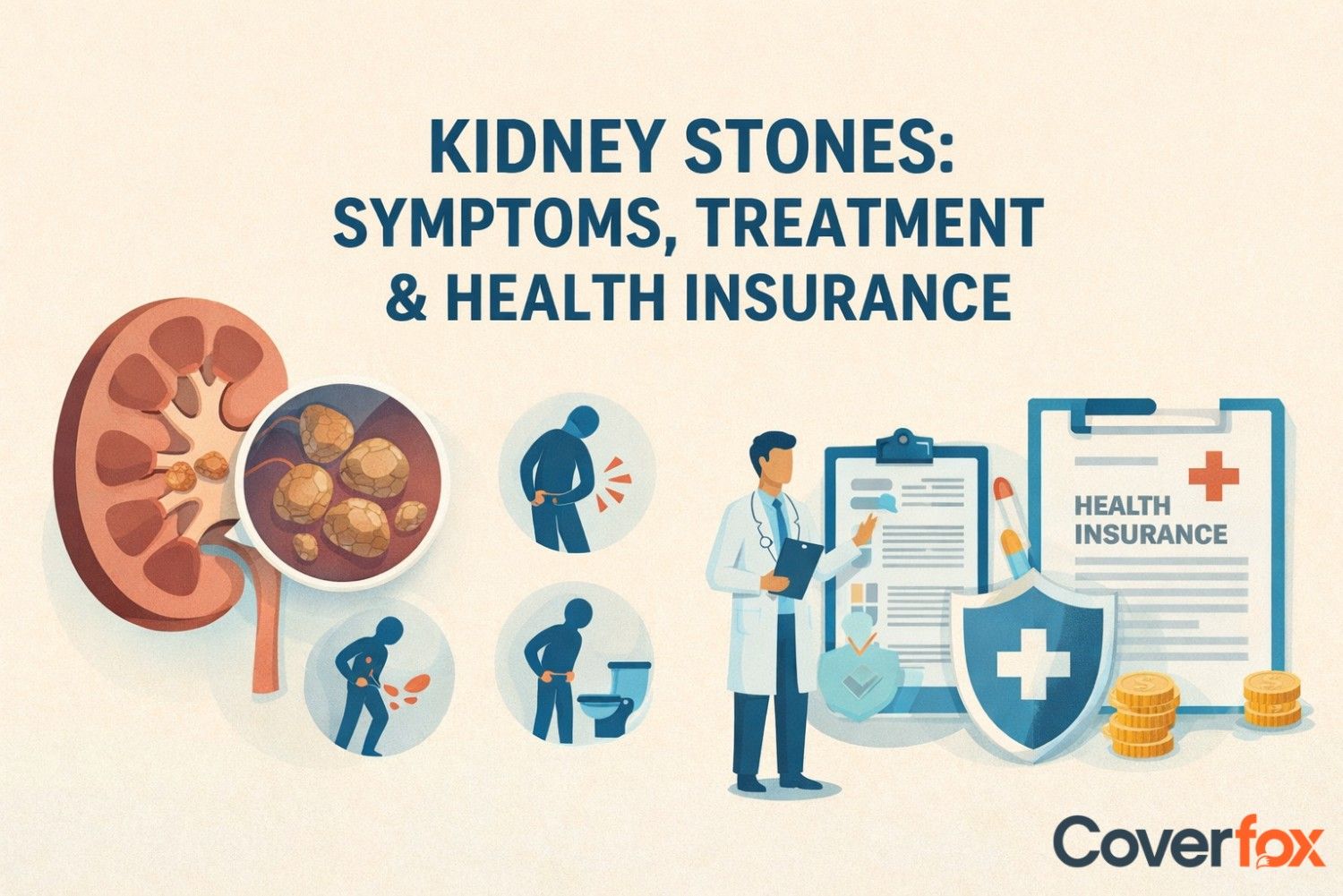
Kidney stones are hard, crystal-like deposits made of minerals and salts that form in the kidneys when the urine becomes too concentrated. They can vary in size, from tiny grains that pass unnoticed to larger stones that cause severe pain while moving through the urinary tract. Kidney stones commonly develop due to low water intake, certain dietary habits, or underlying medical conditions. If not treated in time, they may lead to infections, urinary blockage, or repeated stone formation.

Kidney stones are classified based on the substance they are made of.
The most common type, usually formed from calcium oxalate due to diet or dehydration.
Develop when urine is too acidic, often linked to high protein intake or gout.
Form as a result of urinary tract infections and can grow quickly in size.
Rare stones caused by a genetic condition that leads to excess cystine in urine.
Kidney stones are fairly common, affecting about 10–12% of people at least once in their lifetime. Men are more likely to develop kidney stones than women, and the risk increases with age, dehydration, and lifestyle factors. Once a person has had a kidney stone, the chances of recurrence are also high.
Kidney stones usually form when urine becomes concentrated, allowing minerals to crystallise.
Low water intake: Not drinking enough fluids concentrates urine and promotes stone formation
Diet high in salt or protein: Increases calcium and uric acid levels in urine
Excess oxalate-rich foods: Foods like spinach, nuts, and chocolate can raise stone risk
Family history: Genetics can increase the likelihood of developing stones
Certain medical conditions: Conditions such as gout, obesity, or digestive disorders can increase risk
Kidney stones form when urine becomes too concentrated, allowing minerals like calcium, oxalate, or uric acid to crystallise. Over time, these crystals stick together and grow into hard stones inside the kidneys. Low fluid intake, certain diets, and metabolic imbalances increase the chances of this process.
Kidney stones usually cause symptoms when they move within the urinary tract.
Severe pain in the lower back, side, or abdomen
Pain or burning sensation while urinating
Blood in urine causing pink, red, or brown colour
Nausea or vomiting due to intense pain
Frequent or urgent need to urinate
Kidney stones are diagnosed through a careful evaluation of symptoms, medical history, and diagnostic tests to confirm their presence and type.
Help detect blood, infection, and high levels of minerals that contribute to stone formation
Used to check calcium, uric acid, and kidney function
Ultrasound, X-ray, or CT scan are used to identify the size, location, and number of stones
If the stone is passed naturally, it may be analysed to determine its composition and guide prevention strategies
Kidney stone treatment depends on the stone’s size, type, location, and the severity of symptoms.
Patients are advised to drink 2.5–3 litres of water daily to dilute urine, which helps small stones pass naturally and prevents new stones from forming.
Pain relievers like NSAIDs control severe discomfort, while alpha blockers help relax the ureter, making it easier for stones to pass; other medicines may be prescribed to reduce calcium or uric acid levels based on stone type.
High-energy sound waves are directed at the stone from outside the body to break it into tiny fragments that can pass through urine over time; this is commonly used for medium-sized stones.
A thin, flexible scope is inserted through the urinary tract to directly locate the stone, which is then removed or broken using laser energy; this method is effective for stones stuck in the ureter.
This minimally invasive surgery involves making a small incision in the back to remove very large or complex kidney stones and is usually recommended when other treatments fail.
Preventing kidney stones focuses on reducing the factors that cause minerals to crystallise in urine.
Consuming 2.5–3 litres of fluids daily keeps urine diluted, which helps prevent minerals from sticking together and forming stones.
High sodium levels increase calcium in urine, raising the risk of calcium stone formation; reducing processed and salty foods is recommended.
Limiting excess animal protein and oxalate-rich foods while maintaining adequate dietary calcium helps lower stone risk.
Obesity and metabolic disorders can alter urine composition, increasing the likelihood of stone formation.
Doctors may recommend medicines to control calcium, uric acid, or cystine levels in people with recurrent kidney stones
.Health insurance plays an important role in managing kidney stone treatment, as the condition can require hospitalisation, scans, medications, or surgical procedures. With rising medical costs, having health insurance helps cover expenses related to diagnosis, treatment, and post-procedure care. It also provides access to cashless treatment at network hospitals, reducing financial stress during emergencies. Overall, health insurance ensures timely care for kidney stones without putting a strain on savings.
Here are some health insurance plans that provide comprehensive coverage and financial support for kidney failure treatment.
| Name of the Plan | Best Features |
|---|---|
| Aditya Birla Activ Assure Diamond |
|
| Royal Sundaram Lifeline Health Insurance |
|
| HDFC Ergo My:Optima Secure Health Insurance |
|
| ICICI Lombard Complete Health Insurance Policy |
|
Disclaimer: This information is for general awareness and informational purposes only and should not be considered medical advice. Symptoms, causes, and treatments may vary from person to person. Readers are advised to consult a qualified healthcare professional for accurate diagnosis, treatment, and personalised medical guidance. The content is not intended to replace professional medical consultation, diagnosis, or treatment.
Kidney stones form when urine becomes concentrated, allowing minerals like calcium, oxalate, or uric acid to crystallise and stick together.
Anyone can develop kidney stones, but the risk is higher in people with low water intake, unhealthy diets, family history, obesity, or certain medical conditions.
Yes, kidney stones can cause severe pain, especially when they move through the urinary tract, often accompanied by nausea or burning during urination.
They are detected using urine tests, blood tests, and imaging scans such as ultrasound, X-ray, or CT scan.
No, small stones often pass naturally with fluids and medication; surgery is needed only for larger stones or complications.
Yes, most health insurance plans have a waiting period, usually between 2 and 4 years, for kidney stone-related treatments, depending on the insurer.
Coverage generally includes hospitalisation, surgery, and procedures, but terms vary by policy, so it is important to check inclusions and exclusions.
Yes, cashless treatment is available if the procedure is done at a network hospital of the insurance provider.
Yes, if diagnosed before purchasing the policy, kidney stones are considered a pre-existing condition and are subject to a waiting period.
Stones larger than 6–7 mm or those causing blockage, infection, or severe pain usually require medical procedures or surgery.