
- Retail Insurance
- Business Insurance
- Resources
- Claims


Maternity health insurance is a type of health cover that includes expenses related to pregnancy, childbirth, and pre & postnatal care. These plans help manage the financial burden associated with deliveries and newborn care by covering hospitalisations, medical consultations, and related treatment costs.
Most health care policies offer maternity coverage in one of two ways: as an additional benefit within an overall comprehensive plan (or routine family floater plan) or as a separate stand-alone policy. Since most insurance companies usually require a wait period before any maternity coverage becomes active, purchasing coverage well in advance of a planned baby is essential.
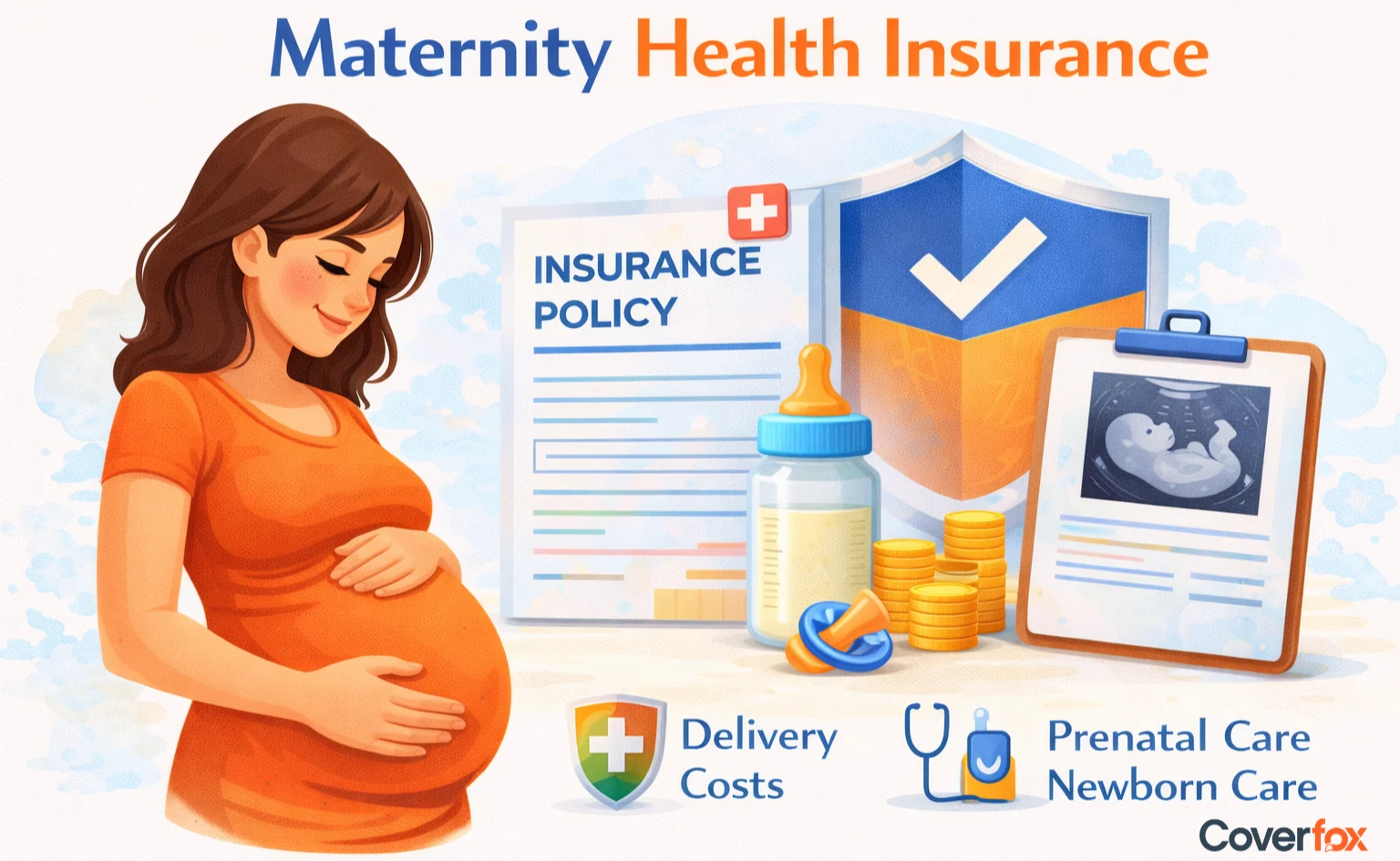
Maternity health insurance plans may cover both normal and caesarean deliveries, along with prenatal and postnatal medical expenses under comprehensive health insurance coverage. These pregnancy insurance plans often include hospitalisation costs, doctor consultations, and diagnostic tests. Some maternity insurance policies also extend newborn baby coverage, offering financial protection for medical care and treatment expenses for a specified duration after birth under a health insurance plan.

Maternity insurance policies generally include a waiting period before maternity-related claims become eligible. Therefore, purchasing coverage early is considered important. Maternity health insurance should ideally be purchased:
To ensure the waiting period concludes before the baby's arrival, it is advisable to purchase maternity health insurance in advance.
Also consider purchasing maternity health insurance as part of your family’s financial planning early on (especially if you choose a family floater plan).
It is also best to purchase maternity health insurance while you are young, since premiums tend to be cheaper for you.
Lastly, it can be practical to choose long-term health insurance that includes maternity benefit options.
You will have access to many different advantages from purchasing your maternity insurance online, such as:
Helps manage the costs associated with pregnancy, hospitalisation, and delivery.
Some policies extend coverage to newborn babies for a defined period after birth.
Policies may provide cashless treatment at network hospitals, reducing the need for immediate out-of-pocket payments.
Most maternity insurance plans cover both normal and caesarean deliveries within policy limits.
Many plans cover routine prenatal visits, doctor consultations, and diagnostic tests such as blood work, urine tests, and ultrasounds, reducing the financial burden of frequent medical appointments.
Certain policies extend coverage to vaccinations recommended during and after pregnancy, including those administered to the newborn in the initial weeks after birth.
Some policies cover postnatal follow-up consultations and treatment required during the mother's recovery, along with ambulance charges incurred during a pregnancy-related emergency.
Select plans offer optional coverage for assisted reproductive technologies such as IVF and IUI, though such coverage is subject to sub-limits, specific eligibility criteria, and waiting periods.
A limited number of insurers offer partial reimbursement for cord blood collection and processing as an add-on benefit, given its potential use in treating certain conditions in the future.
Note: Benefits such as IVF coverage and stem cell preservation vary across insurers. Always review the policy document carefully to confirm inclusions.
| Covered | Not Covered |
| Hospitalisation expenses for childbirth | Expenses during the waiting period |
| Normal and caesarean delivery costs | Pregnancy before policy purchase |
| Prenatal and postnatal medical care (as per policy limits) | Non-medical expenses, such as registration charges |
| Newborn baby medical expenses (for a limited period) | Assisted reproductive treatments in some policies |
| Doctor consultations and diagnostic tests related to pregnancy | Cosmetic or non-medical procedures |
| Nursing charges and hospital room costs | Expenses beyond the coverage limit |
Disclaimer: Maternity insurance plans may vary in coverage and exclusions by insurer and policy type.
In India, the majority of maternity health insurance cover plans are subject to a minimum waiting period of 3 months before you can make any claim for maternity-related expenses. The reason for this waiting period is to deter people from taking out a policy only after they become pregnant.
Some insurers may offer reduced waiting periods under specific maternity plans, but policies with zero waiting periods are generally uncommon. Reviewing policy documents is essential to understanding eligibility and claim conditions.
The cost of maternity care in India varies significantly by city, hospital type, and delivery type. C-section rates in private hospitals in India are notably higher than the WHO recommended 10–15% which directly impacts the overall cost of maternity care for many families. The average hospital stay for a caesarean delivery at a private facility is 3–5 days, compared to 1–2 days for a normal delivery, which also contributes to higher hospitalisation costs.
Neonatal care for post-delivery complications can add significantly to the total bill, depending on the severity and duration of treatment required. Maternity health insurance helps offset these expenses by covering eligible hospitalisation, delivery, and medical costs within the policy's defined limits.
The average costs are:
| Type of Delivery | Estimated Cost |
| Normal Delivery | ₹40,000 – ₹1,20,000 |
| Caesarean Delivery | ₹80,000 – ₹2,50,000 |
| Prenatal Check-ups and Tests | ₹10,000 – ₹40,000 |
| Postnatal Care | ₹5,000 – ₹25,000 |
Note: Costs may be higher in metropolitan cities or private hospitals. Maternity health insurance helps manage these expenses by covering eligible hospitalisation and medical costs.
Before choosing a maternity health insurance policy, evaluate the following:
It is important to know how long it will take until you receive your maternity benefits.
Policies often include a maximum claim limit for maternity expenses, which should be reviewed carefully.
Checking whether the policy includes newborn medical expenses and vaccinations is advisable.
A large network of hospitals ensures easier access to cashless maternity treatment.
The premium amount should be evaluated in relation to the total coverage offered.
Some policies may offer features such as prenatal check-ups, wellness benefits, or vaccination coverage.
Maternity insurance can help manage the significant medical expenses associated with pregnancy and childbirth, which may otherwise result in high out-of-pocket costs. Given the rising cost of healthcare in India, having a maternity cover in place ensures that financial concerns do not overshadow what should be a positive experience.
Maternity insurance covers the costs of delivery, hospitalisation, and newborn care, which can add up quickly without adequate financial planning. It provides a safety net that allows expecting parents to focus on health and well-being rather than managing medical bills.
Maternity insurance should ideally be purchased well before planning a pregnancy, as most insurers apply a waiting period of 9 months to 4 years. Buying early ensures that the waiting period is completed before coverage is actually needed.
Most insurance companies will not provide maternity coverage if the pregnancy has already begun when the policy is purchased. It is advisable to secure a suitable maternity health insurance plan before conception to ensure eligibility for coverage.
The waiting period for maternity insurance generally ranges from 9 months to 4 years, depending on the insurer and the specific plan. Some insurers may offer shorter waiting periods under select maternity-focused plans, so comparing options before purchasing is recommended.
In some cases, maternity benefits can be claimed under two different policies, as allowed under coordination benefits, as stipulated in each policy's terms and conditions. It is recommended to inform both parties at the time of filing a claim.
Generally, maternity insurance policies cover only two childbirths, and a third is not covered. It is recommended to refer to the policy document for more information on these terms and conditions.
The premiums for a maternity insurance policy can be checked on the official website of various insurance companies. Comparing various insurance policy premiums will help you choose a policy that offers the best coverage at a reasonable cost.
In some cases, insurance companies allow adding a maternity policy as an add-on to an existing health policy, subject to the terms and conditions of that policy. It is recommended that you refer to your existing health policy to determine whether such a facility is offered.
Generally, a maternity policy has a fixed claim limit, and any claim above such a stipulated amount has to be borne out of pocket. Therefore, a policy with a coverage limit should be chosen to match the cost of a normal delivery.


