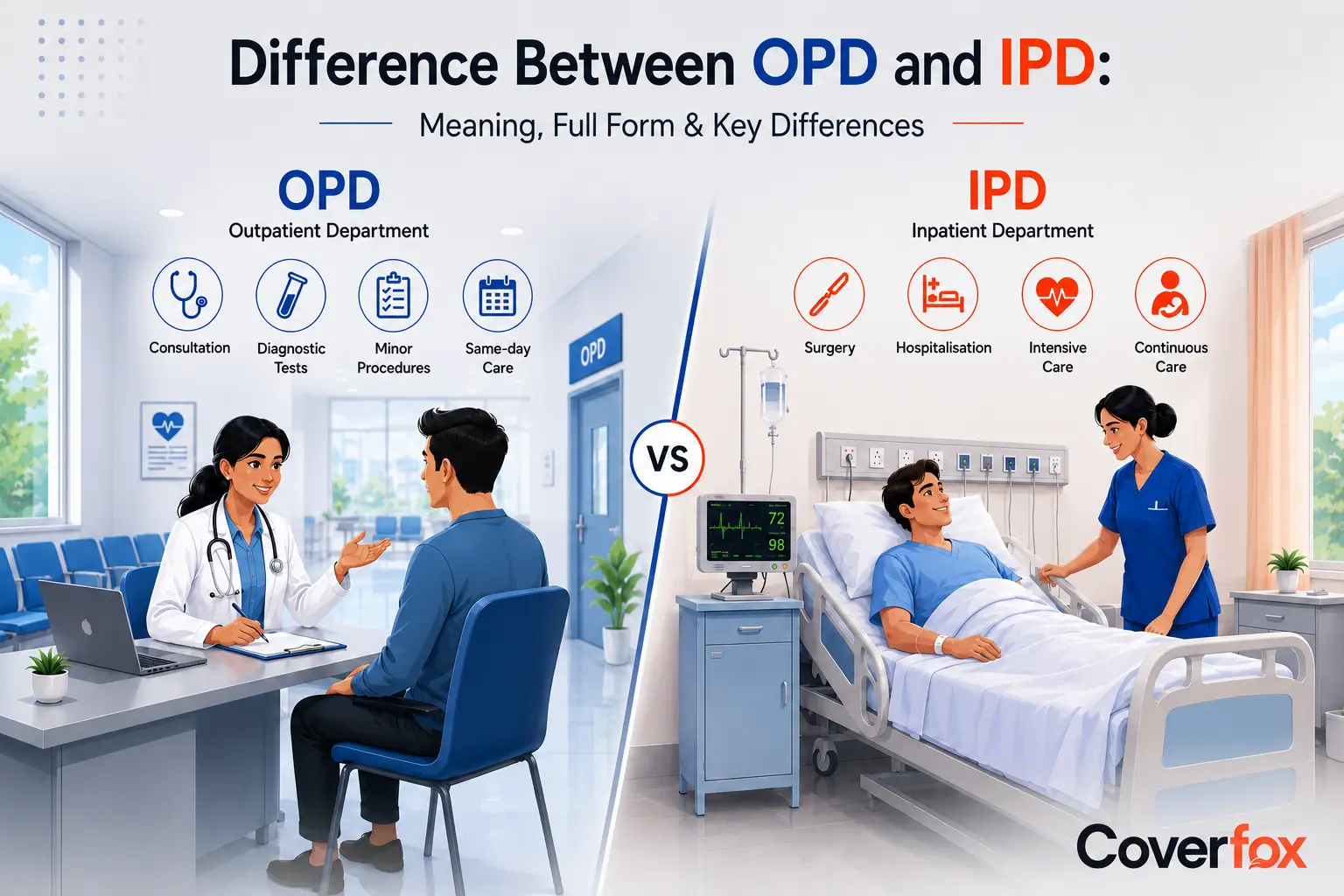
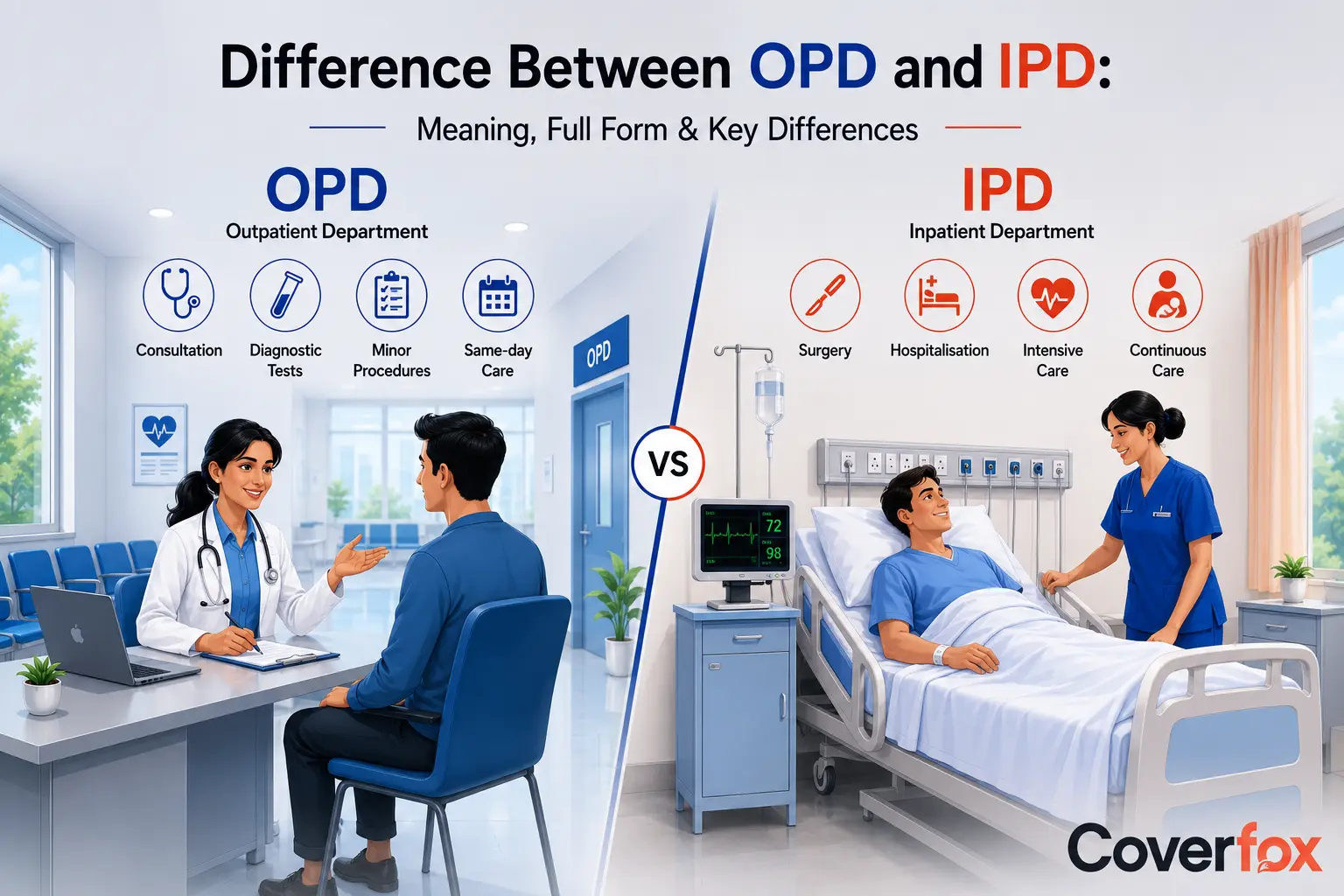
OPD (Outpatient Department) is for medical consultations, tests, and treatments that do not require hospital admission, while IPD (Inpatient Department) is for patients admitted to the hospital for treatment under medical supervision. The key difference lies in hospital admission, type of treatment, duration of care, and how these expenses are covered under health insurance.
Medical expenses don't always begin with a hospital admission. A doctor's consultation, diagnostic test, or follow-up treatment can also add to your healthcare costs. This is where understanding the difference between OPD and IPD becomes important, especially when choosing a health insurance policy. In this article, get to know the full forms, meaning, and key differences between OPD and IPD, along with how each is covered under health insurance.
Understanding OPD and IPD: Full Form and Meaning
What is OPD (Outpatient Department)?
OPD stands for Outpatient Department. OPD in a hospital or clinic is where patients receive medical consultation, diagnosis, treatment, or follow-up care without being admitted to the hospital. Once the consultation or treatment is complete, the patient returns home on the same day.
How OPD Works:
No hospital admission is required. Patients register at the OPD, consult the doctor, undergo any prescribed tests or procedures, collect medicines if needed, and leave the hospital after the visit.
Common services offered in OPD:
Doctor consultations
Specialist consultations
Diagnostic tests such as blood tests, X-rays, ECGs, and ultrasound scans
Minor procedures such as wound dressing and injections
Routine health check-ups
Follow-up consultations after treatment or surgery
What is IPD (Inpatient Department)?
IPD stands for Inpatient Department. IPD in a hospital is where patients are formally admitted for treatment that requires continuous medical supervision, nursing care, or hospitalisation. Patients stay in the hospital until they are discharged by the treating doctor.
How IPD Works:
A doctor recommends hospital admission based on the patient's condition. The patient completes the admission formalities, is allotted a hospital bed or room, receives treatment under medical supervision, and is discharged after recovery or completion of treatment.
Common services offered by IPD:
Surgeries
Hospitalisation for illnesses or injuries
Intensive care (ICU) treatment
Maternity and childbirth services
Continuous monitoring and nursing care
Post-operative recovery and treatment
Difference Between OPD and IPD
The main difference between OPD and IPD is that OPD involves medical consultation or treatment without hospital admission, while IPD involves admission to the hospital for treatment that requires continuous medical care. OPD services are completed on the same day, whereas IPD treatment includes a hospital stay until the patient is discharged.
| Basis | OPD | IPD |
|---|---|---|
| Full Form | Outpatient Department | Inpatient Department |
| Meaning | Medical care without hospital admission | Medical care after hospital admission |
| Hospital admission | Not required | Required |
| Duration of stay | Patient leaves the hospital on the same day | Patient stays in the hospital until discharge |
| Type of treatment | Consultation, diagnosis, minor procedures, follow-up care | Surgery, hospitalisation, intensive treatment, recovery |
| Medical supervision | Limited to the consultation or procedure | Continuous medical and nursing supervision |
| Bed allocation | Not required | Hospital bed or room is allotted |
| Suitable for | Minor illnesses, routine check-ups, diagnostic tests, follow-up visits | Serious illnesses, surgeries, injuries, maternity care, conditions requiring monitoring |
| Cost | Lower as there is no hospital stay | Higher due to room charges, nursing care, procedures, and hospitalisation |
| Health insurance coverage | Covered only if the policy includes OPD benefits | Covered under most comprehensive health insurance plans, subject to policy terms and conditions |
OPD vs IPD: Common Medical Situations
The type of care you receive depends on the severity of your medical condition and whether hospital admission is required. While OPD is suitable for consultations and treatments that can be completed in a single visit, IPD is meant for conditions that require hospitalisation and continuous medical care.
Common OPD Situations
You will receive treatment through the Outpatient Department in situations such as:
Consulting a doctor for fever, cold, cough, or headache
Routine health check-ups
Blood tests, X-rays, ECGs, ultrasounds, and other diagnostic tests
Follow-up consultations after surgery or treatment
Physiotherapy sessions
Minor wound dressing, injections, or vaccinations
Consultation with specialists such as dermatologists, orthopaedists, or ophthalmologists
Common IPD Situations
You will be admitted to the Inpatient Department when your condition requires hospitalisation, such as:
Appendicitis or gallbladder surgery
Childbirth and maternity care
Treatment of fractures requiring surgery
Hospitalisation for dengue requiring intravenous fluids and monitoring
Heart surgery or other major surgical procedures
ICU admission for critical illnesses
Treatment following a serious accident or injury
Any condition that requires continuous observation, nursing care, or post-operative recovery in the hospital
OPD and IPD in Health Insurance
Health insurance does not treat OPD and IPD expenses in the same way. While hospitalisation expenses are a standard feature of most health insurance plans, OPD coverage is available only if it is included in the policy.
Does Health Insurance Cover OPD Expenses?
Yes, health insurance can cover OPD expenses, but only if your policy includes an OPD benefit or OPD add-on. A standard health insurance policy does not automatically cover outpatient consultations and treatments.
OPD coverage includes:
Doctor and specialist consultation fees
Diagnostic tests such as blood tests, X-rays, ECGs, and scans
Prescribed medicines purchased after an OPD consultation, if covered under the policy
Minor medical procedures that do not require hospital admission
Physiotherapy sessions, if covered under the policy
Note: The scope of OPD coverage, annual limits, and eligible expenses differ from one insurer and plan to another.
Does Health Insurance Cover IPD Expenses?
Yes. IPD expenses are covered under comprehensive health insurance plans, subject to the policy's terms, conditions, waiting periods, exclusions, and sum insured. IPD coverage applies when the insured person is admitted to a hospital for treatment.
What Medical Expenses Are Covered?
For IPD treatment, health insurance can cover:
Hospital room charges
ICU charges
Doctor's consultation and surgeon's fees
Nursing charges
Operation theatre charges
Diagnostic tests conducted during hospitalisation
Medicines and consumables covered under the policy
Pre-hospitalisation and post-hospitalisation expenses, as specified in the policy
Day care treatments covered by the policy
For OPD treatment, coverage is limited to the benefits specifically mentioned in the policy and does not apply unless OPD cover is included.
Note: Cashless health insurance claims are available only at network hospitals. If you receive treatment at a non-network hospital, you will need to pay the hospital first and submit a reimbursement claim to your insurer.
OPD vs IPD Coverage in Health Insurance
| Coverage Aspect | OPD Coverage | IPD Coverage |
|---|---|---|
| Hospital admission required | No | Yes |
| Included in standard health insurance | No | Yes |
| Doctor consultations | Covered only if OPD benefit is included | Covered during hospitalisation |
| Diagnostic tests | Covered only if OPD benefit is included | Covered when related to hospitalisation |
| Medicines | Covered only if specified under OPD benefits | Covered during hospitalisation as per policy terms |
| Surgeries | Not covered | Covered as per policy terms |
| Room and ICU charges | Not covered | Covered as per policy terms |
| Nursing charges | Not covered | Covered as per policy terms |
| Applicable for | Outpatient consultations and treatment | Hospitalisation requiring admission |
When Should You Choose OPD or IPD?
The type of care you receive depends on your medical condition and your doctor's recommendation, not personal choice. Patients who do not require hospital admission are treated through the OPD, while those who need hospitalisation receive treatment through the IPD.
Choose OPD if: Your condition requires consultation, diagnostic tests, minor procedures, follow-up care, or treatment without hospital admission.
Choose IPD if: Your condition requires surgery, continuous medical supervision, hospitalisation, or treatment that involves staying in the hospital.
Common Myths About OPD and IPD
There are several misconceptions about OPD and IPD treatment, especially when it comes to hospital admission and health insurance coverage. Here are some of the most common myths and the facts behind them:
OPD treatment is always covered by health insurance.
OPD expenses are covered only if your health insurance policy includes OPD benefits.
Every hospital visit is considered IPD treatment.
A hospital visit becomes IPD treatment only when you are formally admitted to the hospital.
You need to stay overnight for IPD treatment.
IPD begins when you are admitted to the hospital. The duration of your stay depends on your treatment and medical condition, not on completing an overnight stay.
OPD only includes doctor consultations.
OPD also includes diagnostic tests, minor procedures, vaccinations, physiotherapy, and follow-up visits that do not require hospital admission.
Conclusion
Understanding the difference between OPD and IPD helps you know when hospital admission is required and what your health insurance is likely to cover. While OPD is meant for consultations, diagnostic tests, and treatments that do not require admission, IPD covers medical care that involves hospitalisation. Before buying or renewing a health insurance policy, review the coverage details to check whether OPD benefits are included and understand the scope of IPD coverage under the plan.
Frequently Asked Questions
What is OPD and IPD in a hospital?
OPD (Outpatient Department) is the department where patients receive consultation, diagnosis, treatment, and follow-up care without being admitted to the hospital. IPD (Inpatient Department) is the department where patients are admitted to the hospital for treatment that requires medical supervision and hospitalisation.
Is hospital admission mandatory for IPD treatment?
Yes. IPD treatment begins only after the patient is formally admitted to the hospital.
Can a patient be shifted from OPD to IPD?
Yes. If the treating doctor determines that hospitalisation is required after the OPD consultation, the patient is admitted to the IPD for further treatment.
Are day care treatments considered OPD or IPD?
No. Day care treatments are a separate category under health insurance. They involve hospital admission for procedures completed within 24 hours and are covered if they are included in the health insurance policy.
Are diagnostic tests covered under OPD?
Diagnostic tests such as blood tests, X-rays, ECGs, and scans are OPD services. Health insurance covers these expenses only if the policy includes OPD benefits. Diagnostic tests performed during hospitalisation are covered under IPD as part of the hospitalisation expenses.
Can I claim OPD consultation expenses under every health insurance policy?
No. You can claim OPD consultation expenses only if your health insurance policy includes OPD coverage. Standard health insurance policies cover hospitalisation expenses and do not include OPD benefits by default.
Does every hospital visit fall under OPD or IPD?
Yes. A hospital visit is classified as OPD if there is no hospital admission. It is classified as IPD when the patient is formally admitted for treatment.
What documents are required to make an IPD health insurance claim?
For a reimbursement claim, insurers require the claim form, hospital discharge summary, final hospital bill, itemised bill, doctor's prescriptions, diagnostic reports, pharmacy bills, identity proof, cancelled cheque or bank account details, and any other documents requested during claim assessment. For a cashless claim, the hospital submits most of these documents directly to the insurer or TPA, while the policyholder must provide identity proof, health insurance details, and sign the required claim forms.
Disclaimer: OPD and IPD coverage varies by health insurance policy. Please refer to your policy document for applicable terms, conditions, and exclusions.