- Retail Insurance
- Business Insurance
- Resources
- Claims
Dengue is a mosquito-borne viral infection common in tropical and subtropical countries like India that occurs when Aedes mosquitoes transmit the dengue virus to humans. It’s a serious public-health concern, especially during and after the monsoon season when mosquito breeding peaks, because severe dengue can lead to complications like bleeding and shock without early detection and care.
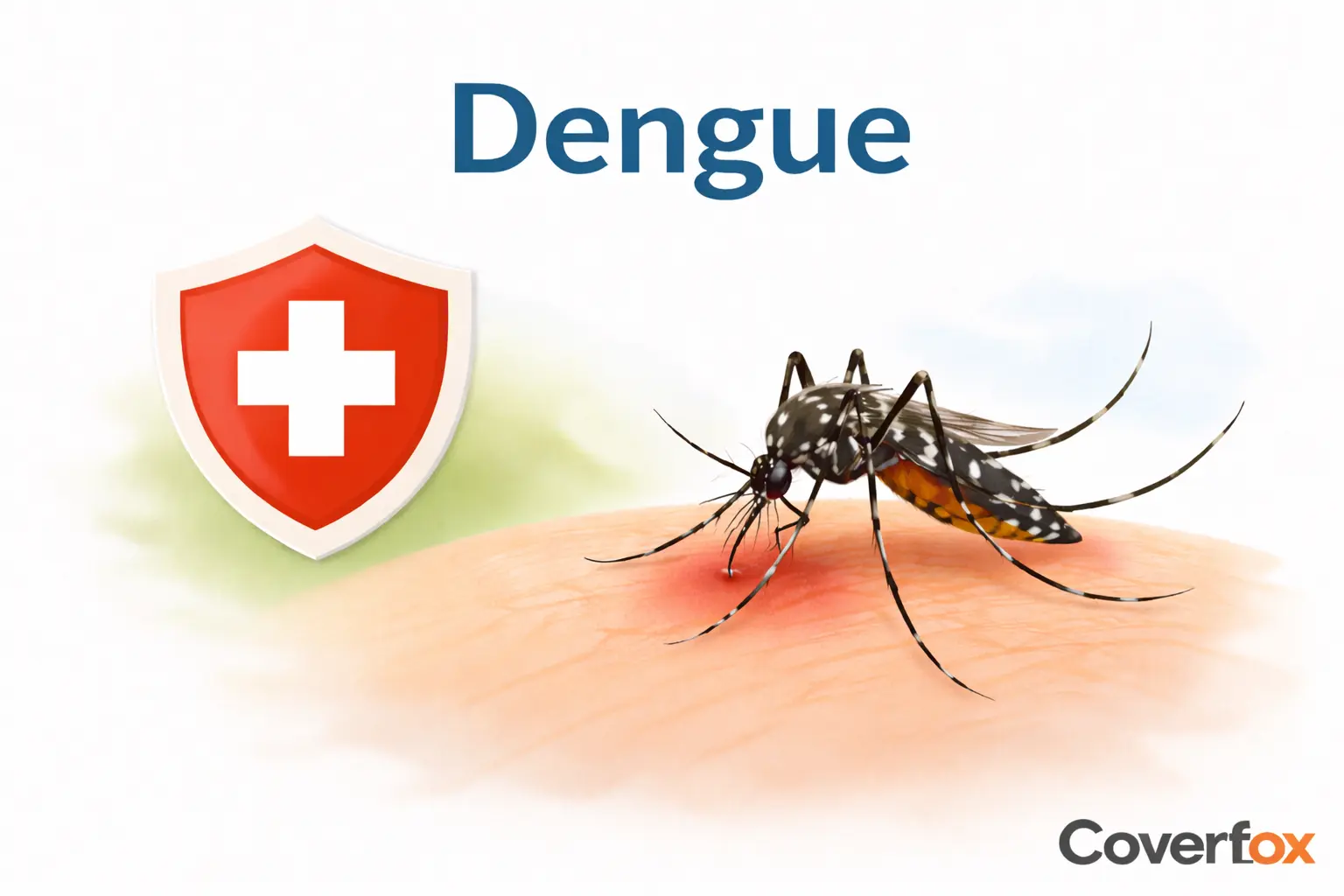
Globally, about 14.4 million dengue cases were reported in 2024 (Source - WHO), reflecting widespread transmission, and in India, thousands of cases continue to be recorded each year during peak seasons. This page explains what dengue is, its symptoms, diagnosis, treatment, and get informed about insurance and dengue.
Dengue fever is a viral illness caused by the dengue virus, which has four strains (DENV-1, DENV-2, DENV-3, and DENV-4). It spreads through the bite of an infected Aedes aegypti mosquito, which commonly breeds in stagnant water and is most active during the daytime. Dengue does not spread from person to person and can only be transmitted through mosquito bites.
Dengue infection can present in different clinical forms, ranging from mild illness to severe, life-threatening conditions, depending on the individual’s immunity and the virus strain.
This is the most common and mild to moderate form, marked by high fever, headache, joint and muscle pain, nausea, and fatigue. Most patients recover fully with timely rest and supportive care.
A more severe form characterised by bleeding from the nose or gums, bruising, low platelet count, and plasma leakage, which can lead to serious complications if not treated early.
The most severe and life-threatening form, where excessive plasma leakage causes a sudden drop in blood pressure, leading to shock, organ failure, and potentially death without immediate medical intervention.
The risk of severe dengue increases if a person is infected with dengue for the second time by a different virus strain, as the immune response can worsen inflammation and complications.
Dengue is caused by the dengue virus spreading through mosquito bites, especially in conditions that support mosquito breeding.
Transmitted by the bite of an infected Aedes aegypti mosquito
Mosquitoes breed in clean, stagnant water such as coolers, tanks, pots, and tyres
Poor water storage and sanitation increase mosquito growth
Warm and humid climate supports faster virus transmission
Monsoon and post-monsoon seasons create ideal breeding conditions, leading to outbreaks
Dengue symptoms usually appear 4–10 days after a mosquito bite and can progress through stages, making early recognition important.
Sudden high fever
Severe headache and pain behind the eyes
Body, joint, and muscle pain (often called “breakbone fever”)
Nausea and vomiting
Skin rash appearing after a few days
Severe abdominal pain
Persistent vomiting
Bleeding gums or nose, easy bruising
Extreme fatigue or restlessness
Signs of low platelet count such as red spots on the skin
The critical phase usually begins after the fever subsides (day 3–7) and can be dangerous. During this phase, plasma leakage, bleeding, or organ involvement may occur, increasing the risk of Dengue Haemorrhagic Fever or Dengue Shock Syndrome, which requires immediate medical attention.
In dengue infection, platelet count is closely monitored because the virus can cause a sharp drop in platelets, increasing the risk of bleeding and severe complications. Tracking platelet levels helps doctors assess disease severity, identify the critical phase early, and decide timely medical intervention.
| Platelet Count (per µL of blood) | What It Indicates |
|---|---|
| 1,50,000 – 4,50,000 | Normal platelet range |
| 1,00,000 – 1,50,000 | Mild drop, usually monitored closely |
| 50,000 – 1,00,000 | Moderate risk, needs medical supervision |
| Below 50,000 | High risk of bleeding, hospitalisation often required |
| Below 20,000 | Critical level, risk of internal bleeding and shock |
NOTE: This is a general range for the count of white platelets in a normal human body. The ranges may differ from person to person and should be consulted with a doctor for proper diagnosis.
Dengue is diagnosed using blood tests that detect the virus, antibodies, and changes in blood counts. The choice of test depends on how many days have passed since the fever began, as different markers appear at different stages of infection.
Used in the early phase (Day 1–5 of fever), this test detects the dengue virus directly in the blood and helps confirm infection quickly.
Becomes positive from Day 4–5 onwards and indicates a recent dengue infection. IgM levels rise during the acute phase.
Appears later, usually after Day 7, and helps identify past infection or secondary dengue, which carries a higher risk of severe disease.
Performed throughout the illness to monitor platelet count and haematocrit levels. A falling platelet count and rising haematocrit are key warning signs, especially during the critical phase.
There is no specific antiviral medicine to cure dengue, so treatment focuses on supportive care to manage symptoms and prevent complications. Early medical guidance and close monitoring are crucial, especially during the critical phase.
Fever and body pain are managed using paracetamol only. Medicines like aspirin, ibuprofen, and other NSAIDs must be avoided as they increase the risk of bleeding.
Adequate fluid intake is essential to prevent dehydration and shock. Oral fluids are sufficient in mild cases, while intravenous fluids may be required in severe cases.
Mild dengue without warning signs can usually be managed at home with rest, fluids, and regular monitoring. Hospitalisation is required if warning signs appear, platelet counts fall rapidly, or the patient has severe symptoms.
Severe abdominal pain, persistent vomiting, bleeding, breathing difficulty, extreme fatigue, very low platelet count, or signs of shock require immediate hospital admission and close monitoring.
Dengue can be effectively prevented by controlling mosquito breeding and protecting people from mosquito bites at both individual and community levels.
Regularly empty, clean, and cover water containers, coolers, flower pots, and tanks to stop stagnant water collection.
Apply repellents on exposed skin, especially during daytime when Aedes mosquitoes are most active.
Use mosquito nets while sleeping and install screens on windows and doors to reduce indoor mosquito entry.
Wear long-sleeved shirts, full-length trousers, and light-coloured clothing to minimise skin exposure.
Regular fogging helps reduce adult mosquito populations during outbreaks.
Proper garbage disposal, drainage cleaning, and elimination of open water sources reduce large-scale mosquito breeding.
Community participation and awareness campaigns play a key role in controlling dengue spread, especially during monsoon seasons.
Several dengue vaccines have been developed globally, but their approval and availability vary by country.
A WHO-recommended tetravalent dengue vaccine developed by Takeda, approved in multiple countries. In India, it is not yet commercially available, but regulatory review and phased introduction are expected in the coming years. (WHO)
The first licensed dengue vaccine globally, approved in some countries with strict eligibility criteria (only for people with prior dengue infection). It is not approved for use in India. (CDC)
India is developing its own dengue vaccines, including candidates like DengiAll, which are currently in advanced clinical trial stages. These vaccines are not yet available to the public.
Current Status in India: As of now, no dengue vaccine is available for routine use in India.
Dengue prevention in India continues to rely on mosquito control, early diagnosis, and timely medical care until vaccines receive regulatory approval. Vaccine availability and guidelines may change, so it is advisable to follow updates from health authorities such as the WHO, ICMR, and the Government of India.
Certain individuals are more likely to develop severe dengue and complications if infected.
People with a previous dengue infection (secondary infection)
Children and elderly individuals
Pregnant women
People with chronic medical conditions such as diabetes, heart disease, or asthma
Individuals with weakened immunity
Those who delay medical care or ignore early warning signs
You should see a doctor immediately if dengue symptoms worsen or persist beyond 2–3 days, especially after the fever starts to subside. Red-flag warning signs such as severe abdominal pain, persistent vomiting, bleeding from gums or nose, extreme fatigue, breathlessness, or sudden dizziness require urgent medical attention. Early intervention during this stage is critical to prevent serious complications like severe dengue or shock.
Most people recover from dengue within 1–2 weeks, though weakness and fatigue may last longer. During recovery, platelet counts gradually return to normal, but some individuals may experience prolonged tiredness, joint pain, or low stamina for a few weeks. Proper rest, hydration, and follow-up tests help ensure complete recovery and prevent relapse.
Dengue is covered under most health insurance policies in India as it falls under vector-borne diseases. Insurers usually cover hospitalisation expenses, including room charges, doctor’s fees, medicines, diagnostic tests, and ICU costs if the condition becomes severe. Coverage applies when hospital admission is medically necessary and is subject to the policy’s sum insured and terms.
However, certain conditions apply. Waiting periods, if any, depend on the policy and insurer, while OPD expenses such as consultations and medicines are generally not covered unless specifically included. Policyholders should also be aware of sub-limits, co-payments, and exclusions for non-medical items, and always review policy documents for exact coverage details.
Disclaimer: The information provided here is for general awareness and educational purposes only and should not be considered a substitute for professional medical advice, diagnosis, or treatment. Dengue symptoms, severity, and insurance coverage may vary from person to person and across policies. Always consult a qualified healthcare professional for medical concerns and refer to your health insurance policy documents or insurer for exact coverage details.
No, dengue does not spread from person to person. It is transmitted only through the bite of an infected Aedes mosquito.
Dengue fever usually lasts 1-2 weeks, though weakness and fatigue may continue for a longer period.
The critical stage typically occurs 3–7 days after fever onset, when the fever starts to subside but the risk of complications like plasma leakage and bleeding increases.
Yes, dengue can occur more than once. A second infection with a different virus strain increases the risk of severe dengue.
A platelet count below 50,000 per µL is considered risky and requires close medical monitoring.
No, platelet transfusion is not routinely needed and is usually done only in cases of active bleeding or extremely low platelet levels.
Mild dengue without warning signs can be managed at home with rest, fluids, and medical supervision, but severe cases require hospital care.
Nutritious foods like fruits, vegetables, soups, coconut water, and protein-rich meals help support recovery and hydration.
Yes, untreated severe dengue can be life-threatening due to complications like shock, bleeding, or organ failure.
Dengue can be detected as early as Day 1–5 of fever using the NS1 antigen test.
Yes, dengue treatment is usually covered under cashless health insurance at network hospitals, subject to policy terms.
Prevent dengue by avoiding stagnant water, using mosquito repellents, wearing protective clothing, and maintaining clean surroundings.