- Retail Insurance
- Business Insurance
- Resources
- Claims
Obesity is a disease where the accumulation of excess fat builds up in the human body. According to the WHO, 1 in 8 people live with obesity, and 2.5 billion adults are overweight. Obesity opens the door to multiple severe health conditions, including heart risk, calling for the need to fight this disease. This page will cover what obesity is, what its symptoms are, its causes, treatments and what role health insurance plays in obesity.
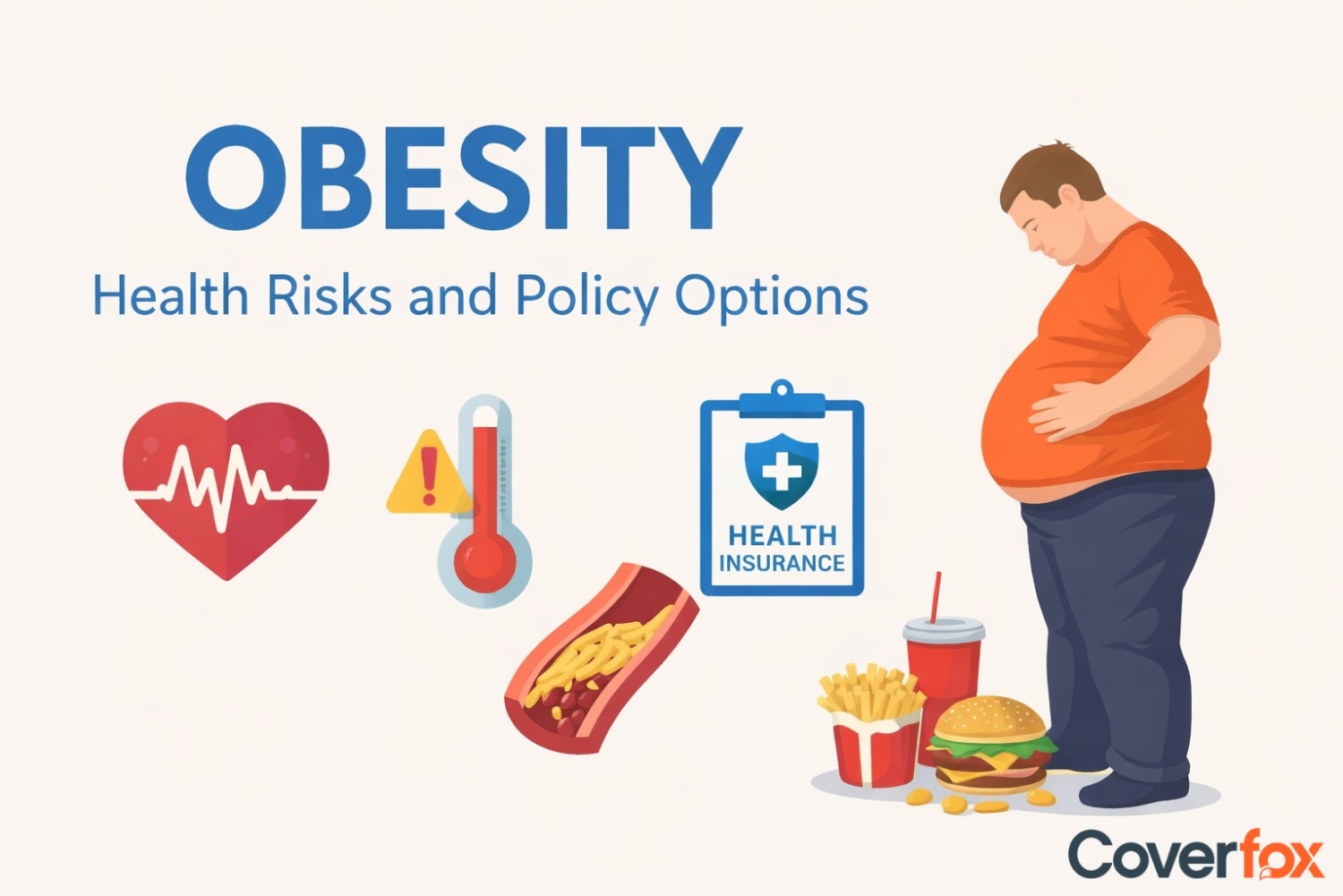
Obesity is a condition where a person has excess body fat that can harm overall health. It usually develops when calorie intake is consistently higher than the body’s energy use. Obesity increases the risk of problems like diabetes, heart disease, and joint pain, and it often requires long-term lifestyle changes to manage.
Body Mass Index (BMI) is a simple measure that uses a person’s height and weight to assess whether their body weight is within a healthy range. It helps identify if someone is underweight, healthy, overweight, or obese.
| BMI Range (kg/m²) | Weight Category | What It Means |
|---|---|---|
| Below 18.5 | Underweight | Body weight is lower than healthy levels |
| 18.5 – 24.9 | Healthy weight | Ideal range associated with lower health risks |
| 25.0 – 29.9 | Overweight | Higher risk of lifestyle-related health issues |
| 30.0 and above | Obese | High risk of chronic conditions like diabetes and heart disease |
Note: BMI is a general screening tool and does not directly measure body fat or muscle mass.
Obesity is commonly classified based on Body Mass Index (BMI), which helps assess the severity of excess body weight.
Considered mild obesity, this stage carries an increased risk of lifestyle-related health issues.
Known as moderate obesity, it is associated with a higher risk of conditions like diabetes, high blood pressure, and heart disease.
Also called severe or morbid obesity, this stage has a very high risk of serious health complications and often requires medical supervision.
Explore key statistics on obesity worldwide and in India, highlighting trends, prevalence, and projections for adults and children.
In 2022, about 2.5 billion adults (aged 18 +) were overweight, including over 890 million adults living with obesity, representing around 43 % of the world’s adult population. This reflects a significant increase from 1990
Among children and adolescents aged 5–19 years, overweight prevalence has risen from 8 % in 1990 to about 20 % in 2022
WHO estimates that the number of overweight children under 5 years old in 2024 was around 35 million globally.
According to the National Family Health Survey (NFHS-5, 2019-21), around 24 % of Indian women and 23 % of Indian men aged 15-49 years are overweight or obese. In the same age group, 6.4 % of women and 4.0 % of men are classified as obese (BMI ≥30).
Research shows that abdominal obesity is high in India, affecting over half of adults in some studies, with about 12 % classified as obese.
Worldwide, obesity rates have risen sharply over recent decades, and projections suggest that more than half of adults and around one-third of children could be overweight or obese by 2050 without strong public health action. (Lancet report projections)
Sources -
WHO Obesity and Overweight:
https://www.who.int/news-room/fact-sheets/detail/obesity-and-overweight
Lancelot Report:
https://www.thelancet.com/journals/lancet/article/PIIS0140-6736(25)00397-6/fulltext
Obesity in India Research:
https://pmc.ncbi.nlm.nih.gov/articles/PMC10204471/
Research on Temporal change in prevalence of BMI categories in India:
https://pmc.ncbi.nlm.nih.gov/articles/PMC11097587
Obesity usually develops due to a combination of lifestyle, biological, and environmental factors rather than a single cause.
Regular consumption of high-calorie, sugary, and processed foods without enough physical activity.
Sedentary lifestyles, desk jobs, long screen time, and minimal exercise reduce calorie burn.
Skipping meals, overeating, frequent snacking, and reliance on fast food contribute to weight gain.
Family history can influence how the body stores fat and regulates appetite.
Conditions like hypothyroidism, PCOS, and Cushing’s syndrome can lead to weight gain.
Stress, anxiety, and depression may trigger overeating or unhealthy food choices.
Poor sleep disrupts hunger hormones, increasing appetite and cravings.
Some medicines, such as steroids, antidepressants, and hormonal drugs, may cause weight gain.
Obesity significantly increases the risk of several short-term and long-term health problems that can affect overall quality of life.
Excess body fat reduces insulin sensitivity, leading to high blood sugar levels.
Obesity raises blood pressure, cholesterol, and triglyceride levels, increasing cardiovascular risk.
Extra body weight puts added strain on the heart and blood vessels.
Increased weight stresses joints, leading to knee pain, osteoarthritis, and mobility issues.
Conditions like sleep apnoea and shortness of breath are more common in people with obesity.
Excess fat accumulation in the liver can lead to inflammation and long-term liver damage.
Obesity can cause irregular periods, infertility, and pregnancy complications.
Higher risk of cancers such as breast, colon, endometrial, and kidney cancer.
Obesity is linked to low self-esteem, anxiety, depression, and social stigma.
Obesity does not always cause obvious symptoms at first, but over time, it can affect daily comfort, physical ability, and overall health.
Excess body weight or visible fat accumulation, especially around the abdomen
Breathlessness during routine activities like walking or climbing stairs
Easy fatigue and low energy levels
Excessive sweating even with minimal activity
Joint pain, especially in the knees, hips, and lower back
Difficulty sleeping or sleep apnoea symptoms such as loud snoring
Reduced physical stamina and mobility
Skin issues, including rashes or infections in skin folds
Doctors diagnose obesity by assessing body weight, fat distribution, and related health risks.
BMI of 30 or above indicates obesity
Increased waist circumference suggests higher risk
Medical history and lifestyle assessment
Physical examination and vital checks
Blood tests to identify related conditions
When obesity is moderate to severe or associated with medical complications, doctors may recommend clinical treatments beyond lifestyle measures.
Doctor-prescribed drugs that act on appetite control, satiety, or fat absorption. These are used under medical supervision and are indicated when BMI thresholds and risk factors are met.
Advanced medicines that regulate hunger hormones and slow gastric emptying, helping reduce calorie intake and improve metabolic control. Regular monitoring is required.
Non-surgical, minimally invasive procedures performed via the mouth (e.g., gastric balloons) to reduce stomach capacity temporarily and promote early fullness.
Surgical procedures that alter the digestive system to limit food intake and/or nutrient absorption. Commonly recommended for severe obesity or obesity with serious comorbidities.
Includes gastric bypass, sleeve gastrectomy, and adjustable gastric banding, chosen based on BMI, health conditions, and clinical evaluation.
Long-term medical supervision is essential after treatment or surgery to manage nutrient deficiencies, metabolic changes, and weight maintenance.
These treatments are recommended only after thorough medical assessment and counselling, as obesity management is a long-term clinical process.
Preventing obesity focuses on early and consistent health practices that help maintain a healthy body weight over time.
Balanced and mindful eating to avoid excess calorie intake
Regular physical activity to maintain energy balance
Adequate sleep to regulate hunger and metabolism
Stress management to reduce emotional or binge eating
Limiting sugary drinks and ultra-processed foods
Regular health check-ups to monitor weight and metabolic health
Here are some health insurance policies that can be considered
| Name of the Plan | Best Features |
|---|---|
| Aditya Birla Active Health Enhanced - Platinum | Cashless treatment and hospitalization available at 9000 network hospitals Sum insured ranges from INR 2 lakhs to INR 2 crore Health return, recovery benefit, expert wellness coach and some other programs are the highlights of this plan Cumulative bonus increased by 50% for the first claim-free year and can reach upto 100% of INR 1 crore for each claim-free year |
| Star Comprehensive Plan | The sum insured can increase upto 100% for successive claim-free years Pre and post hospitalization expenses are covered Mid-term inclusion benefit is available on the plan |
| Manipal Cigna Lifetime Health | Available sum insured ranges from INR 50 lakhs to Rs 3 crore Covers pre and post-hospitalization plans Restoration of the sum insured is available |
Buying a health insurance policy that considers obesity can be beneficial for individuals who face a higher risk of weight-related health issues, including:
People with frequent consumption of junk food, sugary drinks, or high-calorie diets
Individuals leading a sedentary lifestyle with little or no regular physical activity
Those with high or regular alcohol intake, which can contribute to weight gain
People with a family history of obesity or metabolic disorders
Individuals diagnosed with hormonal or metabolic conditions such as PCOD, PCOS, or thyroid disorders
People who consistently get less than 7 hours of sleep, affecting metabolism and appetite
Individuals experiencing chronic stress, which may lead to hormonal imbalance and overeating
Those taking long-term medications like steroids or certain antidepressants that may cause weight gain
Health insurance plans covering obesity usually include essential treatment, surgery, and long-term care benefits, though the scope varies by insurer.
Hospitalisation cover for obesity-related treatment, including pre- and post-hospitalisation expenses and medical consumables
Bariatric and weight-loss surgeries such as gastric bypass, sleeve gastrectomy, and laparoscopic gastric banding when medically required
Coverage for pre-existing obesity from day 1 or after a short waiting period (31 days) in select plans
Chronic care and disease management support, including obesity-linked conditions
Preventive and wellness benefits, including annual health check-ups, nutritional counselling, and weight management programmes
Financial protection add-ons, such as daily hospital cash and restoration of sum insured, if included in the policy
Note: Coverage for obesity varies across health insurance plans and insurers.
Most obesity-related health insurance plans do not cover:
Cosmetic or elective bariatric surgeries
Plastic or aesthetic procedures not medically necessary
Dietary supplements and weight-loss products
Experimental or unproven treatments
Rest cures, rehabilitation stays, or wellness retreats
Investigative or diagnostic procedures not linked to active treatment
Always check the policy wording for exact inclusions, exclusions, and waiting periods.
Obesity can lead to higher health insurance premiums because it increases the risk of medical claims related to conditions like diabetes, heart disease, and joint problems. Insurers may apply loading charges, waiting periods, or exclusions based on BMI and existing health conditions.
Disclaimer:
The information provided above is for general awareness and educational purposes only and should not be considered medical advice, diagnosis, or treatment. Health insurance coverage for obesity, including inclusions, exclusions, waiting periods, and eligibility criteria, varies by insurer, policy type, and individual medical assessment. Readers are advised to consult a qualified medical professional for health-related decisions and carefully review the policy wording or speak with the insurer before purchasing or relying on any health insurance plan.
Yes, many health insurance plans cover obesity-related treatments, including hospitalisation and bariatric surgery, if medically necessary and subject to policy terms, waiting periods, and BMI criteria.
Common signs include BMI of 30 or above, excess abdominal fat, breathlessness on exertion, fatigue, and joint pain.
Treatment depends on severity. Medical therapy and bariatric surgery are considered most effective for moderate to severe obesity when supervised by a doctor.
Yes. Most insurers require a minimum BMI (usually 35 or above, or 30 with comorbidities) for bariatric surgery coverage.
Often, yes. Many plans have a waiting period, though some may cover pre-existing obesity from day 1 or after 31 days.
Insurance may cover bariatric surgery, hospitalisation, chronic disease management, and related medical care when clinically indicated.
Obesity makes you more likely to catch serious health problems compared to fit people, hence the premium you need to pay becomes higher.
This is not true. Health insurance is a protection against critical illnesses and not particularly obesity or overweight.
Yes, BMI, also known as Body Mass Index is a parameter to measure your weight status. However, it is an exception in the case of athletes.
If you are overweight, you will need to pay higher premiums. You will run a high risk of getting critical health illnesses that might drain your money.
It is estimated that obesity costs 2% to 7% of the total healthcare costs.