- Retail Insurance
- Business Insurance
- Resources
- Claims


Did you know? About 42 million people in India are estimated to suffer from some form of thyroid disease, making it one of the most common endocrine disorders in the country (Source - Research on Thyroid Disorders in India) and globally. Thyroid hormones regulate metabolism, growth, energy use and many body functions, so disorders of the thyroid can significantly affect overall health. This page explains what thyroid disease is, why it matters, the different types (like hypothyroidism and hyperthyroidism), common symptoms, causes and how it’s diagnosed and treated.
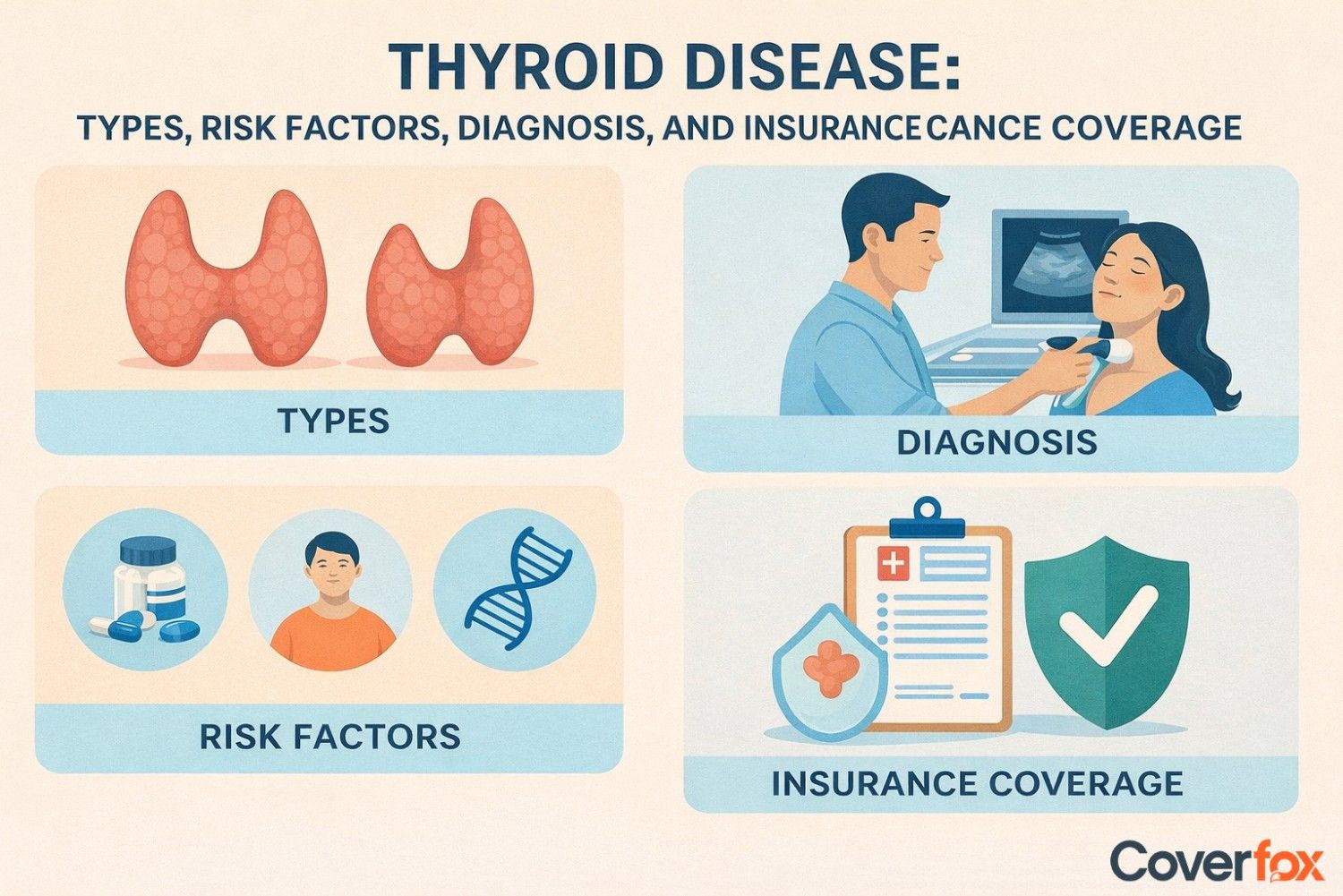
The thyroid gland is a small, butterfly-shaped gland located at the front of your neck, just below the Adam’s apple. It produces hormones that control how fast your body uses energy, how warm you feel, and how well your organs function. These hormones play a key role in regulating metabolism, heart rate, digestion, and growth. Even a small imbalance in thyroid hormones can affect your overall health.
Thyroid diseases are conditions in which the thyroid gland produces too much or too little thyroid hormone, affecting how the body functions.
This occurs when the thyroid gland produces too little hormone, slowing down body processes and causing symptoms like fatigue, weight gain, and feeling cold.
This happens when the thyroid produces too much hormone, speeding up body functions and leading to symptoms such as weight loss, rapid heartbeat, and anxiety.
A condition where the thyroid gland becomes enlarged, often due to iodine deficiency or hormonal imbalance, and may or may not affect hormone levels.
These are lumps or abnormal growths in the thyroid gland, usually non-cancerous, but some may affect hormone production or require further testing.
Inflammation of the thyroid gland that can cause temporary hyperthyroidism or hypothyroidism, often triggered by infection, autoimmune conditions, or after pregnancy.
A rare but serious condition where cancerous cells develop in the thyroid gland, often detected as a painless lump in the neck.
Thyroid disease can develop due to a mix of medical, lifestyle, and genetic factors that affect how the thyroid gland functions.
Conditions like Hashimoto’s thyroiditis and Graves’ disease cause the immune system to attack the thyroid.
Too little or too much iodine in the diet can disrupt thyroid hormone production.
Thyroiditis due to infections or post-pregnancy changes can affect hormone levels.
Certain medicines, radiation therapy, or surgery involving the neck can impact thyroid function.
Some people are born with an underactive or missing thyroid gland.
Symptoms of thyroid disease vary depending on whether the thyroid gland is underactive or overactive, and they often develop gradually.
Persistent tiredness and low energy
Weight gain despite no change in diet
Feeling cold more often than usual
Dry skin, hair fall, and brittle nails
Slow heart rate, constipation, and low mood
Unexplained weight loss
Rapid or irregular heartbeat
Feeling hot, sweaty, or anxious
Tremors, nervousness, and irritability
Increased appetite and frequent bowel movements
Swelling in the neck (goitre)
Changes in the menstrual cycle or fertility issues
Muscle weakness and sleep problems
Difficulty concentrating or memory issues
Thyroid disease is diagnosed using a combination of blood tests, imaging studies, and clinical evaluation to assess thyroid function.
TSH blood test: Measures thyroid-stimulating hormone to check overall thyroid activity
T3 and T4 tests: Evaluate the actual thyroid hormone levels in the blood
Thyroid antibody tests: Help identify autoimmune thyroid disorders
Ultrasound of the thyroid: Detects nodules, enlargement, or structural changes
Radioactive iodine uptake test: Assesses how well the thyroid absorbs iodine
Biopsy (FNAC): Examines thyroid nodules to rule out cancer
Treatment for thyroid disease depends on the type of disorder, its severity, age, overall health, and whether symptoms are mild or severe. The main goal is to restore normal thyroid hormone levels and relieve symptoms.
For hypothyroidism, synthetic thyroid hormone (levothyroxine) is prescribed to replace the missing hormone and is usually taken long-term.
For hyperthyroidism, anti-thyroid medicines help reduce excess hormone production and control symptoms like rapid heartbeat and anxiety.
This treatment is commonly used for hyperthyroidism. Radioactive iodine is taken orally and gradually reduces thyroid activity by destroying overactive thyroid cells, often leading to controlled or reduced hormone levels.
Partial or complete removal of the thyroid gland may be recommended in cases of large goitres, suspicious or cancerous nodules, or when other treatments are ineffective. Lifelong medication may be needed after surgery.
Beta-blockers may be used to control symptoms such as palpitations, tremors, and anxiety, especially in hyperthyroidism, without affecting hormone levels directly.
Regular blood tests, a balanced iodine intake, stress management, and routine follow-ups are essential to ensure treatment effectiveness and long-term thyroid health.
Health insurance plans designed for thyroid patients generally offer wide-ranging coverage to manage both routine care and medical emergencies related to the condition. Most policies cover in-patient hospitalisation expenses, including room rent, doctor’s fees, nursing care, and treatment costs if hospital admission is required. Many insurers also include OPD consultations, allowing policyholders to claim for regular doctor visits. Expenses related to diagnostic tests, such as blood tests and scans, are usually covered when prescribed by a doctor.
In addition, policies often reimburse the cost of prescribed medicines through pharmacy cover, along with ambulance charges in case of medical emergencies. Coverage typically extends to pre-hospitalisation expenses incurred before admission and post-hospitalisation expenses related to recovery. Some plans also include daycare procedures that do not require 24-hour hospitalisation, non-medical expenses as per policy terms, and preventive health check-ups to help monitor thyroid levels regularly.
NOTE: Subject to the insurers and insurance policy. Read your policy document carefully before buying health insurance for thyroid.
While many health insurance companies provide health insurance coverage for Thyroid, however, it is highly recommended that you disclose your condition to the insurer well in advance. Your application may be accepted but you may have to pay a comparatively higher premium or wait for a specific period.
| Name of the Plan | Key Features |
|---|---|
| HDFC ERGO Optima Restore |
|
| Care Freedom Health Companion |
|
| Star Health Comprehensive Plan |
|
| Royal Sundaram Family Plus Health Insurance |
|
| Aditya Birla Activ Assure Diamond Plan |
|
Health insurance for thyroid disease is ideal for individuals who need regular medical care, tests, or long-term treatment for thyroid-related conditions.
People diagnosed with hypothyroidism, hyperthyroidism, goitre, or thyroid nodules
Individuals requiring lifelong medication and routine thyroid function tests
Women, as they are more prone to thyroid disorders
People above 35 years of age with increased thyroid risk
Those with a family history of thyroid or autoimmune diseases
Individuals with other chronic or autoimmune health conditions
Yes, thyroid-related hospitalisation, diagnostics, and treatments are generally covered under health insurance, subject to policy terms, waiting periods, and exclusions.
If diagnosed before purchasing the policy, thyroid disease is considered a pre-existing condition and is covered after the specified waiting period.
Thyroid disease is usually manageable with timely treatment, but if left untreated, it can lead to serious complications affecting the heart, fertility, and metabolism.
Thyroid disorders can cause weight changes, fatigue, heart issues, mood disorders, menstrual irregularities, and fertility problems if not properly managed.
Yes, untreated thyroid imbalances can interfere with ovulation and menstrual cycles, potentially leading to fertility issues.
A balanced diet with adequate iodine, selenium, zinc, whole grains, fruits, vegetables, and lean proteins helps support thyroid function.
Most health insurance plans cover thyroid diagnostic tests when prescribed by a doctor, either under OPD benefits or hospitalisation cover.
Yes, regular exercise, stress management, proper sleep, and a balanced diet can support thyroid health alongside medical treatment.
Waiting periods typically range from 2 to 4 years for pre-existing thyroid conditions, depending on the insurer and policy.
Anyone diagnosed with a thyroid disorder, or at higher risk due to age, family history, or long-term medication needs, should consider health insurance.