
- Retail Insurance
- Business Insurance
- Resources
- Claims


The Mahindra XUV 3XO EV, launched in January 2026, is Mahindra’s new entry into the compact electric SUV segment, replacing the XUV400 with a more modern and feature-rich offering. It stands out for its strong performance with premium tech like Level 2 ADAS and fast acceleration, making it one of the most advanced EVs in its class. Its launch further strengthens Mahindra’s growing EV collection and focus on accessible electric SUVs in India.
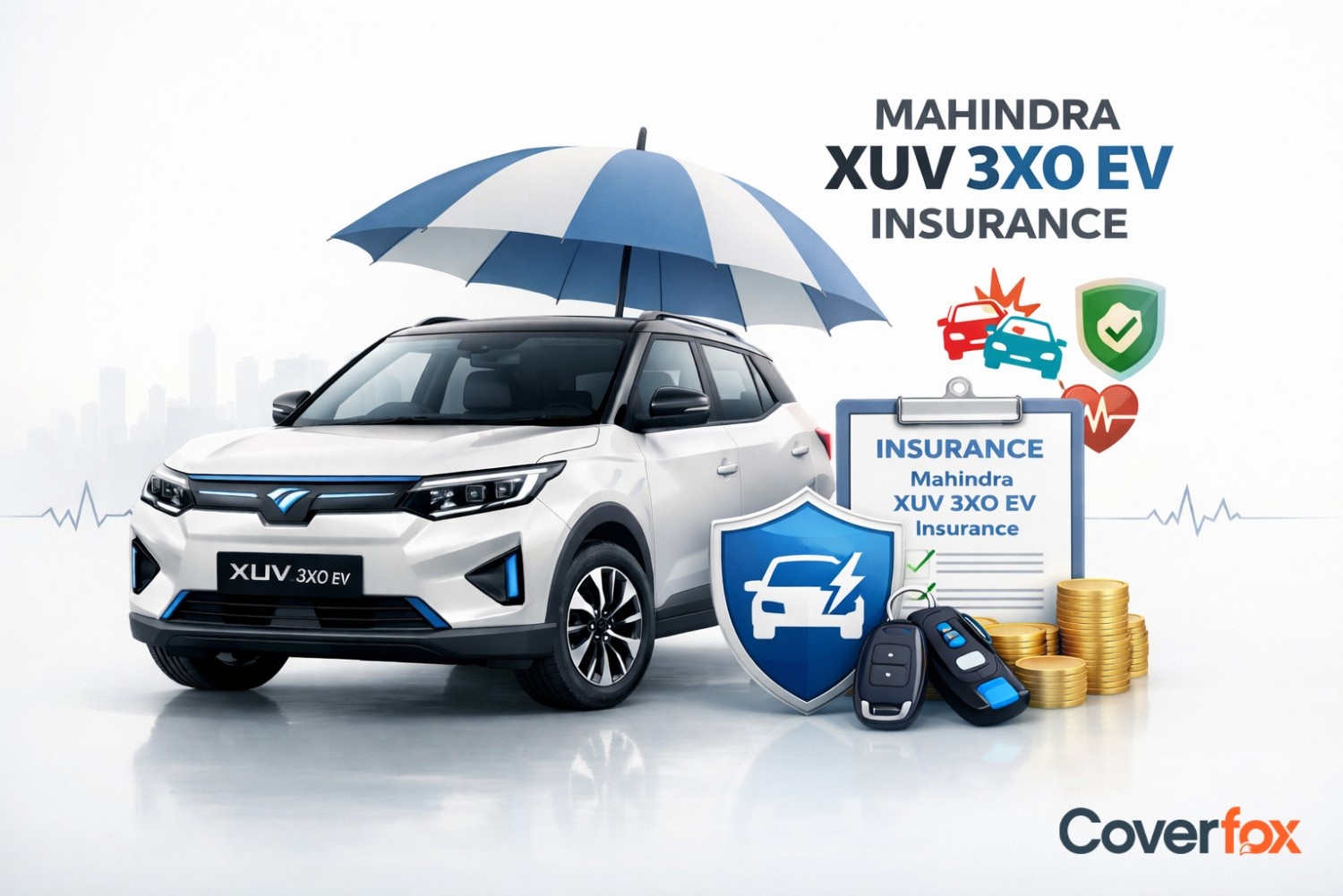
Here are the Mahindra XUV 3XO EV variants along with prices:
| Variants of Mahindra XUV 3XO EV | Insured Declared Value | Zero Depreciation | Net Premium |
|---|---|---|---|
| XUV 3XO EV AX5 | ₹11,11,200 | ₹4,545 | ₹17,026 |
| XUV 3XO EV AX7 L | ₹11,96,800 | ₹4,883 | ₹17,781 |
NOTE: The insurance premiums mentioned above are indicative and may vary based on location, driving history, and other factors. Please contact your insurer for an accurate quote.
The Mahindra XUV 3XO EV comes packed with premium technology and safety features, making it a well-rounded electric SUV.
Dual 10.25-inch screens, wireless Android Auto & Apple CarPlay
Panoramic sunroof, dual-zone climate control, wireless charging
7-speaker Harman Kardon audio system
Level 2 ADAS, 6 airbags, 360-degree camera
Connected car tech with Adrenox & Alexa integration
The XUV 3XO EV offers a strong balance of performance, range, and practicality for daily and long-distance driving.
Battery: 39.4 kWh
Power: ~147 bhp
Torque: 310 Nm
Range: Up to 456 km (MIDC)
Charging: ~50 mins (DC fast 0–80%), ~6.5 hrs (AC full charge)
Acceleration: 0–100 km/hr in ~8.3 seconds
Drivetrain: FWD (electric motor)
Boot Space: 364 litres
Ground Clearance: ~190 mm
Top Speed: ~150 km/hr
Owning the Mahindra XUV 3XO EV means investing in advanced electric technology, making electric car insurance essential to protect both the vehicle and your finances.
The EV battery is one of the most expensive components, and insurance helps cover repair or replacement expenses.
Covers repair costs for damages caused by accidents, natural disasters, or theft.
Features like ADAS, sensors, and infotainment systems are costly to repair without insurance.
Mandatory in India to cover damages or injuries caused to others.
Ensures you’re financially protected from unexpected repair or replacement costs.
There are different types of electric car insurance plans available for the Mahindra XUV 3XO EV, depending on the level of coverage you need.
Mandatory by law, covers injury, death, or property damage caused to third parties only.
Covers both third-party liabilities and damages to your XUV 3XO EV, including accidents, theft, and natural disasters.
Covers damages to your EV due to accidents, theft, fire, or disasters, but must be purchased along with third-party insurance.
The Mahindra XUV 3XO EV, with its advanced battery, ADAS tech, and electronic components, benefits most from EV-specific add-ons that protect high-cost systems.
The XUV 3XO EV’s battery is its most expensive component, so this add-on ensures coverage against damage, short circuits, or replacement costs.
With a high-performance electric motor delivering instant torque, this add-on protects against costly repairs due to electrical or accidental damage.
Ideal for XUV 3XO EV owners using home or portable chargers, this covers damage or theft of charging cables and equipment.
Helps in situations like battery drain, offering towing to the nearest charging station or emergency charging support—very useful for city and highway drives.
Ensures full claim value on expensive EV parts like sensors, bumpers, and electronics without depreciation cuts.
Other add-ons: Return to invoice cover, consumables cover, key replacement, tyre protection, and NCB protection.
Buying insurance for your Mahindra XUV 3XO EV through Coverfox is a quick online process that lets you compare and choose the best plan in minutes.
Visit Coverfox and go to Car Insurance: Start by selecting the car insurance option on the website.
Enter vehicle details: Add your registration number or select “new car”, then choose Mahindra XUV 3XO EV and variant.
Compare insurance plans: Instantly view quotes from multiple insurers and compare coverage, IDV, and premiums.
Select plan & add-ons: Choose the right policy (third-party or comprehensive) and customise with add-ons like battery protection or zero dep.
Make secure payment: Pay online via UPI, card, or net banking through a secure gateway.
Get instant policy issuance: Your insurance policy is generated instantly and sent to your email.
This entire process is paperless, takes just a few minutes, and allows you to find the most suitable EV insurance plan at competitive prices.
Yes, EV insurance is largely similar to regular car insurance but includes EV-specific considerations like battery protection, electric motor coverage, and charging equipment. Since EV components are more expensive and technologically advanced, insurers often provide specialised add-ons tailored for electric vehicles.
A standard comprehensive policy may cover battery damage only if it is caused by an insured event like an accident, fire, or flood. However, for broader protection (like internal faults or short circuits), you need a battery protection add-on, which is highly recommended for EVs.
EV insurance can be slightly higher due to the high cost of the battery and advanced electronics. However, competitive pricing, lower maintenance risks, and available discounts can help balance the premium, making it comparable in many cases.
The insurance premium depends on factors like variant, IDV, location, add-ons, and insurer. Typically, a comprehensive policy for the XUV 3XO EV may range from ₹25,000 to ₹45,000 annually, but this can vary based on coverage and customisation.
If the damage occurs due to an insured event (like a power surge, fire, or short circuit), it may be covered under a comprehensive policy. For complete protection, a charging equipment or battery protection add-on ensures coverage for charging-related risks.
Yes, you can lower your premium by:
Yes, the insurance policy can be transferred to the new owner along with the vehicle. It is important to initiate the transfer process with the insurer to ensure continuous coverage and avoid claim issues.
A comprehensive policy typically covers:
Insurance generally does not cover:
To file a claim: