
- Retail Insurance
- Business Insurance
- Resources
- Claims


The TVS iQube has emerged as one of India’s most popular family electric scooters, especially in metro cities like Bengaluru. Known for its practical design, connected technology, smooth performance, and multiple battery options, the iQube series caters to both daily commuters and families looking for a reliable EV for urban mobility.
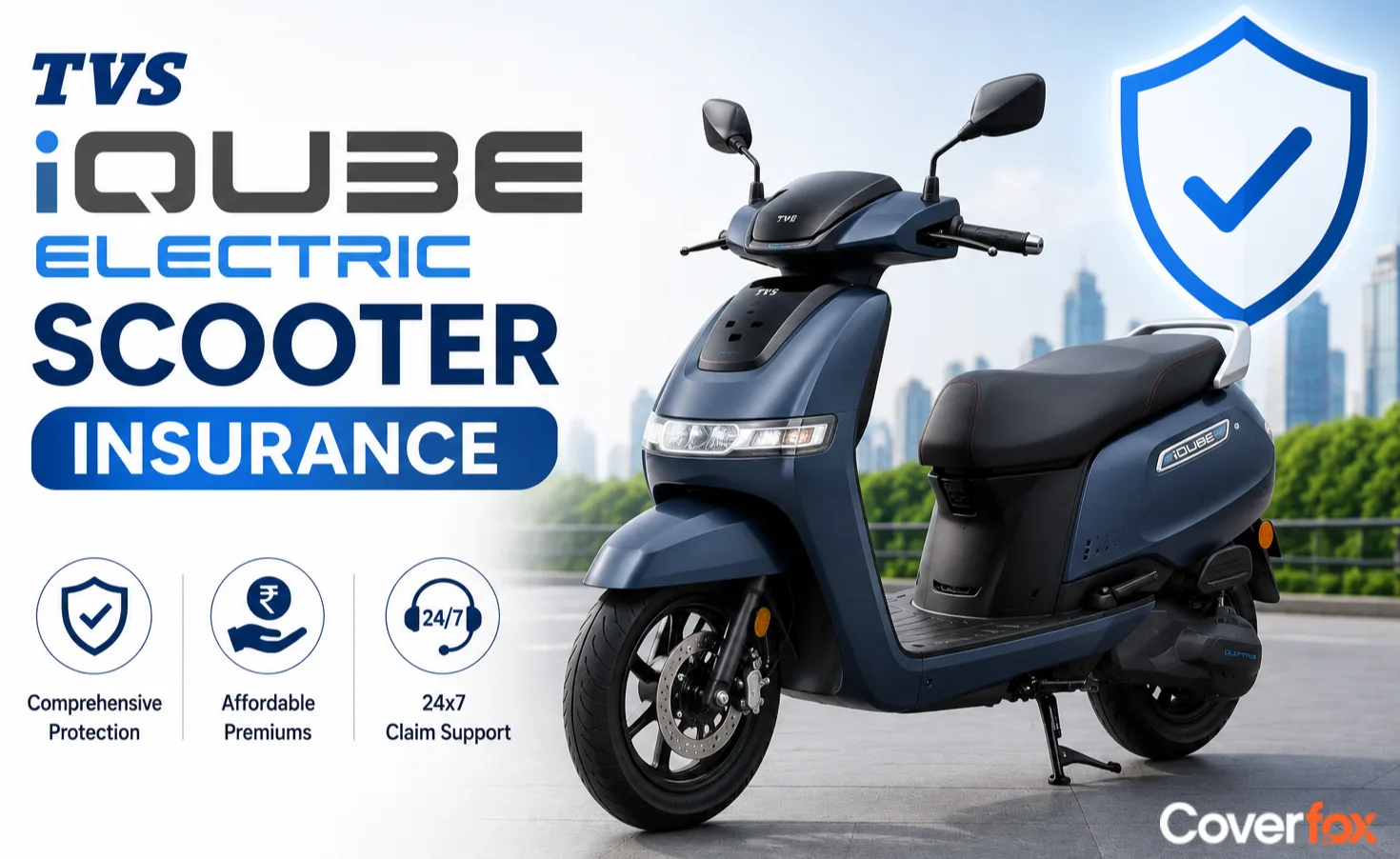
The 2026 TVS iQube lineup is available in multiple battery variants including 2.2 kWh, 3.1 kWh, S 3.5 kWh, ST 3.5 kWh, S 4.7 kWh, and the flagship ST 5.3 kWh. Depending on the variant, the scooter offers an IDC-claimed range between 94 km and 212 km, while top speeds go up to 82 km/h. The TVS iQube price ranges between ₹1.13 lakh and ₹1.71 lakh (ex-showroom) depending on the variant and battery capacity. In Bengaluru, the on-road price starts from approximately ₹1.22 lakh and goes up to around ₹1.79 lakh for the top-end variants.
As electric scooters become more advanced and feature-rich, insurance plays an even more important role. Components such as lithium-ion batteries, electric motors, connected displays, sensors, and smart electronics can be expensive to repair or replace. A suitable two wheeler insurance helps protect iQube owners from financial losses caused by accidents, theft, floods, fire, and third-party liabilities.
The TVS iQube lineup is designed for different riding needs, ranging from basic city commuting to extended-range urban travel.
The entry-level variant offers an IDC-claimed range of approximately 94 km with a top speed of 75 km/h. It is mainly designed for short city commutes and everyday urban riding.
This version improves the riding range to around 123 km while increasing the top speed to approximately 82 km/h. It balances performance and practicality for regular city riders.
The 3.5 kWh variant delivers an IDC-claimed range of around 145 km and focuses on riders looking for improved battery range without moving to the premium variants.
The iQube S variant delivers an estimated 175 km range and includes several connected features, making it suitable for long daily commutes and family usage.
The top-end ST variant offers an IDC-claimed range of approximately 212 km with premium connected technology, larger battery capacity, and advanced digital features.
Insurance premiums for the TVS iQube depend on factors such as battery variant, IDV, registration city, add-ons selected, and claim history.
| TVS iQube Variants | IDV [1st Year] | Zero Depreciation | Net Premium [5 years] |
| iQube Celebration Edition | ₹1,10,844 | ₹388 | ₹5,968 |
| iQube Electric S | ₹84,615 | ₹424 | ₹6,063 |
| iQube STD | ₹1,10,844 | ₹388 | ₹5,968 |
| iQube Electric ST | ₹82,180 | ₹288 | ₹5,561 |
Note: Prices and premiums are indicative and may vary depending on location, insurer, policy type, and add-ons selected.
Available in multiple battery variants ranging from 2.2 kWh to 5.3 kWh with IDC-claimed range up to 212 km.
Delivers top speeds up to 82 km/h along with smooth electric acceleration and peak torque of approximately 140 Nm.
Features smart technology including TFT digital console, turn-by-turn navigation, geo-fencing, smartphone connectivity, and over 118 connected features.
Includes practical family-focused features such as hill hold assist, Q-Park Assist, spacious seating, and approximately 32 litres of under-seat storage.
Electric scooters contain several expensive electrical and battery-related components that may significantly increase repair costs after accidents or water damage. The TVS iQube includes:
Lithium-ion battery pack
Electric motor
TFT digital console
Connected technology
Sensors and electronic systems
Damage to these components can lead to expensive repairs if the scooter is uninsured. Additionally, EV scooters are commonly used for daily office commuting, city rides, frequent charging cycles, and heavy traffic usage. This naturally increases exposure to scratches, accidental falls, waterlogging risks, and battery-related concerns.
Third-party bike insurance covers legal and financial liabilities caused to another person, vehicle, or property and is mandatory for riding on Indian roads.
Comprehensive bike insurance provides wider protection by covering third-party liabilities along with accidental damage, theft, fire, floods, and natural calamities affecting your TVS iQube.
Standalone own-damage bike insurance covers damages to your electric scooter caused by insured events such as accidents or theft, while third-party coverage needs to be purchased separately.
Zero Depreciation Cover helps reduce depreciation deductions during claims and is especially useful for premium EV body panels and electrical components.
Battery Protection Cover is highly recommended because battery replacement costs in electric scooters can be significantly expensive.
Roadside Assistance (RSA) provides emergency support during breakdowns, towing situations, charging-related emergencies, or punctures.
Return to Invoice (RTI) Cover and Consumables Cover provide additional financial protection during major damage or total loss situations.
| Zero Depreciation Cover | No Claim Bonus Cover | Roadside Assistance Cover |
| Return to Invoice Cover | Consumables Cover | Engine Protection Cover |
| Passenger Assistance Cover | Personal Accident Cover |
Insurance for your TVS iQube can be purchased or renewed online easily through Coverfox.
Start by keeping documents such as the RC, previous insurance policy for renewals, driving licence, and basic KYC details ready.
Enter the scooter registration number or select the correct iQube battery variant to explore available insurance plans.
You can then compare policies based on coverage benefits, IDV, premium amount, add-ons, and claim support before selecting a suitable plan.
After completing the payment online, the policy is issued digitally and can be downloaded instantly for future claims, renewals, and policy reference.
Raising a claim for your TVS iQube insurance is generally a simple process when all required details and documents are submitted correctly.
Contact the insurance provider immediately after an accident, theft, flood damage, or any insured event affecting the scooter.
Submit important information such as the policy number, location of the incident, damage details, and photographs if requested by the insurer.
The insurer may arrange a surveyor inspection or video verification to assess the extent of damage to the scooter.
Once inspection is completed, repairs can be initiated either through a cashless network garage or by choosing reimbursement mode.
Documents such as RC copy, driving licence, policy copy, repair bills, and FIR for theft or major accidents may be required during claim processing.
After successful verification and approval, the insurer processes the claim settlement according to the selected policy coverage and terms.
Disclaimer: *Discount up to 85% is calculated by comparing different insurers and may vary depending on the insurer, vehicle details, location, and policy terms.


Comprehensive insurance is generally recommended because it covers both third-party liabilities and damages to your own electric scooter.
Yes. Since EV battery replacement can be expensive, battery protection cover is considered one of the most useful add-ons for electric scooters.
Yes, comprehensive insurance generally covers flood and water-related damage. However, coverage for battery or motor damage may depend on policy terms and selected add-ons.
The TVS iQube ST 5.3 kWh variant offers an IDC-claimed range of approximately 212 km.
Insurance premiums are usually slightly higher than standard petrol scooters because EVs include expensive battery packs and electronic systems.
Yes, comprehensive insurance policies generally cover theft or total loss subject to policy terms and conditions.
Yes, expired policies can usually be renewed, although inspection and revised premium conditions may apply.
Yes. The iQube series is specifically designed for urban commuting and family usage with smooth performance, practical storage, and comfortable riding ergonomics.
Yes. Major aftermarket modifications or undeclared accessories may affect claim approval depending on policy terms.
A comprehensive insurance policy generally covers accidental damage, theft, fire, floods, natural calamities, third-party liabilities, and personal accident cover for the owner-rider.
Common exclusions include normal wear and tear, electrical or mechanical breakdowns outside policy coverage, riding without a valid licence, drunk riding, and damage outside policy terms.

