ABS and CBS are braking technologies used in two-wheelers to improve safety. ABS prevents wheel lockup during sudden braking, maintaining control and stability, especially at high speeds or on slippery roads. CBS distributes braking force between both wheels for balanced stopping, making it useful for beginners. While CBS is cost-effective, ABS offers superior safety and control overall.
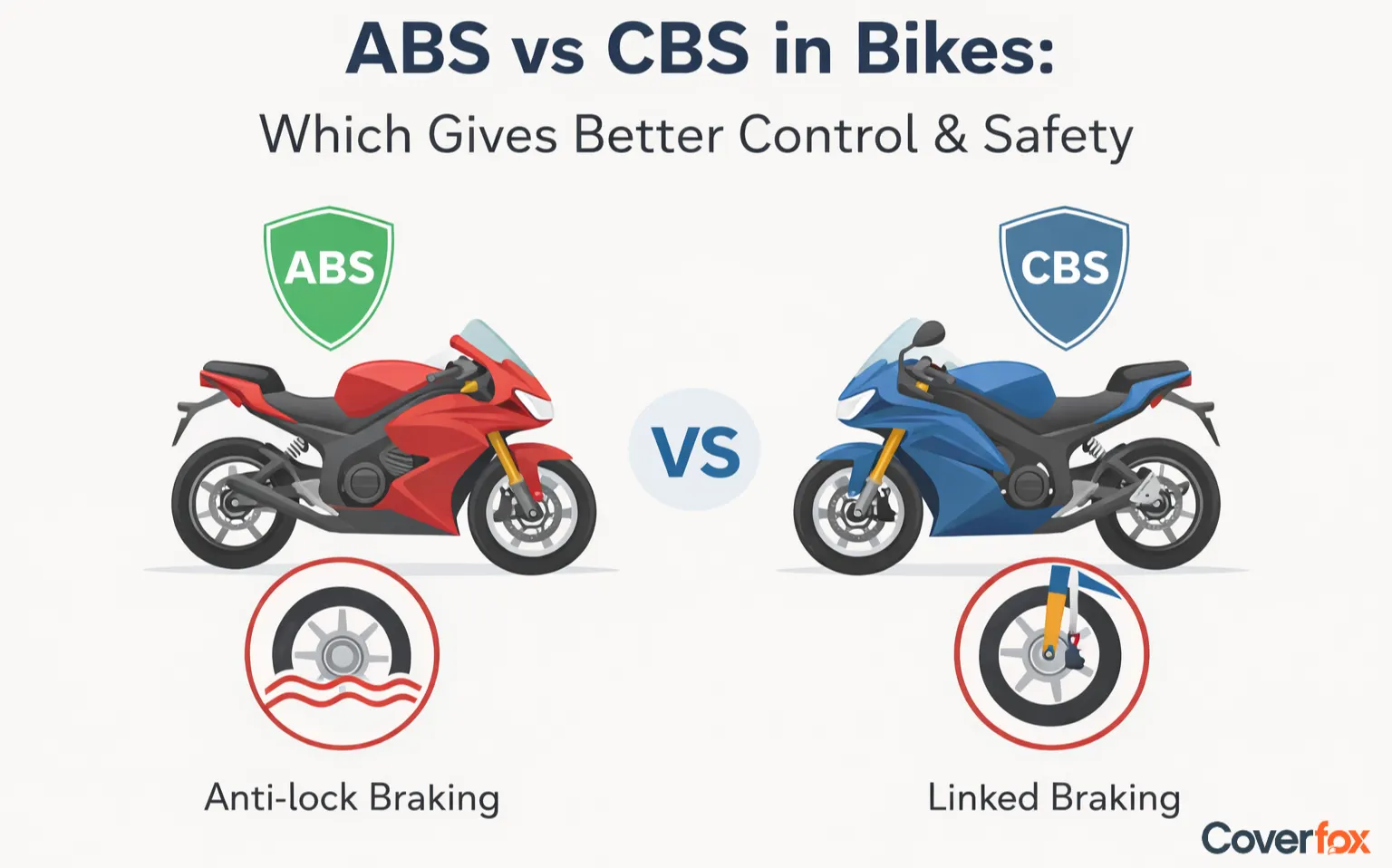
Braking systems are very important for motorcycles, particularly in unpredictable road conditions. The performance of brakes depends heavily on consistent maintenance over time. Under pressure, even small delays can drastically affect outcomes. This blog post discusses: What is an Anti-Lock Braking System (ABS) and its benefits, what is the Combi Braking System (CBS) and its benefits, and the difference between ABS and CBS.
Braking systems on motorcycles are designed for one reason and one reason only: to ensure the rider stops safely and predictably, just like bike insurance aims to protect riders. However, not all braking systems share the same approach to this objective. The debate between ABS vs. CBS continues because each handles risk differently. Preventing wheel lockup during hard stops defines a system's role. One is designed to prevent loss of control when braking, while the other is designed to provide balanced braking for normal riding conditions.
What Is ABS (Anti-Lock Braking System) in Bikes?
An anti-lock braking system is an advanced feature for safety that ensures that the wheels don’t lock during hard braking. In an ABS brake system, electronic sensors detect when the wheels might lock up and adjust the brake pressure. Unlike the air brake systems used in heavy vehicles, ABS in motorcycles uses electronic control and hydraulic modulation to prevent loss of traction and control stability and steering.
How ABS Function In Motorcycles?
ABS in Bikes works by adjusting brake pressure to lock the wheels. This adjustment occurs many times per second. This action happens faster than human reaction. Because of this, the rider can brake hard without losing balance or control. This feature is especially helpful when the road is wet, when there is loose gravel, or when a situation may cause panic.
Benefits of Anti-Lock Braking System
The ABS system is designed to significantly improve the rider’s safety during sudden braking. The system helps maintain control of the motorcycle even on low-grip roads. The benefits of ABS in bikes are as follows:
Helps Avoid Skid and Fall
Enhances Stability
Elevates safety and convenience for the rider
The ABS prevents the wheels from locking when the brakes are applied hard, so the motorcycle is less likely to skid, and the rider's fall is reduced.
By using ABS, a motorcycle becomes more stable over wet, slippery surfaces; broken gravel, or when the road is rough-paved without proper maintenance.
A rider who is aware that the braking system is capable of handling emergencies, especially at higher speeds, feels safe while riding a motorcycle.
Also, in India, the ABS system is compulsory for motorcycles having an engine capacity of 125cc or more.
What is the CBS or Combi Brake System, in Bikes?
The CBS, or Combi Brake System in Bike, applies the braking force on both the front and rear wheels of the bike. When a bike rider applies the CBS brake, the brakes on both wheels are applied simultaneously in a fixed ratio.
CBS is a braking system that emphasizes balance over electronic assistance and is widely used on commuter bikes.
How CBS Works in Bikes?
When a bike is fitted with a CBS system, applying the brake on either the front or rear wheel activates the brakes on both wheels. This makes it less likely that the bike will experience uneven braking due to the rider's braking action, such as applying the brakes on only one wheel. The CBS system cannot detect wheel speed and cannot apply the brakes if the wheels begin to skid.
Advantages of CBS in Bikes
CBS enhances braking performance by providing equal braking force. The main aim of CBS is to help bikers who are not experts in using the bike's brakes.
Balanced Braking Force Distribution
Reduces Rider Braking Errors
Simple and Cost-Effective Design
CBS automatically distributes the braking force to both wheels of the bike, thus reducing the problem of imbalance in braking force.
CBS helps reduce the errors committed by new bikers while braking.
CBS has a simpler design compared to ABS, making it cost-effective.
Difference Between ABS and CBS in Bikes
ABS vs. CBS is based on the level of active participation in the system in enhancing the bike’s safety. ABS is an active system that works according to the braking force and road conditions, whereas CBS is a passive system that works by distributing the braking force.
ABS is more appropriate for emergency braking and unpredictable road conditions. CBS works well in predictable conditions for daily commuting. To better compare CBS vs. ABS, the following table outlines their differences.
| Aspect | ABS (Anti-Lock Braking System) | CBS (Combi Brake System) |
|---|---|---|
| Core Purpose | Prevents wheel lock-up | Balances braking force |
| Type of System | Electronic and Hydraulic | Mechanical or Hydraulic |
| Skid Prevention | Yes | No |
| Emergency Braking | Highly effective | Limited effectiveness |
| Steering Control | Maintained during braking | Not actively supported |
| Performance on Wet Roads | Strong | Moderate |
| Cost | Expensive | Budget-friendly |
| Best For | Highways and safety-conscious riders | City commuting and beginners |
CBS vs. ABS in Bikes: Which Is Better?
For faster speeds, highways, and unpredictable road conditions, ABS is the superior choice for control and safety. It is designed for emergency braking, where braking errors are most hazardous. On the other hand, city commuters find CBS to be more suitable. Choose the right braking system according to an individual’s specific requirements.
Also Read About:
Disclaimer: The information provided in this article is for general informational and educational purposes only. Vehicle features, braking technologies, and regulatory requirements may vary depending on the manufacturer, model, and region. Readers are advised to verify specifications with the vehicle manufacturer or authorized dealer before making a purchase decision.
* Discounts on bike insurance premiums are subject to the insurer and may vary across different insurers. Not all insurers provide discounts for clean riding records; check your policy carefully.
FAQs on ABS vs CBS
What is the main function of ABS in bikes?
The primary purpose of ABS on motorcycles is to prevent wheel lock-up during abrupt braking. This allows the rider to stay balanced and continue steering the bike, thereby reducing the risk of an accident.
Is CBS as effective as ABS?
CBS helps stabilize the brakes, but it does not prevent skidding. ABS is more effective in terms of safety, especially in emergencies.
Does ABS reduce braking distances?
ABS does not necessarily reduce braking distances but ensures smooth braking. This often prevents skidding-related accidents.
Does ABS work all the time?
ABS functions only when it senses wheel lock-up. In normal braking conditions, ABS is not active.




 in Bikes.webp)
 in Bikes.webp)