
Dual-channel ABS improves braking safety by preventing wheel lock on both front and rear tyres, helping riders maintain control during sudden or emergency braking.
It uses sensors, an ECU, valves, and a pump to automatically regulate brake pressure, ensuring better stability on wet roads, sharp turns, and uneven surfaces.
Mandatory for modern two-wheelers, dual-channel ABS significantly reduces accident risk and works best when paired with responsible riding and proper bike insurance coverage.
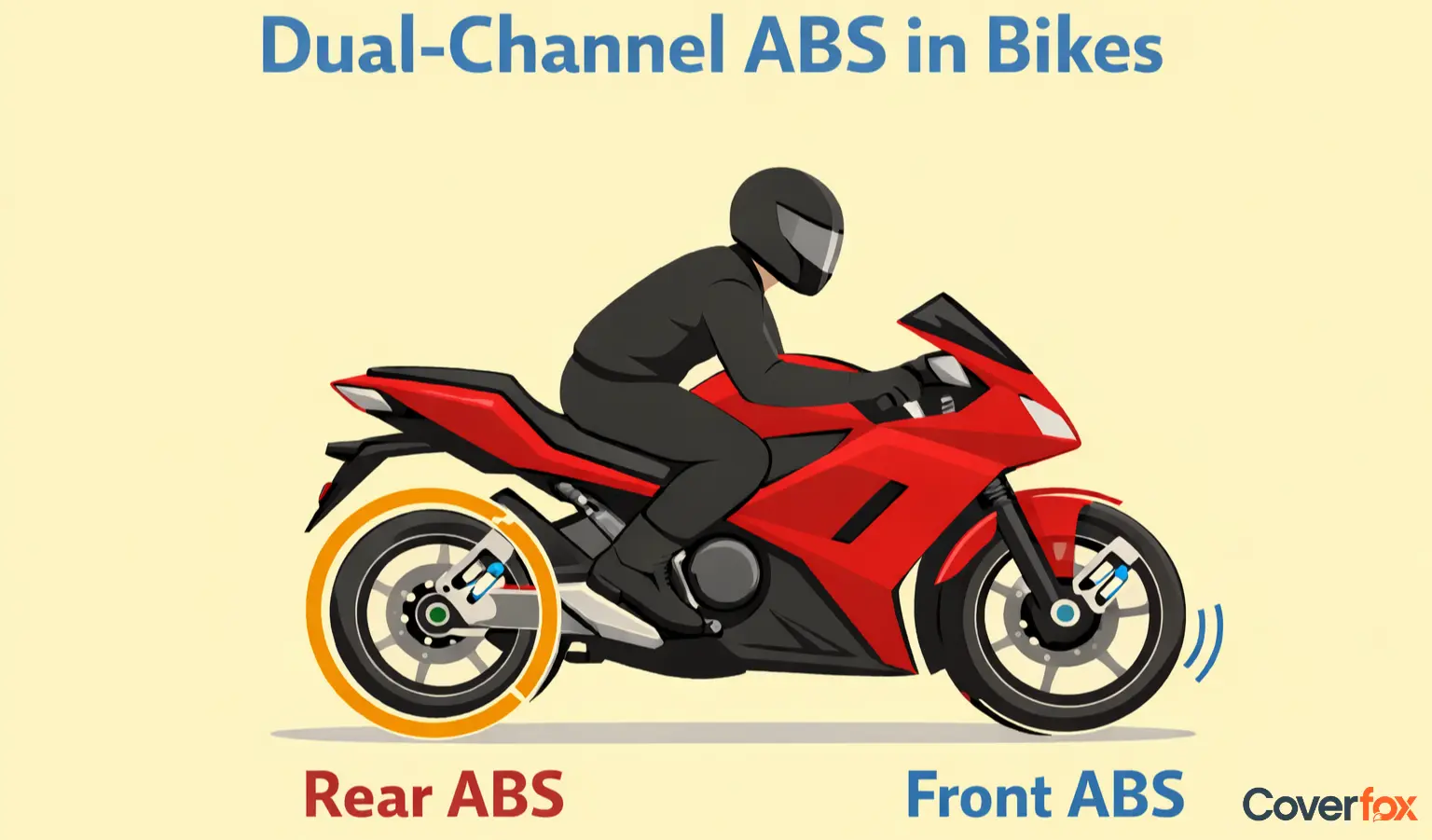
Road conditions change often, and a motorcycle reacts quickly to any sudden braking force. Strong brake pressure can cause the wheels to stop turning abruptly, losing grip and sliding. To manage this, many modern motorcycles now include dual-channel ABS. The anti-lock braking system keeps both wheels under control during emergency stops and helps the tyres stay stable on the road.
What is ABS in a bike?
It is a brake system that prevents the wheel from locking when sudden braking occurs due to a rapid decrease in speed. Once a wheel locks, the tyre may lose grip on the road, resulting in lateral drift as the front wheels lose grip (front-wheel washout). ABS prevents such an event by reducing brake pressure for a moment and then restoring it. The system holds a few important parts:
A small electronic box that manages the function
Sensors that note wheel speed
Valves that change pressure
A pump that returns pressure to the brake line
Indian rules state that all new motorcycles above 125 cc must come with ABS for rider safety, as mandated by the Ministry of Road Transport & Highways under notification G.S.R. 673(E). More recently (June 2025), MoRTH expanded the rule—from January 1, 2026, ABS will be mandatory for all new two-wheelers, regardless of engine capacity, as per notification G.S.R. 415(E) dated June 23, 2025.
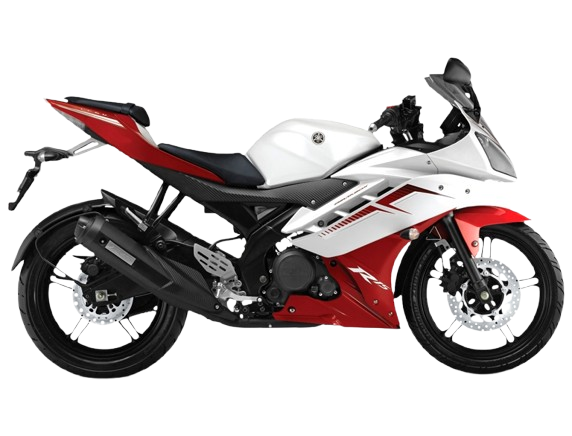
What is Dual-channel ABS in Bikes?
Dual-channel ABS in bikes operates on both wheels. Each wheel has its own sensor and pressure control. When the tyres lose grip due to heavy braking, the system reduces pressure and lets the wheels turn again. This helps the motorcycle stay upright.
Motorcycles that come with two-channel systems often sit in the mid- or premium class. These models provide more controlled stopping on long roads and busy streets.
Operation of Dual-Channel ABS
The system works through several parts that act at the same time when the brake lever is pressed:
Wheel Speed Sensors
Electronic Unit (ECU)
Valves
Pump
These sensors check how fast each wheel is turning and send that information to the electronic unit.
The ECU reads the signal and adjusts pressure whenever it finds a wheel slowing too quickly.
The valves release brake pressure for a brief moment.
The pump restores pressure to the system as needed.
The cycle repeats many times per second. The motorcycle keeps better movement on bends, wet roads, and surfaces covered with small stones.
Single-Channel ABS vs Dual-Channel ABS
Anti-lock Braking Systems (ABS) prevent wheel lock-up during sudden braking, improving vehicle control and safety. Single-channel ABS monitors only one axle, usually the rear, while dual-channel ABS monitors both front and rear wheels independently for better braking performance.
| Feature | Single-Channel ABS | Dual-Channel ABS |
|---|---|---|
| Wheel Coverage | Front wheel only | Front and rear wheels |
| Braking Balance | Basic | More stable |
| Cost Range | Lower | Higher |
| Safety Level | Moderate | Improved |
| Common Use | Small engine models | Mid and large-engine models |
Dual-channel systems handle both wheels, so the motorcycle has a steady braking operation. Single-channel systems support only the front wheel and are usually fitted on basic models.
Benefits of Dual-Channel ABS in Two-Wheelers
A two-channel unit supports smoother brake action and helps across multiple high-risk scenarios, including heavy traffic, emergency braking, and poor weather.
General Benefits of Dual ABS
Helps wheels avoid sudden lock
Reduces tyre wear due to managed pressure
Improves stopping control on damp surfaces
Gives more stable motion when the road has loose material
Helps manage braking on long downhill routes
Reduces front-wheel lock incidents by automatically modulating brake pressure during sudden deceleration.
Situations Where It Helps Most
Braking in city traffic when others stop without warning
Braking on a bend with a slight lean
Braking on roads with water patches during the monsoon months.
Dual-channel ABS does not replace careful riding, but it helps the motorcycle respond better when the rider needs a quick stop.
Conclusion
Dual-channel ABS in bikes improves steering responsiveness by maintaining optimal traction during sudden manoeuvres. Riders who travel through chaotic road conditions often prefer such bikes due to better grip and steady movement in sudden stops. While ABS does not change riding skills, it reduces the risk of tyre slips when using strong brakes. Bike insurance also plays a major part in motorcycle safety planning. A standard insurance policy helps with costs that arise from accidents, weather damage, theft, and third-party damage.
Read More About:
FAQs on Dual Channel ABS
Is ABS better than non-ABS bikes?
ABS helps avoid wheel lock, while non-ABS bikes may slide when the brake is pressed sharply. ABS supports more stable stopping.
Does dual-channel ABS give stronger protection than single-channel ABS?
Yes. It manages brake pressure on both wheels, while a single-channel unit works only on the front wheel.
What are the disadvantages of ABS?
ABS raises the cost of the motorcycle. Repairs of sensors and valves also need trained service. Some riders feel slight movement in the lever during ABS action, which is normal.
Is ABS required for all motorcycles in India?
As per current rules, ABS is compulsory for new models above 125cc. Models with smaller engines follow separate norms.
Can a motorcycle be upgraded to dual-channel ABS?
It may be done, but the process is complex. It needs new sensors, wiring, an ECU, and brake line changes. Factory-installed systems are more reliable.

 in Bikes.webp)
.webp)
.webp)

