
Clean riding records indicate rider behaviour on the road, and insurers can check these records to assess risk of the policyholder. Depending on the assessment, insurers may provide discounts for a cleaner riding record or increase premiums/impose stricter terms for riding records with multiple infractions.
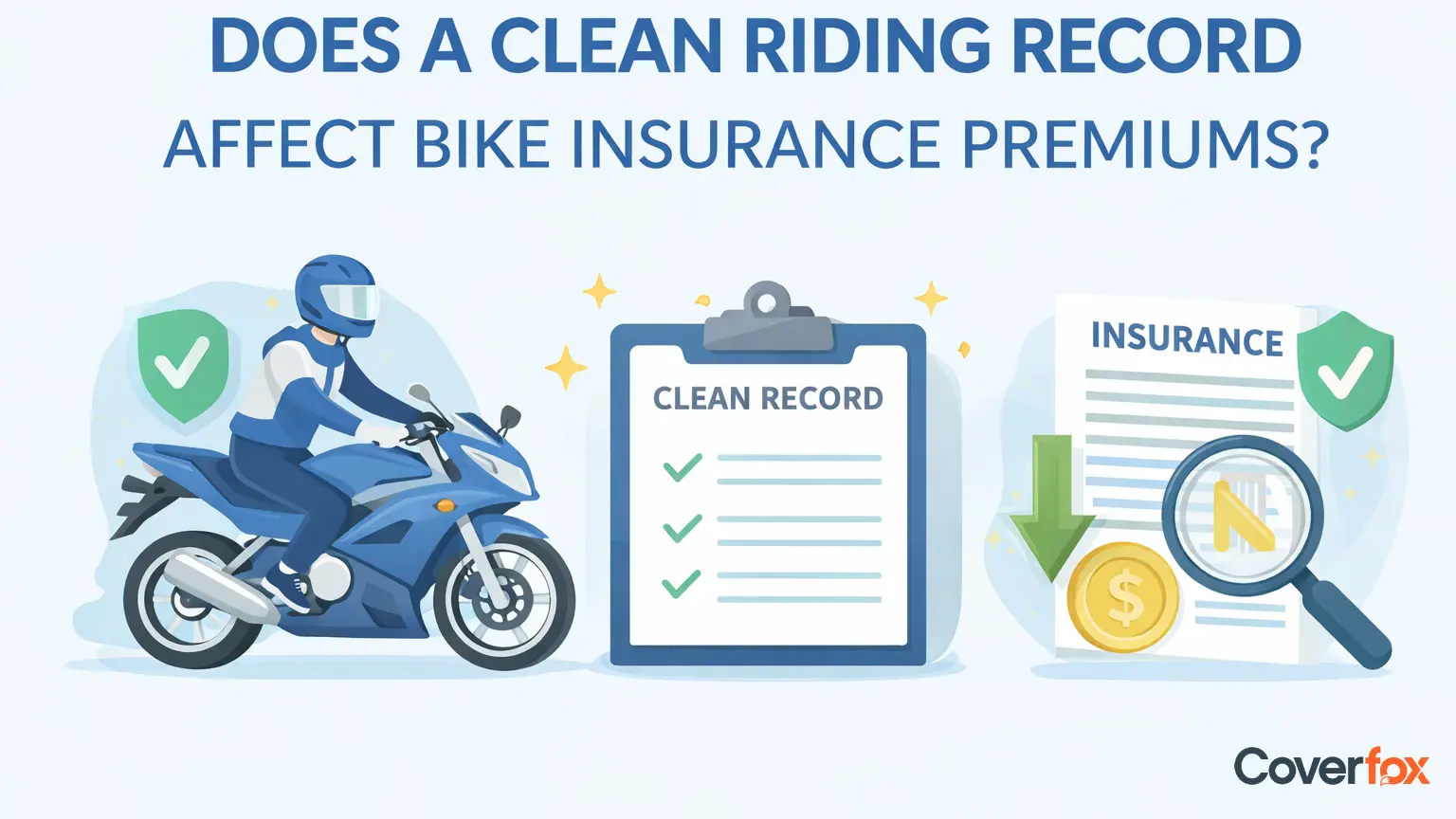
Riding on Indian roads is a task in itself. But, maintaining a clean riding record, following traffic law vigilantly, and ensuring the road safety of everyone around you goes beyond basic etiquette; it also helps reduce bike insurance premiums, and you get to save more! Bike insurance companies offer discounts and compensation for policyholders who have clean riding records and fewer claims (Subject to the insurer).
What Is a Clean Riding Record?
A clean riding record refers to a rider’s documented history free of accidents, insurance claims, traffic violations, e-challans, licence suspensions, and convictions. It serves as a comprehensive report card on your driving behaviour and road safety over a specific period. Insurers analyse this data to assess your risk profile, using a "clean" history to offer you lower premiums and eligibility for No Claim Bonuses (NCB).
What Does a Riding Record Include?
A riding record is a detailed summary of your legal and safety history on the road, which insurers verify to assess risk during underwriting or claim settlements.
Accident History
Claim History
Traffic Violations
E-Challans
License Suspensions
Conviction Records
A log of any previous road mishaps or collisions.
Records of past insurance claims filed for damages or third-party liabilities.
Instances of overspeeding, wrong-side riding, signal jumping, and other infractions.
Any unpaid or pending digital traffic fines issued by authorities.
Periods where your legal right to ride was revoked due to serious offences.
Legal penalties or court rulings related to major traffic or criminal offences while riding.
How does a Clean Riding Record Affect Bike Insurance Premiums?
A clean riding record ensures the insurer that the policyholder is a low-risk rider, meaning the chance of making a claim will be significantly lower. For these reasons, they provide discounts to such riders. This not only helps the policyholder by saving them money, but also encourages them to have safer riding etiquette.
Can Traffic Violations Increase Your Bike Insurance Premium?
Yes, traffic violations can increase your bike insurance premiums. Repeated violations such as overspeeding, wrong-side riding, signal jumping, triple riding, or riding without a helmet increase risk perception. Insurers may increase premiums or impose stricter terms for riders with frequent offences.
Do Accidents and Frequent Claims Impact Bike Insurance Policy Premiums?
While accidents and mishaps may happen and are unpredictable events, frequent accidents and repeated claims can indicate to the insurer that the policyholder may have a higher future risk. This can lead to higher renewal premiums, reduced discounts, or stricter underwriting conditions.
Can Unpaid E-Challans Affect Bike Insurance Claims or Renewal?
Unpaid or pending traffic challans may create issues during renewal or claims, as insurers may consider them indicators of risky behaviour. Clearing dues helps maintain a smoother claim process as well. Also, unpaid e-challans can lead to heftier fines and penalties, even seizures of your vehicle.
Does a Clean Riding Record Ensure Faster Claim Settlement?
Yes, a clean riding record requires less verification from the insurer, and in turn quickens the claim settlement process. However, the best way to ensure you have a smooth and quick claim settlement is to have all documents ready in place and provide truthful information to your insurer.
Does a Clean Riding Record Help You Get a Higher No Claim Bonus (NCB)?
While NCB is a fixed discount as per the insurer's terms for having claim-free years, having a clean riding record ensures that you do not need to make a claim against your bike insurance policy. This will guarantee that your NCB bonus is accumulated and in-turn gets you higher NCB benefits.
What Other Factors Affect Two-wheeler Insurance Premium Apart from Riding Record?
Other factors that affect insurance premiums, other than the riding record of the biker, are:
Geographical location of the policyholder
Age, Make, Model of the bike
NCB benefits
Direct discounts from the insurer
IDV
Deductibles
How to Maintain a Clean Riding Record?
Maintaining a clean riding record is the most effective way to protect your safety, keep your legal status intact, and secure the lowest possible insurance premiums.
Follow Traffic Rules Consistently
Avoid Rash or Reckless Riding
Never Ride Under the Influence
Pay Traffic Challans on Time
Avoid Frequent Insurance Claims
Always obey speed limits, stop at traffic signals, maintain lane discipline, and wear a certified helmet to prevent fines and accidents.
Steer clear of aggressive manoeuvres like sudden swerving or tailgating, as these behaviours significantly increase your risk profile in the eyes of insurers.
Intoxicated riding is a severe legal offence that can lead to immediate license suspension and make you virtually uninsurable.
Settling e-challans promptly prevents legal escalations and ensures your record remains clear during insurance background checks.
Think twice before filing claims for minor scratches or small repairs; paying out-of-pocket for small issues preserves your No Claim Bonus (NCB) and keeps long-term costs down.
How Can You Check Your Riding Record or Challan Status?
Checking your riding record and challan status is essential for maintaining your legal standing and ensuring you continue to receive insurance benefits like the No Claim Bonus (NCB). Regularly monitoring these portals allows you to settle fines promptly, preventing them from escalating into legal hurdles or higher insurance premiums during renewal.
Parivahan e-Challan Portal
State Traffic Police Portals
mParivahan App
Insurance Information Bureau (IIB)
The primary national platform to check and pay traffic fines using your vehicle number, DL number, or challan number. Check Status on Parivahan.
Many states have dedicated websites for localised monitoring and payment (e.g., Maharashtra, Telangana, or Delhi Traffic Police). Maharashtra Traffic e-Challan, Telangana Traffic Police e-Challan.
A mobile-friendly government app that provides instant access to your digital RC, DL, and any pending challans on the go.
Useful for checking your overall insurance and accident claim history linked to your vehicle. Visit IIB V-Seva.
Is It Possible to Get Bike Insurance After Traffic Convictions?
While getting traffic convictions does have an influence on bike insurance, you can definitely still get bike insurance, but probably at a higher premium rate or a stricter policy term. A third-party bike insurance policy is still mandatory, and you cannot ride without it. Having a clean record will ensure the premium rates will go back to normal over time.
Conclusion - Clean Riding Record Is Important for Long-Term Insurance Savings
To sum it up, having a clean bike riding record ensures your own safety, the safety of those around you, and you get a discount on insurance premiums as well! A clean record not only ensures you are compliant with the law, but also shows the insurer that you are a low-risk policyholder, helping you get faster claims, quicker background checks and save money – all at once!
Related Article:
Disclaimer: Discounts on bike insurance premiums are subject to the insurer and may vary across different insurers. Not all insurers provide discounts for clean riding records; check your policy carefully.
FAQs on Clean Riding Record & Two-Wheeler Insurance
Will a bike accident affect my riding record?
Yes. Any accident where you are at fault is recorded in your history. Insurers view this as an indicator of high risk, which typically leads to increased premiums and the immediate loss of your No Claim Bonus (NCB).
Can a Bad Riding Record Lead to Policy Rejection or Cancellation?
Yes. In extreme cases involving multiple severe violations, fraud, or frequent high-value claims, an insurer may deem you "uninsurable." They can reject your application for a new policy or even cancel an existing one if they discover significant non-disclosures.
Do insurers check riding records before issuing a bike insurance policy?
Yes. Most modern insurers in India use the Parivahan database and their own internal claim registries to verify your history. This background check happens during the underwriting process to determine your final premium.
Can a clean riding record improve insurance terms over time?
Absolutely. A consistent, clean record builds trust. Over time, this allows you to accumulate a maximum NCB of up to 50%, qualify for lower deductibles, and gain access to premium "add-on" covers that might be restricted for high-risk riders.
Does wrong-side riding impact bike insurance premiums?
Yes. Wrong-side riding is a major traffic violation. If it results in a challan or an accident, it signals reckless behaviour to the insurer. Additionally, many policies explicitly exclude coverage for accidents that occur while riding on the wrong side of the road.
Will multiple minor traffic offences affect bike insurance pricing?
Yes. While one minor slip-up might be overlooked, a pattern of frequent offences (like small speeding fines) suggests a lack of discipline. Insurers often aggregate these data points to justify a "risk loading" fee on your premium.
Can a suspended licence affect bike insurance coverage?
Yes. Riding with a suspended license is illegal. If an accident occurs during this period, your insurance claim will be outright rejected, and you could face permanent blacklisting by insurance providers.
How do traffic violations affect bike insurance premiums?
Insurers use a risk-based pricing model. Every recorded violation increases your "risk score." As this score rises, the insurer increases the premium to offset the higher likelihood that you will file a claim in the future.
Can my insurance claim be rejected due to a bad riding record?
Indirectly, yes. If an accident is caused by a violation found on your record (like intoxicated riding or reckless speed), the insurer can reject the claim based on "illegal acts" or "gross negligence" clauses in your policy.
Does a clean riding record guarantee cheaper insurance?
Generally, yes. While other factors like the bike's age and location (RTO) matter, a clean record ensures you get the base rate without extra penalties and keeps your NCB discounts active, making it significantly cheaper than a "high-risk" policy.
How long does a traffic conviction affect insurance premiums?
Typically, a serious traffic conviction or a major claim can impact your premiums for 3 to 5 years. You usually need to maintain a spotless record for at least a year or more to start seeing those rates go back down.
Can insurers check my traffic challans?
Yes. With the digitalisation of traffic records, insurers can easily access the e-challan portal using their vehicle or license number. Pending or frequent challans are a red flag during the renewal process.
Does paying challans late affect my bike insurance?
Yes. Delayed or unpaid challans reflect a "laid-back" attitude toward the law. Insurers may categorise you as a high-risk customer, leading to stricter policy terms, higher voluntary deductibles, or increased premium rates.

 in Bikes.webp)
 in Bikes.webp)

.webp)

