Starting a motorcycle in winter becomes difficult due to reduced battery power, thicker engine oil, and poor fuel vaporisation. Proper preparation, like checking the battery, using the choke correctly, and warming up the engine briefly, can prevent starting issues. With the right cold-start habits, riders can ensure smoother starts and protect their engine during winter rides.
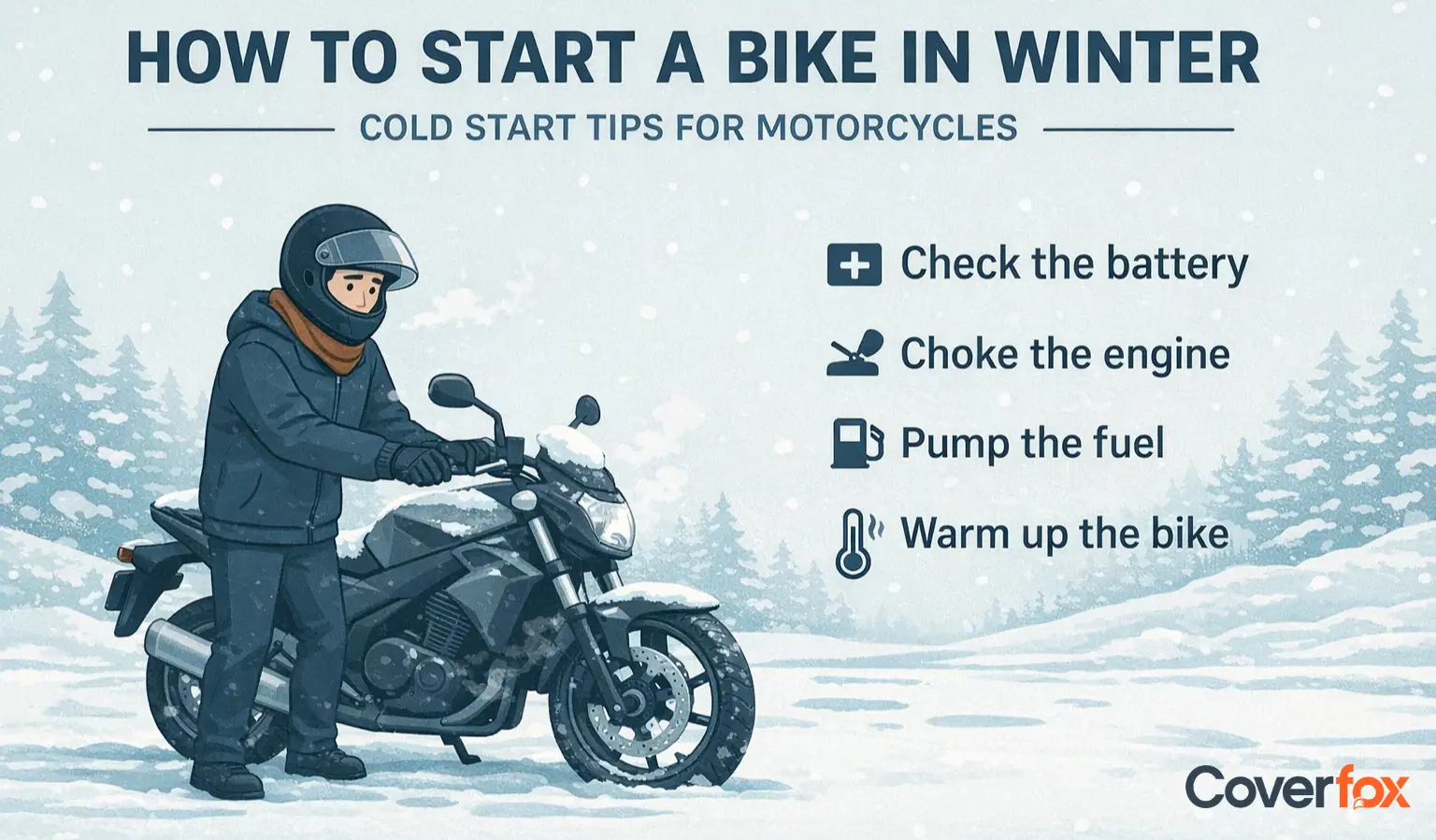
Ever struggled to start your bike on a cold winter morning? If the answer is yes, then you have come to the right place. The tips provided in this article will make sure your morning winter rides are not abrupt due to the cold weather.
Why Are Motorcycles Hard to Start in Cold Weather?
Low temperatures slow down the chemical reactions inside the battery, reducing the power needed to crank the engine. Cold air also thickens engine oil, making it harder for engine parts to move freely, which is why you may hear a slow or weak cranking sound. Fuel doesn’t vaporise easily in cold conditions, making the air–fuel mix less effective for ignition. Together, these factors make the engine hesitate or fail to start on chilly mornings.
What Happens to Your Motorcycle in Freezing Temperatures?
Battery Drain
Sluggish Starter Motor
Poor Engine Lubrication
Reduced Fuel Vaporisation
Tyre Stiffness
Condensation in Fuel Tank
Low temperatures reduce cranking power and can cause weak or delayed starts.
Thickened fluids increase resistance, making the starter motor work harder and crank more slowly.
Cold oil circulates slowly, increasing friction during startup.
Petrol doesn’t atomise properly in cold air, making ignition difficult and causing the engine to struggle to catch.
Cold rubber hardens, increasing rolling resistance and making the bike feel heavy during initial movement.
Moisture buildup can mix with fuel or clog fuel lines, leading to rough starts or misfiring.
Things to Check Before Starting a Bike in Winter
Battery Condition
Engine Oil
Fuel Quality and Level
Bike Position and Initial Movement
Cold weather drains battery faster. Check charge regularly, use a battery tender if parked long, and watch for dim headlights or slow cranking.
Use winter-grade oil and check the level before starting to avoid dry or rough starts.
Keeping the tank fuller helps prevent moisture buildup and condensation. Use a fuel stabiliser if the bike is unused for weeks.
Gently rolling the bike back and forth before starting helps loosen cold components and allows oil to circulate slightly, reducing strain on the engine during the first crank.
How to Start a Carbureted Bike in Cold Weather?
Turn the Fuel Petcock On
Use the Choke Correctly
Start the Engine (Kick or Electric Start)
Warm Up the Engine Briefly
Gradually Turn Off the Choke
The petcock allows fuel to flow from the tank to the carburettor. Ensuring it’s fully open helps the engine get enough fuel to start smoothly.
The choke enriches the air–fuel mixture, making cold starts easier. Use a full choke when the engine is completely cold, but avoid riding with it fully on as it can flood the engine and reduce performance.
Crank the engine steadily without overdoing it. Avoid repeated long cranks, as this can drain the battery or flood the carburettor. If it doesn’t start, pause for a few seconds before trying again.
Let the bike idle for 30–60 seconds—just enough for oil to circulate properly. Prolonged idling is unnecessary and can lead to fuel wastage or carbon buildup.
As the engine warms up and idles smoothly, slowly reduce the choke. Turning it off too quickly can cause stalling, while leaving it on too long can harm fuel efficiency and engine health.
How to Start a Fuel-Injected (FI) Motorcycle in Winter?
Simply Press the Starter Button
Ride Gently After Starting
Fuel-injected bikes don’t need a choke. The ECU automatically regulates the air–fuel mixture in cold conditions. Just switch on the ignition, wait for the fuel pump to prime, and press the starter.
Avoid hard acceleration or high revs immediately after starting. Ride smoothly with light throttle input until the engine oil circulates properly and the tyres warm up for safe riding.
What to Do If Your Bike Won’t Start in Cold Weather?
Recheck the Battery
Kick-Start to Build Compression
Push-Start as a Last Resort
Cold weather weakens battery output. Dim lights or slow cranking usually mean low charge. Try charging or jump-starting the bike. Replace the battery if it’s completely dead.
For carbureted bikes, gently cycling the kickstarter a few times helps move thick oil, build compression, and improve fuel flow, making the engine easier to fire on the next proper kick.
Push-starting can work if the battery is weak but not dead. It won’t help if the battery has zero charge or if the fuel system isn’t supplying fuel. Always do this on a clear, flat stretch and avoid traffic for safety.
How Long Should You Warm Up a Bike in Winter?
A bike only needs 30–60 seconds of warm-up—just enough for the oil to circulate properly. Prolonged idling is unnecessary and can lead to fuel wastage and carbon buildup. The best way to warm up a bike is to ride gently for the first few minutes, keeping revs low until the engine reaches normal operating temperature.
Key Takeaway
While starting the bike is not a big task, winter conditions can make it more difficult. Knowing these tips, making essential checks before riding, and practicing cold-start habits will ensure smoother, safer winter rides. Additionally, having comprehensive bike insurance can protect against unexpected winter mishaps.
Read More:
FAQs on Starting A Bike During Cold Weather
How cold is too cold to start a motorcycle?
Most bikes can start even near 0°C, but starting becomes difficult below 5°C due to battery drain and thickened oil.
How do I get my engine to start in the cold?
Ensure the battery is charged, use the choke correctly (for carb bikes), and avoid repeated cranking. Let the fuel pump prime before starting.
How to avoid a cold start on a bike?
Park the bike in a covered area, use a battery tender, keep the fuel tank full, and ride regularly to keep components active.
How long does a cold motorcycle start take?
Ideally, 30–60 seconds of idling is enough before riding off gently.
Can cold weather damage my motorcycle engine?
Yes, repeated cold starts without proper warm-up can increase engine wear due to poor lubrication.
Should I use a choke every time I start my bike in winter?
Only for carbureted bikes and only when the engine is cold. Fuel-injected bikes do not need a choke.
How often should I ride my motorcycle during winter?
At least once every 7–10 days to keep the battery charged and engine parts lubricated.
Is it bad to rev the engine during a cold start?
Yes. Revving a cold engine increases wear because the oil hasn’t fully circulated yet.
Why does my motorcycle stall after starting in cold weather?
This usually happens due to poor fuel vaporisation, low idle speed, or turning off the choke too early.
Can fuel freeze in a motorcycle during winter?
Petrol itself doesn’t freeze easily, but moisture in the tank can form condensation and affect fuel flow.
Is push-starting safe for my motorcycle?
It’s safe if done occasionally and correctly, but it won’t work if the battery is completely dead or on some FI bikes.
Should I let my motorcycle warm up on the centre stand or side stand?
Either is fine, but avoid prolonged idling. Start riding gently once the engine settles.
Can I use a car battery to jump-start my motorcycle in winter?
Yes, but only with the car engine switched off. Car batteries deliver high current and can damage bike electronics if used incorrectly.

 in Bikes.webp)
 in Bikes.webp)
.webp)