The KYC process is mandated by IRDAI to purchase two-wheeler insurance. KYC process can be done through Aadhar-based OTP, e-KYC, V-KYC, or going to the office and getting KYC done Offline and e-KYC can be done quickly, in under minutes.
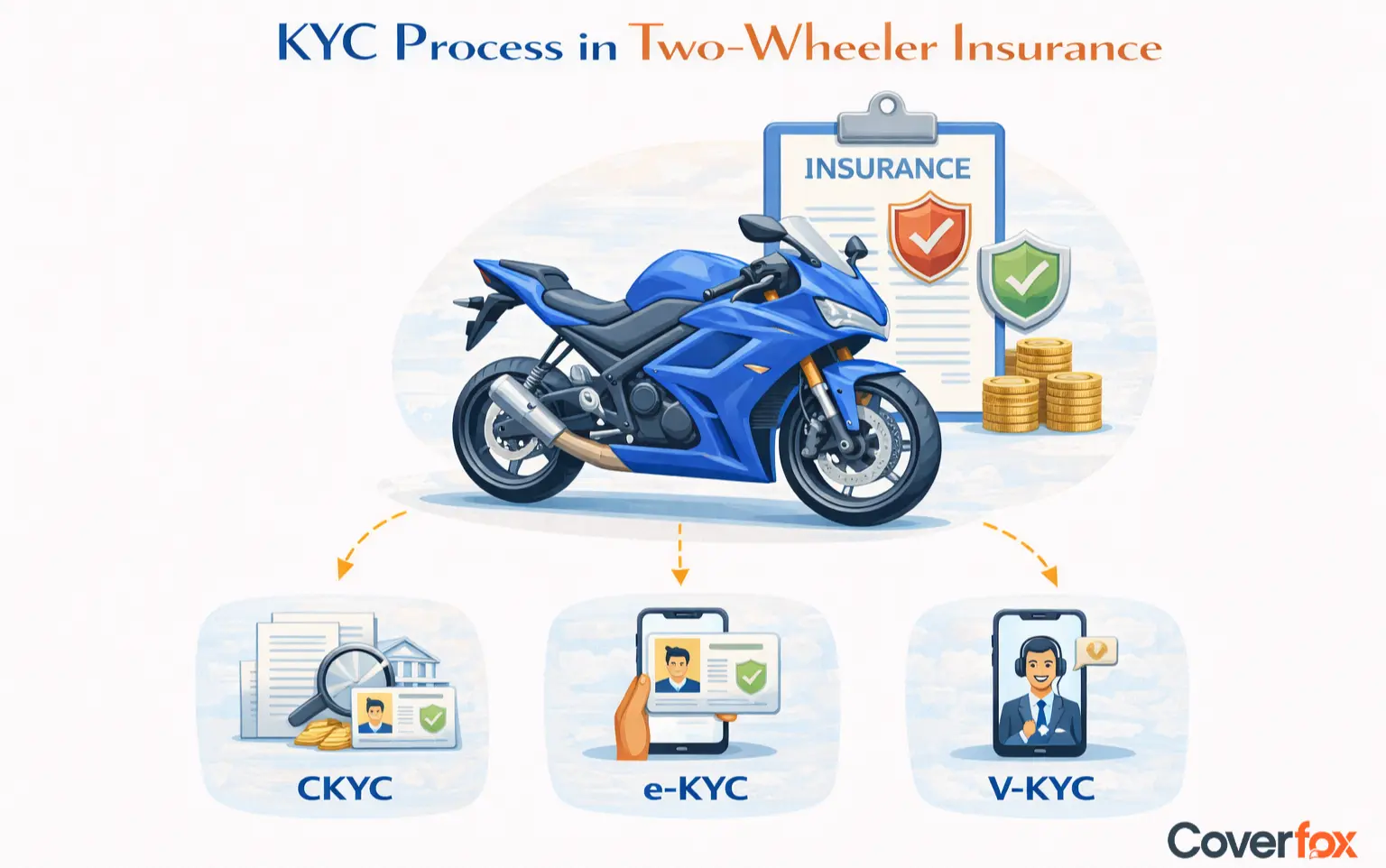
The KYC (Know Your Customer) process in two wheeler insurance is a mandatory verification step used to confirm the identity and address of the policyholder. It helps insurers prevent fraud, ensure transparency, and comply with regulatory guidelines set by the Insurance Regulatory and Development Authority of India. Completing KYC is essential for buying, renewing, or processing claims on a bike insurance policy.
Why Is KYC Mandatory for Two-Wheeler Insurance?
KYC (Know Your Customer) is mandated by IRDAI
to ensure transparency and reduce the risk of fraud in insurance transactions. It helps verify the policyholder's identity, preventing identity fraud and fake or duplicate claims.KYC is compulsory across all stages of a two-wheeler insurance policy, whether you are purchasing a new policy, renewing an existing one, making endorsements, or filing a claim. This requirement applies equally to policies bought online or offline, ensuring a uniform and secure process for all customers.
When Is KYC Required in Two-Wheeler Insurance?
KYC becomes mandatory in several key situations related specifically to bike insurance:
Buying a new two-wheeler insurance policy
Renewing an expired policy
Filing a claim
Transfer of ownership
Making corrections or endorsements
To verify the identity of the policyholder at the time of purchase.
Especially when there is a break in policy continuity.
To ensure that the claim is made by the genuine policyholder.
When a used bike is sold, KYC is required to update the new owner’s details in the policy.
Such as changes in name, address, or contact details.
Types of KYC Methods Available for Two-Wheeler Insurance
To make the process faster, more convenient, and largely paperless, insurers today offer multiple KYC methods for bike insurance. These options allow policyholders to complete verification seamlessly, whether online or offline.
Aadhaar-Based e-KYC
Digital / Online Document Upload KYC
Video KYC (V-KYC)
Digilocker-Based KYC
CKYC (Central KYC) for Two-Wheeler Insurance
Physical KYC (Offline Mode)
This is the quickest and most widely used method. It uses OTP authentication linked to your Aadhaar-registered mobile number, enabling instant identity verification without any paperwork.
In this method, policyholders can upload scanned copies or clear photos of KYC documents (like PAN, Aadhaar, or driving licence) through the insurer’s website or mobile app for verification.
Video KYC involves a short live video interaction with an insurer representative. During the session, you display your original documents and your face is verified in real time, ensuring authenticity.
Using DigiLocker, insurers can directly fetch your verified government documents digitally. This eliminates the need for manual uploads and ensures secure, tamper-proof verification.
If you already have a CKYC number issued under the Central Registry of Securitisation Asset Reconstruction and Security Interest of India, insurers can retrieve your KYC details directly. This avoids submitting documents repeatedly for new or renewed policies.
This is the traditional method where you submit hard copies of documents at a branch office or through an authorised agent. It is typically used when digital methods are not feasible or fail.
Step-by-Step KYC Process for Two-Wheeler Insurance
The KYC process for bike insurance is simple and quick, whether done online or offline. Here’s how it typically works:
Submission of KYC Details
Verification by the Insurer
Confirmation of KYC Completion
You provide basic information and submit your KYC documents through your bike insurer’s website, mobile app, video KYC, or physical mode.
The insurer verifies your details either instantly (in case of Aadhaar-based or DigiLocker KYC) or manually (for uploaded or physical documents).
Once verified, you receive confirmation via SMS or email, and your policy is issued, renewed, or updated accordingly.
Common Issues Faced During KYC in Bike Insurance & Solutions
Here are the common problems faced during KYC in Bike Insurance, and their solutions:
OTP not received
Name mismatch
Address mismatch
Blurry document uploads
Expired documents
Video KYC failure
CKYC not fetching
VAHAN mismatch
Technical errors
KYC pending
Check the network, ensure your Aadhaar-linked number is active, or retry later.
Update details in Aadhaar or correct them with the insurer before resubmitting.
Ensure documents have the same address or update Aadhaar.
Upload clear, well-lit images with all details visible.
Submit valid, up-to-date documents only.
Use good lighting, stable internet, and keep original documents ready.
Verify your CKYC number or switch to another KYC method.
Correct details in the VAHAN database and retry.
Retry later, change browser/device, or use another method.
Contact insurer support for quick resolution.
What Happens If the Bike Insurance KYC Is Not Completed?
If KYC is not completed, your two-wheeler insurance policy may not be issued, activated, or renewed. Insurers may also restrict services like endorsements or claim processing until verification is done, as per guidelines from IRDAI. In some cases, claims can be delayed or rejected due to incomplete KYC compliance.
Difference Between KYC & e-KYC in Bike Insurance
| Basis | KYC (Traditional) | e-KYC (Electronic) |
|---|---|---|
| Process | Manual document submission (online upload or physical copies) | Digital verification using Aadhaar OTP or online tools |
| Speed | Takes longer due to manual verification | Instant or completed within minutes |
| Documentation | Requires physical or scanned document submission | Paperless, minimal or no document upload required |
| Convenience | May involve branch visits or multiple steps | Can be done anytime, anywhere online |
| Verification | Done manually by the bike insurer | Automated and real-time verification |
KYC for Second-Hand or Transferred Two-Wheeler Insurance
KYC becomes mandatory when a two-wheeler is sold or ownership is transferred, as insurers need to verify the identity and address of the new owner. This ensures that the insurance policy is correctly updated in the buyer’s name and remains valid for future claims, renewals, and legal compliance as per IRDAI.
KYC Requirements for Commercial or Corporate Two-Wheeler Policies
For commercial or corporate-owned two-wheelers, KYC involves additional verification as the policyholder is a juridical entity (company, firm, or organisation). Insurers require documents such as proof of business existence (like registration certificate), details of authorised signatories, and the registered office address to validate ownership and ensure compliance with Insurance Regulatory and Development Authority of India guidelines.
Conclusion - Importance of Completing KYC for Bike Insurance
Getting your KYC done is necessary and mandated by IRDAI. Without doing so, you would not be able to make claims, renew or purchase bike insurance policies, or worse, get your claims rejected due to insufficient documentation. With modern integrations, e-KYC takes just a few minutes, and there is no reason for you not to complete it ASAP.
Related Articles:
Disclaimer: * Discounts on bike insurance premiums are subject to the insurer and may vary across different insurers. Not all insurers provide discounts for clean riding records; check your policy carefully.
FAQs on KYC Process in Two-Wheeler Insurance
Is KYC mandatory for buying two-wheeler insurance in India?
Yes, KYC is mandatory as per guidelines issued by the Insurance Regulatory and Development Authority of India for purchasing and maintaining a valid bike insurance policy.
Can I buy bike insurance without completing KYC?
No, insurers may not issue or activate the policy until KYC is completed successfully.
How can I complete two-wheeler insurance KYC online?
You can complete KYC through Aadhaar-based OTP, document upload, Video KYC, or DigiLocker via the insurer’s website or app.
What documents are required for KYC in bike insurance?
Common documents include an Aadhaar card, a PAN card, a driving licence, or any valid address and identity proof.
What happens if my KYC is rejected?
You will need to correct the issue (such as mismatched details or unclear documents) and resubmit the KYC for approval.
Is Aadhaar compulsory for bike insurance KYC?
No, Aadhaar is not compulsory; you can use other valid ID and address proofs if Aadhaar is not available.
How long does KYC verification take?
It can be instant for e-KYC methods or take a few hours to a couple of days for manual verification.
Is KYC required at every bike insurance renewal?
Not always; if your KYC is already completed and up to date, it may not be required again unless there are changes or regulatory requirements.