
Ever heard of two-stroke bikes? These were once really popular bike engines used in India in the early 2000s. Compared to four-stroke engines, these have been known for their lightweight design, raw performance, and unique engine style, which made them all the rage among bike riders. Even today, they hold a special place for many in terms of simplicity and the power they deliver.
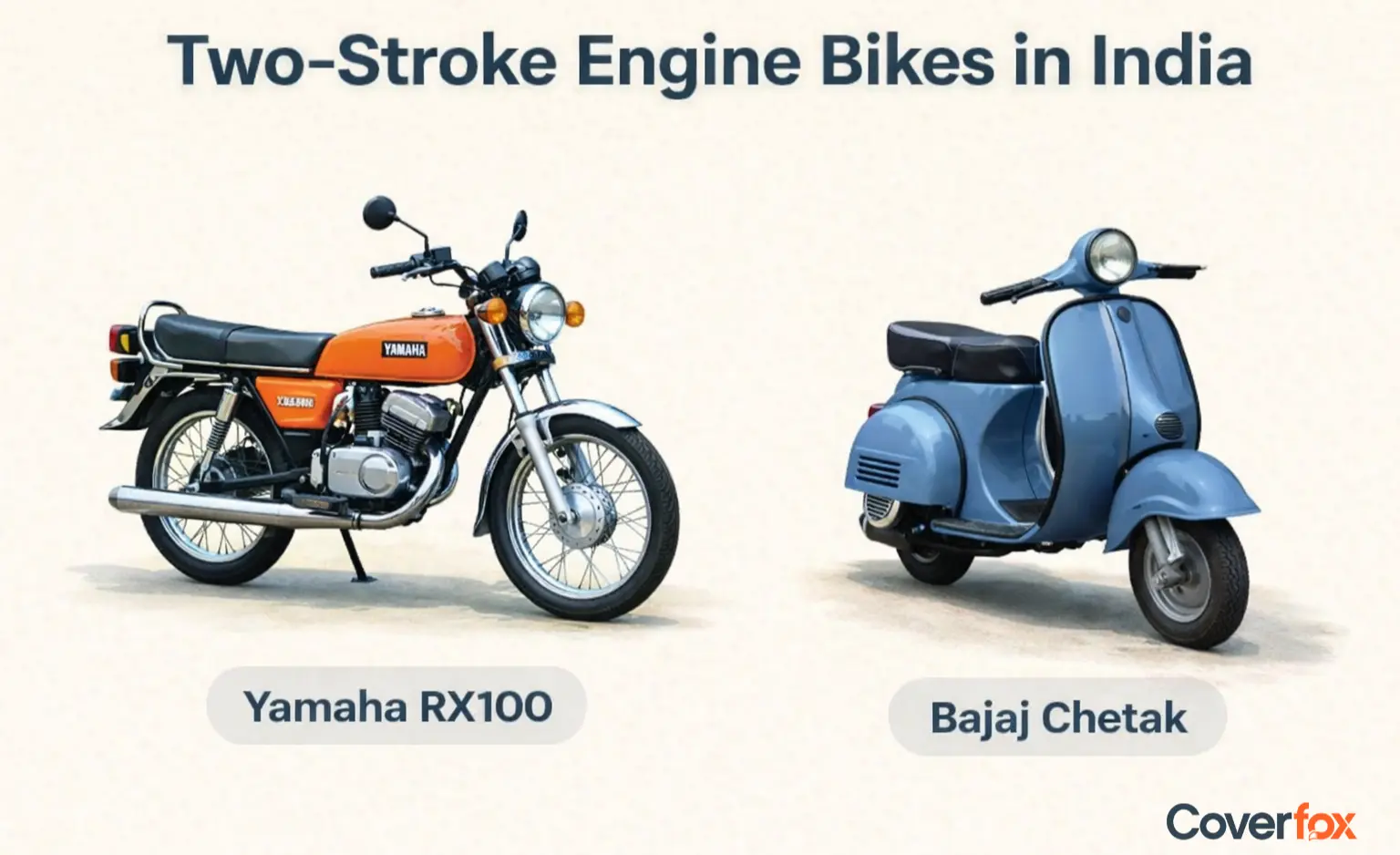
The guide below takes you through what exactly two-stroke bikes are, the best ones available in India, and their many pros and cons.
Overview of Two-Stroke Bikes in India
Two-stroke bikes in India are those bikes whose engine completes its cycle in two movements of the piston. Compared to four-stroke bikes, these have fewer parts, making them lighter and easier to maintain as well. While these bikes were initially very popular for their high power output and lightweight design, their use is now restricted in many regions to comply with emission laws.
Two-stroke motorcycles in India operate on a cycle that completes in only two piston strokes (one crankshaft revolution), compared to the four piston strokes (two revolutions) of a four-stroke engine.
While two-stroke engines often provide a strong power-to-weight ratio and a simpler mechanical layout (for example, fewer moving parts and no dedicated valve train), this doesn’t automatically mean they are unconditionally “lighter and easier to maintain.” In practice, two-strokes tend to require more frequent maintenance (for example, due to oil‐mix lubrication, higher wear rates, and more frequent rebuilds), and their advantages in weight or simplicity may be offset by higher ongoing running costs.
Disclaimer: While two-stroke engines are mechanically simpler, their actual maintenance needs can vary based on usage, riding conditions, and engine age. Always refer to the manufacturer’s guidelines or consult a certified mechanic for accurate maintenance requirements.
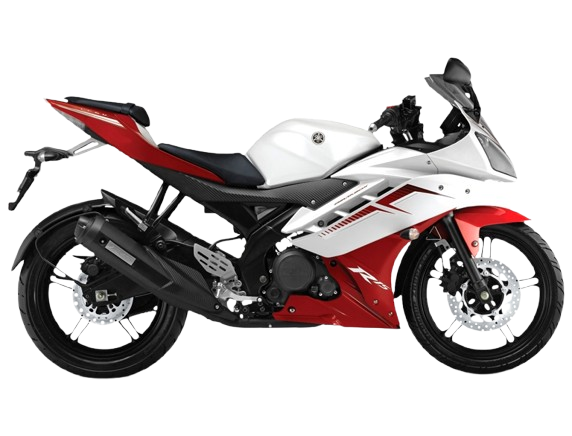
Top Two-Stroke Engine Bikes in India
Check out the various renowned 2-stroke bikes in India that hold a very strong motorcycle legacy on Indian roads. Two-stroke motorcycles once ruled Indian roads with their lightweight construction, aggressive power delivery, and unmistakable exhaust note. Below is a combined overview of some of the most iconic two-stroke bikes, along with their key specifications and historical significance.
Yamaha RX100
Suzuki Shogun
Yamaha RX135 / RX-Z
Yezdi 350
Yamaha RD350 (Rajdoot 350)
The Yamaha RX100 remains one of the most iconic two-stroke motorcycles ever sold in India. Powered by a 100 cc air-cooled engine, it produces around 11 bhp and 10.3 Nm of torque at 6,500 rpm. With a lightweight body of approximately 100 kg, the RX100 could reach a top speed of about 110 km/hr.
Launched in the mid-1980s and discontinued in 1996, the RX100 was admired for its affordability, reliability, and thrilling performance. It became especially popular among young riders during the 80s and 90s.
The Suzuki Shogun was known for its aggressive styling and race-inspired performance. It features a 108.2 cc air-cooled engine delivering roughly 14 bhp and 11.4 Nm of torque at 8,250 rpm. Weighing about 114 kg, the Shogun offered a top speed of around 105 km/hr.
Highly popular in the 1990s, the Shogun stood out for its quick acceleration and powerful output, often competing head-to-head with the Yamaha RX100 and RX135.
An evolution of the RX100, the Yamaha RX135 came equipped with a 135 cc air-cooled engine producing approximately 14 bhp and 12.25 Nm of torque at 7,000 rpm. With a kerb weight of about 116 kg, it could achieve a top speed of nearly 125 km/hr.
Available with four- and five-speed gearboxes, the RX135 catered to performance enthusiasts. Yamaha later introduced the sportier RX-Z variant, which further enhanced its appeal among speed lovers.
The Yezdi 350 was powered by a 350 cc liquid-cooled engine generating around 21 bhp and 29.62 Nm of torque at 6,000 rpm. It weighed approximately 194 kg and had a top speed of about 140 km/hr.
Although less powerful than the Yamaha RD350, the Yezdi 350 was known for its affordability, strong low-end torque, and comfortable city riding experience, making it popular among budget-conscious riders.
Launched in India in 1983 as the Rajdoot 350, the Yamaha RD350 was a performance legend. Its 350 cc air-cooled engine produced around 30.5 bhp at 6,750 rpm and 32.3 Nm of torque at 6,500 rpm (Indian version). With a weight of about 155 kg, it could reach a top speed of nearly 150 km/hr.
Despite lower fuel efficiency compared to smaller two-stroke bikes, the RD350 was celebrated for its blistering acceleration and high-speed stability. It was discontinued in 1989 but remains a cult classic.
Disclaimer: The specifications and performance figures listed above are sourced from third-party websites and may vary based on model year, condition, modifications, and regional regulations. The details provided are approximate and for general informational purposes only.
Benefits and Drawbacks of Two-Stroke Engine Bikes
Here are the various advantages and disadvantages of owning two-stroke bikes in India:
| Advantages of Two-Stroke Bikes | Disadvantages of Two-Stroke Bikes |
|---|---|
| Strong performance: Bikes like the Yamaha RD350 deliver quick acceleration, making them ideal for speed enthusiasts. | Environmental concerns: They emit higher levels of pollutants, which can lead to bans under stricter emission norms. |
| Lightweight and easy to maintain: A simpler engine design keeps the bike lighter and makes maintenance easier, with sharp handling. | Poor fuel economy: They consume more fuel, increasing running costs as petrol prices rise. |
| Affordable for riders: Models such as the Yamaha RX100 are budget-friendly and suitable for beginners and young riders. | Needs frequent servicing: Requires regular upkeep and more oil, which can raise long-term expenses. |
Why Two-Strokes Were Phased Out in India?
Two-stroke bikes didn’t disappear completely, but by the early 2000s, they had almost vanished from new-bike showrooms in India. Here are the reasons why:
Fuel Emissions and pollution
Fuel efficiency and noise
Regulation and phase-out
Starting from 2000, Bharat Stage emission rules became stricter with BS II and BS III, making it very hard for manufacturers to keep producing two-stroke bikes for usage on the road.
Four-stroke bikes became more popular because they offered better mileage and ran more quietly.
Most two-stroke models stopped being produced in the late 1990s and early 2000s, and soon after that, they disappeared from regular sales.
Thus, brands like Hero, Honda, and Bajaj switched to four-stroke engines because they were cleaner, more fuel-efficient, and fit the new norms.
How the Two-Stroke Restoration Culture Thrives Today?
Due to the nostalgia held by two-stroke bikes, many enthusiasts and mechanics have taken it upon themselves to rebuild these bikes. This has given rise to a popular movement of restoration in cities like Bangalore, Pune, Hyderabad, and Kolkata. However, here are certain key points that buyers need to take note of:
Availability of Parts
Places for Sourcing
Cost of Restoration
Checks for Authenticity
Support from the Community
Genuine parts are scarce, so many projects depend on aftermarket or reproduced spares.
Vintage clubs, online communities, and enthusiast groups are the best places to source what you need.
Full rebuilds and detailed bodywork can get expensive and may cost several lakhs.
Always confirm engine and frame numbers to ensure the bike is original.
Rallies, local clubs, and active WhatsApp groups help keep the two-stroke culture alive.
Cost Range of Restoration for Two Two-Stroke Bikes
A simple restoration of a common bike like the Yamaha RX100 can sometimes be completed for ₹40,000–50,000 if you already own a donor bike. In contrast to this, show-quality restorations with genuine chrome, premium paint, and complete engine overhauls can exceed ₹1.5–2 lakh, especially for rare models like the RD350. Restoration costs can vary widely based on bike condition, availability of parts, labour rates, and regional pricing. The figures mentioned are approximate estimates and may differ for each project. Actual prices and conditions may vary significantly depending on the bike’s model, city, mechanic's expertise, and the availability of genuine components.
Conclusion
Today, while 2-stroke bikes in India have become less common due to environmental concerns and regulatory bans, many models like the Yamaha RX100, Yezdi 350, and Suzuki Shogun remain cherished among enthusiasts. Their lightweight design, strong performance, and easy maintenance truly fortify their position as an iconic and nostalgic legacy on Indian roads.
It goes without saying that as a motorcycle owner, you should safeguard your bike with a valid two wheeler insurance policy. Head to Coverfox and insure your bike today with the right policy, assuring both financial safety and peace of mind!
Also Read About:
FAQs on Two Stroke Engine Bikes
What are 2-stroke bikes?
Two-stroke bike engines complete their power cycle in two piston movements, and are lighter with fewer parts, easier to maintain, and budget-friendly.
What are the advantages of 2-stroke bikes?
Two-stroke bikes offered strong performance with quick acceleration, lightweight and easy maintenance due to simpler engine design, and affordability, making them especially popular among beginners and young riders.
Are 2-stroke bikes in India banned?
While these bikes are not outrightly banned, they are being phased out from Indian roads in order to comply with stricter emission norms like Bharat Stage IV and VI.

 in Bikes.webp)
 in Bikes.webp)
.webp)
.webp)

