
A quickshifter is a motorcycle system that enables clutchless gear shifts by briefly cutting engine power. It allows faster, smoother acceleration and reduces rider effort. Available as upshift-only or bidirectional, it enhances performance and control, especially at higher speeds. However, it may be less effective at low RPMs and requires proper maintenance and calibration for optimal performance.
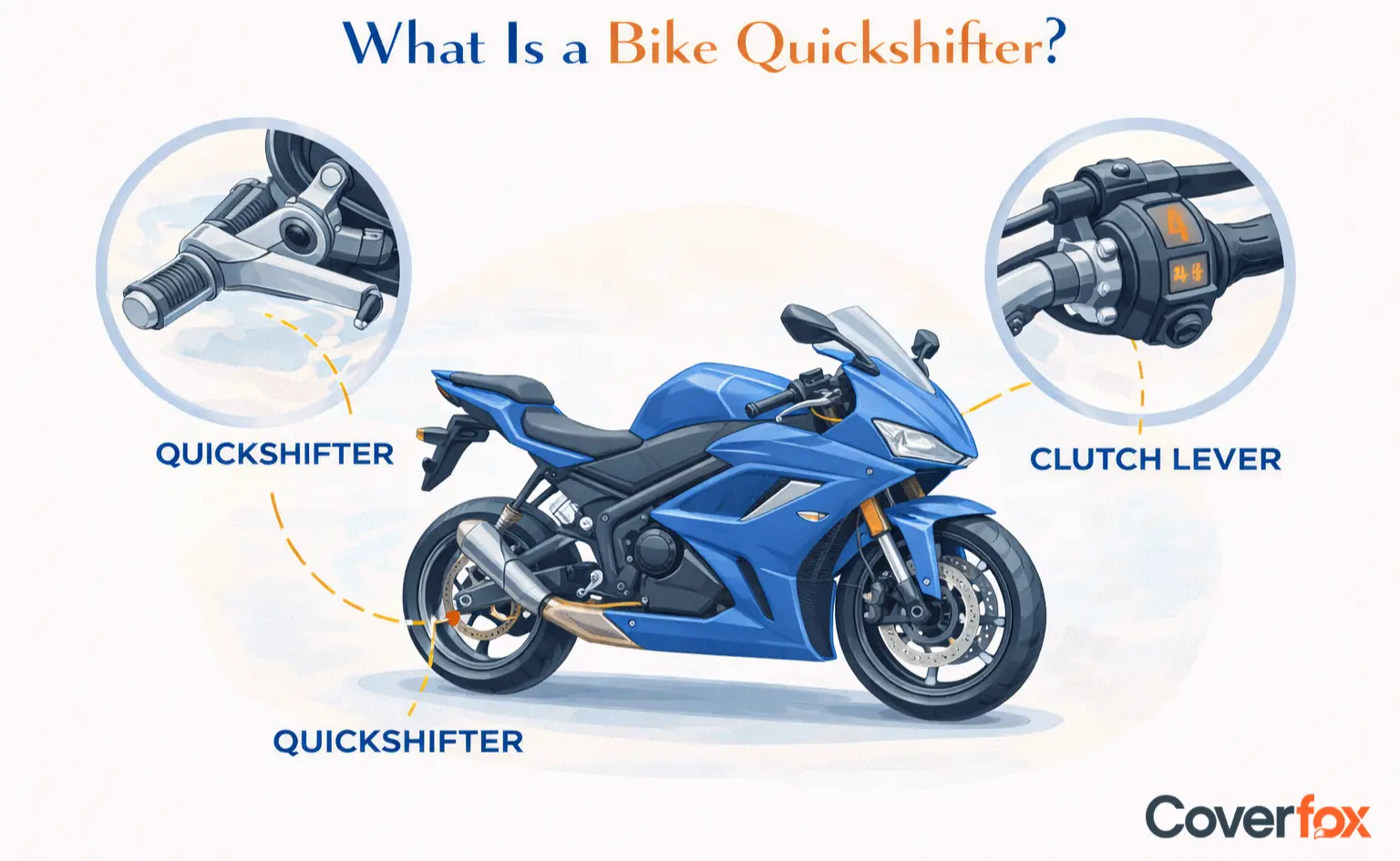
A quickshifter is a motorcycle technology that allows riders to change gears without using the clutch by momentarily cutting engine power. This guide explains how quickshifters work, their types, benefits, drawbacks, and maintenance tips. One of the most enjoyable aspects of riding a motorcycle is the smooth transition of gears.
Modern engineering has pushed this further, making gear shifting easier and faster. This innovation has led to the introduction of a quick shifter. This feature enables the motorcycle to keep moving while shifting gears. This technology, previously exclusive to high-performance racing bikes, is now a common sight on production motorcycles, changing the way every ride feels.
What Is a Quickshifter in Bikes?
A quickshifter is an electronic device that enables a motorcycle rider to shift gears without using the clutch or manually closing the throttle. It temporarily interrupts engine power during the gear-shifting process, reducing the load on the gearbox and allowing a smooth transition.
In short, it’s an automated version of the tiny pause the hand usually creates when releasing the throttle and the clutch, except it does it quicker and more accurately. This is why quickshifters are preferred in sport-oriented bikes.
Why Do Modern Motorcycles Use Quickshifters?
The traditional gear-shifting process has several steps. It includes closing the throttle, pressing the clutch, shifting the gear, and reopening the throttle. Even though this process is reliable, it takes time and momentarily interrupts the acceleration process. The need for a quickshifter is based on the following factors:
Need for faster acceleration
Enhanced power transmission during riding
Reduced fatigue during city or long rides
Enhanced control during aggressive corner exits
How Does a Quickshifter Function?
A quickshifter uses a sensor, which is commonly fitted to the gear lever, to detect pressure as the rider shifts gears. As soon as the pressure is detected, the quickshifter turns off the ignition or fuel supply for a few milliseconds.
The sudden release of power makes it easier to change gears without using the clutch. In high-performance quick shifters, a bidirectional quick shifter is used to manage the blipping of the throttle for smooth braking and stability.
Types of Quickshifters in Bikes
Quickshifters differ from one another based on their functionality and complexity. The types of quickshifters are:
Upshift-Only Quickshifter
Bidirectional Quickshifter
The upshift-only quickshifter is the basic form of a quickshifter for motorcycles, exclusively used for clutchless upshifting. This quickshifter system turns off the ignition or fuel supply as soon as upward pressure is applied to the gear lever, allowing the next gear to fall into place smoothly. Upshift-only quickshifters in bikes are very affordable and reliable, perfect for riders who are looking for a performance upgrade without the complexity, especially when riding at high speeds.
A bidirectional quick shifter is an advanced system that allows the rider to shift gears in both directions without using the clutch. In the downshift feature, it automatically blips the throttle to coordinate the engine speed with the lower gear. This feature is commonly employed in sport bikes, which require a high level of control during riding.
Advantages and Disadvantages of a Quickshifter in Bikes
| Advantages of a Quickshifter | Disadvantages of a Quickshifter |
|---|---|
| Enables fast gear shifting, allowing smoother and quicker acceleration. | Less effective at low RPM, where traditional clutch-based shifting works better. |
| Reduces the need to use the clutch, helping decrease rider fatigue during long rides or heavy traffic. | Higher cost, as motorcycles with factory quickshifters or quality aftermarket systems are usually more expensive. |
| Provides smoother power delivery, improving control during high-speed overtaking or corner exits. | Can produce harsh or jerky shifts if the system is not properly calibrated or used incorrectly. |
| Enhances the overall riding dynamics, giving a sportier and more performance-oriented riding experience. | Requires additional maintenance, including sensor checks, calibration, and occasional software updates. |
| Minimizes shift timing errors compared to manual throttle and clutch coordination. | Learning curve for new riders, as proper throttle and gear lever input affects shift quality. |
Maintenance Tips for Quickshifters
A quickshifter is dependent on precise electronic signals and mechanical action, so even minor issues can affect the operation of gear shifting. Thorough and regular maintenance and checks are a must.
Make sure the gear shift linkage is always clean, well-aligned, and tight, because any looseness, no matter how small, can cause missed or jarring shifts.
During servicing, you should check the quickshifter components and wiring, as any of these: mud, moisture, or loose fitting can result in signal transmission interference.
Occasionally, give the shift mechanism an oil bath, but be careful not to overdo it.
Do not make clutchless shifts at low RPMs, as it can wear down the system quickly.
Conclusion
A quickshifter is more than a performance accessory; it’s a technology that enhances the riding experience. It bridges racing innovation with everyday riding comfort, offering smoother, faster gear shifts and better control. Whether you prioritize performance, convenience, or overall riding enjoyment, understanding quickshifters helps you make an informed choice. Additionally, having two wheeler insurance ensures your bike is protected against accidents, theft, or damage while enjoying these advanced features.
Also Read:
Disclaimer:The information provided in this article is for educational and informational purposes only. Motorcycle technologies and features may vary depending on the manufacturer, model, and specifications of the bike. Riders should refer to their vehicle manual or consult a certified mechanic before installing or using aftermarket components such as quickshifters. This article does not constitute mechanical, technical, or insurance advice.
* Discounts on bike insurance premiums are subject to the insurer and may vary across different insurers. Not all insurers provide discounts for clean riding records; check your policy carefully.
FAQs on Quickshifter in Bike
What is the purpose of a quickshifter in a bike?
A quickshifter in a bike is a mechanism that allows the rider to shift gears without using the clutch. It works by momentarily cutting off the engine power.
Can I fit a quickshifter to my bike?
Yes, you can install a quickshifter on your bike. However, it depends on the engine, ECU, and gearbox type of your bike.
Does a quickshifter damage the gearbox?
A quickshifter does not damage the gearbox. In fact, it can relieve stress on the gearbox during gear shifting.
Can quickshifters be used in all gears?
Quickshifters work best in the mid to high gears and higher RPMs. They may not work well in low gear and at low speeds.




 in Bikes.webp)

