Winter riding becomes challenging due to cold temperatures, fog, low traction, and reduced visibility, making preparation essential for safety. Riders need the right gear, steady control, and careful adjustments to handle slippery roads and colder engine performance. Regular checks of tyres, brakes, lights, and fluids help prevent breakdowns and slips during winter rides. With proper precautions and maintenance, riding in winter can remain safe, comfortable, and reliable.
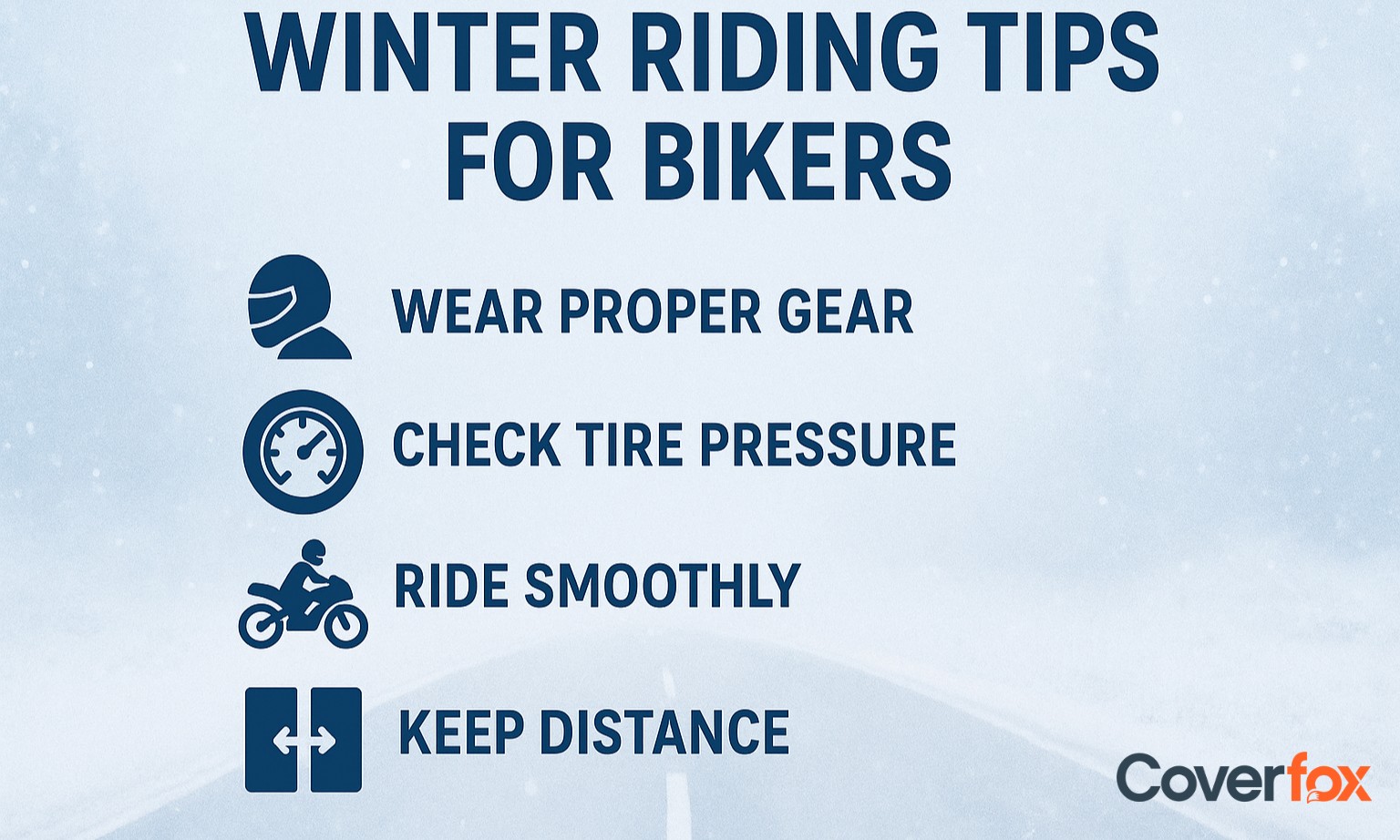
Winter riding is exciting but also demanding, thanks to cold temperatures, fog, slippery roads, reduced traction, and low visibility. These conditions make every ride a test of awareness, preparation, and control. Winter riding requires the right gear, timely bike maintenance, smart safety techniques, improved visibility habits, and a few essential precautions.
In this guide, we’ll share 9 winter riding tips that help you stay safe on the road, avoid unnecessary bike insurance claims, and enjoy your winter rides with confidence.
Why Does Winter Riding Preparation Matter?
Winter riding is very different from other seasons because cold temperatures affect both the rider and the motorcycle. Engine fluids become thicker, batteries lose performance, tyres harden, and braking distances increase — all of which reduce overall control. At the same time, riders face fogged visors, numb hands, and lower visibility due to fog, snow, and frost, making every ride more unpredictable.
Roads also become more hazardous as ice patches, slush, and wet surfaces reduce traction, while the salt and sand used for de-icing can corrode metal parts and damage your bike. These combined factors increase the risk of accidents, making preparation and caution essential for safe winter riding.
9 Winter Riding Tips for Two-Wheeler Owners
These 9 winter riding tips will ensure that your winter bike rides are smooth and stress-free. These include tips involving maintenance of the bike, riding tips, and winter preparation tips for your bike:
1. Check Winter Weather & Road Conditions Before Riding
Winter roads can be unpredictable, with snow, ice, and slush making it harder to maintain control of your bike. Always assess road conditions and adjust your riding accordingly—avoid routes that haven’t been cleared or salted, as they can be extremely slippery. Stick to main roads that are regularly maintained and skip back roads or shortcuts that may hide ice patches.
Before heading out, check the temperature, fog levels, ice warnings, wind chill, and precipitation forecast. Many weather apps now highlight frost-prone areas, black-ice risk zones, and visibility scores—use these alerts to plan safer routes. Avoid riding during freezing rain, heavy fog, or snowfall. A quick pre-ride weather check can prevent breakdowns, slips, and serious accidents.
2. Essential Winter Riding Gear & Layering Techniques
Wearing the right gear is crucial for winter riding, and proper layering keeps you warm, dry, and comfortable. Start with thermal base layers that wick moisture, add insulating mid-layers for warmth, and finish with a waterproof, windproof outer shell to shield you from snow and icy winds. Choose insulated gloves, waterproof boots, and balaclavas or neck warmers to protect your extremities. Breathable fabrics that maintain mobility and reflective accents on jackets or trousers are essential for visibility in foggy conditions.
For added safety and clarity on the road, use anti-fog helmets, pinlock visors, and snow-rated riding gear designed for extreme weather. These features prevent visor fogging, improve visibility, and ensure comfort, allowing you to maintain better control throughout your winter ride. Keeping warm, dry, and unrestricted directly translates into safer and more confident riding.
3. Heated Winter Gear & Accessories for Maximum Comfort
While riding safely is a priority, having comfort while riding is also essential. Having heated grips, gloves, jackets or vests, seat warmers ensure optimum temperature for maximum comfort.
You can also have windshields, handguards and bar muffs for extended protection against the cold. Heated accessories are not only beneficial for comfort, but also for blood circulation, preventing numbness and catching a cold. Just ensure that these accessories do not overload your bike batteries and refer to the manufacturer's manual for reference.
4. Cold-Weather Bike Maintenance & Pre-Ride Inspection
Winter affects how your motorcycle performs, so a quick pre-ride inspection is essential. Check your battery level, coolant, winter-grade engine oil, and brake fluid, as cold temperatures thicken fluids and reduce proper lubrication.
Inspect the chain lubrication, clutch cables, and throttle response to ensure everything moves smoothly despite the cold. Make sure your brake pads and rotors are in good condition and verify that the suspension behaves normally, as it can stiffen in low temperatures.
Electrical systems also need extra attention during winter. Confirm that all lights—headlight, tail-light, indicators, and brake lights—are functioning properly for maximum visibility in fog and low light. A few minutes spent checking these basics helps prevent mid-ride issues, improves control on slippery roads, and keeps your bike reliable throughout the winter season.
5. Tyre Safety in Winter - Pressure, Grip & Traction
Tyres get stiffened up in cold weather, reducing traction, so check tread depth regularly and avoid riding on worn-out tyres. Slightly lowering tyre pressure (within manufacturer limits) can improve grip, but allow extra warm-up time as the rubber needs longer to heat up.
Consider cold-weather tyre compounds for better performance, and be cautious around painted markings, metal surfaces, potholes, and frost patches, which become extremely slippery in winter.
6. Safe Winter Riding Techniques for Low-Traction Roads
Ride with smooth throttle inputs, gentle braking, and avoid sudden lean angles to prevent skidding on low-traction surfaces. Maintain lower speeds, take wider lines through corners, and avoid cruise control or aggressive downshifting, as both reduce control on slippery roads.
Always scan ahead, anticipate that other vehicles may slow earlier, and keep both hands firmly on the handlebars. Staying calm and riding deliberately helps you maintain stability and react safely to changing winter conditions.
7. Visibility Tips for Winter Riding (Fog, Low Light, Glare)
Fog is one of the major concerns of bikers during winter mornings. Use low-beam headlights, LED lights, and anti-fog visor inserts to maintain clear vision in foggy or low-light conditions, as high beams create glare and reduce visibility. Wear bright-coloured jackets, reflective gear, and helmet stickers so other road users can spot you easily.
In fog-prone areas, maintain consistent lighting, position yourself deliberately within your lane, and ride at a pace that matches visibility levels. Always ensure your tail-lights and indicators are clean—mud, moisture, and slush can quickly cover them and make you harder to see on winter roads.
8. Quick Fixes & On-Road Adjustments During Winter Rides
While riding, the rider can have some quick fixes for cold hands or fogged-up visors. Heating up near the bike vents (only if it is safe), using pocket warmers, or even rubbing your hands for temporary warmth are excellent quick fixes. Also, using anti-fog sprays on visors, lowering tyre pressure for long rides, is also a neat trick to ensure smoother winter rides.
9. Post-Ride Winter Bike Care & Storage Tips
After every winter ride, wash off road salt, mud, and slush to prevent corrosion, then re-lubricate the chain and check your brakes for any ice buildup. Dry your riding gear thoroughly to prevent moisture damage, and if your bike will sit idle, keep a battery tender connected to maintain a charge.
For longer winter breaks, use a breathable motorcycle cover, store the bike indoors when possible, and add a fuel stabiliser to keep the fuel system healthy until the next ride.
Conclusion - Staying Safe While Riding in Winter
Winter riding can be both safe and enjoyable when you prepare well, wear the right gear, and stay consistent with bike maintenance. By understanding weather conditions, improving visibility, adjusting your riding techniques, and taking extra precautions, you significantly reduce the risks that come with cold, foggy, and low-traction roads.
Always prioritise safety, stay alert, and avoid riding in extreme conditions such as freezing rain or heavy fog. Ultimately, being prepared, cautious, and well-equipped is the key to riding confidently through winter and enjoying every journey.
Read More:
What is the minimum safe temperature to ride a bike in winter?
Most riders avoid riding below 0°C, as traction drops sharply and components stiffen. Anything between 0–5°C requires extreme caution.
Which tyres are best for winter riding?
Tyres with softer, cold-weather compounds and deeper tread patterns offer better grip. Avoid worn-out tyres at all costs.
How do I stop my helmet visor from fogging?
Use anti-fog inserts or pinlock visors, keep vents open, and avoid breathing directly onto the visor.
Should I warm up my bike before winter rides?
Yes—let the engine idle for 30-60 seconds so oil circulates, then ride gently for the first few kilometres.
What winter riding gear is absolutely essential?
Thermal layers, windproof outer shell, insulated gloves, waterproof boots, balaclava/neck warmer, and anti-fog helmet.
How does cold weather affect motorcycle braking?
Cold hardens tyres and thickens fluids, increasing braking distance. Brakes may also feel less responsive until warmed up.
Should I lower tyre pressure for winter rides?
Slightly lowering PSI within safe limits can enhance grip, but never go below the manufacturer’s recommended range.
Can I ride when there is light snow on the road?
It’s possible but risky—traction is unpredictable. Stick to cleared, salted roads and avoid riding during active snowfall.
Are heated grips safe for long-distance rides?
Yes, they are safe and help maintain consistent throttle control. Just ensure your electrical system can handle them.
How do I improve visibility in winter fog?
Use low beams, reflective gear, LED lights, and anti-fog visor inserts. Keep tail-lights and indicators clean.
Why does my bike struggle to start in winter?
Cold temperatures reduce battery efficiency and thicken engine oil, making the starter work harder.
How do I avoid slipping on icy or wet roads?
Use smooth throttle inputs, gentle braking, reduced lean angles, and ride at lower speeds. Avoid painted roads, metal surfaces, and frost patches.
How often should I service my bike in winter?
Every 1–2 months, or sooner if you ride frequently—winter accelerates wear on batteries, fluids, and chains.
What emergency items should I carry during winter rides?
A torch, thermal blanket, small tool kit, tyre inflator, power bank, first-aid kit, and water/snacks for long rides.