
Many Indian riders notice the terms SOHC and DOHC in bike brochures, but the meaning often stays unclear until explained in simple words. While both systems may look similar in diagrams, the difference becomes noticeable once the engine runs affecting noise, power delivery, and how the engine breathes.
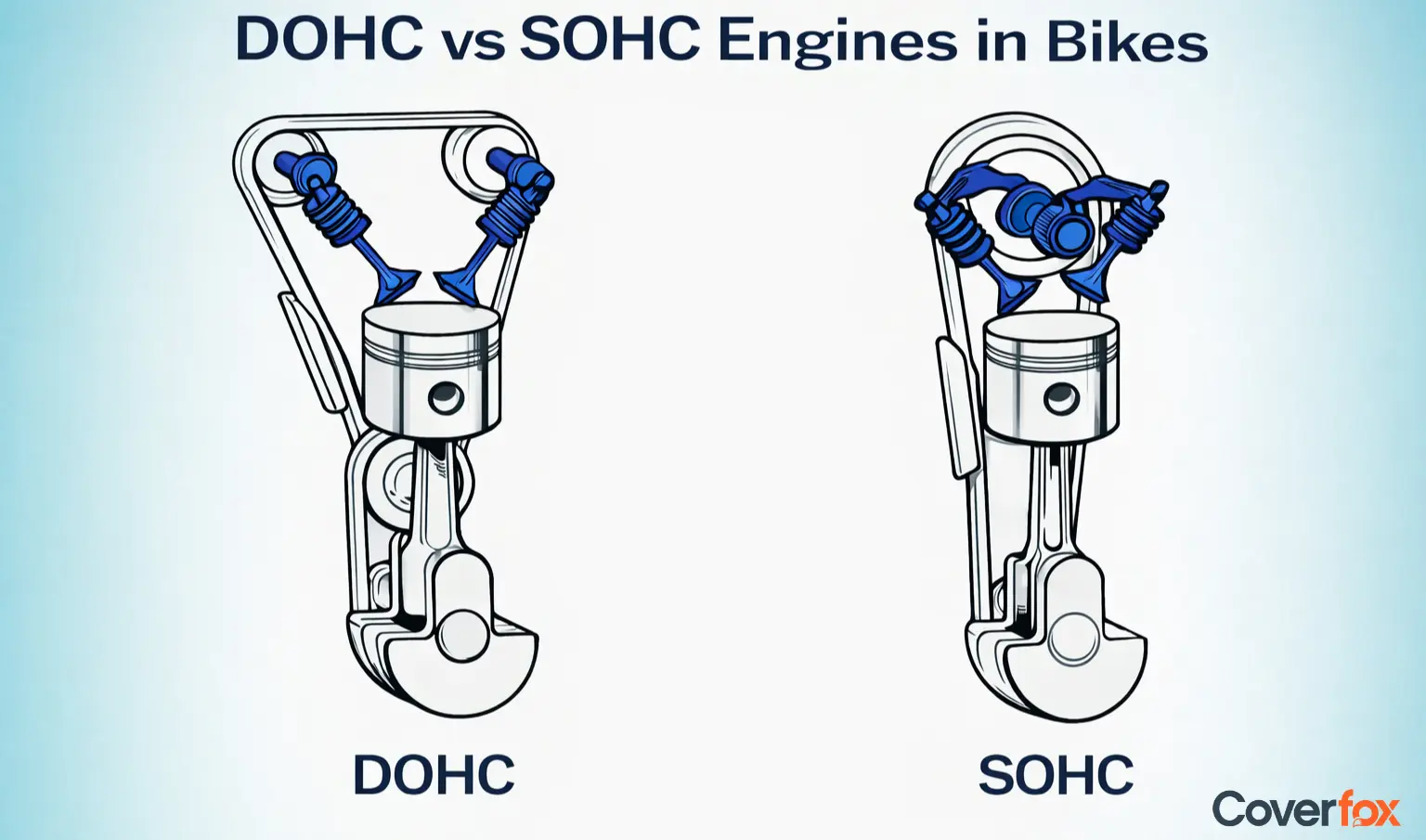
The SOHC vs DOHC debate matters for bike buyers because engine design directly influences fuel efficiency, maintenance cost, long-term durability, and riding performance. Some commuter and entry-level bikes still use SOHC layouts, while most newer and performance-oriented motorcycles rely on DOHC systems.
Service centres follow manufacturer-specified procedures for each engine type, and even bike insurance assessments during repairs depend on documented engine designs rather than assumptions.
What is SOHC?
SOHC stands for Single Overhead Camshaft. In this design, one camshaft sits above the cylinder head and controls both intake and exhaust valves. Since all valve movement depends on a single shaft, the system remains compact, lightweight, and mechanically simple.
SOHC engines work well in bikes that do not require very high RPM performance. Many commuter motorcycles and older models still use SOHC because the layout suits their cost, size, and everyday riding needs.
Advantages of SOHC Engines in Bikes
SOHC engines have remained popular for decades due to several practical benefits:
Fewer moving parts compared to complex valve systems
Lower manufacturing and servicing costs
Compact design that fits well in small-capacity engines
Good fuel efficiency during regular city riding
These factors make SOHC ideal for commuter bikes focused on affordability and mileage.
Disadvantages of SOHC Engines in Bikes
Despite their simplicity, SOHC engines have limitations:
Limited valve timing flexibility due to a single camshaft
Lower performance at high RPM
Restricted airflow at higher engine speeds
Because of these limits, many modern motorcycles move away from SOHC when higher performance is expected.
What is DOHC?
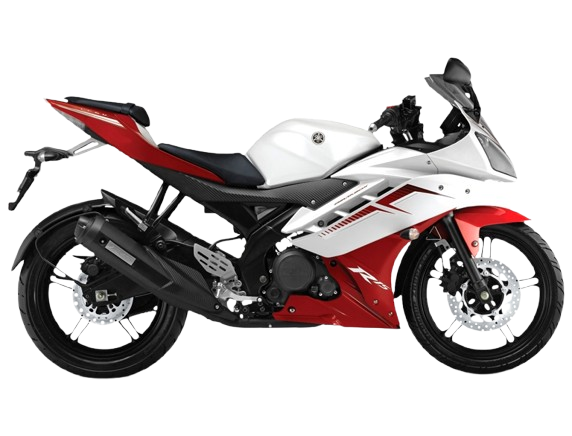
DOHC stands for Double Overhead Camshaft. This setup uses two camshafts mounted on top of the cylinder head one for intake valves and one for exhaust valves. This separation allows precise valve timing and usually supports four valves per cylinder.
The result is better airflow, improved combustion, and smoother engine operation. Today, many mid-range and performance motorcycles use DOHC engines as standard.
Advantages of DOHC Engines in Bikes
DOHC engines bring several performance-focused benefits:
Higher power output at high RPM
Improved airflow with separate intake and exhaust control
Smoother acceleration and better high-speed stability
Better support for modern emission standards
Greater flexibility for tuning and refinement
This design handles performance demands efficiently without excessive strain on the engine.
Disadvantages of DOHC Engines in Bikes
DOHC engines also come with trade-offs:
More components increase manufacturing cost
Repairs and servicing require more labour
Slightly heavier and larger cylinder head
Even with these drawbacks, the Indian two-wheeler market shows a steady shift toward DOHC engines, especially in bikes above 150cc. This shift is often highlighted in manufacturer launches and can influence repair costs and, in some cases, bike insurance considerations.
SOHC vs DOHC: Key Differences in Bikes
A direct look at SOHC vs. DOHC engine differences helps explain why some engines feel “tight,” and others feel freer at high RPM. SOHC depends on one camshaft. DOHC uses two. That one change spreads into breathing, timing, and fuel patterns. Some engines use a simple setup, while others rely on DOHC for smoother performance. The 2023 J.D. Power India Two Wheeler Study noted that many buyers weigh engine behaviour during selection, along with maintenance needs and bike insurance planning.
Comparison Table – SOHC vs DOHC
The table shows SOHC fits basic driving needs, while DOHC suits higher performance use.
| Feature | SOHC | DOHC |
|---|---|---|
| Camshafts | One camshaft | Two camshafts |
| Valve Control | Both intake and exhaust valves controlled by a single camshaft | Intake and exhaust valves are controlled separately |
| Power Output | Adequate for commuter bikes | Higher power output at high RPM |
| Fuel Pattern | Steady performance in small engines | Can deliver strong performance with good tuning |
| Cost | Lower | Higher |
| Size | Compact design | Larger cylinder head section |
| Common Use | Entry-level and older bike models | Mid-range and performance bikes |
This table shows that each design carries its own aim—SOHC stays basic and light, and DOHC focuses on performance and cleaner burn.
Which Is Better: SOHC or DOHC?
The answer depends more on what the driver expects than on a single best option. SOHC stays simple, light, and affordable, so it fits small hatchbacks and basic commuter bikes. DOHC engines deliver stronger power, smoother response, and a steadier high-RPM range. Recent sales data from Indian automotive segments show that most new petrol cars now rely on DOHC layouts because manufacturers need cleaner combustion and better control of valve timing to meet evolving emission norms. This shift also reflects buyer demand for refinement, especially in the compact and mid-size categories.
Why Does This Matters for Indian Bike Buyers?
Indian roads vary, and that changes what people need from their engines. Industry reports indicate that the DOHC share in new passenger vehicles continues to rise each year, mainly because it supports BS6 tuning. SOHC still finds room in lower-cost vehicles, but its presence keeps shrinking as brands update their platforms.
SOHC works well for low-speed city commuting
DOHC supports modern BS6 emission requirements more easily
Most newly launched bikes above 150cc now use DOHC
Resale value often favours DOHC-equipped motorcycles
DOHC engines may cost slightly more to service
These factors also influence workshop bills and sometimes minor differences in bike insurance premiums.
The pattern stays similar for bikes. Budget models still use SOHC, while mid-range and performance bikes now run DOHC. Market releases from major two-wheeler brands show higher adoption of DOHC in engines above 150cc because riders expect stronger pickup and cleaner combustion. These variables may influence spare part brackets in workshop bills and sometimes even small differences in bike insurance.
Conclusion
When comparing SOHC vs. DOHC, both systems do the same overall job, but their behaviour changes once the engine starts. The SOHC layout feels simple and keeps costs low. It works well for basic cars and bikes where power needs stay modest. DOHC runs cleaner and stronger, giving the engine room to breathe better. That is why most new cars in India now include DOHC as standard. SOHC still appears in entry-level models, though less often with each passing year.
Also Read:
Disclaimer: The information provided in this article on SOHC and DOHC engines is meant for general awareness only. Engine designs, performance characteristics, emission standards, and vehicle specifications may vary across manufacturers and model years. Readers should verify technical details directly with the vehicle manufacturer or authorised service centres before making any purchase or maintenance decisions.
FAQs on SOHC vs DOHC
What does SOHC mean in a bike engine?
It means Single Overhead Camshaft. One cam controls intake and exhaust valves.
What does DOHC mean in a bike engine?
It means Double Overhead Camshaft. One cam manages intake, and the other handles exhaust.
How to know if it's SOHC or DOHC?
It is often written on the engine cover. DOHC engines usually look wider due to two cams.
Are SOHC engines still used in India?
Yes, mainly in older models or a few basic hatchbacks and bikes.
Which gives better mileage: SOHC or DOHC?
SOHC often gives predictable mileage. DOHC can also deliver decent mileage if tuned well.

 in Bikes.webp)
 in Bikes.webp)

.webp)
.webp)

