The luxury automotive market relies on engineering accuracy, advanced safety features, and strong long-term performance. BMW and Mercedes-Benz lead this space, and their differences become clearer through verified data. BMW emphasises driving engagement, as shown in manufacturer figures, such as the BMW 330i reaching 0 to 60 mph in about 5.6 seconds and the X3 30i averaging 23 to 29 mpg, according to EPA ratings.
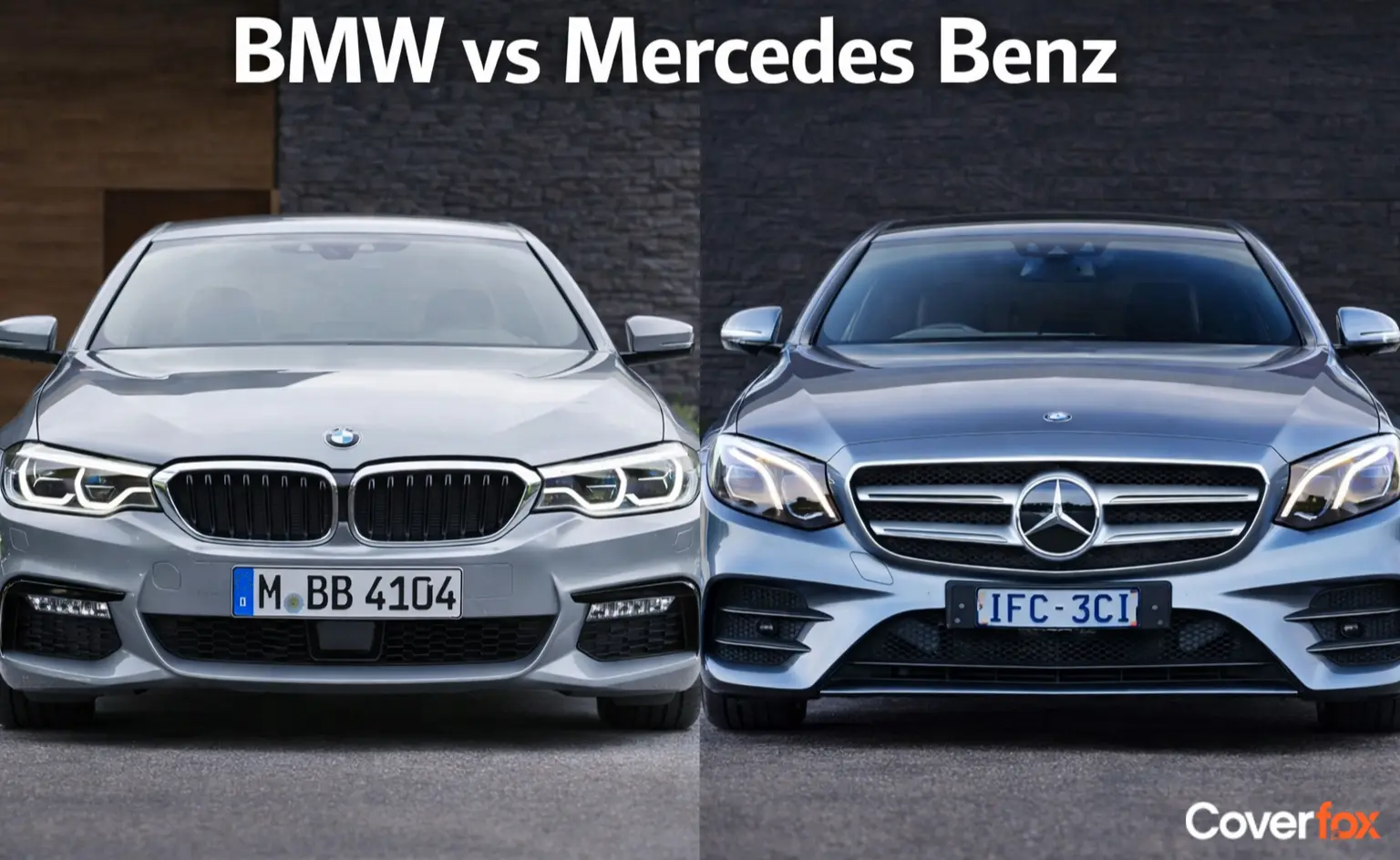
Mercedes prioritises comfort, with the C300 achieving 0–60 mph in roughly 6.0 seconds and the GLC 300 returning about 22–29 mpg. Both brands hold strong IIHS and NHTSA safety scores, and reliability studies from J.D. Power and Consumer Reports place them in competitive long-term rankings.
What is the History of BMW and Mercedes?
BMW originated in Germany as an aircraft engine manufacturer before moving into automobiles, where models like the 3 Series and 5 Series became known for balanced weight distribution close to 50:50 in many generations.
Mercedes-Benz, one of the oldest carmakers, built its identity around safety advances, including the first production crumple zone in 1959 and early ABS integration in the S Class in 1978.
The long BMW–Mercedes rivalry has shaped modern engineering, influencing measurable categories such as acceleration times, braking performance and safety ratings that continue to define both brands in global markets.

BMW vs Mercedes Benz Car Brands - Head to Head
Both manufacturers offer hatchbacks, sedans, coupes, SUVs, and electric models. Industry tests support BMW's development of cars with stronger driver engagement, highlighting steering response and chassis balance. Mercedes is consistently noted in automotive reviews for its smoother ride quality and cabin comfort. These patterns come from long-term reporting within the automotive press rather than assumptions about customer expectations. Together, the BMW and Mercedes model ranges cover daily commuting, long-distance touring, and premium transport needs across multiple segments.
Comfort and Luxury
Reliability and Safety
Design and Style
Technology and Innovation
Mercedes-Benz models typically prioritise comfort through soft suspension tuning, quieter cabins, and interiors designed for a premium tactile experience. BMW employs firmer suspension and driver-focused ergonomics aimed at delivering responsive control. Evaluating which is best, BMW or Mercedes, depends on whether driving pleasure or cabin comfort is the primary requirement.
Both brands include comprehensive safety suites with technologies such as collision prevention, lane assistance systems, adaptive braking, and stability controls. Mercedes models like the E-Class often hold five-star Euro NCAP ratings, and BMW models such as the 5 Series show similar scores. Mercedes is known for long-term safety development, while BMW focuses on sharp handling and quick driver assistance responses.
Reliability shifts by model and upkeep. Most owners service these cars every ten to twelve thousand kilometres or once a year. Routine servicing usually ranges from eight hundred to sixteen hundred dollars, depending on the model. Regular detailing, scheduled servicing, and suitable luxury car insurance support long-term performance and component life.
BMW designs typically feature sports-inspired lines, aerodynamic shapes, and a bold presence focused on agility. Mercedes-Benz has elegant contours, refined proportions, and understated luxury. The visual distinction plays a significant role in customer preference, reflecting individual choices between modern athletic aesthetics and traditional premium styling.
Both manufacturers incorporate advanced digital systems, connected technology, and enhanced infotainment interfaces. BMW's iDrive system emphasises driver interaction, while Mercedes's MBUX prioritises intuitive voice controls and seamless cabin integration. Electric mobility advancements continue in both brands through hybrid and fully electric options under their respective EV portfolios.
BMW vs Mercedes - Performance & Mileage Comparison
BMW typically focuses on high-performance engines with responsive steering, offering sharper acceleration, with many core models reaching 0 to 100 km/h in roughly 5 to 6 seconds. Mercedes balances smooth power delivery with refined suspension for consistent highway performance, and several AMG units reach similar times or drop to nearly 4 seconds.
The comparison depends on the model because certain AMG variants outperform comparable BMW units, while BMW M-series cars often record quicker lap times or faster mid-range pull. Mileage for both brands varies across models; smaller engines generally deliver better efficiency, while high-performance segments offer moderate consumption.
Entry-Level Model Prices of Benz & BMW
Entry-level BMW and Mercedes models in India typically fall within similar price brackets. Variations arise based on segments, features, and imported components; for example, the BMW 2 Series starts around ₹43 lakh, and the Mercedes A-Class was previously positioned in a comparable range. Factors like engine type, trim level, and added technology features influence these shifts.
The cost of ownership, including servicing and insurance, should be assessed alongside the initial purchase price. Comprehensive protection through appropriate luxury car insurance supports the maintenance of these vehicles.
Ideal Buyer for BMW & Mercedes
BMW appeals to drivers seeking dynamic performance, sporty build characteristics, and a more engaging driving experience. Current 2025 line-ups, including stronger mild-hybrid units and wider EV choices such as the latest i4 and iX updates, reinforce that positioning. Mercedes-Benz suits individuals by prioritising luxury, comfort, and a relaxed riding profile, which continues across its 2025 models like the newest C-Class facelift and the EQE range.
In India, both brands carry revised price bands for the 2025 cycle, with BMW’s entry points often sitting slightly lower while Mercedes holds stronger resale in chauffeur-driven segments. The decision between BMW and Mercedes often reflects the buyer's lifestyle, travel patterns, and expectations for a luxury car.
Conclusion
The analysis of BMW vs Mercedes reveals that both brands offer high engineering standards and premium features, yet target slightly different types of consumers. BMW emphasises performance and handling finesse, while Mercedes highlights comfort, refinement, and interior luxury. Identifying which is best, BMW or Mercedes, depends on personal priorities related to driving comfort, long-term use, and maintenance expectations.
Selecting between BMW and Mercedes requires an assessment of performance needs, budgets, maintenance patterns, and individual driving preferences. Both brands are leaders in global luxury segments, yet they offer different strengths to prospective buyers. Whether choosing sporty engineering or comfort-centred design, car insurance remains an essential component of ownership.
Also Read:
FAQs on BMW vs. Mercedes
BMW or Mercedes: which is better?
Both offer premium engineering; BMW focuses on performance, while Mercedes prioritises comfort.
Which manufacturer makes a longer-lasting car, BMW or Mercedes?
Longevity depends on maintenance, service quality, and usage habits; both can last a long time with proper care.
How often should a luxury car be detailed in India?
Detailing every 4–6 months supports paint protection and interior maintenance in Indian conditions.
Does BMW or Mercedes last longer?
Both can achieve long service life when serviced regularly and maintained according to manufacturer guidelines.
Which manufacturer is more luxurious, BMW or Mercedes?
Mercedes is widely associated with classic luxury, while BMW focuses more on sporty premium design.
BMW vs Mercedes: which has more speed?
Performance varies by model; BMW often tunes engines for higher acceleration, while Mercedes offers balanced power.
Which car is high maintenance, BMW or Mercedes?
Both require higher maintenance than standard vehicles; costs depend on models, parts availability, and usage.
Which is cheaper to insure, a BMW or a Mercedes?
Insurance costs vary by model and risk profile; smaller-engine models often carry lower premiums.
Which is more economical, BMW or Mercedes?
Fuel economy differs across models; smaller BMW engines may offer better efficiency, while Mercedes focuses on steady long-distance composure.