India’s adoption of the Bharat Stage emission standards marks a major shift in environmental policy and automotive manufacturing. The transition to Bharat Stage VI, popularly referred to as BS6, represents one of the most stringent emission frameworks introduced to reduce vehicular pollution and improve fuel quality nationwide.
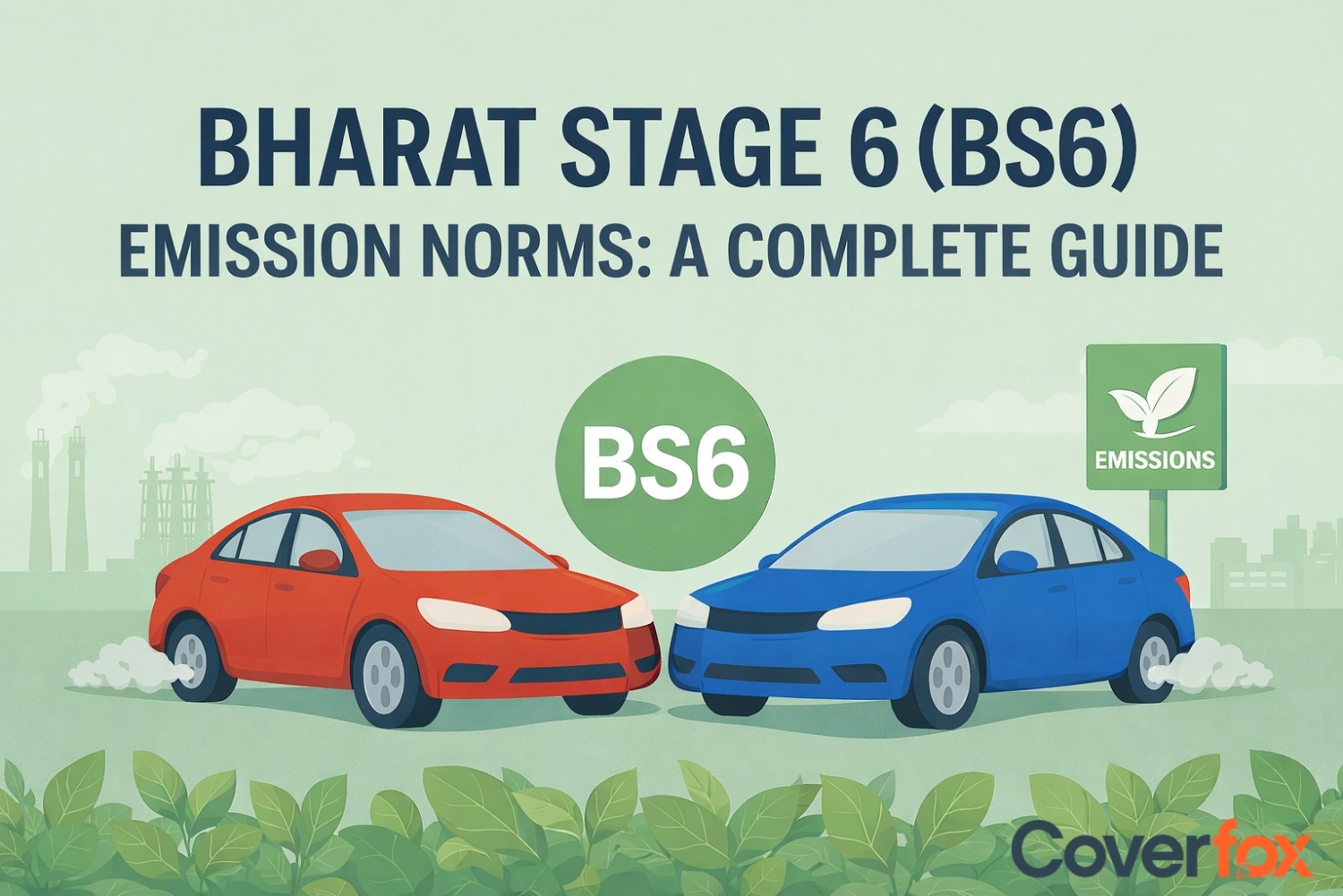
Understanding the structure, benefits, and compliance requirements is essential for vehicle owners, manufacturers, and industry observers alike.
What Are BS6 Emission Norms?
The new emission regulations limit pollutants released from vehicle exhaust systems. These norms significantly reduce nitrogen oxides (NOx), hydrocarbons, particulate matter (PM), and sulphur content in fuels. The BS6 Emission Norms replace the earlier BS4 standards and align India with global environmental practices. The BS6 launch date was 1 April 2020, marking a nationwide shift to the new emission regime for all vehicles sold in the country.
BS6 (Bharat Stage 6) Norms Phase 1
Phase 1 is focused on regulating laboratory-based emission tests under controlled conditions. Vehicle manufacturers were required to:
Reduce NOx levels in petrol and diesel engines
Introduce diesel particulate filters (DPFs) in diesel vehicles.
Equip vehicles with better catalytic converters.
Reduce the sulphur content in both petrol and diesel to 10 parts per million to help control particulate matter levels.
Improve onboard diagnostics for the emission monitoring.
These measures formed the foundational compliance structure for the BS6 transition.
BS6 (Bharat Stage 6) Norms Phase 2: Real Driving Emission (RDE)
Phase 2, implemented from April 2023 onwards, introduced Real Driving Emission (RDE) testing. This phase ensures that vehicles meet emission limits not only in laboratory environments but also during real-world driving scenarios. Under RDE:
Vehicles must contain onboard sensors to monitor real-time emissions.
Manufacturers must comply with Portable Emission Measurement System (PEMS) requirements.
Emissions remain controlled during city driving, high-speed runs, and mixed road conditions, as shown in standard drive-cycle tests that recorded steady exhaust levels across these patterns.
RDE ensures transparency and accuracy in emission reporting, strengthening the credibility of Bharat Stage emission standards.
Also Read: BS4 vs BS6 Engine: How Engine Upgrades Improve Performance and Emissions
BS6 Regulation Compliance
Compliance with the BS6 regulations requires manufacturers to meet strict guidelines relating to exhaust emissions, fuel quality, and system diagnostics. Both petrol and diesel engines must follow the emission limits prescribed under Bharat Stage VI, ensuring environmental consistency across all classes of vehicles.
Owners must also follow maintenance practices such as timely servicing, clean filters, and correct fuel usage to sustain the BS6 vehicle's performance.

What Are the Technologies Employed in the BS6 Engines?
BS6-compliant vehicles incorporate advanced technologies, including:
Diesel Particulate Filter (DPF): Traps particulate matter in diesel vehicles
Selective Catalytic Reduction (SCR): Uses AdBlue/urea solution to reduce nitrogen oxides
Exhaust Gas Recirculation (EGR): Re-routes exhaust gas to lower combustion temperature
Improved Catalytic Converters: Enhance treatment of pollutants
Onboard Diagnostics (OBD-II): Monitors performance and emission levels in real time
These systems collectively ensure adherence to the stringent emission norms.
Challenges of Implementing BS6 (Bharat Stage 6) Norms
Transitioning to BS6 standards posed several challenges:
Manufacturers incurred significant technological upgrades
Diesel engines became more complex due to DPF and SCR requirements.
Maintenance costs increased for certain components.
Fuel quality had to improve across the country before the BS6 introduction.
Customers initially experienced confusion regarding BS6 maintenance and regeneration cycles.
Despite these challenges, the shift has resulted in long-term environmental benefits.
How to Know if a Vehicle Complies With the BS6 Norms?
A BS6-compliant vehicle can be identified through:
The BS6/BS-VI marking on the Registration Certificate (RC)
Manufacturer labels on the engine compartment
Sales documentation specifying compliance with Bharat Stage VI
Updated vehicle emission certificates
All vehicles sold after the BS6 launch date automatically follow BS6 standards.
Key Advantages of BS6 (Bharat Stage 6) Norms?
Below are the key advantages of BS6 (Bharat Stage 6) norms:
| Advantage | Summary |
|---|---|
| Lower emissions | BS6 engines use cleaner combustion systems and improved aftertreatment, which reduces NOx, PM, and hydrocarbons compared to older BS norms. |
| Cleaner fuel | BS6 fuel contains only 10 ppm sulphur, which is far lower than BS4 levels and supports cleaner burning with fewer deposits. |
| Better performance | Refinements in combustion control, injection timing and exhaust treatment create smoother running, though the main purpose is emission reduction, not power gains. |
| Improved diagnostics | OBD systems track emission levels and component health more accurately and help detect faults earlier. |
| Less pollution | The combined effect of cleaner fuel, stricter emission limits and better monitoring leads to lower urban pollution levels. |
These advantages show how the BS6 norms significantly improve emission control, fuel quality, and overall environmental sustainability.
What Are the Disadvantages of the BS6 (Bharat Stage 6) Norms?
Below are the disadvantages of BS6 (Bharat Stage 6) norms:
| Drawback | Summary |
|---|---|
| Higher vehicle cost | Advanced equipment increases prices. |
| Complex diesel systems | Additional components make engines more complex. |
| Lower mileage | Stricter emission controls may reduce fuel efficiency. |
| Fuel quality sensitivity | Requires high-quality BS6-grade fuel. |
| More maintenance | Needs extras like AdBlue refills for diesel vehicles. |
These drawbacks highlight the practical challenges of BS6 ownership, helping buyers make informed decisions based on cost, maintenance, and fuel requirements.
Wrapping Up
Bharat Stage 6 (BS6) norms represent a significant step forward in reducing vehicular pollution and improving air quality across India. While the transition to BS6 brings about advanced technologies and cleaner vehicles, it also comes with challenges such as increased costs and more complex maintenance. However, the long-term environmental benefits outweigh these concerns. For vehicle owners, it's important to ensure their BS6 vehicle is properly maintained and covered by reliable car insurance to safeguard against potential repairs and liabilities.
Explore More Articles:
Petrol Density in India & Its Impact on Vehicle
A Guide To Track Your Vehicle With GPS
FAQs on BS 6 Norms
What is the full form of BS6?
BS6 stands for Bharat Stage 6, India’s emission standard for vehicles.
What do BS6 norms mean?
They specify strict limits on vehicle emissions to reduce air pollution and improve environmental quality.
What is the implementation date of BS6 in India?
BS6 norms came into force on 1 April 2020.
How do Bharat Stage 6 norms affect vehicle prices?
Prices increased due to the incorporation of advanced emission-control technologies.
Why is the mileage of BS6-compliant vehicles low?
Stricter emission control systems sometimes increase fuel consumption, affecting mileage slightly.
Disclaimer: The information provided in this article is for general awareness and educational purposes only. It should not be considered technical, legal, or regulatory advice related to vehicle manufacturing, emissions, or compliance. Vehicle specifications, emission guidelines, and BS6 requirements may vary based on manufacturer updates and government notifications.