A car alternator is a critical power-generating component, and its failure can lead to electrical issues, battery drain, stalling, and complete vehicle breakdown if ignored. Early symptoms like warning lights, dim headlights, and electrical malfunctions help distinguish alternator problems from battery issues and allow timely diagnosis and prevention. While alternator failure is a maintenance issue not covered by car insurance, early repair or replacement reduces repair costs and helps avoid roadside emergencies and accident risks.
The car alternator is the power plant of the car and is the vital component of the engine that provides and generates electricity for all the electrical parts in the car. Issues with car alternators can lead to hefty repairs, and failures are more common than you think. This article will cover car alternator failures, its symptoms and give you tips on how to get it fixed.
What Is a Car Alternator Failure?
Car alternator failure is a condition where the alternator stops generating enough electrical power to run the car’s systems and charge the battery while the engine is running. When this happens, the vehicle starts relying only on the battery for power, which eventually drains and leads to electrical failures or engine shutdown.
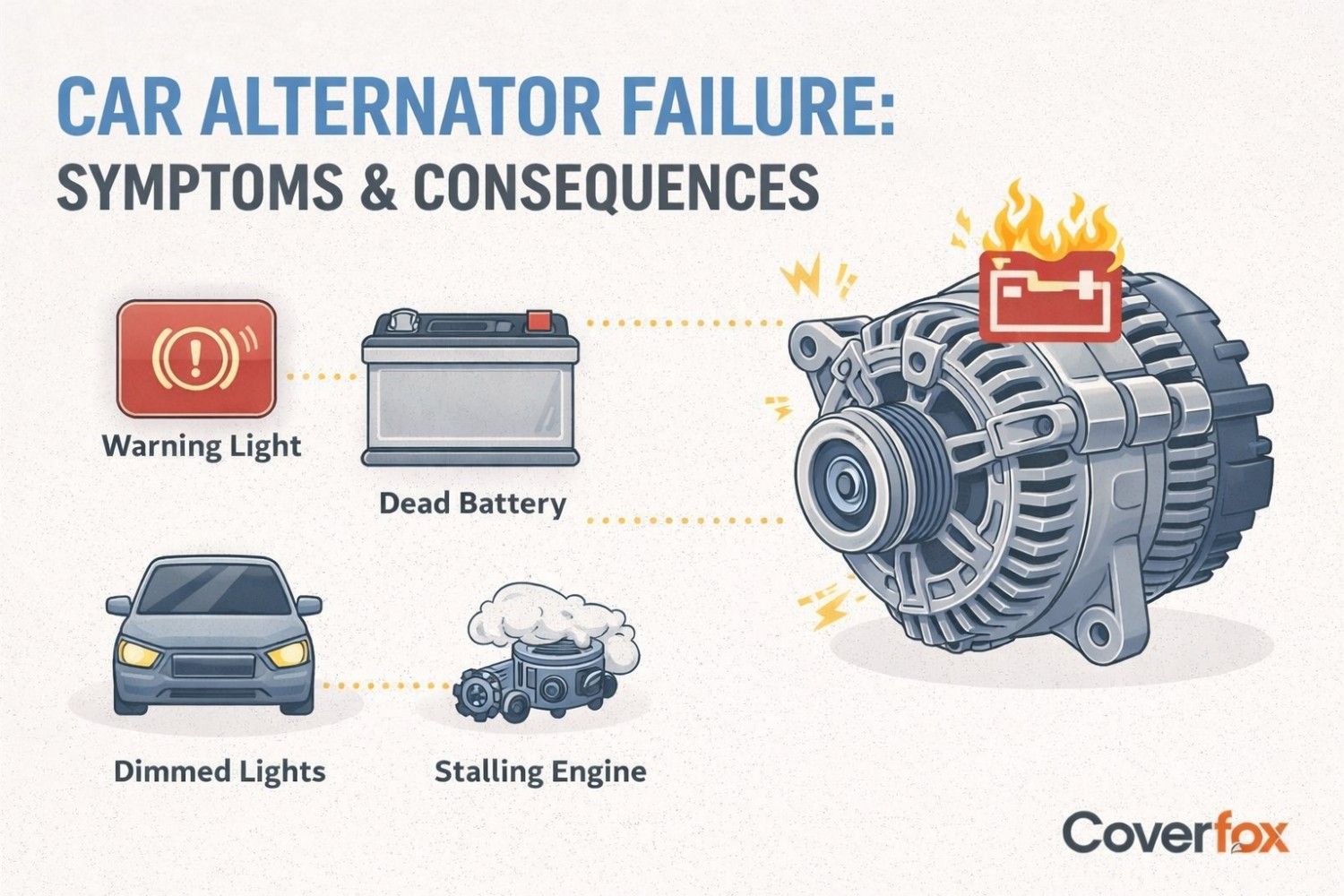
Alternator failure can cause issues such as dim headlights, warning lights on the dashboard, malfunctioning electronics, and difficulty starting the car. If left unaddressed, it can result in a completely dead battery and leave the vehicle stranded.
Common Causes of Alternator Failure
Alternator failure usually develops gradually due to wear, heat, or electrical stress rather than failing suddenly.
Worn-out brushes:
Faulty voltage regulator:
Loose or broken drive belt:
Bearing failure:
Overheating:
Electrical overload:
Moisture or water damage:
Over time, the internal carbon brushes wear down, interrupting the flow of electricity.
Causes overcharging or undercharging, damaging both the alternator and battery.
Prevents the alternator from spinning at the required speed to generate power.
Worn bearings create noise and friction, eventually stopping the alternator from working.
High engine temperatures damage internal components and insulation.
Excessive use of aftermarket accessories strains the alternator beyond its capacity.
Water ingress during floods or engine washing can short internal circuits.
Signs and Symptoms of a Failing Alternator
A failing alternator often shows early warning signs through your car’s electrical system before a complete breakdown.
The battery warning light is glowing or flickering on the dashboard
Dim or flickering headlights, especially at low speeds
Electrical accessories malfunctioning, such as power windows or infotainment
Difficulty starting the car or frequent stalling
Unusual whining or grinding noise from the engine bay
Burning rubber or an electrical smell due to overheated components
Dead battery despite recent replacement

What Happens if You Continue to Drive with a Failing Alternator?
If you keep driving on a faulty alternator, the battery will eventually drain out. As the battery weakens, essential systems like headlights, power steering, fuel injection, and brakes may start malfunctioning. Eventually, the engine can stall without warning, leaving the vehicle stranded mid-drive. Prolonged driving can also damage the battery and sensitive electronic components, increasing repair costs.
Difference Between Battery Problem vs Alternator Problem
Battery and alternator issues may show similar symptoms, but the root cause and behaviour of the car are different.
| Aspect | Battery Problem | Alternator Problem |
|---|---|---|
| Primary role | Stores electrical power | Generates power and charges the battery |
| Car starting | Car struggles or won’t start | Car may start but stalls while driving |
| Battery warning light | Usually turns off after starting | Often stays on or flickers |
| Headlights | Dim only during start-up | Dim or flicker while driving |
| Electrical systems | Fail immediately or intermittently | Gradually fail as battery drains |
| Battery condition | Battery may be old or discharged | Battery keeps draining despite being healthy |
| Jump-start effect | Car runs normally after jump-start | Car stops again once battery power drops |
| Long-term impact | Replacing battery solves the issue | Ignoring it can damage battery and electronics |
How to Diagnose Alternator Failure?
Alternator failure can be diagnosed through simple checks and basic tests before it leads to a complete breakdown. Check the dashboard warning light: A glowing battery or charging-system light while driving often indicates alternator trouble.
1. Observe electrical behaviour:
Dimming headlights, flickering interior lights, or weak power windows point to poor charging.
2. Listen for unusual noises:
Whining, grinding, or squealing sounds from the engine bay may indicate bearing or belt issues.
3. Inspect the drive belt:
A loose, cracked, or broken belt can stop the alternator from charging properly.
4. Test battery voltage:
With the engine running, voltage should read around 13.5–14.5 volts; lower readings suggest alternator failure.
5. Professional diagnostic scan:
A mechanic can confirm alternator or voltage regulator faults using specialised equipment.
How to Prevent Alternator Failure?
Alternator failure can often be prevented with timely checks, proper electrical use, and regular vehicle maintenance. Maintain a healthy battery: A weak or dying battery puts extra load on the alternator, accelerating wear.
Inspect drive belts regularly: Check for cracks, looseness, or glazing and replace belts as recommended.
Avoid electrical overload: Limit excessive use of aftermarket accessories like high-power lights or audio systems.
Protect from water damage: Avoid driving through deep water and be cautious during engine washing to prevent moisture ingress.
Ensure proper engine cooling: Overheating can damage alternator components, so keep the cooling system in good condition.
Fix warning signs early: Address battery warning lights, unusual noises, or dimming lights promptly.
Schedule regular servicing: Routine inspections help detect alternator wear before it leads to complete failure.
Alternator Repair vs. Replacement: Which One Is Right?
Deciding between alternator repair and replacement depends on the severity of the fault, repair cost, and expected lifespan after fixing.
When to Repair the Alternator:
When to Replace the Alternator:
Repair is suitable when the problem is limited to minor, replaceable components such as worn carbon brushes, a faulty voltage regulator, or loose electrical connections. In these cases, the al/ternator housing and core parts remain healthy, making repairs cost-effective and quick, especially for newer vehicles or first-time failures.
Replacement is the better option when there is major internal damage, including failed bearings, burnt windings, repeated breakdowns, or when the alternator has already completed a long service life. If repair costs are close to the price of a new unit, replacement ensures long-term reliability and reduces the risk of future electrical failures.
Cost of Alternator Replacement
The cost to replace a car alternator in India typically ranges from ₹6,000 to ₹20,000 for most passenger vehicles, depending on the make, model, and whether you choose a new, remanufactured, or OEM unit. Labour charges at service centres can add another ₹1,000 to ₹3,000, so total replacement costs may vary based on location and vehicle specifications.
Wrapping Up
While car alternator problems can easily be confused with battery problems, it is necessary to deal with it as soon as possible. Early repairs will save you from huge accidents and not leave you stranded on the road. Even though car insurance won’t cover alternator failure (as it is a maintenance issue), having a four-wheeler policy will ensure that accidents arising from such cases don’t leave you out dry.
Related Articles:
Piston in Engine: What It Is and How It Works
What is a Diesel Particulate Filter (DPF) in Cars?
What Is an Anti-Lock Braking System (ABS) in Cars & How Does It Work?
Frequently Asked Questions
How long does an alternator usually last?
An alternator typically lasts 7–10 years depending on driving conditions and electrical load.
How do I know if it’s the alternator or battery that’s failing?
If the car starts but electrical systems fail while driving, it’s likely the alternator; if the car won’t start at all, the battery is usually the issue.
Can a bad alternator damage the battery?
Yes, a failing alternator can overcharge or undercharge the battery, reducing its lifespan or causing permanent damage.
How often should alternators be checked?
Alternators should be checked during regular vehicle servicing or whenever warning lights or electrical issues appear.
Can a failing alternator cause my car to stall?
Yes, once the battery drains due to poor charging, the engine can stall suddenly while driving.
Can an alternator be repaired or does it always need replacement?
Minor issues can be repaired, but severe internal damage or repeated failures usually require replacement.
What is the average cost of alternator repair or replacement in India?
Repair may cost ₹2,000–₹6,000, while replacement generally ranges between ₹6,000 and ₹20,000, excluding labour.
Can I drive with a failing alternator until the next service?
It’s not advisable, as the car may stall without warning and cause further electrical damage.
Will a bad alternator invalidate my car insurance claim?
No, alternator failure does not invalidate car insurance, but damages caused due to negligence or delayed repairs may not be covered.