A car gearbox is a mechanical system that regulates engine power and ensures smooth transfer of torque to the wheels through different gear ratios. It plays a crucial role in vehicle performance, fuel efficiency, and driving comfort. In modern vehicles, gearboxes come in different configurations, such as manual, automatic, AMT, CVT, and dual-clutch systems, each designed to suit specific driving needs and comfort levels.
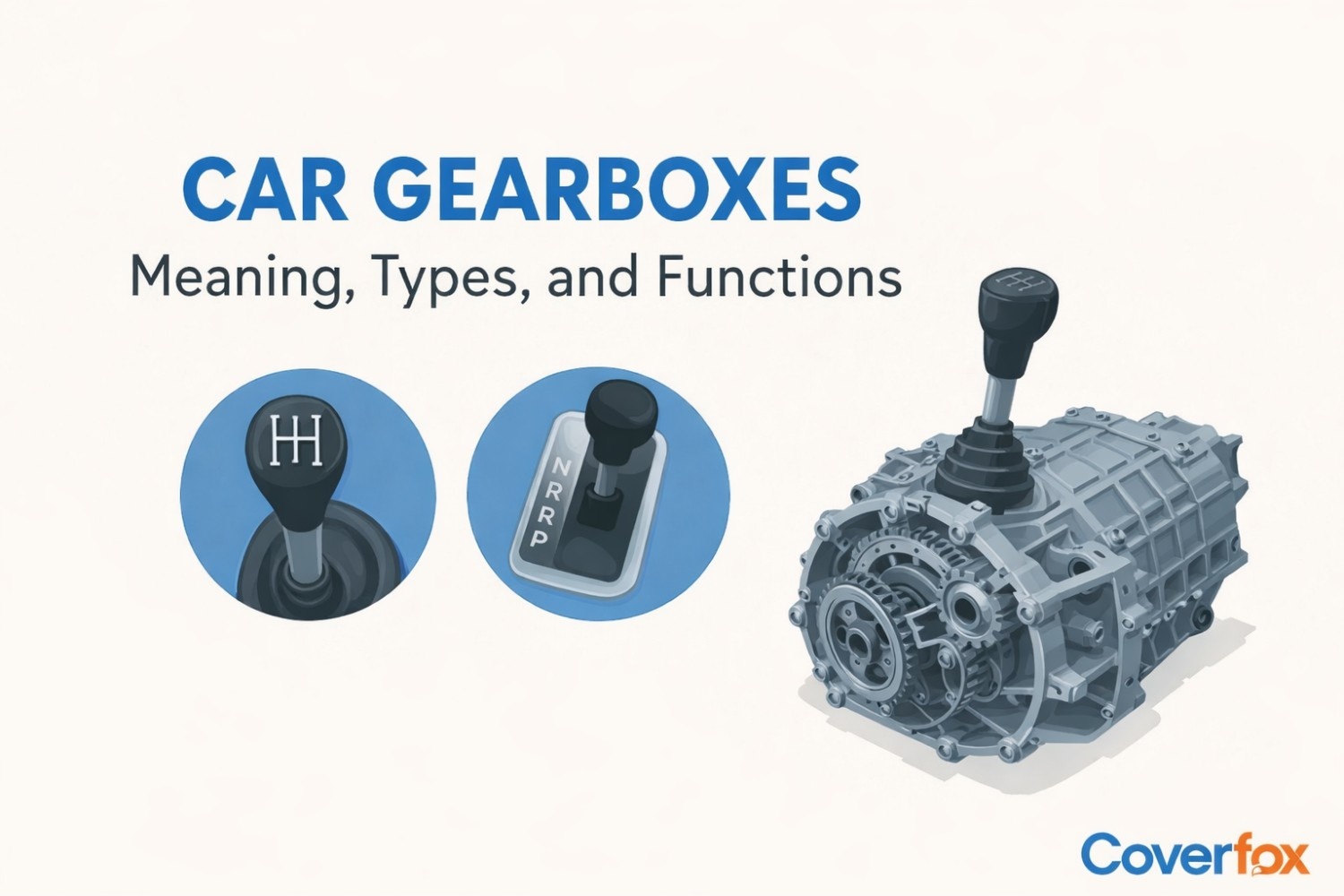
In this article, we explain what a gearbox is, how they operate, their parts and types, and their maintenance aspects, plus whether the condition of the gearbox will affect car insurance claims within India.
What is a Car Gearbox?
Gearbox refers to a mechanical system that transmits engine power to the wheels while adjusting torque and speed. It enables a vehicle to operate efficiently across varying driving conditions such as starting, climbing inclines, and cruising at high speeds.
In a typical car gear system, gears of different sizes are arranged to modify the rotational force. Lower gears provide higher torque for acceleration, while higher gears deliver speed with lower engine strain. According to the Ministry of Road Transport and Highways, maintaining transmission components is essential for roadworthiness and safety compliance in India.
How Does a Gearbox Work?
The gearbox function is to control the transfer of power from the engine crankshaft to the drive wheels through gear ratios. Working principle:
1. Engine Produces Rotational Energy:
The engine generates rotational force (torque) as it burns fuel, which needs to be transmitted efficiently to the wheels.
2. Clutch or Torque Converter Connects Engine to Gearbox:
In manual cars, the clutch engages or disengages the engine from the gearbox. In automatic cars, the torque converter performs a similar function, allowing smooth power transfer without stalling.
3. Gear Sets Adjust Torque and Speed:
Different gears control how much torque and speed reach the wheels. Lower gears provide more torque for acceleration or climbing, while higher gears offer speed efficiency with less engine strain.
4. Output Shaft Transfers Power to Wheels:
After passing through the gears, the output shaft sends the adjusted power to the differential, which then powers the drive wheels, propelling the vehicle forward.
In a manual car, the driver controls the gears with a gear lever; in an automatic car, the transmission uses sensors to change shifts. The gearbox has the job of providing smooth driving, fuel efficiency, and reduced engine wear.
Build and Material Properties of Gearboxes
The build and material properties of gearboxes, including strong housing, precision gears, and effective lubrication, play a crucial role in vehicle performance and longevity.
High-strength steel or aluminium housing
Lubrication system using transmission fluid
Precision-cut gear teeth for reduced noise
Heat resistance for prolonged operation
The life of a gearbox has a direct bearing on the overall performance and lifecycle cost of the vehicle.

Applications of Gearboxes in Vehicles and Machinery
The use of gearboxes extends far beyond passenger cars. They are essential in various vehicles and machinery to optimize performance and efficiency:
Passenger and Commercial Vehicles:
Two-Wheelers and Heavy-Duty Trucks:
Agricultural Machinery:
Industrial Equipment:
Gearboxes in cars, SUVs, and commercial trucks help manage torque and speed, ensuring smooth acceleration, better fuel efficiency, and easier handling in city traffic and highways.
Motorcycles, scooters, and large trucks rely on gearboxes to handle engine power effectively, providing the right balance between speed and torque for different loads and terrains.
Tractors, harvesters, and other farm equipment use gearboxes to deliver consistent power for heavy-duty operations like plowing, planting, and harvesting.
Gearboxes in machinery such as conveyors, crushers, and manufacturing equipment regulate power transfer for precise operations and long-lasting performance.
In all these applications, the output shaft transfers controlled power to the wheels or machinery components, ensuring efficient motion and reliable operation under varying loads.
Key Components of a Car Gear System
The important parts of a car's gear system include:
Clutch or torque converter
Gear sets (spur, helical, planetary)
Input shaft and output shaft
Synchronisers
Bearings and shafts
Gear selector mechanism
These parts work together to deliver controlled motion and efficient power transmission.
Different Types of Gearboxes
Here are different types of gearboxes, each offering unique driving experiences, efficiency, and performance to help drivers choose the best fit for their vehicle and needs.
| Gearbox Type | Description | Key Benefit |
|---|---|---|
| Manual Transmission | The driver shifts gears manually using the clutch | Better control and fuel economy |
| Automatic Transmission (AT) | Uses a torque converter and planetary gears | Ease of driving in traffic |
| Automated Manual Transmission (AMT) | Manual gearbox with automated clutch | Lower cost than full automatic |
| Continuous Variable Transmission (CVT) | Uses a belt and pulley system | Smooth acceleration without shift shock |
| Dual-Clutch Transmission (DCT) | Uses two clutches for faster shifts | High performance and efficiency |
Gearbox types are chosen according to the vehicle segment, cost, and driving needs. More information about gearbox technologies and vehicle safety can be obtained from the Automotive Research Association of India, which is the regulatory body for automotive standards in India.
Manual vs Automatic Gearbox: Key Differences
Manual and automatic gearboxes differ in operation, efficiency, and driving experience, helping you choose the right transmission for your vehicle and lifestyle.
| Feature | Manual Gearbox | Automatic Gearbox |
|---|---|---|
| Gear shifting | Driver-controlled | System-controlled |
| Driving effort | Higher | Lower |
| Fuel efficiency | Typically higher | Moderate to high |
| Maintenance cost | Lower | Higher |
| Traffic comfort | Lower | Higher |
Both systems perform the same function while operating differently and offering different conveniences.
How Gearbox Condition Affects Car Insurance Claims in India?
The condition of your car’s gearbox can impact insurance claims if it contributes to an accident or breakdown. Insurers may review your vehicle maintenance history, including gearbox servicing, to assess negligence or wear-and-tear. Regular maintenance and timely repairs not only extend the life of your gearbox but also help ensure smoother claim approval in case of damage under car insurance policy.
Summary
An automobile gear system is critical for efficient vehicle operation from both safety and fuel economy standpoints. Therefore, it is important that you understand how gears operate and the various types of gearboxes, as well as some general maintenance and repair guidelines. Also, regular servicing of the automobile gear system decreases the likelihood of breaking down while operating your vehicle and helps ensure your vehicle complies with the applicable road safety laws within India.
Related Articles:
What Is AMT in Cars and How Does It Work?
Types of Car Transmissions: How Does it Work?
Frequently Asked Questions
How do I maintain my car's gearbox?
Routine inspection by a mechanic will ensure your gearbox fluid levels are sufficient and correct. Refrain from using your transmission very hard again to prolong its life.
What is the difference between a manual and an automatic transmission?
Manual systems require driver input for gear changes, while automatic systems shift gears automatically.
Can a faulty gearbox impact my car insurance?
Yes. If a gearbox failure leads to an accident, claim assessment may consider maintenance history as per insurer guidelines.
What is a 7-speed gearbox?
A gearbox with 7 forward gear ratios provides better efficiency than a gearbox without 7 gear ratios and can give a vehicle smoother performance.
What are the signs of a car gearbox failing?
Unusual noises, delayed shifting, fluid leaks, and vibration are common signs.
How do I know if my car needs a new gearbox?
Persistent performance issues and major internal damage may require gearbox replacement after inspection by a certified mechanic.
Disclaimer: This blog is intended for informational purposes only and does not constitute financial, legal, or insurance advice. Insurance policies, coverage, and claim decisions may vary by insurer. Always consult your insurance provider for accurate and personalized guidance.